

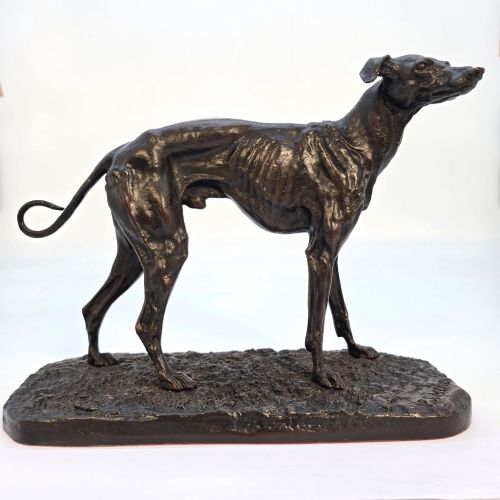
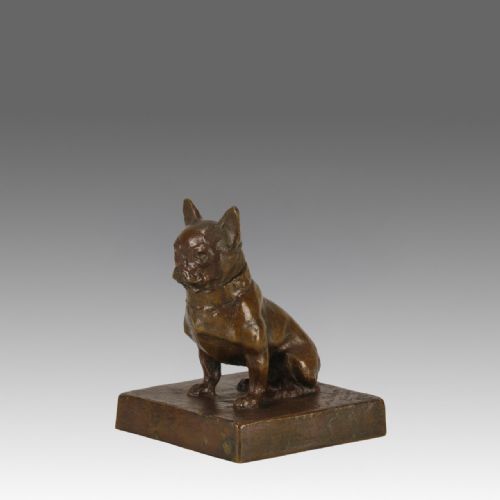
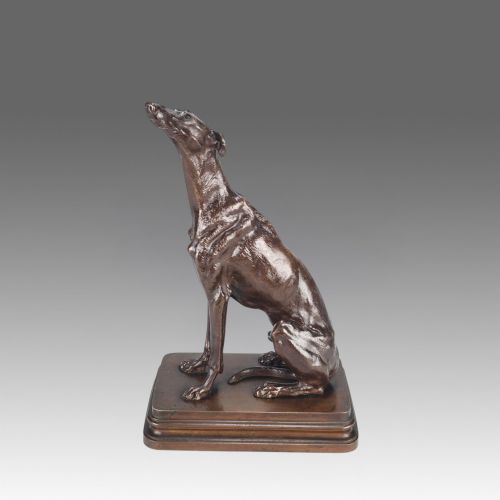
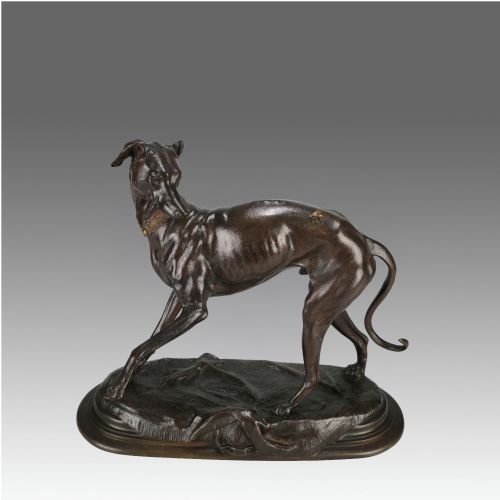



French Animalier Bronze Dogs
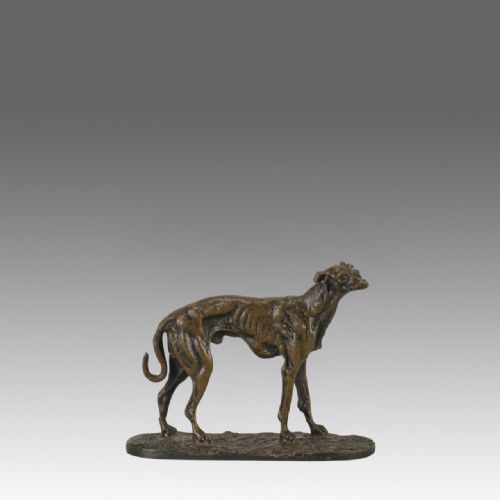
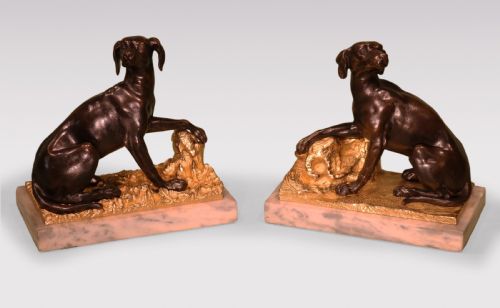
These French animalier bronze dogs capture muscular hounds and sporting dogs in naturalistic poses.
French Animalier Bronze Dogs
When you search for french animalier bronze dogs, you encounter sculptural figures representing hounds, setters, greyhounds, and spaniels. These works appear primarily as standalone bronzes, mantel clocks, and paperweights from the nineteenth and early twentieth centuries.
The objects stem from the French animalier tradition, portraying subjects such as hunting dogs, resting hounds, and poodles with close attention to canine anatomy. Most pieces date from the Victorian era up to the nineteen-twenties, often mounted on marble or timber bases.
How they were made
Foundries produced these sculptures using bronze, patinated bronze, and gilt bronze, occasionally employing brass, cast iron, or spelter for secondary elements or alternative figures. Artisans frequently set the heavy metal castings onto fitted marble or timber bases to anchor the composition.
Makers applied various surface treatments, including dark patinas, cold painted finishes, and gilt highlights, to accentuate the texture of dog coats and muscular forms. Casts were produced either directly by the artists' chosen foundries, such as Barbedienne, or as later editions after the original sculptors.
French Animalier Bronze Dogs Retail Price Guide 2026
Typical asking prices for french animalier bronze dogs among the pieces listed under this phrase on Sellingantiques today, from the lower quarter to the upper quarter. They describe what is for sale here now, not the wider market.
Listings feature nineteenth-century and early twentieth-century sculptures utilising bronze, patinated bronze, marble, and timber bases.
What varies in quality
Quality rests in the crispness of the chasing and the fidelity of the musculature and facial expression in the cast. Finer examples retain delicate surface texture in the fur and subtle gradations in the patina rather than losing detail to heavy polishing.
The integrity of the mount contributes to the overall standard, with well-fitted marble or timber bases providing proper balance to the heavy metal sculpture. Signed pieces associated with known animalier sculptors generally demonstrate superior modeling compared to unsigned or later recast versions.
Alfred Dubucand·Alfred Barye·Dora Heber·P J Mêne·Prosper Lecourtier·Jules Moigniez·Delabrierre·Antoine Louis Barye·Louis Riche·Auguste Nicholas Cain·Arthur Waagen·Joseph Francois Victor Chemin·Christophe Fratin·L Bureau
The French Animalier Bronze Dogs Glossary
- Animalier
- A nineteenth-century artistic movement focused on the realistic depiction of animals, particularly in sculpture. Practitioners studied live subjects in menageries and veterinary schools to capture natural movement.
- Patina
- The surface coloration and sheen developed on bronze through chemical treatment or natural ageing. A well-preserved patina enhances the depth and tactile quality of the metal.
- Spelter
- A zinc alloy frequently used as a cheaper substitute for bronze in decorative figures. It is lighter and softer than true bronze.
- Cold painted
- A technique where paint is applied to cold metal without firing. This finish is delicate and susceptible to flaking over time.
French Animalier Bronze Dogs: Frequently Asked Questions
What is an animalier dog bronze?
An animalier bronze is a nineteenth-century sculpture depicting animals with anatomical accuracy and lifelike posture. In this category, the focus rests entirely on canine subjects such as greyhounds, setters, and poodles.
These pieces range from small desk ornaments and paperweights to large mantel sculptures and clock garnitures. They reflect the period's fascination with realistic depictions of nature and sporting life.
How do I identify the maker?
Makers and sculptors often signed their names directly into the bronze base or casting during the modeling process. Foundry marks may also appear alongside the signature.
Catalogues raisonnés and period exhibition records help attribute unsigned or cast-after pieces by comparing the model's stance and dimensions to documented works.
What are marble bases used for?
Marble or timber bases provide structural stability and visual weight to heavy bronze animal sculptures. They anchor the composition and protect the surface underneath.
Many nineteenth-century animalier bronzes were manufactured specifically to fit onto tailored stone plinths, which complemented the dark patina of the metal.