




French 18k Gold Medallion
These french 18k gold medallion pieces are decorative pendants carrying devotional imagery or personal motifs, offering a tangible connection to early twentieth-century European goldsmithing.
French 18k Gold Medallion
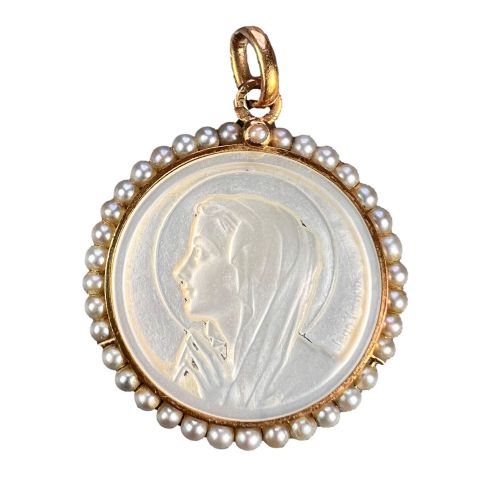
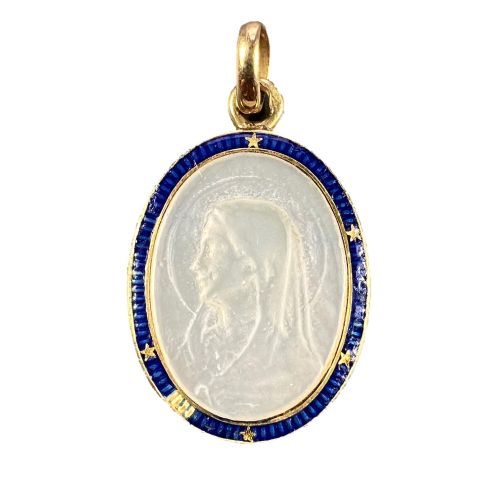
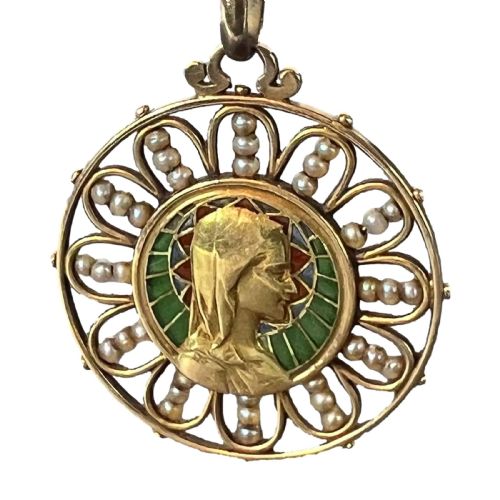
When you search for a french 18k gold medallion, you encounter small devotional objects, personal charms, and commemorative medals produced across France from the late nineteenth century through the mid-twentieth century. The most common version met on this page is an eighteen-carat yellow gold religious pendant depicting the Virgin Mary, the Madonna and Child, or patron saints.
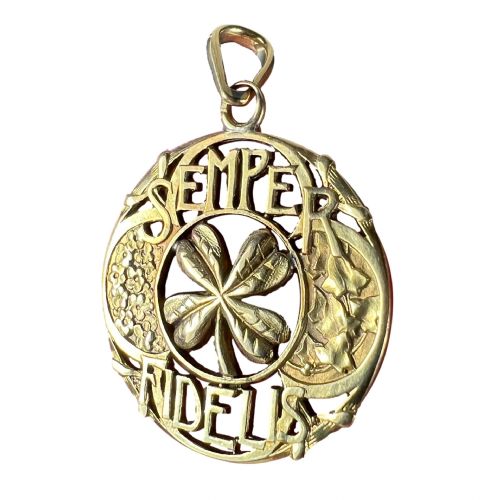
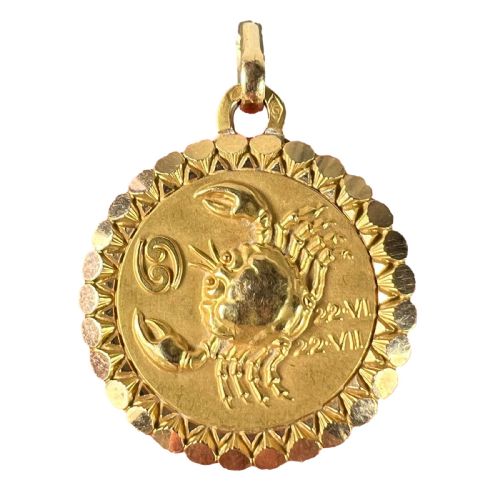
The forms range from simple oval and shield plaques to intricate circular frames ornamented with floral wreaths, lucky clovers, and zodiac signs. Stylistically, the inventory spans the flowing lines of Art Nouveau and Belle Epoque through the geometric rigour of Art Deco and mid-century modernism.
How They Were Made
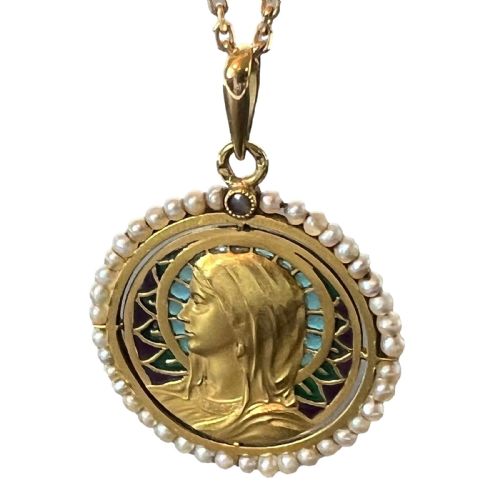
The foundation of these pieces is eighteen-carat yellow, rose, or white gold, shaped into medals, charms, and pendant frames that often incorporate twisted wire borders or cast floral motifs. Artisans applied specialised decorative techniques such as plique-à-jour enamel, which creates stained-glass effects without a backing, alongside traditional opaque enamelling.
Many surfaces combine polished and matte metal finishes with hand-engraved details, seed pearls, mother-of-pearl backings, and occasional diamond accents. The resulting constructions balance structural durability with delicate artistic ornamentation characteristic of French workshops.
Materials appearing across the inventory include eighteen-carat yellow, rose, and white gold, complemented by mother-of-pearl and enamel.
What Varies in Quality
The distinction between standard production and exceptional work rests on the fineness of the hand-engraving and the complexity of the artisan's technique. Pieces featuring translucent plique-à-jour enamel or detailed sculptural relief by named medallists represent a higher tier of execution than plain stamped discs.
The integration of supplementary materials, such as finely matched seed pearls or iridescent mother-of-pearl panels, also elevates the overall refinement of an object. Superior examples display crisp definition in facial expressions and botanical motifs, showing little softening of detail across the gold surface.
Emile Monier·Paul Brandt·Perroud·Mazzoni·Pageli Perriat·Guilbert·Vernon·Emile Dropsy·Sellier·Rasumny·Ovide Yencesse·Tairac
The French 18k Gold Medallion Glossary
- Plique-a-Jour
- An enamelling technique where enamel is applied in cells without a metal backing, allowing light to shine through the transparent colour. This method resembles miniature stained glass.
- Medallion
- A large medal or coin-like pendant worn around the neck or attached to a charm bracelet. These often commemorate religious figures, historical events, or personal milestones.
- Art Deco
- A design style popular in the nineteen-twenties and nineteen-thirties characterised by streamlined geometric shapes and stylized patterns. It marked a sharp departure from organic nineteenth-century ornamentation.
French 18k Gold Medallion: Frequently Asked Questions
How were these pendants worn?
Original owners typically wore these pieces suspended from fine gold chains around the neck. They also appeared frequently hung from charm bracelets.
Religious examples often served as personal talismans or gifts for significant life events. Commemorative pieces marked dates, names, or civic pride.
How do I care for my medallion?
Clean eighteen-carat gold gently using warm water, mild soap, and a soft cloth. Avoid harsh chemical dips that might damage enamel or pearl elements.
Store the pendant separately in a fabric-lined box to prevent scratching against other jewellery. Take care to protect any delicate plique-à-jour enamel from impacts.
How can I identify the period?
Stylistic cues such as flowing botanical lines point toward Art Nouveau origins. Geometric symmetry and streamlined framing indicate later Art Deco production.
Many pieces bear artist signatures or maker stamps alongside gold assay marks. These tiny hallmarks help narrow down the exact decade of manufacture.