
Freestanding Wood Mirror
Freestanding wood mirror designs give you a movable reflection in solid mahogany, walnut, and oak, ready to anchor a dressing room or hallway.
Freestanding Wood Mirror
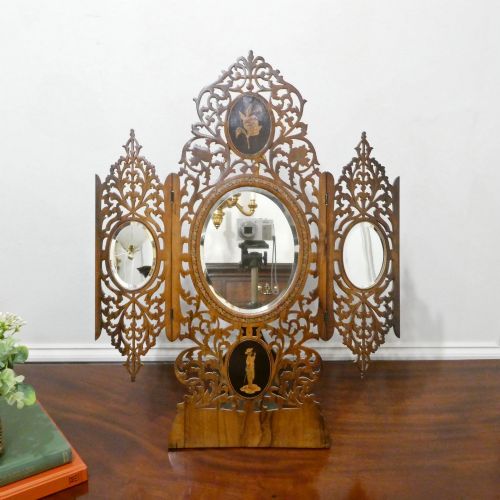
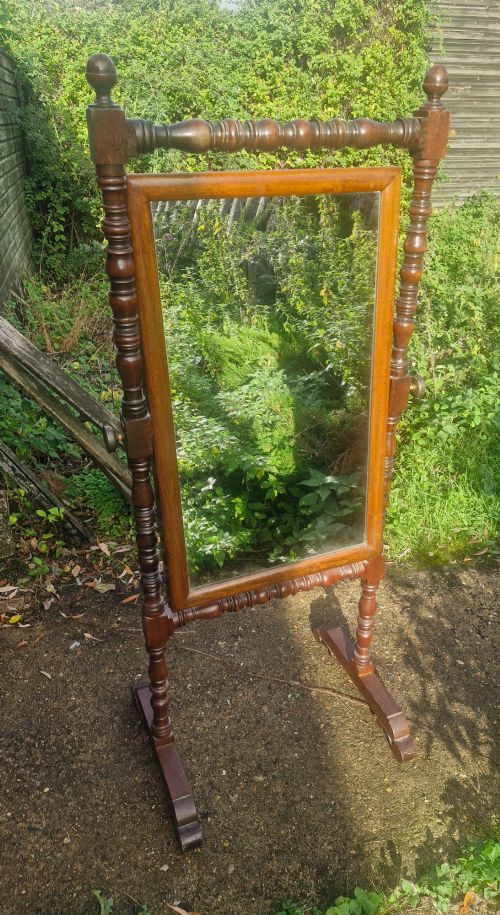
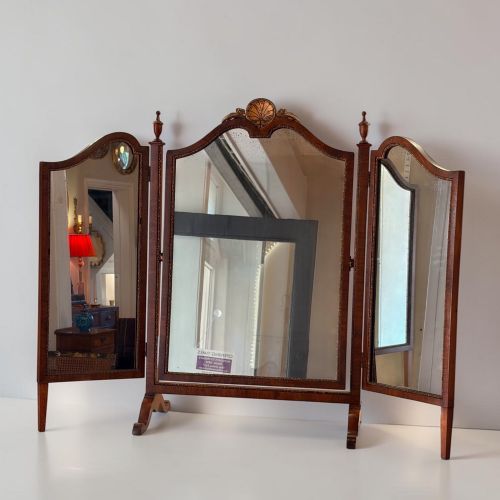
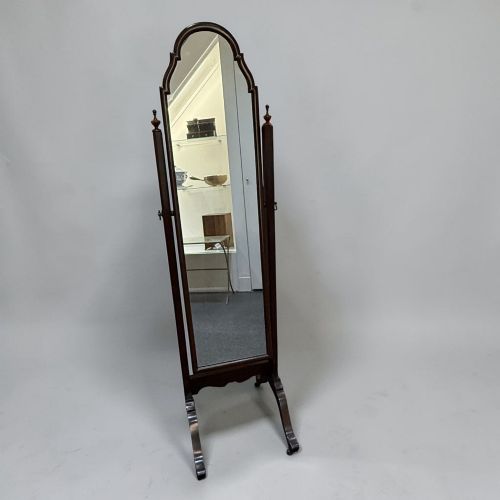
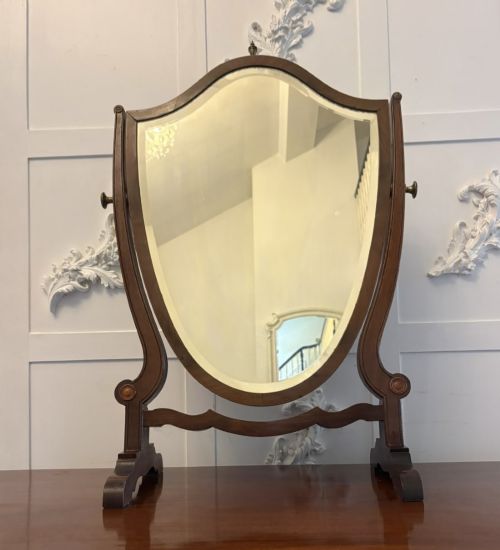
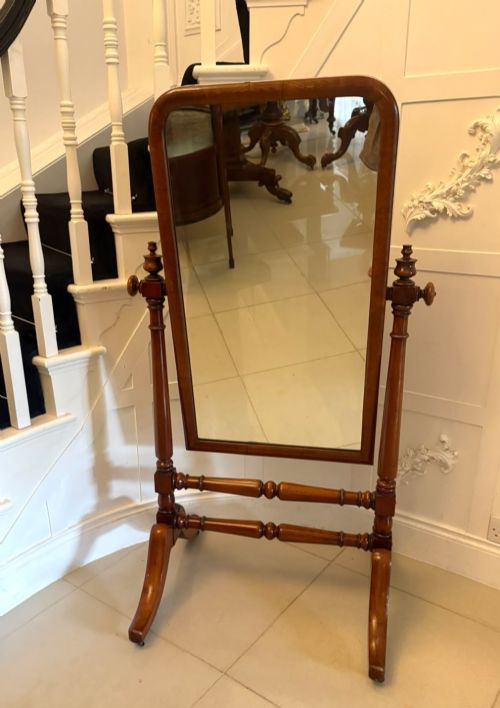
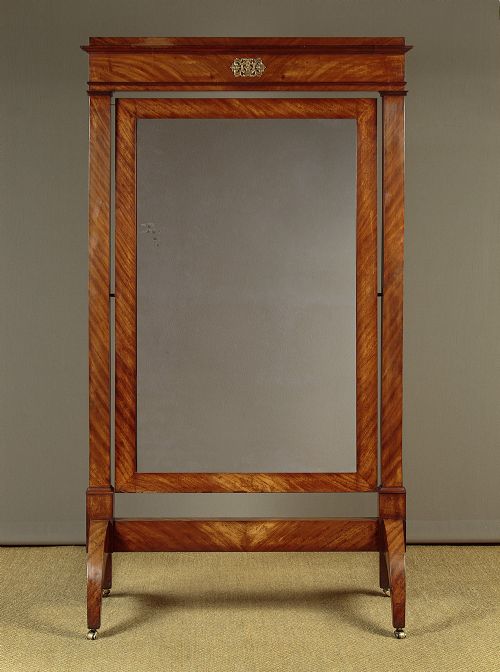
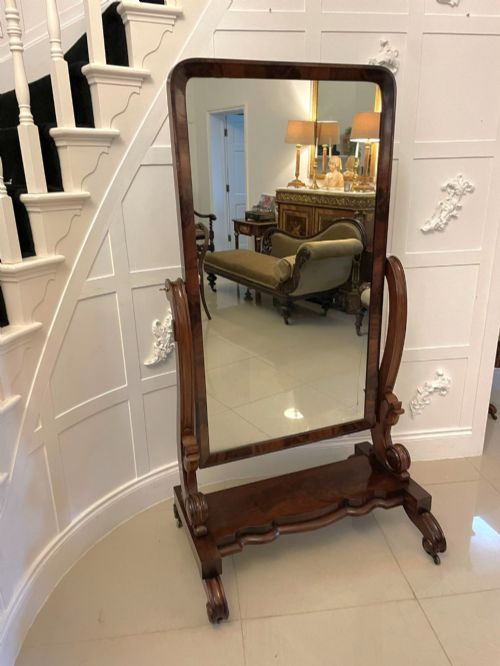
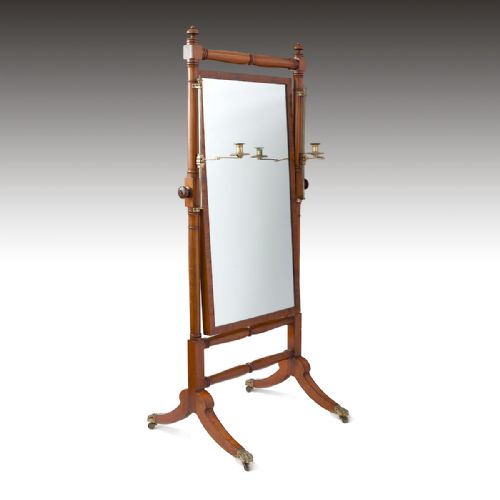
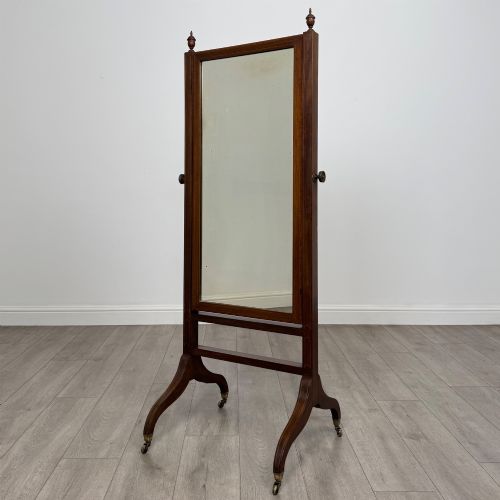
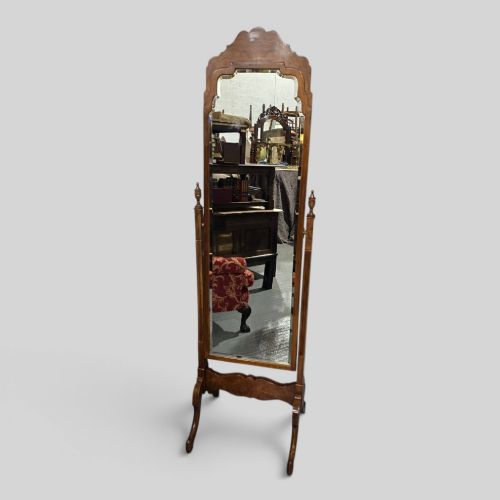
A freestanding wood mirror brings movable reflection to a room, ranging from full-length cheval frames to small dressing table glasses. When you search for a freestanding wood mirror, you meet floor-standing cheval designs alongside compact toilet mirrors and adjustable shaving stands. These pieces span the nineteenth century, Victorian, Regency, and Edwardian periods, appearing in mahogany, walnut, oak, and satin birch.
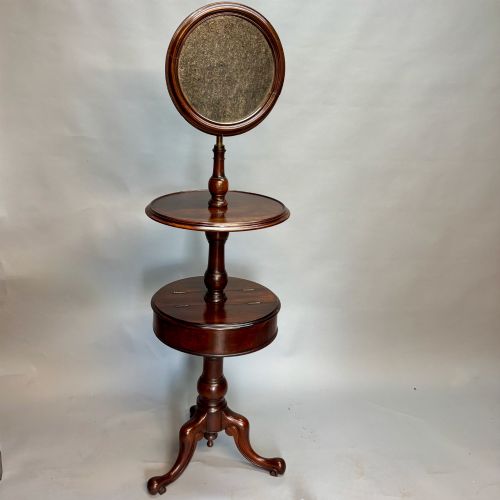
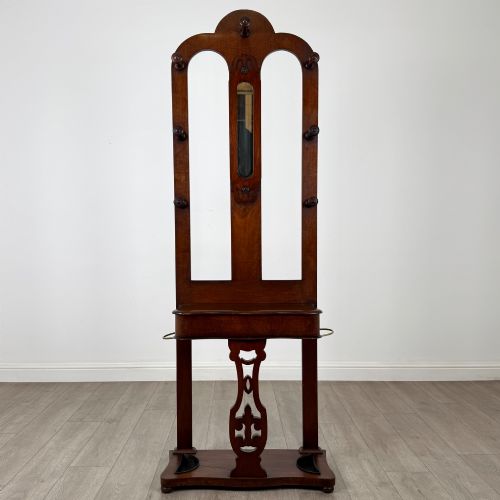
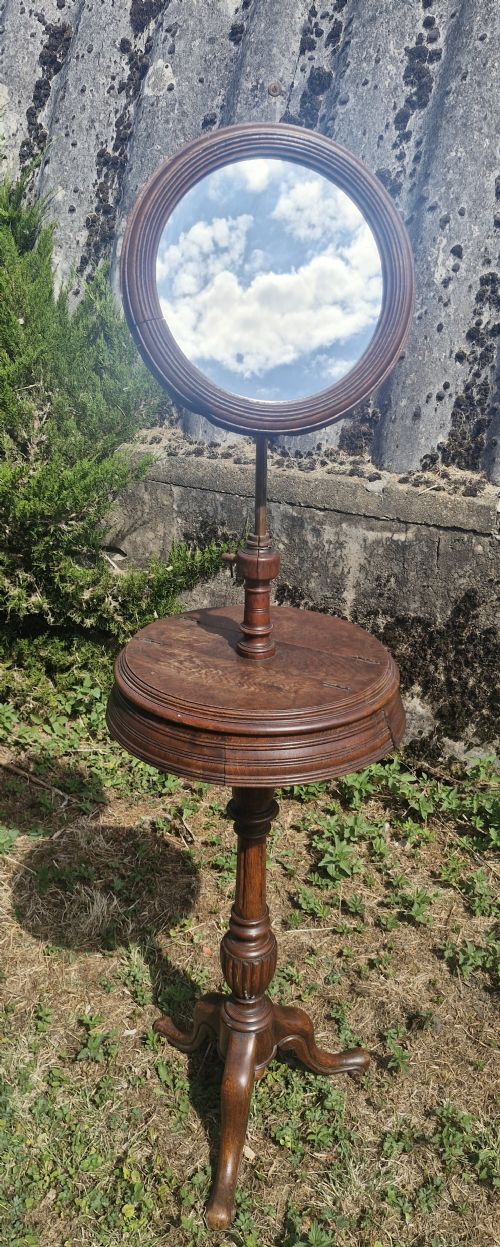
The most common forms on this page are mahogany cheval mirrors and smaller dressing table mirrors supported on swing frames. You will also find specialised pieces such as gentleman's shaving stands on tripod bases and hall stands incorporating mirrors. Their timber frames sit on brass castors, scroll feet, or tripod legs depending on the exact date and regional workshop.
How they were made
Cabinetmakers constructed these frames using dense hardwoods like mahogany and walnut, frequently incorporating turned uprights and sturdy stretcher bars. The mirror glass itself rests within swing frames or pivoting pivots, allowing the angle of reflection to alter easily. Brass hardware such as adjustable screw knobs, castors, and hanging arms provide both structural movement and decorative contrast against the dark timber.
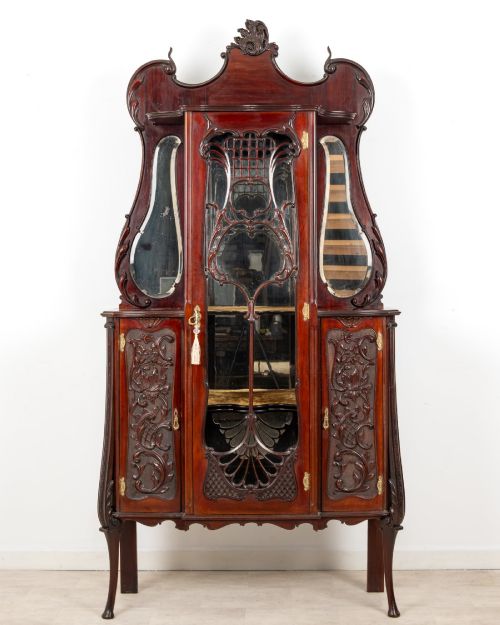
Surfaces receive hand-applied polish or French polish to highlight the grain of the wood, while more decorative examples feature carved crests or inlaid timber details. Shaving stands utilise telescopic brass columns within wooden pillars to permit height adjustment, whereas large cheval frames rely on heavy weighted feet to maintain stability during tilt.
One recorded mirror once belonged to a military general, proving that even high-ranking commanders needed a reliable reflection before inspection.
What varies in quality
The distinction between ordinary and superior examples lies in the selection of the timber and the crispness of the joinery. Dense, finely figured mahogany or burr walnut with rich natural grain elevates a piece far above plain utility versions made from secondary softwoods. Furthermore, the weight and thickness of the original mirror glass, together with the substance of the brass mounts, signal the original maker's investment in materials.
Proportion and mechanical execution also divide the range, particularly in adjustable shaving stands and pivoting cheval frames. A superior mirror tilts smoothly and holds its position firmly without slipping, supported by well-turned uprights and substantial bracket feet rather than flimsy joints.
The Freestanding Wood Mirror Glossary
- Cheval mirror
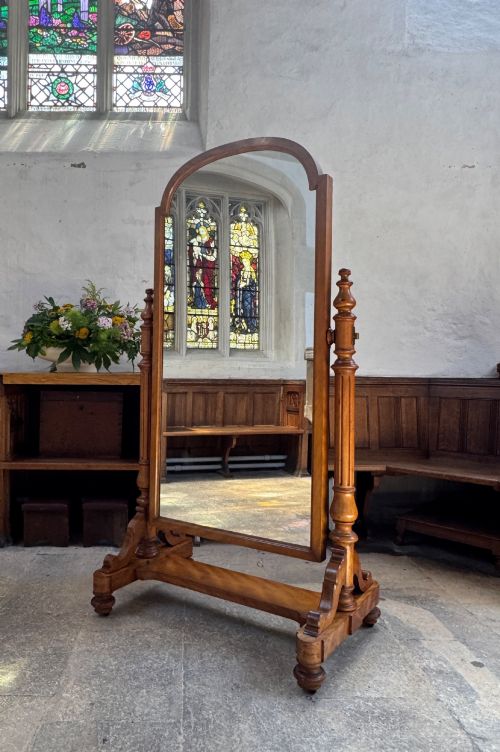
- A large floor-standing mirror mounted in a frame with vertical pivots that allow the glass to swing back and forth. They are designed for full-length viewing in bedrooms and dressing rooms.
- Toilet mirror
- A smaller mirror mounted on a wooden stand or small set of drawers, built to sit upon a dressing table or chest. These were essential items for grooming before the widespread adoption of fitted wardrobe glass.
- Shaving stand
- A specialist freestanding piece featuring an adjustable mirror combined with small shelves, drawers, or basins for a gentleman's morning routine. They frequently stand on tripod bases or slender pillar supports.
- Swing mirror
- Any mirror plate hung on horizontal pivots between two upright posts, allowing the user to tilt the reflection. The term applies equally to tabletop dressing glasses and large floor models.
- Telescopic
- Describing a vertical support composed of sliding tubes or pillars that permit height adjustment. This mechanism appears frequently on nineteenth-century shaving stands.
Freestanding Wood Mirror: Frequently Asked Questions
How do I date a freestanding wood mirror?
Dating relies upon timber choice, hardware fixings, and construction methods visible in the frame. Regency and George III pieces tend to feature lighter mahogany with refined reeded columns, while heavy carved scrolling and plate glass surrounds often indicate Victorian manufacture.
Edwardian examples frequently display lighter satinwood or mahogany with subtle inlaid banding and simpler turned uprights. Examining the screws, backboards, and the composition of the mirror plate itself helps narrow the decade of production.
Where should I place a cheval mirror?
A floor-standing cheval mirror requires a solid floor and adequate clearance to tilt safely on its pivots. Bedrooms and dressing rooms remain the traditional locations, providing full-length utility for daily dressing.
Because these pieces reflect significant portions of a room, positioning them opposite a window or an interesting architectural feature enhances natural light. Ensure the floor is level so the frame does not strain its side supports.
Are shaving stands stable enough to use?
Period shaving stands are structurally robust, though their tripod legs or slender columns require careful placement on firm flooring. The adjustable mechanisms were built for daily use by nineteenth-century households.
When operating a telescopic column or tilting mirror plate, support the weight of the fixture with one hand rather than relying solely on the locking screw. Routine care preserves the original brass fittings and wooden threads.
What is the difference between a cheval and a toilet mirror?
A cheval mirror is a tall, floor-standing piece offering a full-length reflection of the entire body. It stands directly on the floor via its own heavy frame and feet.
A toilet mirror is much smaller and requires a separate surface, such as a dressing table, chest of drawers, or sideboard, to elevate it to a useful height for facial viewing.