


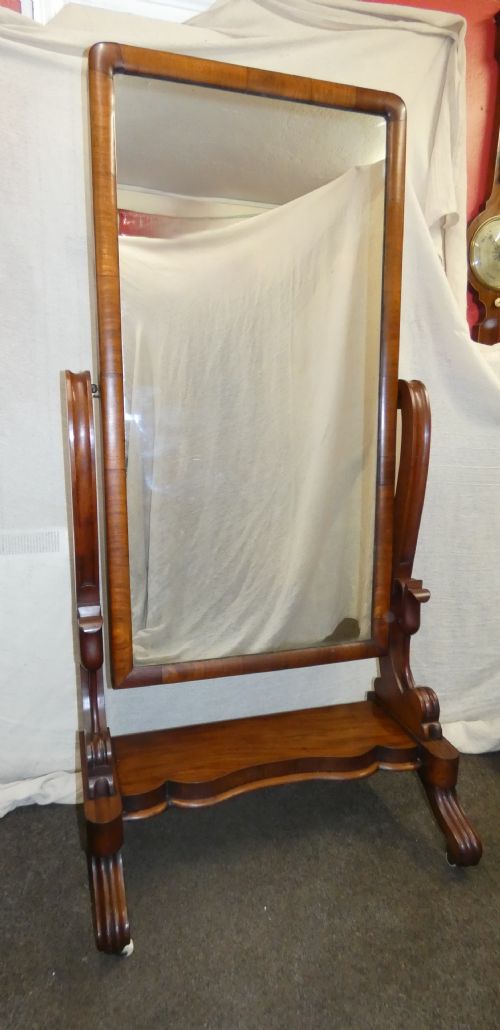


Freestanding Tilt Mirror
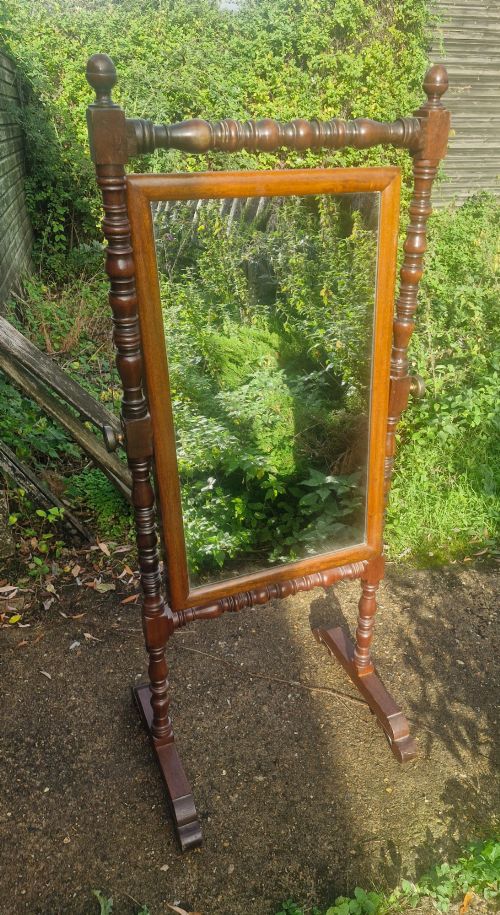
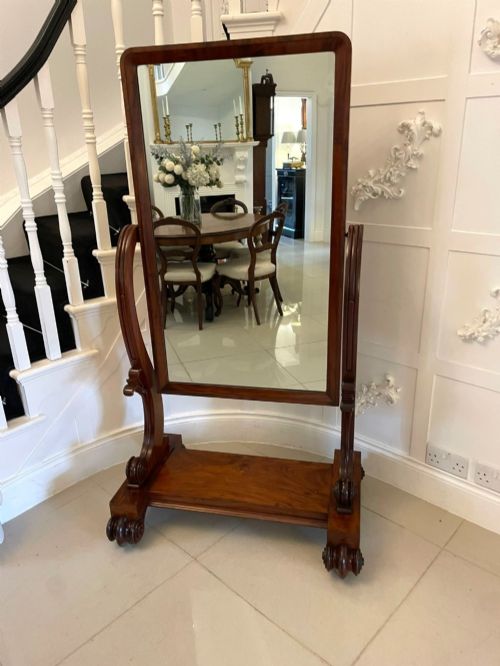
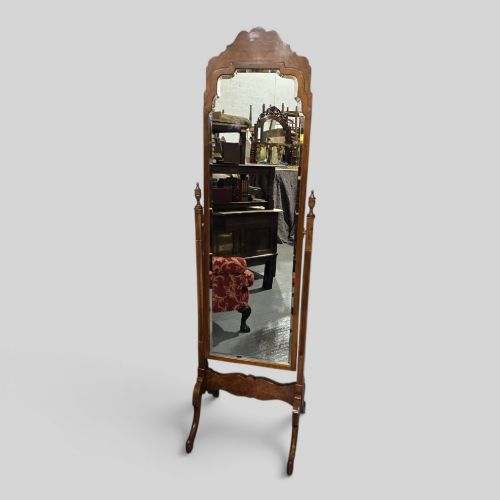
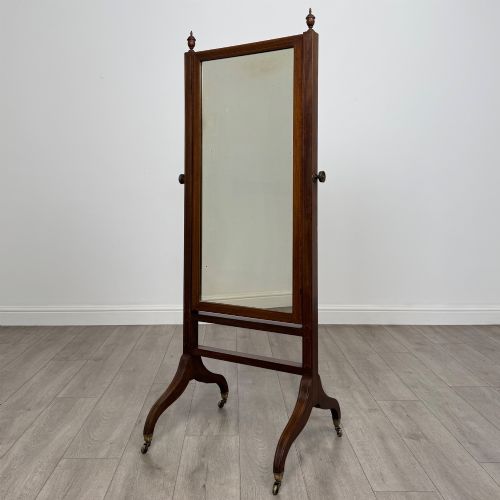
These freestanding tilt mirror examples combine daily dressing utility with upright floor or table presence, offering adjustable angles in rich period woods.
Freestanding Tilt Mirror
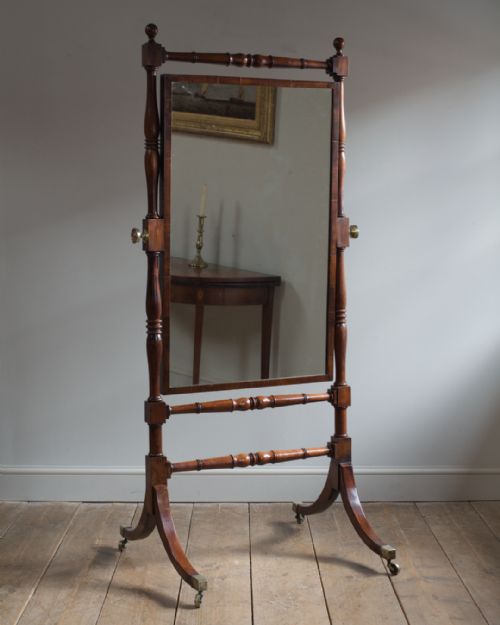
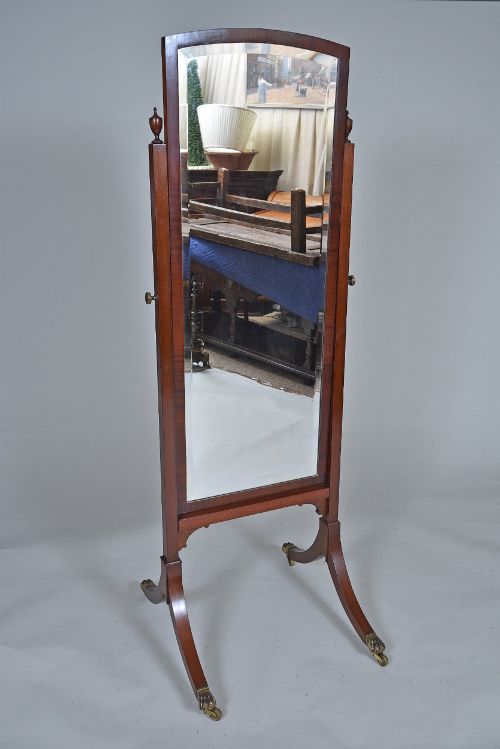
A freestanding tilt mirror stands independently on its own frame, designed for bedrooms and dressing rooms to provide a full or half-length reflection. The glass plate swings on pivots within upright supports, allowing the user to adjust the viewing angle easily.
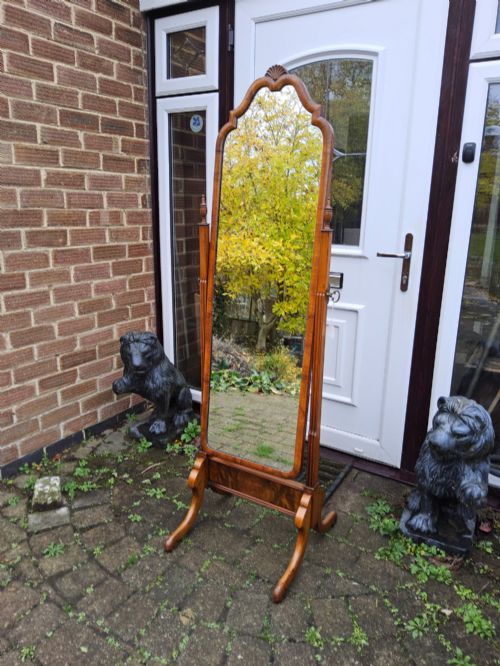
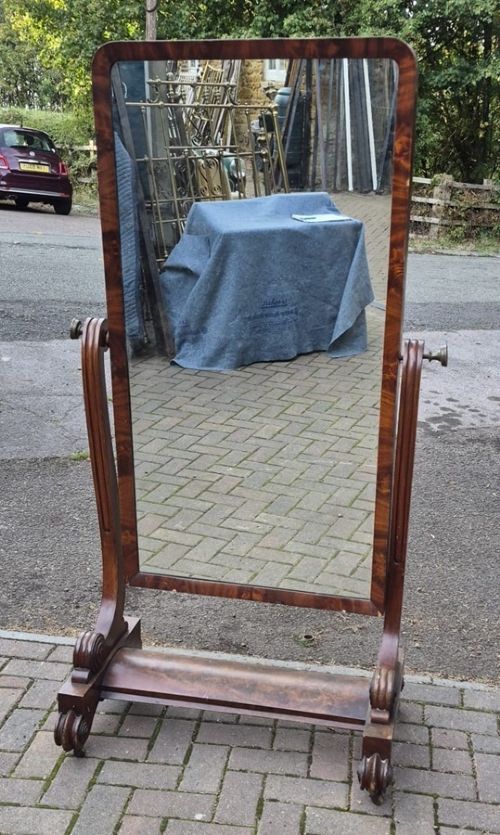
The selections available here range from tall cheval mirrors mounted on floor frames to smaller dressing table mirrors meant for chest placement. Mahogany dominates the offerings, alongside walnut, burr walnut, and pitch pine variations.
Period styles stretch across the nineteenth and twentieth centuries, taking in Regency, Victorian, Edwardian, and Art Deco designs. Floor-standing cheval formats appear most frequently among the pieces present.
Materials and construction methods
Cabinet makers constructed the primary frames using solid and veneered timbers like mahogany and walnut, often selecting flame or burr grains for decorative impact. Brass hardware such as castors, sabots, and pivoting screw caps provide both structural movement and metallic contrast.
Glass plates rest within secured wooden surrounds, supported by side uprights connected via stable feet or trestle bases. Some pieces incorporate inlay work or turned wooden elements, reflecting the cabinet-making standards of their respective decades.
Freestanding Tilt Mirror Retail Price Guide 2026
Typical asking prices for freestanding tilt mirror among the pieces listed under this phrase on Sellingantiques today, from the lower quarter to the upper quarter. They describe what is for sale here now, not the wider market.
Listings feature periods from Regency to Art Deco, executed predominantly in mahogany and walnut with brass hardware.
Distinctions in craftsmanship and form
Superior examples show refined proportion in the frame uprights and stability in the pivot mechanism, ensuring the glass holds its adjusted position without slipping. The selection of timber figure, such as well-matched flame mahogany or burr walnut, marks out finer workshops.
The quality of secondary details, including original brass castors and neatly turned supports, separates standard utility pieces from higher-status commissions. Surface finishing and timber depth reveal the care taken during initial construction.
Whytock & Reid
The Freestanding Tilt Mirror Glossary
- Cheval mirror
- A large freestanding mirror designed to display the full figure, supported by a vertical frame and four feet.
- Tilt glass
- A mirror plate mounted on side pivots that permits the glass to tilt backward and forward.
- Sabot
- A metal shoe fitted to the foot of a furniture leg, commonly cast in brass on Regency pieces.
- Pitch pine
- A resinous softwood utilised in certain nineteenth-century regional furniture for robust framing.
- Swing mirror
- An alternative descriptor for a mirror hung on pivots within a stationary frame.
Freestanding Tilt Mirror: Frequently Asked Questions
How do I secure a loose tilt mirror?
Most pivoting frames use threaded screw caps or tension washers set into the side uprights. Tightening these components restores friction to hold the glass at the desired angle.
If the mechanism lacks exterior screws, check for internal wooden wedges or leather washers behind the pivot points that may need replacement.
Where should I place a cheval mirror?
Position the piece near a natural light source, such as a window, to maximise reflection without creating harsh glare. Ensure the floor surface is level so the frame rests evenly on its castors or feet.
Because these mirrors have significant height and weight, keep them away from busy household thoroughfares where they might sustain accidental bumps.
How do I date a mahogany tilt mirror?
Examine the timber selection, leg forms, and construction methods used in the base and frame. Regency examples often feature sabre legs and brass castors, while Edwardian pieces may show lighter proportions and subtle inlay.
Tool marks on the backboards and the thickness of the mirror glass plate also offer reliable clues to the manufacturing decade.