



Freestanding Occasional Table
A freestanding occasional table stands away from the wall to show fine timber and craftsmanship from every angle.
Freestanding Occasional Table
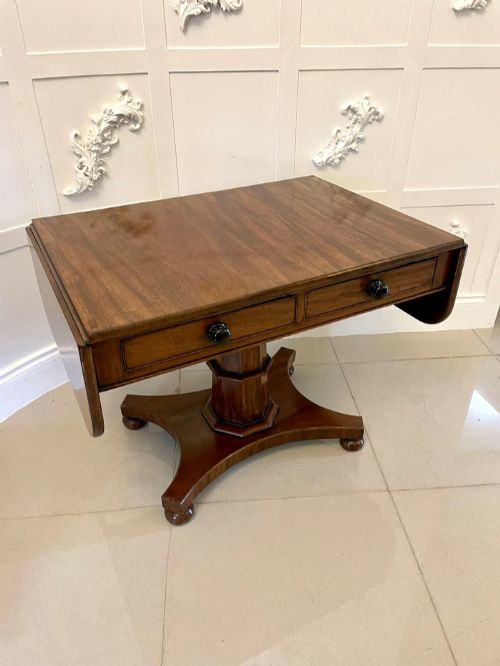
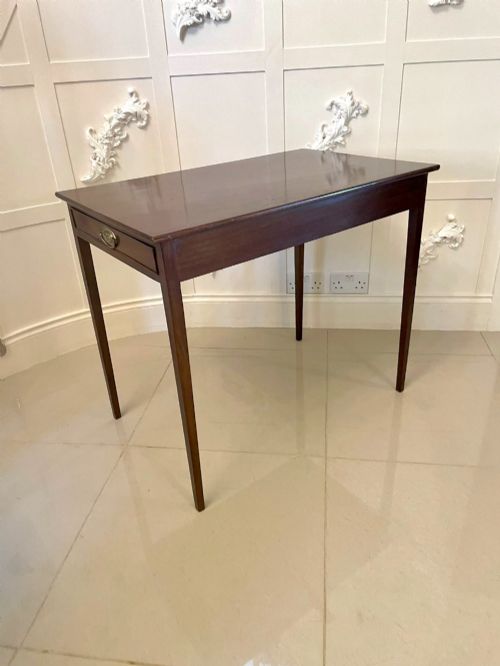
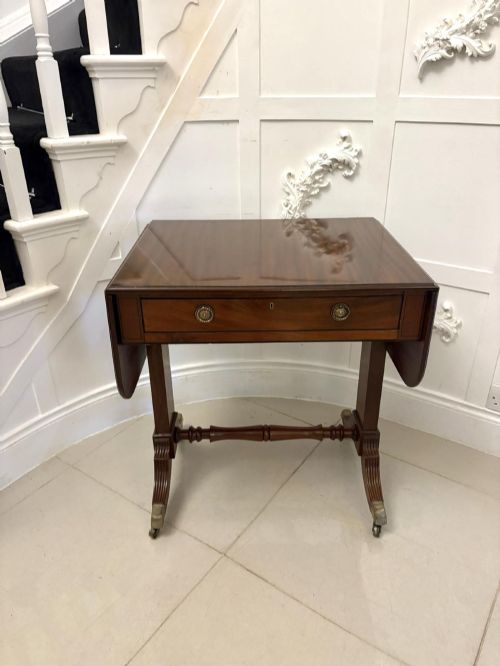
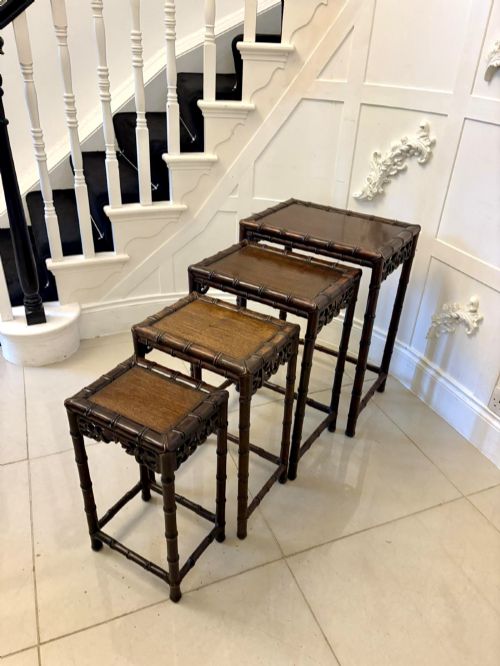
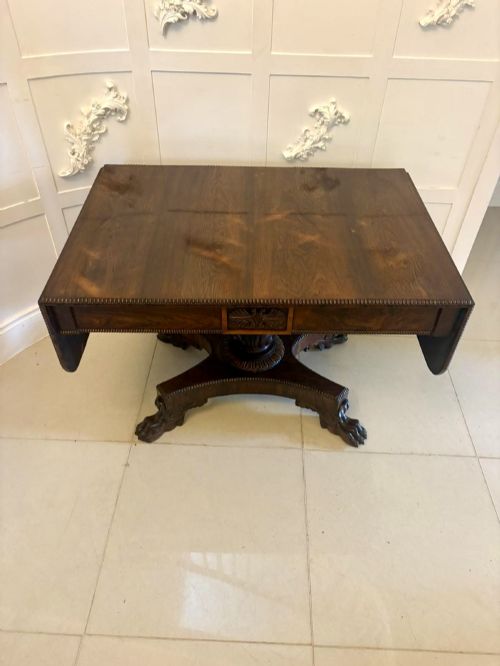
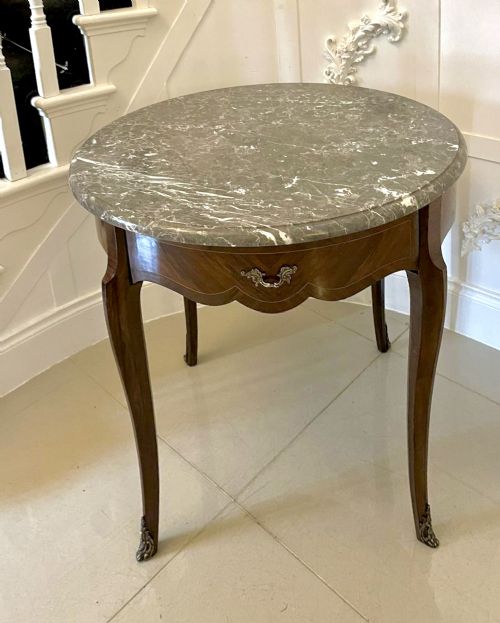
A freestanding occasional table is designed to be finished on all sides so it can sit in the middle of a room rather than against a wall. When you search for a freestanding occasional table, you encounter diverse forms created for specific domestic tasks, including centre tables, lamp tables, sofa tables, and nests of tables.
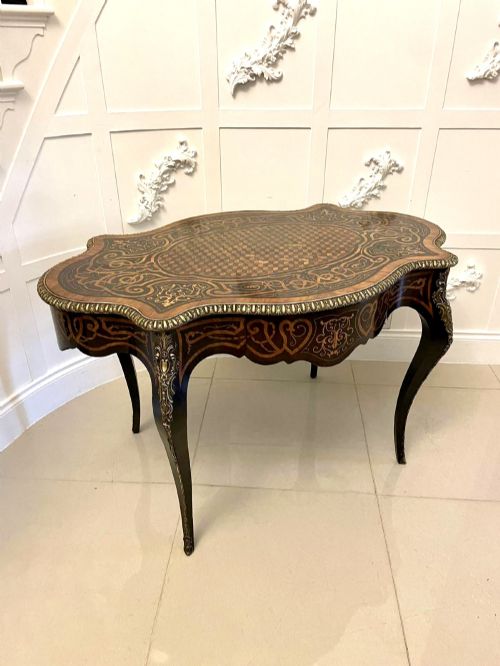
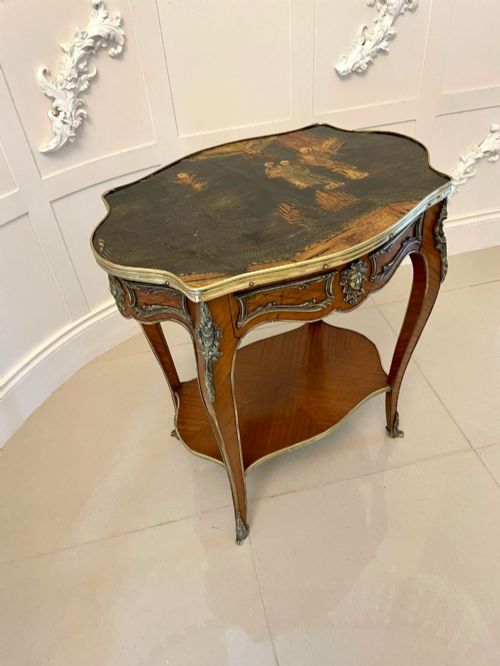
The pieces appearing on this page span the Georgian, Regency, and Victorian eras, alongside later nineteenth and early twentieth century examples. Victorian and nineteenth century designs in Burr Walnut, Kingwood, and Rosewood dominate the selection, often incorporating French stylistic influences like Louis XV Revival.
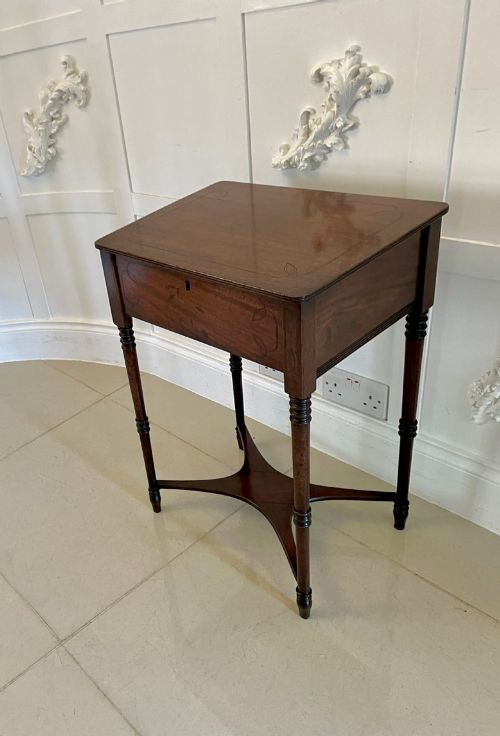
Makers of these tables utilised substantial timber frames and sophisticated mechanisms, such as sewing compartments or drop leaves, to combine utility with decorative presence. Each piece offers finished backboards and polished undersides, ensuring the table looks correct from any vantage point in a principal room.
Materials and construction methods
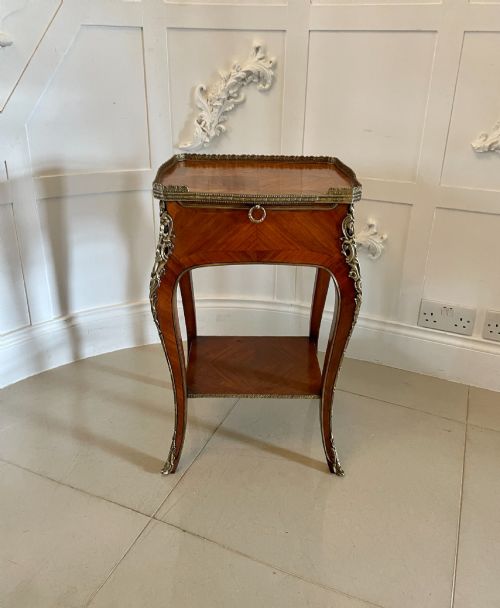
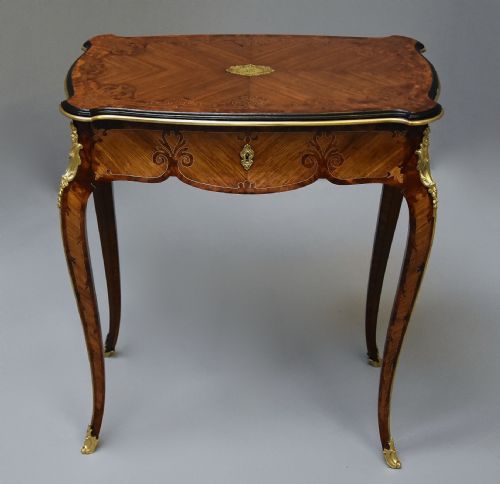
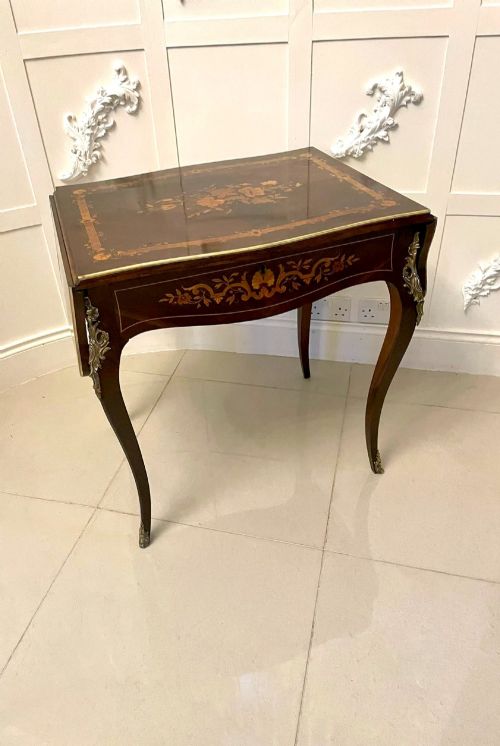
Cabinetmakers constructed these tables using dense hardwoods like mahogany, rosewood, burr walnut, and kingwood, frequently applying veneers over solid secondary timbers. Marquetry and parquetry inlays decorate the surfaces of many French-influenced pieces, while others rely on the natural grain figures of the wood.
Mounts of gilt bronze or ormolu accent the corners and legs of nineteenth-century French pieces, secured with precision screws. Carved details appear on rosewood and mahogany frames, showing crisp hand-tooling on friezes and pedestal bases.
Freestanding Occasional Table Retail Price Guide 2026
Typical asking prices for freestanding occasional table among the pieces listed under this phrase on Sellingantiques today, from the lower quarter to the upper quarter. They describe what is for sale here now, not the wider market.
Listings feature woods including Mahogany, Rosewood, Burr Walnut, Kingwood, and Elm, spanning the Georgian period to the Edwardian era.
Distinctions in execution and design
Quality rests in the selection of veneer figures and the crispness of hand-carved details on the frieze and legs. Superior examples display symmetrical grain matching across the top and fully finished interiors within drawers or sewing compartments.
The integration of metal mounts and the complexity of internal mechanisms separate standard workshop production from master-carved items. Heavy cast brass components and tight joinery at the pedestal junctions indicate an elevated standard of period manufacture.
The Freestanding Occasional Table Glossary
- Sofa table
- A rectangular table with two drop leaves designed to stand in front of a sofa, typically featuring two small drawers.
- Ormolu
- Gilded bronze applied as decorative mounts on furniture, highly popular in French nineteenth-century cabinetmaking.
- Marquetry
- Decorative patterns formed by inserting pieces of coloured wood and other materials into a veneer background.
- Parquetry
- Geometric mosaic woodwork arranged in patterns such as cubes or stripes, used to surface tabletops.
- Burr walnut
- Timber taken from the warted growths of walnut trees, prized for its swirling, highly figured grain patterns.
- Frieze
- The decorative horizontal band situated immediately beneath the top surface of the table.
Freestanding Occasional Table: Frequently Asked Questions
Where should I place a freestanding occasional table?
These pieces suit positions in the centre of a room, behind a sofa, or beside a reading chair where all sides remain visible.
Because the backs are finished to the same standard as the fronts, they do not need to anchor against a wall.
How do I identify a true centre table?
Look for symmetry and finish quality across every elevation, including the back of the frieze and the underside of the top.
True centre tables have no designated front or back, allowing them to sit comfortably in open floor space.
What is the difference between a lamp table and a centre table?
Lamp tables generally have a smaller footprint designed to hold illumination near seating areas, while centre tables occupy larger floor areas.
Both share the finished all-round construction that defines this category of antique furniture.
How do I care for polished mahogany and walnut surfaces?
Maintain the timber by keeping pieces away from direct heat sources and sudden humidity changes that can crack veneers.
Apply traditional beeswax occasionally and buff gently with a soft cloth to preserve the natural lustre of the polish.