


Freestanding Library Desk
A freestanding library desk stands away from the wall to anchor a room with polished timber and leather.
Freestanding Library Desk
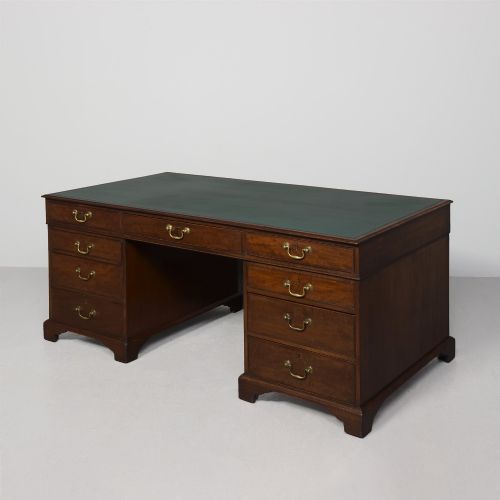
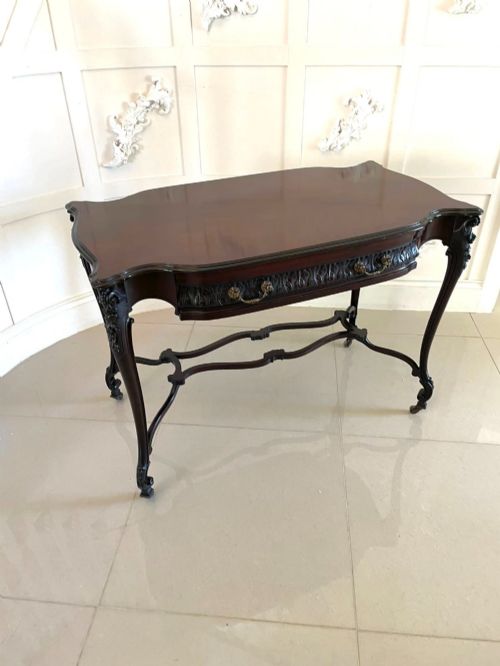
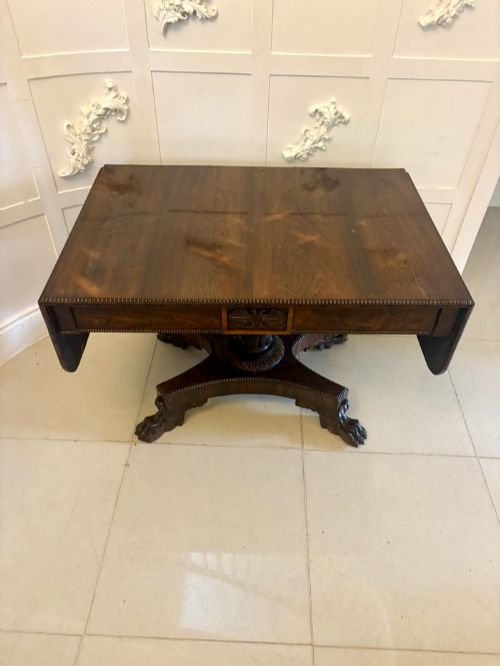
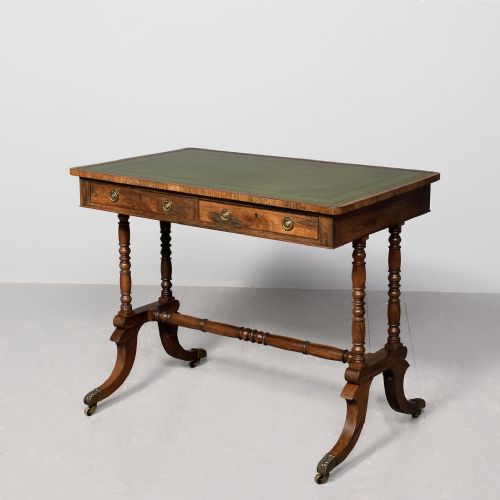
A freestanding library desk offers finished panels on every side so it sits proudly in the middle of a room rather than against a wall. When you search for a freestanding library desk, you encounter forms ranging from Regency rosewood sofa tables and Victorian burr walnut centre tables to Georgian mahogany kneehole desks.
Makers utilised rich timbers such as mahogany, rosewood, burr walnut, oak, and satinwood. These varied forms reflect the changing demands for domestic study and writing furniture across the nineteenth and early twentieth centuries.
What varies in quality
The selection of timber grain sets the visual standard, with highly figured burr walnut, figured mahogany, and matched rosewood marking the upper tier. Cabinet makers who took care to align grain patterns across drawers and tabletops achieved a superior aesthetic balance.
Carved wooden elements and applied brass hardware show distinct degrees of artisan skill. Crisp, deeply carved foliage and clean joinery differentiate workshops that produced exceptional pieces from those that delivered standard utility.
Period styles span Georgian, Regency, William IV, Victorian, Edwardian, and Louis XV and XVI revivals.
The Freestanding Library Desk Glossary
- Freestanding
- Finished on all sides so the piece can stand in the middle of a room without a back against the wall. This design requires polished timber panels right around the carcase.
- Sofa Table
- A small rectangular table traditionally placed in front of a sofa, fitted with drop leaves at either end. These tables often include small drawers beneath the top.
- Centre Table
- A multi-purpose table designed to sit in the middle of a room for display or occasional writing. Victorian examples frequently feature circular or oval burr walnut tops.
- Ormolu
- Gilded bronze mountings applied to furniture for decorative effect. Popularised in French-inspired revival styles during the nineteenth century.
- Kneehole Desk
- A desk featuring a recessed central space for the user's legs, flanked by pedestals of small drawers. Georgian and satinwood examples appear in this format.
Freestanding Library Desk: Frequently Asked Questions
Where should a freestanding library desk go?
Place the desk in the centre of a study, library, or drawing room where all sides remain visible. Because the back is finished with the same care as the front, it needs no wall for support.
Position it to catch natural light across the writing surface while maintaining clearance for chairs to pull out comfortably in all directions.
How do I care for the leather top?
Dust the leather regularly with a soft, dry cloth and avoid placing hot cups or liquids directly on the surface. Conditioning the leather periodically with suitable balms keeps the material supple.
Keep the desk away from direct sunlight and strong heat sources to prevent the leather from drying, cracking, or fading over time.
Can I use these desks for daily writing?
Most of these historic desks were built for writing and administrative work, making them well suited for contemporary laptop use or correspondence. Ensure your chair height matches the writing surface to maintain comfort.
Use a blotter or pad beneath heavy writing implements to protect antique leather and polished wood veneers from accidental scratches.
How do I identify the wood type?
Examine the grain pattern, colour, and weight of the timber to distinguish between mahogany, rosewood, walnut, and oak. Rosewood often displays dark streaking, while burr walnut shows swirling knot formations.
Consult the listing details and compare the hue against known period examples, noting that centuries of polishing deepen the natural patina of the wood.