
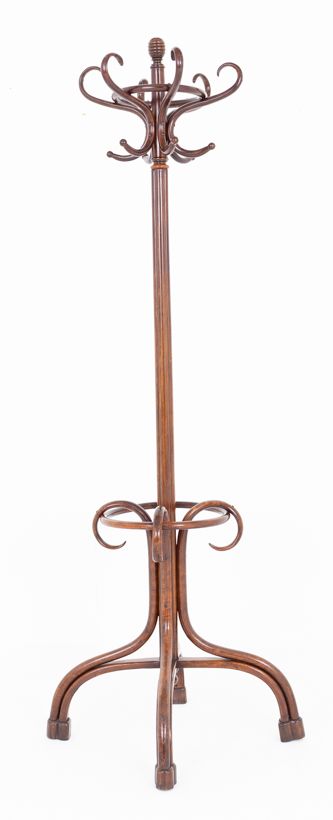
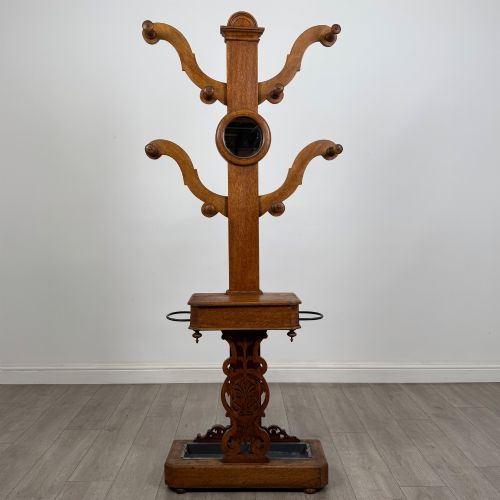
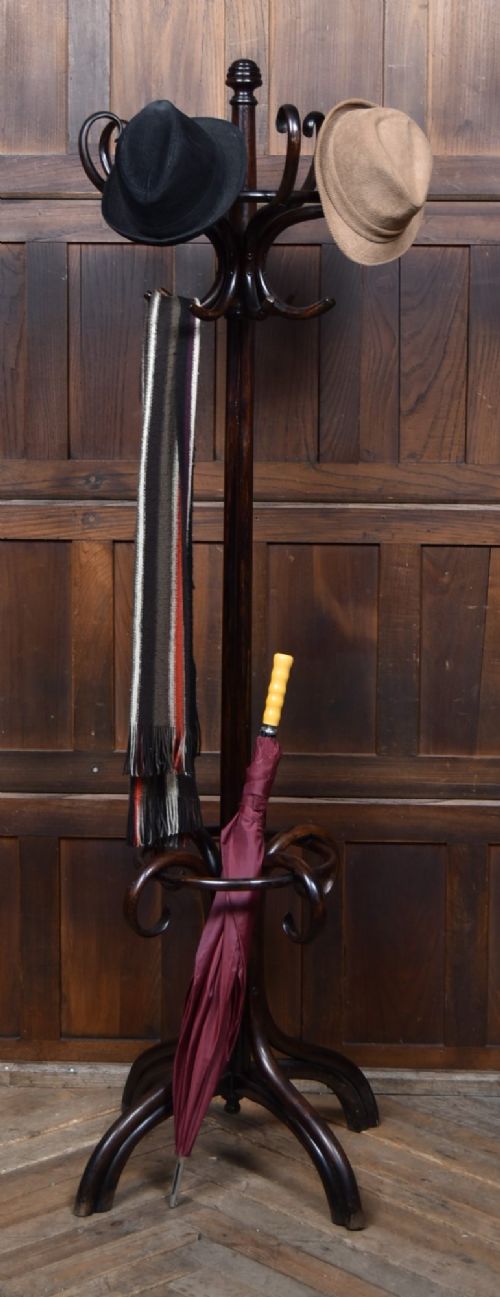
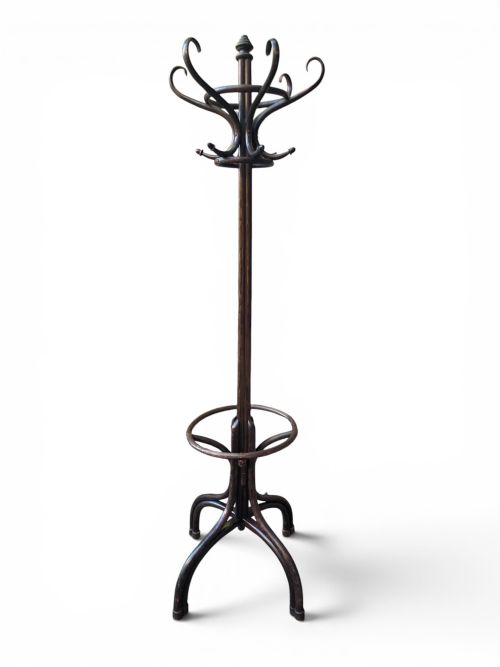
Freestanding Hat Coat Rack
A freestanding hat coat rack provides an upright domestic arrival point for garments, hats and umbrellas across Victorian, Edwardian and early twentieth century rooms.
Freestanding Hat Coat Rack
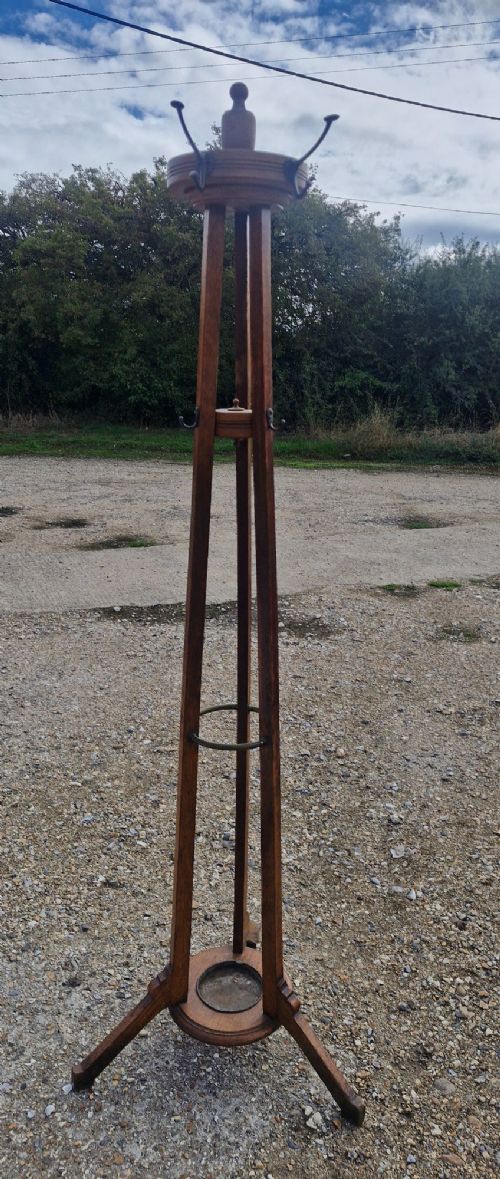
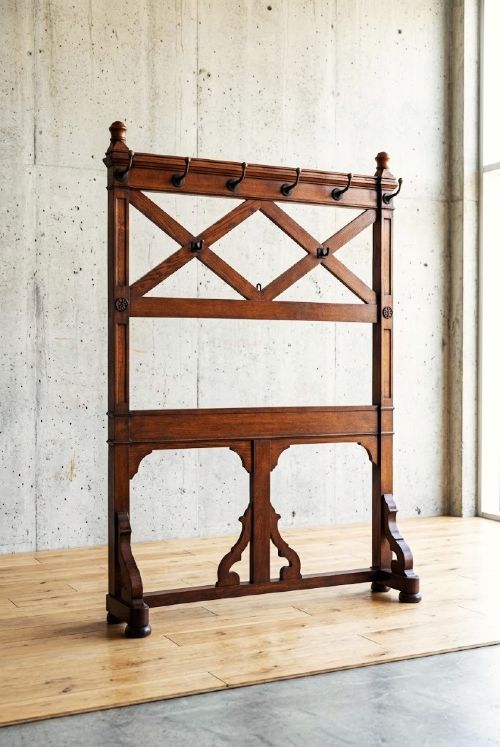
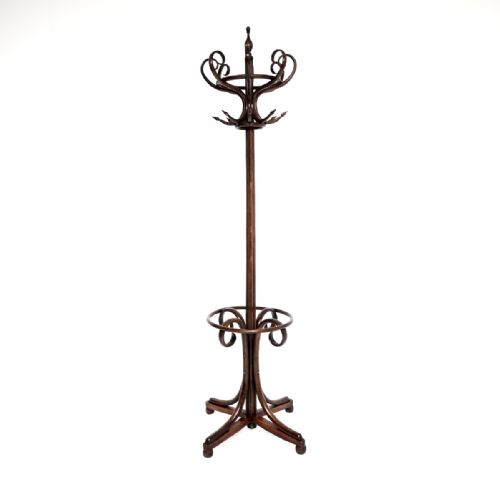
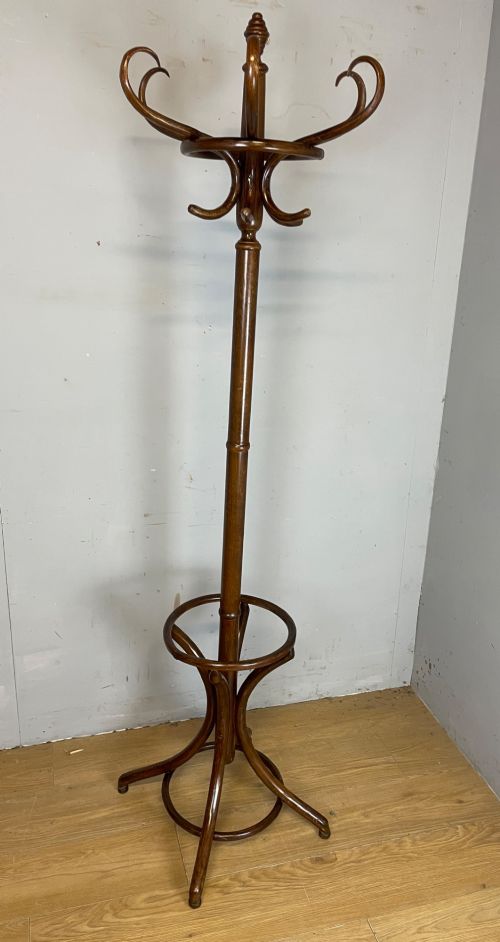
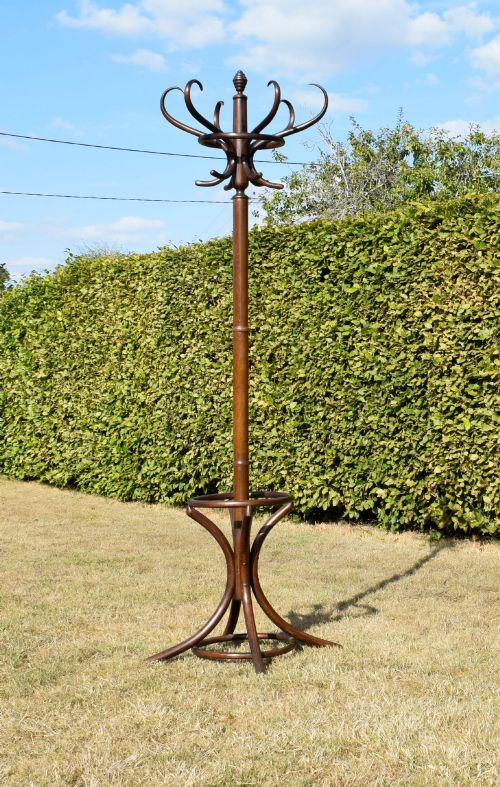
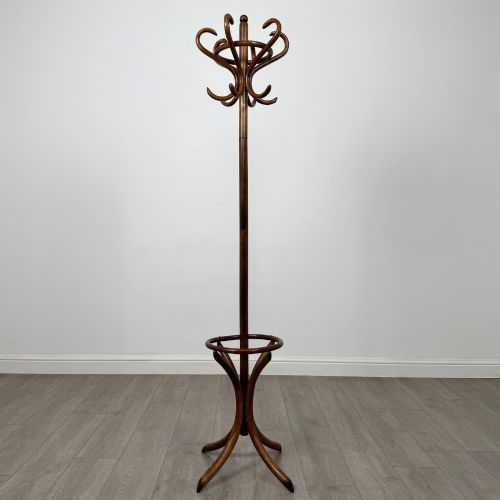
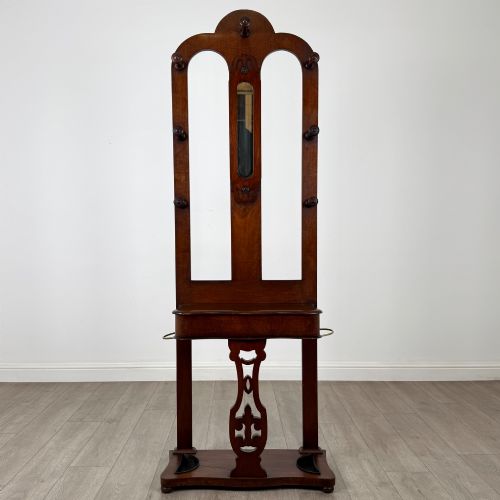
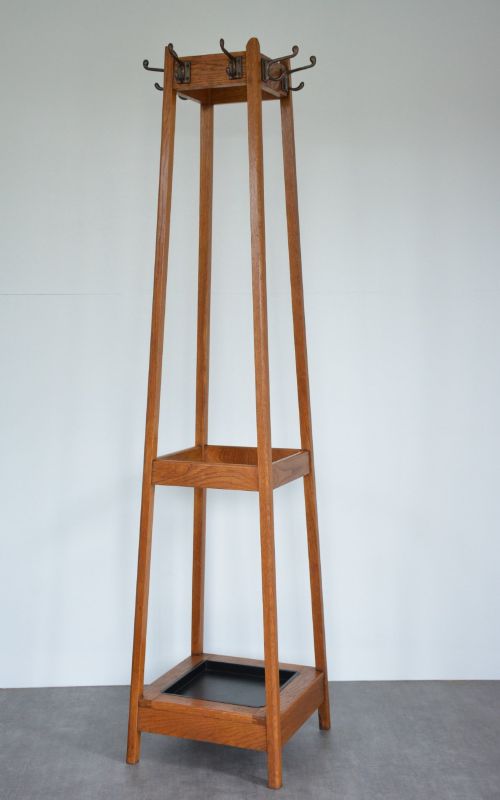
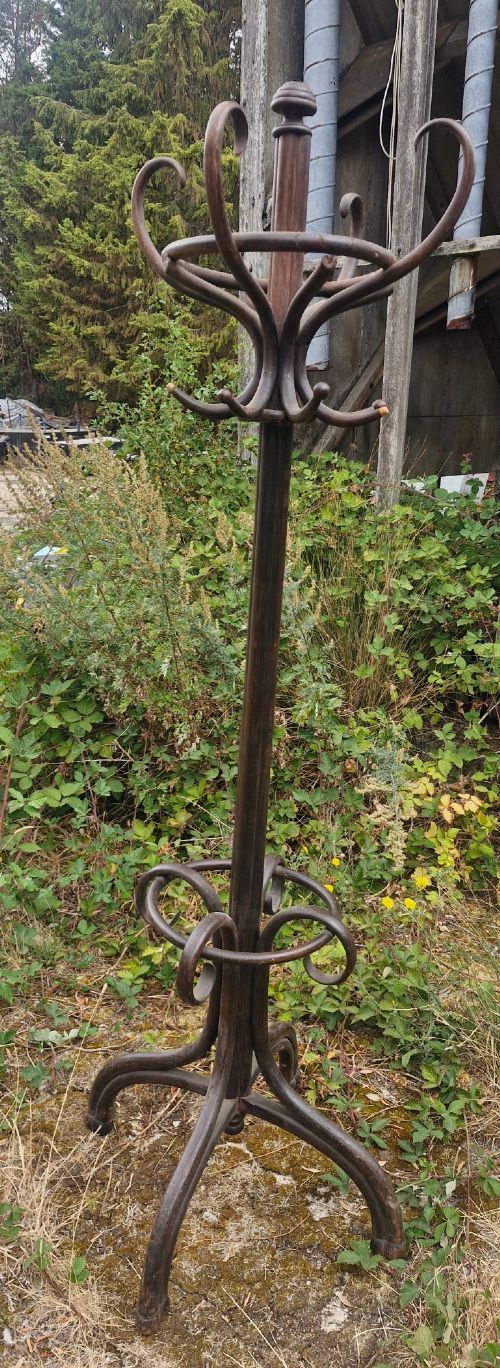
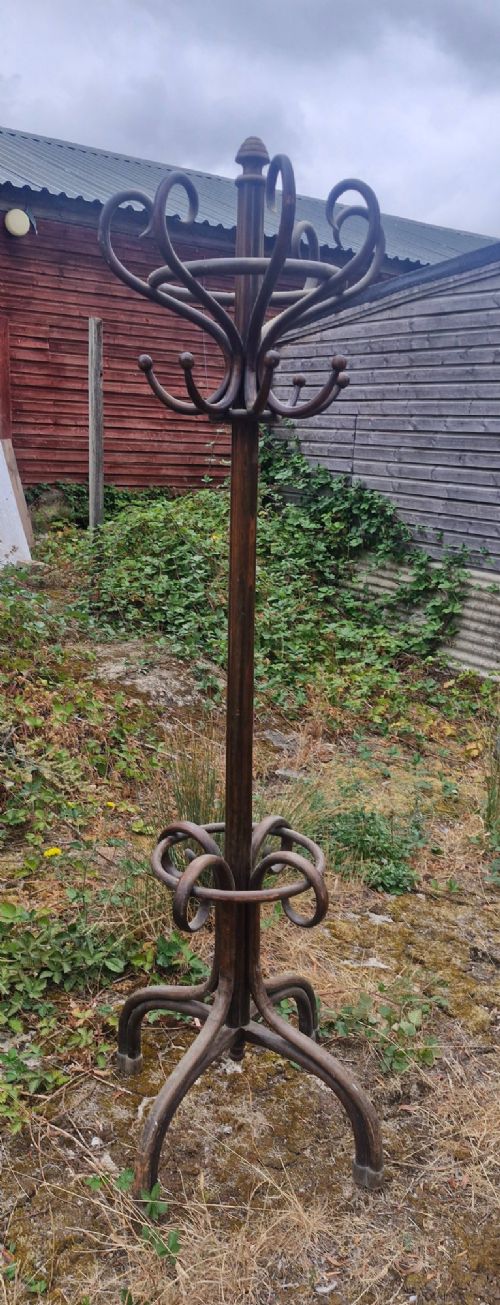
A freestanding hat coat rack serves as a practical entrance hall furnishing designed to organise outdoor wear. The selection on this page centres primarily on bentwood designs from the late nineteenth and early twentieth centuries, alongside solid oak and mahogany hall stands.
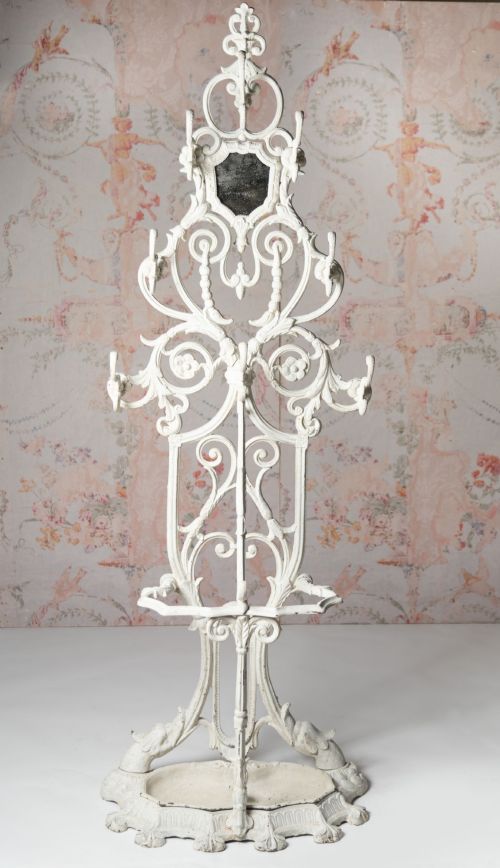
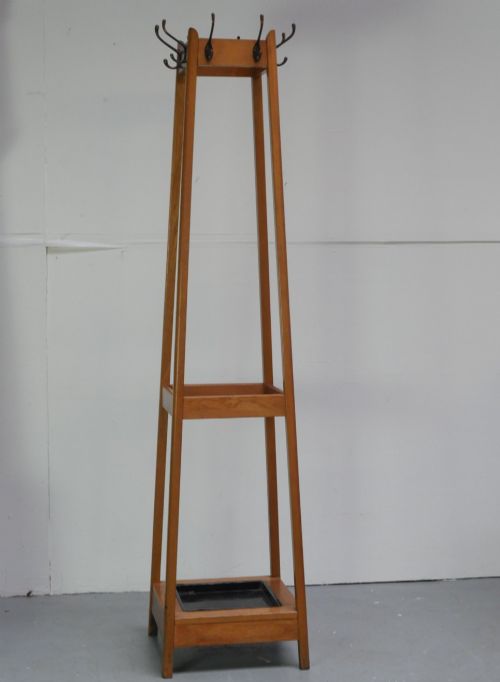
Makers produced these pieces in forms ranging from simple revolving bentwood poles to substantial hall trees incorporating umbrella holders and drip trays. Examples appear from Victorian, Edwardian and Arts and Crafts periods, utilising timber frames built for daily household utility.
How They Were Made
Cabinet makers and workshops utilised steam to bend beech and beechwood into the curved structural components characteristic of bentwood hat stands. Solid timbers like oak, mahogany and walnut formed heavier hall stands, frequently joined with brass fittings, coat hooks and metal drip trays.
Construction techniques balanced stability with vertical reach, supporting multiple tiers of upper hanging hooks and lower umbrella rings without tipping. Joinery methods relied on sturdy dowelling, pegged joints and steam-set curves designed to withstand constant weight.
Some revolving stands allowed owners to spin their bowler hats into position while balancing umbrellas below.
What Varies in Quality
Quality rests in the structural integrity of the steam-bent timber curves and the overall weight distribution of the upright post. Heavier grades of beech, oak and mahogany maintain better balance under heavy winter coats than lighter, more flexible alternatives.
The finish and retention of original hardware, including brass coat hooks and metal drip trays, distinguish finer examples from standard utility pieces. Maker labelling and precise joinery elevate certain pieces above mass-produced counterparts.
Astrola·Jas. Shoolbred·Fischel·GW Evans
The Freestanding Hat Coat Rack Glossary
- Bentwood
- Wood softened by steam and bent into curved structural forms. This technique created the light yet resilient frames seen in many Edwardian hat stands.
- Hall Tree
- A tall freestanding piece combining coat hooks, a hat rack and often a mirror or umbrella stand. They stood in entrance halls to receive outdoor garments.
- Drip Tray
- A metal or ceramic tray fitted at the base of a stand to catch water from wet umbrellas. It protected wooden flooring from moisture damage.
- Revolving
- Design feature allowing the upper tier of hooks to rotate. This mechanism granted easy access to hats and coats hung on crowded stands.
Freestanding Hat Coat Rack: Frequently Asked Questions
Where should a freestanding hat coat rack go?
These pieces suit entrance halls, boot rooms and corridors where household members and visitors arrive with outdoor garments.
Position them with sufficient clearance around the base so coats hang freely without crowding walls or doors.
How do bentwood stands stay stable?
Steam-bent wooden legs flare outward from a central weighted base to distribute the downward pull of heavy winter garments.
Heavier construction grades prevent tipping when coats hang unevenly on upper hooks.
Did these stands include umbrella storage?
Many hall stands and coat racks integrated lower ring holders paired with removable metal drip trays to catch rainwater.
This addition kept wet umbrellas contained near the entrance separate from dry woollen coats.
How are different periods identified?
Victorian and Edwardian pieces frequently employ rich mahogany or carved oak with Gothic or Arts and Crafts stylistic motifs.
Later twentieth century and bentwood examples favour steam-bent beech with simpler, more industrial profiles.