





Framed Wildlife Canvas
Framed wildlife canvas works bring natural history and sporting art into domestic interiors through oil paint on canvas.
Framed Wildlife Canvas
A framed wildlife canvas depicts animals, birds, and sporting subjects rendered in oil paint upon canvas surfaces, often housed within timber or giltwood surrounds. These works range from seventeenth-century Dutch and Flemish influenced compositions to twentieth-century sporting and natural history studies.
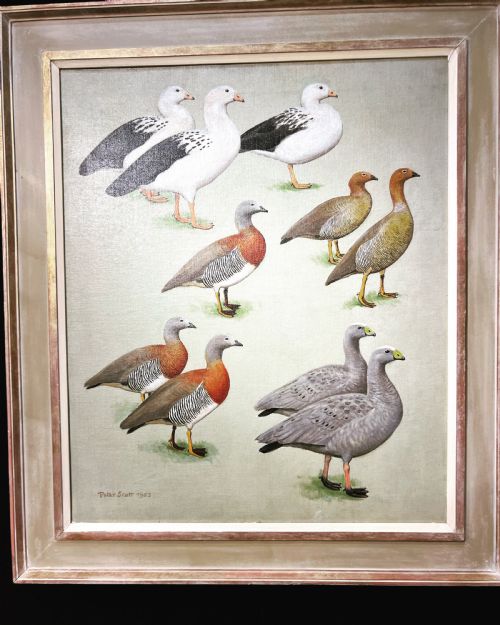
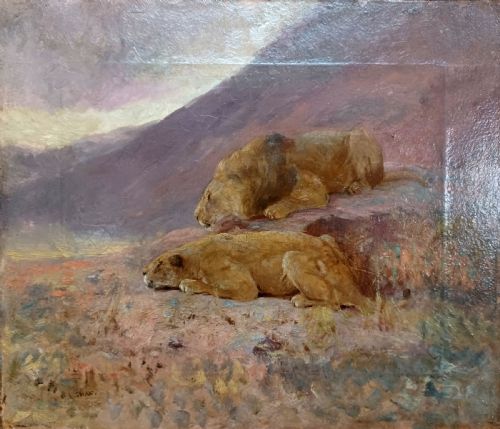
Buyers seeking a framed wildlife canvas most frequently encounter nineteenth-century and eighteenth-century examples featuring birds, stags, big cats, and waterfowl. These pieces reflect periods such as the Victorian era and the broader nineteenth century, capturing creatures in natural and dramatic settings.
How they were made
These works utilise oil paint applied to stretched canvas supports, employing techniques common to fine art oil paintings across several centuries. Artists layered pigments to achieve tonal depth in depictions of feathers, fur, and landscape backgrounds.
The canvases are secured within timber frames, with many period examples incorporating gold leaf or gilt wood finishes. These surrounds complement the oil paintings while protecting the edges of the canvas.
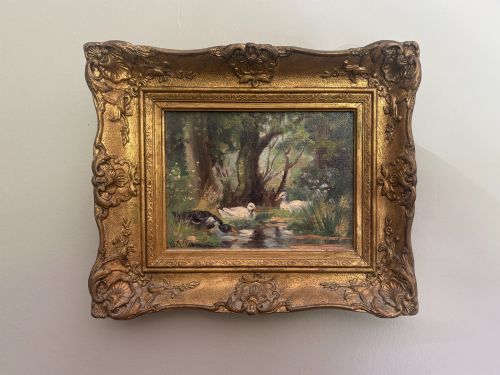
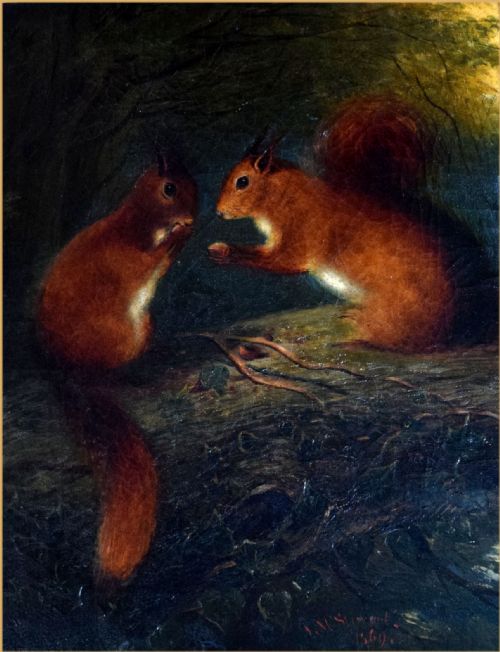
Several canvases capture the intense drama of red squirrels feeding, frogs alongside ducks, and leopards eyeing a peacock.
What varies in quality
The standard of an oil painting rests upon the anatomical precision of the animals and the handling of light within the composition. Works by documented painters or those showing distinct stylistic affinity demonstrate superior brushwork and compositional balance.
Framing also influences the character of the piece, with period giltwood frames carrying different craftsmanship values compared to later replacements. The preservation of the original canvas surface and pigment stability further distinguish finer examples.
Sir Peter Markham Scott·Philipp Ferdinand de Hamilton·Marmaduke Cradock·Jacob Bogdani·Cuthbert Edmund Swan·Thomas Blinks·Constant Ludovic Artz·Geza Vastagh·William Crampton·James Malcolm Stewart·Stephen Elmer
The Framed Wildlife Canvas Glossary
- Oil paint
- A slow-drying paint made of pigment particles suspended in a drying oil, typically linseed oil. This medium allows for smooth blending and rich tonal variations.
- Giltwood
- Wood carved and covered with a thin layer of gold leaf or gold paint. This material is frequently found on traditional picture frames.
- Naturalism
- An artistic movement focused on the accurate depiction of nature and wildlife without idealisation. It underpins many nineteenth-century sporting and animal paintings.
- Animalier
- A nineteenth-century artistic genre devoted to the realistic representation of animals. Practitioners often focused on wild beasts and sporting subjects in dynamic poses.
Framed Wildlife Canvas: Frequently Asked Questions
How do I hang a heavy framed canvas safely?
Ensure your wall fixings are anchored into solid masonry or timber studs rather than plasterboard alone. Heavy oil paintings require robust picture wire and sturdy brass D-rings secured firmly to the wooden stretcher or frame.
Distribute the weight evenly across two wall hooks to maintain a level alignment. This method also reduces strain on the individual hanging points of the frame.
What lighting protects oil paintings from damage?
Position your framed canvas away from direct, harsh sunlight to prevent the oil pigments from fading or the canvas from drying out. Indirect ambient light displays the brushwork best without thermal stress.
If using picture lights, choose modern low-heat LED bulbs placed at a safe distance. Excessive heat from older halogen lamps can crack the paint layer over time.
How can I tell an eighteenth-century canvas from a nineteenth-century one?
Examine the preparation of the canvas and the style of the wooden stretcher bars behind the painting. Earlier eighteenth-century works often feature hand-planed timbers and coarser canvas weaves typical of that era.
Subject matter and framing styles also provide clues, as seventeenth and eighteenth-century pieces frequently show Dutch and Flemish stylistic influences. Comparing known artist signatures and historical palettes helps confirm the period.