




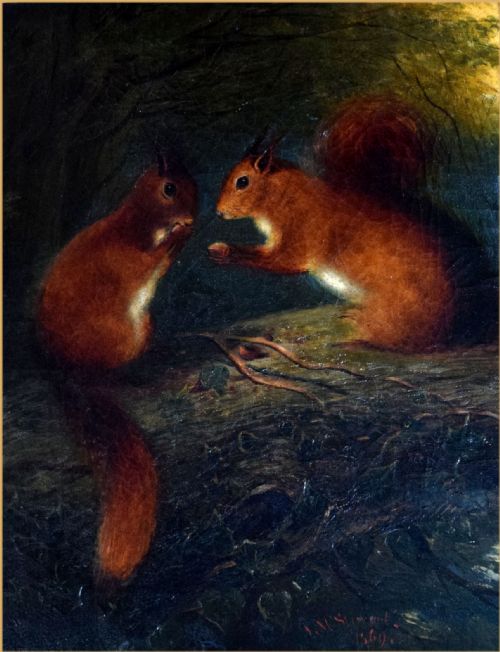
Canvas Wildlife Painting
A canvas wildlife painting brings the natural world indoors through traditional oil on canvas compositions depicting animals and birds.
Canvas Wildlife Painting
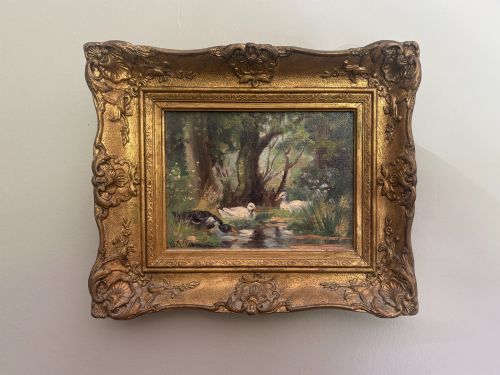
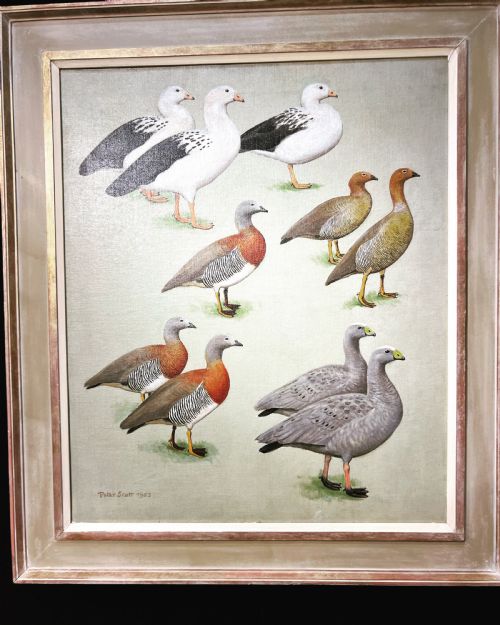
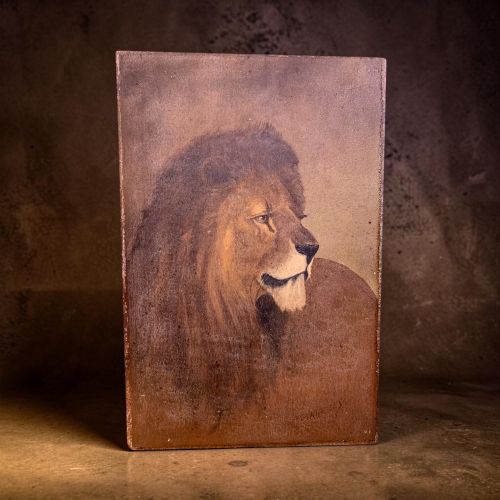
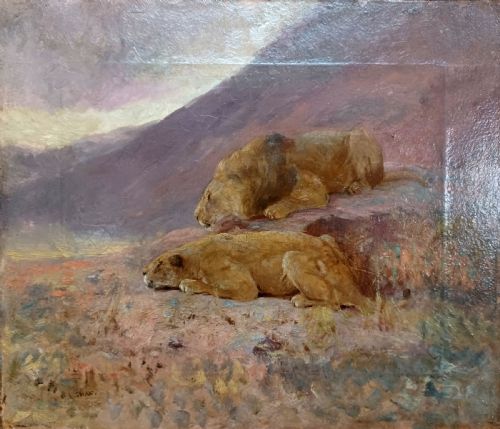
A canvas wildlife painting represents animals, birds, and sporting subjects rendered in oil paint upon woven fabric supports. These works range from naive folk art depictions of lions to detailed studies of ducks, stags, and geese in natural landscapes.
Buyers frequently encounter nineteenth-century examples alongside eighteenth-century works and mid-twentieth-century pieces. The subjects span British naturalism, Victorian sporting art, and European styles framed in wood or giltwood.
How they were made
Artists applied oil paint to stretched canvas, building texture and depth through layered brushwork. Many pieces retain their original wood or giltwood frames, sometimes enhanced with gold leaf.
The combination of oil pigments and fabric grounds allowed painters to capture the feather details of birds, the fur of lions and foxes, and atmospheric backgrounds in landscape settings.
Ducks and ducklings appear frequently across different centuries, showing that artists have long found amusement in painting webbed feet.
What varies in quality
Quality rests upon the artist's ability to render animal anatomy and movement accurately within a natural setting. Works by recorded painters display distinct brushwork and compositional balance compared to naive or unsigned examples.
The preservation of the paint surface and the integrity of the canvas and frame influence the overall standing of each piece.
Sir Peter Markham Scott·Philipp Ferdinand de Hamilton·George Armfield·Marmaduke Cradock·Cuthbert Edmund Swan·Thomas Blinks·Constant Ludovic Artz·Geza Vastagh·William Crampton·James Malcolm Stewart·Stephen Elmer
The Canvas Wildlife Painting Glossary
- Canvas
- A heavy woven fabric used as a surface for oil paintings. It is stretched over a wooden frame before the artist begins painting.
- Oil Paint
- A slow-drying paint made by mixing pigments with drying oils. This medium allows for rich colour blending and fine detail work.
- Giltwood Frame
- A wooden picture frame coated with a thin layer of gold leaf or gold paint. These frames often accompany antique oil paintings.
- Victorian Sporting Art
- A genre of painting popular during the nineteenth century focusing on game animals, hunting dogs, and rural pursuits.
Canvas Wildlife Painting: Frequently Asked Questions
What subjects appear in canvas wildlife painting?
These works display a wide variety of animals and birds, including lions, foxes, stags, squirrels, ducks, geese, and leopards. The creatures appear in natural habitats, marshes, and highland landscapes.
Scenes range from solitary animals to complex compositions involving predators and prey or birds in flight.
How do I identify the period of a painting?
Dating relies upon stylistic markers, artist attribution, and framing materials. Pieces span the eighteenth century, the Victorian era, the nineteenth century, and into the mid-twentieth century.
Records of specific artists and stylistic movements help place each work within its historical context.
How should I display these paintings at home?
These works suit traditional interiors, studies, and living spaces where wooden and giltwood frames complement interior furnishings. Proper placement avoids direct sunlight to protect the oil paint and canvas.
Matching the scale of the painting to wall space ensures the artwork remains a focal point.
What materials make up these artworks?
The primary components are oil paint applied to canvas, supported by wooden stretchers. Many pieces include period frames made of wood or giltwood, occasionally accented with gold leaf.
These traditional materials contribute to the longevity of the paintings.