


Framed Victorian Textile Art
Framed victorian textile art pieces bring needlework samplers, woolies, and silk panels into modern interiors within period wood and gilt frames.
Framed Victorian Textile Art
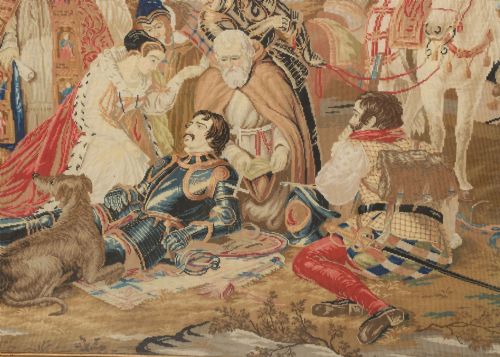
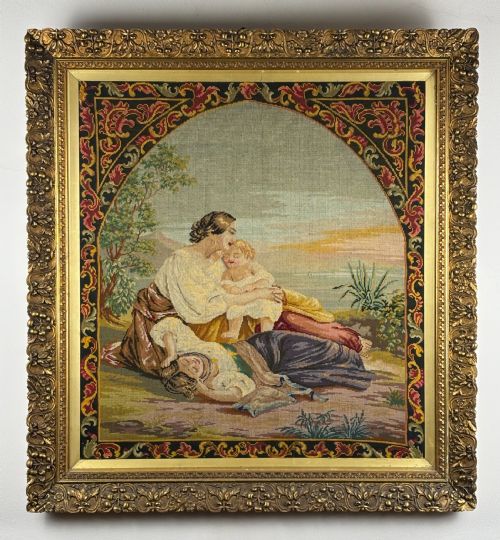
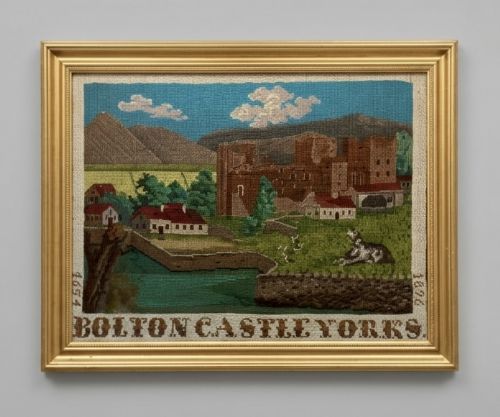
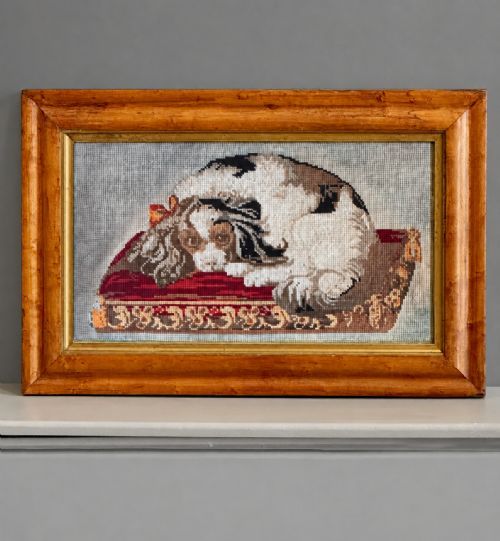
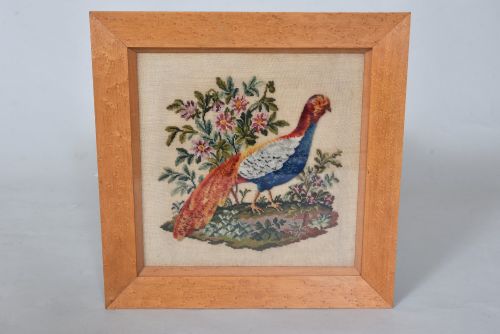
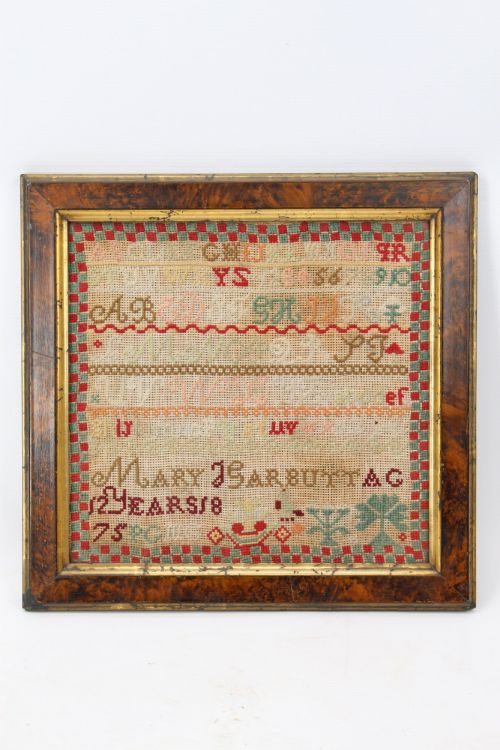
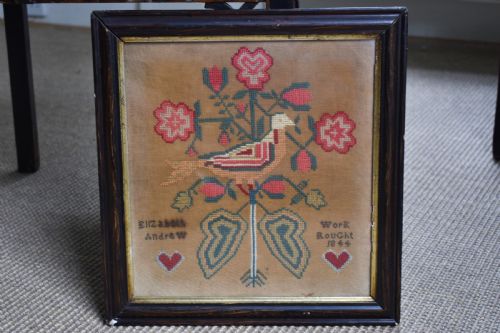
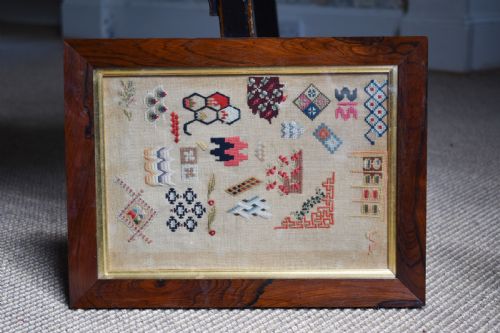
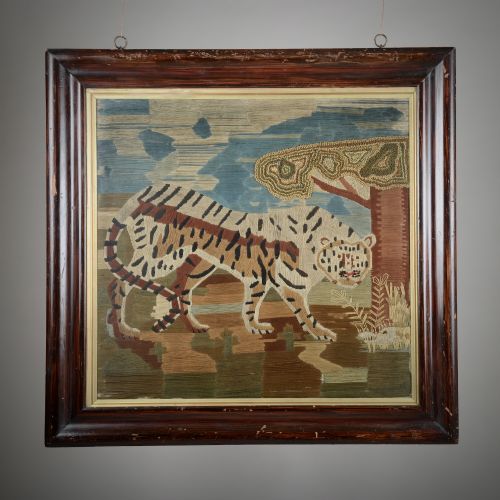
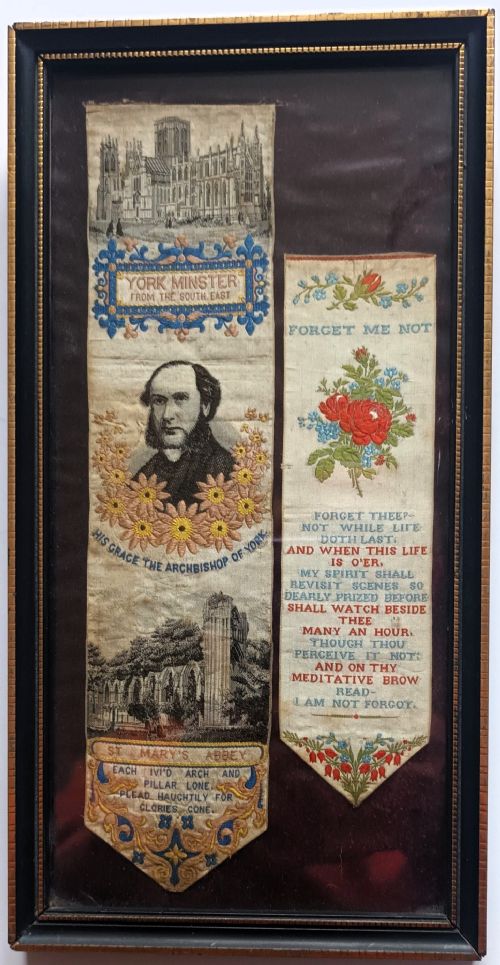
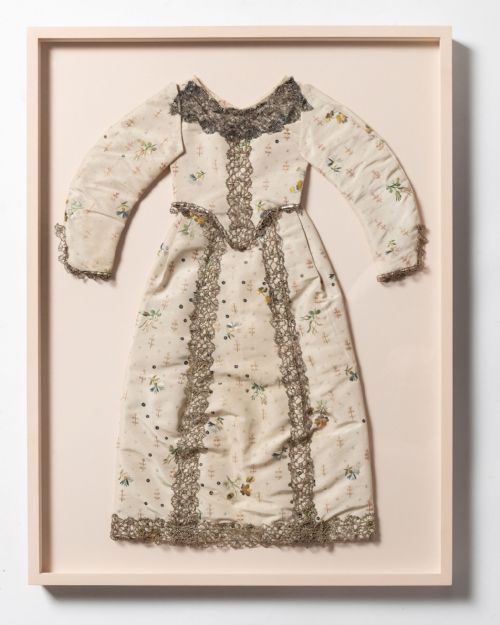
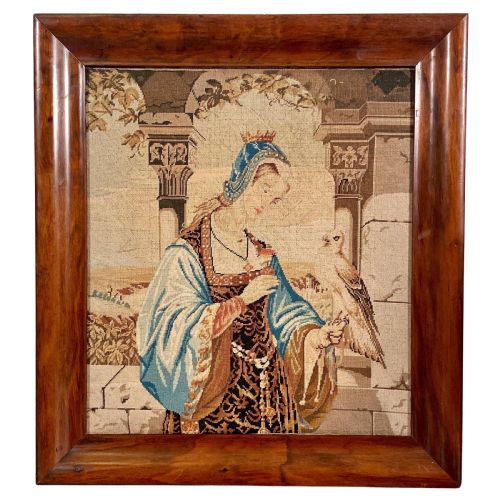
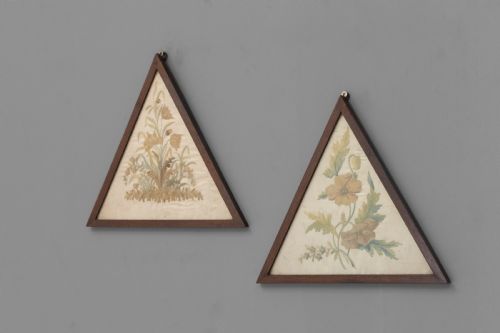
When you search for framed victorian textile art, you encounter needlework samplers, Berlin woolwork pictures, and sailors' woolies created during the nineteenth century. These textile works range from alphabet and religious samplers stitched by young girls to large historical woolwork pictures and silk bookmarkers. Most pieces appear preserved behind glass in original wooden, giltwood, or burr maple frames.
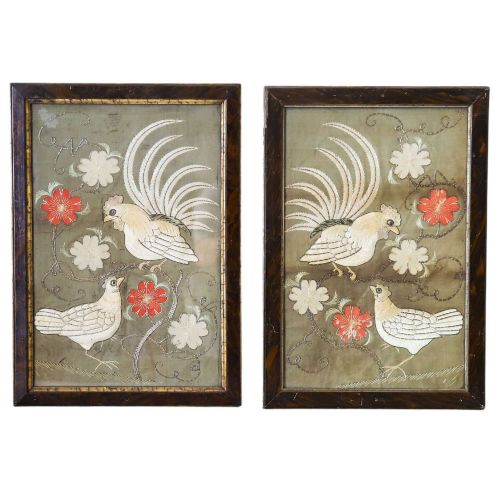
The selection includes specific regional works such as Scottish samplers and English country house panels alongside French silk embroideries. You also find specialised items like plushwork animals, beadwork panels, and framed lace fans from the Victorian era. These objects represent domestic handwork and professional textile manufacturing from the 1840s through the turn of the twentieth century.
Materials and construction
Makers utilised natural fibres including wool, silk, linen, and canvas as the foundation for their needlework. Wool yarn and silk thread provide the colour and texture in gros-point, Berlin woolwork, and plushwork pictures. Beads and lace also appear on specific panels, mounted alongside embroidered elements.
The finished textiles are housed behind glass within wooden frames constructed from materials such as giltwood, burr maple, and faux tortoiseshell. Many pieces retain their original timber surrounds, protecting the delicate silk and wool surfaces from environmental damage.
Framed Victorian Textile Art Retail Price Guide 2026
Typical asking prices for framed victorian textile art among the pieces listed under this phrase on Sellingantiques today, from the lower quarter to the upper quarter. They describe what is for sale here now, not the wider market.
Materials recorded across the inventory include wool, silk, linen, canvas, glass, and giltwood.
Judging quality in textile art
Quality rests in the precision of the stitching and the complexity of the design, distinguishing standard samplers from elaborate historical woolwork pictures. Finer pieces demonstrate tight, even tension in the wool or silk threads and sophisticated pictorial composition, often after known artists.
The survival of the original frame and the protective glass contributes significantly to the integrity of the piece. Contemporary mountings alter the historic character, whereas intact burr maple or giltwood frames preserve the original presentation of the textile.
Thomas Stevens
The Framed Victorian Textile Art Glossary
- Sampler
- A piece of needlework produced by a beginner to demonstrate proficiency in various stitches and alphabets. These often include the maker's name, age, and date of completion.
- Berlin work
- A style of needlepoint embroidery popular in the nineteenth century, worked in wool on canvas from printed colour-grid patterns. This technique allowed for shaded, highly pictorial representations.
- Woolie
- A pictorial embroidery created by nineteenth-century sailors using leftover wool yarns. These typically depict naval vessels and maritime scenes under glass.
- Gros-point
- A coarse type of needlepoint embroidery stitched on canvas using wool yarn. It provides durable texture and deep colour saturation for pictorial wall art.
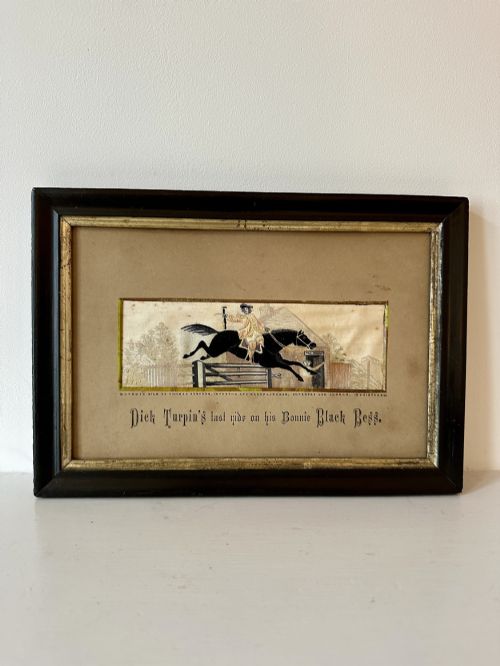
- Stevengraph
- A small woven silk picture produced on a Jacquard loom by Thomas Stevens of Coventry. These miniature artworks were often mounted and framed as bookmarks or panels.
Framed Victorian Textile Art: Frequently Asked Questions
What is a sailors woolie?
A sailors woolie is a nineteenth-century embroidered picture made by sailors using coloured wool yarns. These works frequently depict sailing ships and maritime scenes.
They were typically framed behind glass and serve as a distinct category of maritime textile art from the Victorian period.
How do you date a needlework sampler?
Many samplers include embroidered dates, along with the maker's name and age. Style, alphabet fonts, and framing materials also help determine the period.
Most examples date from the Victorian era or the mid-nineteenth century, reflecting the domestic education of young girls.
Are these textile pieces in original frames?
A significant portion of pieces retain their original wooden surrounds, such as burr maple, giltwood, or faux tortoiseshell frames. Original glass often protects the fragile silk and wool surfaces underneath.
Checking the backboards and framing construction helps confirm whether the mounting dates to the nineteenth century.
What is Berlin needlepoint?
Berlin needlepoint is a heavy wool embroidery worked on canvas using numbered colour charts. This technique enabled makers to create shaded pictorial scenes and floral motifs.
Popular during the Victorian era, these large panels were frequently mounted in gilt frames for display in homes.