


Framed Victorian Pet Portrait
A framed victorian pet portrait captures domestic animals through nineteenth-century oils and needlework, offering a direct glimpse into historical companionship.
Framed Victorian Pet Portrait
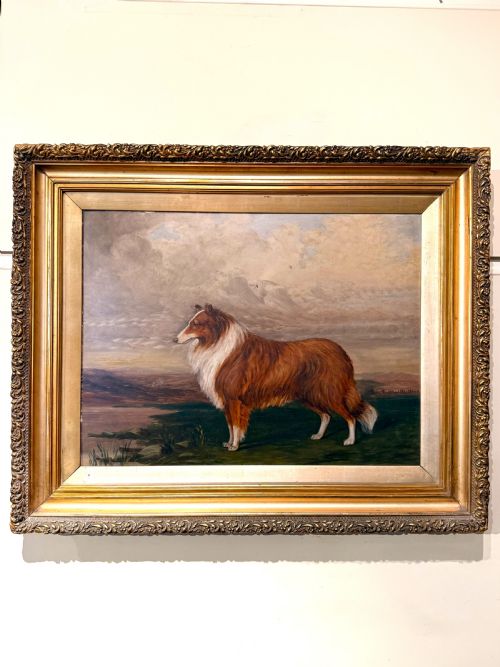
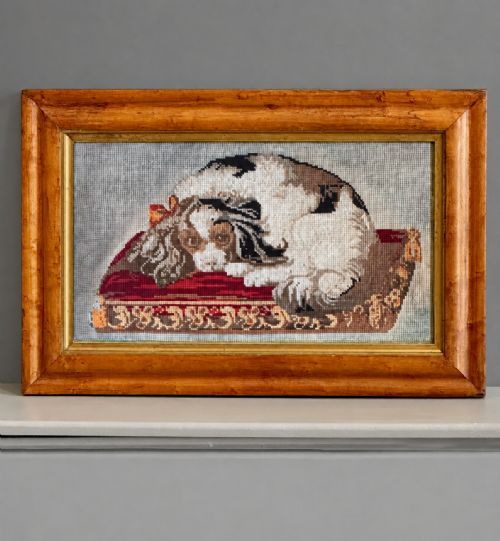
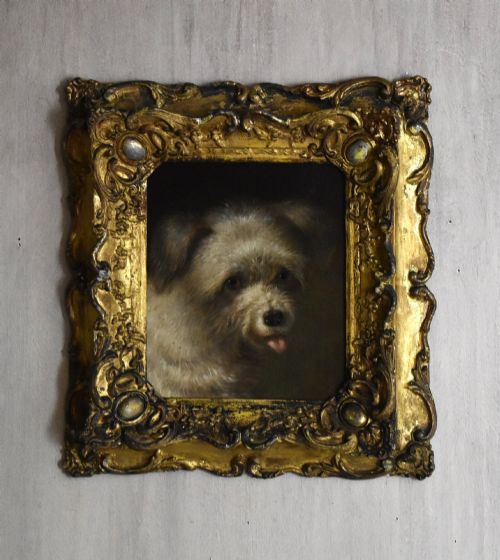
A framed victorian pet portrait represents animals through nineteenth-century oil paintings on canvas or board, alongside framed textile needlework. These works depict dogs, cats, and rabbits, often set within interiors or domestic landscapes.
The pieces on this page span the nineteenth century, Victorian era, and early twentieth century, reflecting both fine art traditions and provincial British school methods.
How they were made
Artists built these works using oil paint on canvas or wooden board, applying pigment to capture the texture of animal fur and the warm light of interiors. Needlework examples employ Berlin work techniques to render subjects like King Charles Spaniels in thread.
Surviving pieces utilise period frames constructed from wood and gesso, frequently finished with gold leaf or burr maple veneers to enclose the artwork.
Six Persian kittens gather for a tea party in one painted scene.
What varies in quality
Quality rests upon the artist's ability to render anatomical accuracy and personality in the subject, distinguishing master handlers from provincial practitioners. Works by known painters demonstrate superior brushwork in handling light, texture, and expression.
The preservation of the original framing, such as burr maple or gilded gesso mouldings, influences the integrity of the piece.
Martin Theodore Ward·William Barraud·Agnes Augusta Talboys·John Henry Dell·Valentine Thomas Garland·Philip Eustace Stretton·Francisco Jose Domingo y Marques·Samuel John Carter·Jules Le Roy
The Framed Victorian Pet Portrait Glossary
- Berlin work
- A type of nineteenth-century needlework stitched on canvas from charted designs, often utilising wool to depict domestic animals.
- Gesso
- A plaster-like material applied to wood frames, providing a smooth surface for gilding with gold leaf.
- Oil on board
- A painting technique where pigment is applied to a rigid wooden panel rather than stretched canvas.
- Burr maple
- A decorative timber showing twisted knot growths, frequently selected for nineteenth-century picture frames.
Framed Victorian Pet Portrait: Frequently Asked Questions
What animals appear in these portraits?
Paintings and needleworks depict domestic pets, most frequently dogs such as terriers, spaniels, and greyhounds, alongside kittens and rabbits.
Individual works capture animals either alone or gathered in groups within domestic interiors.
Are these works painted on canvas?
Support materials vary between stretched canvas and wooden boards, depending on the artist and the period.
Textile examples utilise needlework stitched onto canvas grounds rather than paint.
How do I identify the period of the frame?
Nineteenth-century framing often incorporates timber, gesso mouldings, and applied gold leaf or burr maple veneers.
Original frames match the age of the artwork enclosed within them.
Where were these portraits made?
Surviving pieces originate from British and continental European artists working in the nineteenth and early twentieth centuries.
Works range from fine art academic paintings to provincial school pieces.