


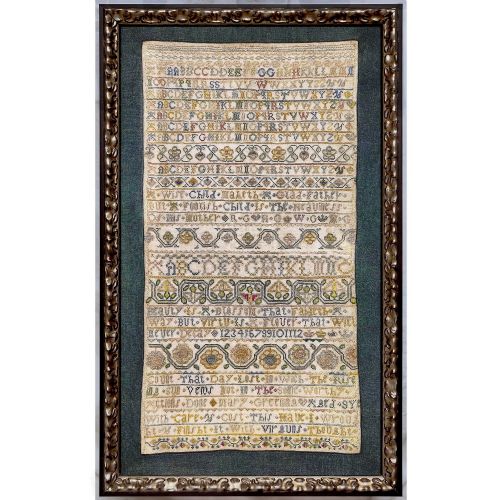

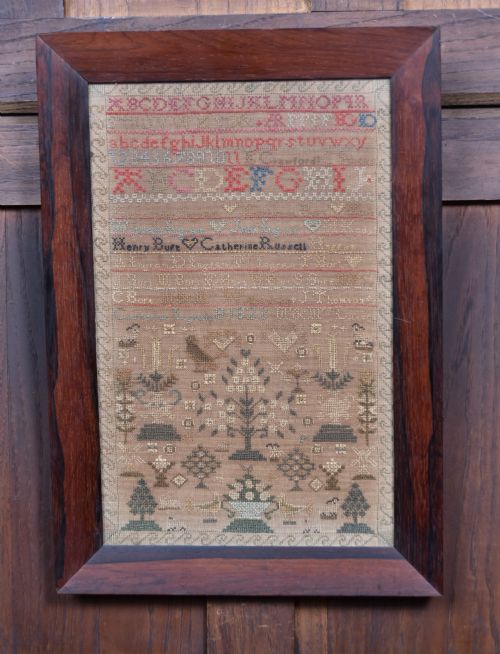


Framed Textile Sampler
A framed textile sampler brings the practiced needlework of past centuries straight to the wall, preserving names, dates, and stitches under glass.
Framed Textile Sampler
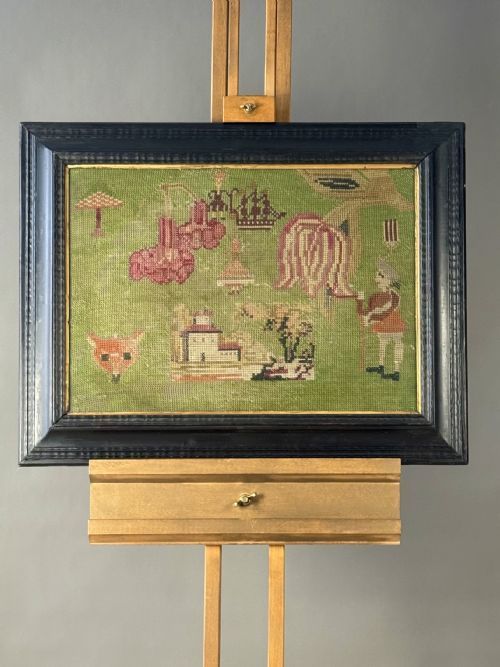
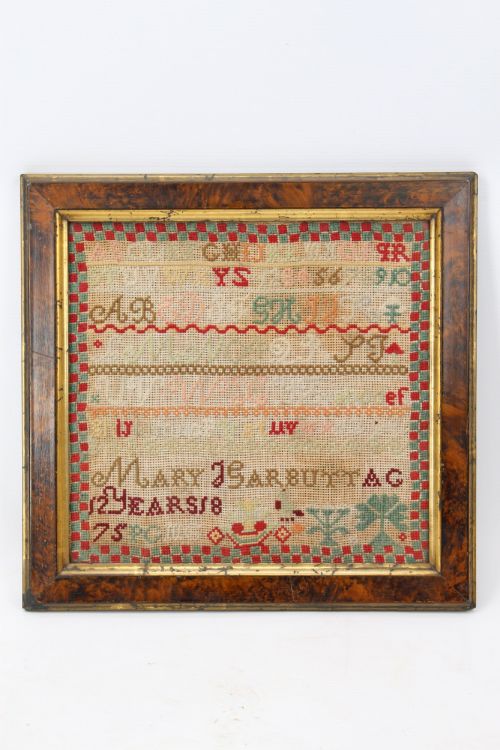
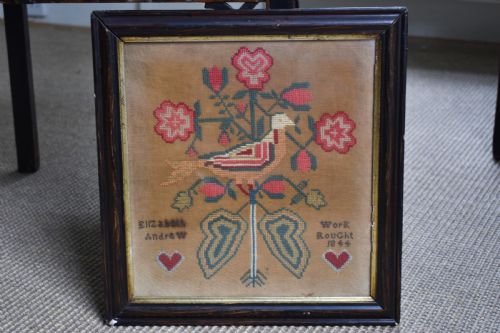
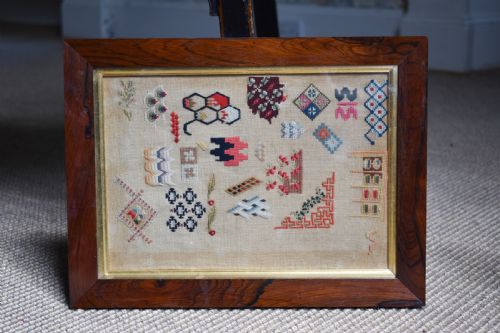
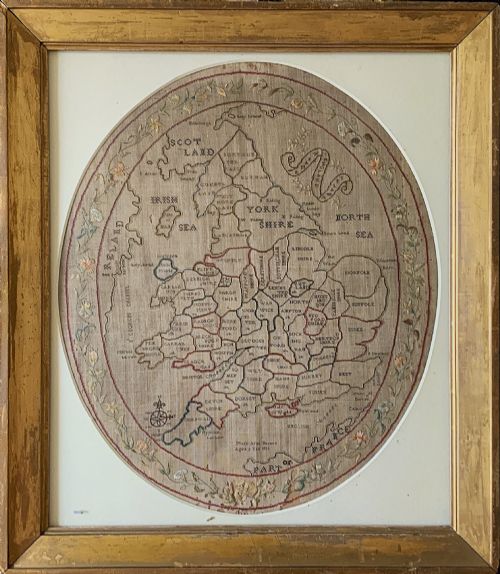
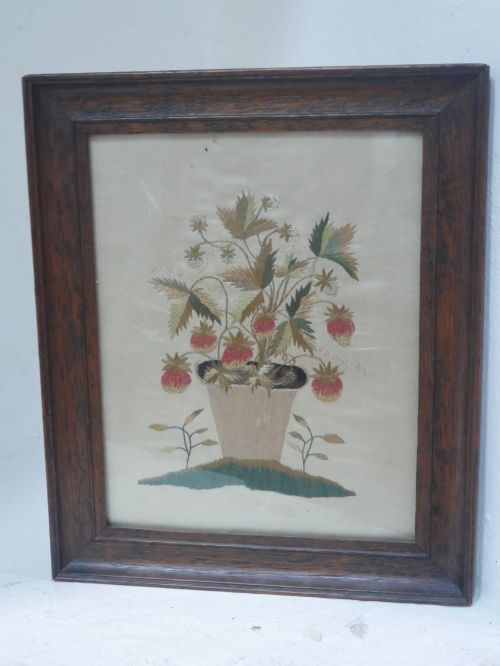
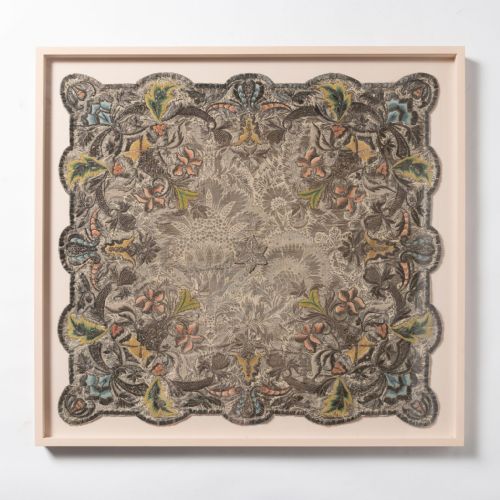
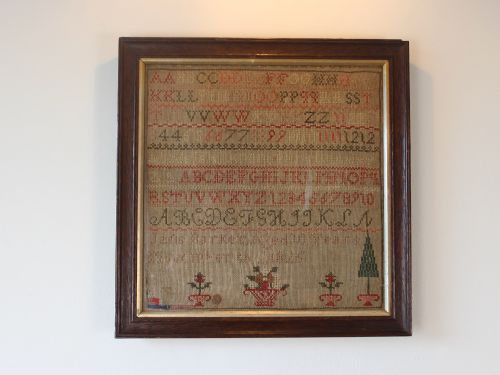
When you search for a framed textile sampler, you encounter centuries of domestic needlework, most commonly originating from the Georgian and Victorian eras. These pieces take the form of alphabet studies, pictorial scenes, cartographic maps, and genealogical records worked by young makers. Surviving examples are typically housed in wooden frames behind protective glass.
The selection ranges from early band samplers and detailed maps of England and Wales to mid-nineteenth-century wool work and religious needlepoint pictures. Many carry specific dates alongside the name and age of the maker, often aged between eleven and thirteen years. Scottish, English, French, and Italian origins appear across the listings.
How they were made
Makers stitched onto grounds of linen or canvas using threads of silk, wool, and silk floss. The work relies on counted thread techniques, gros point, and various embroidery stitches to form alphabets, figures, and floral motifs.
Framing involves wood housings designed to protect the fragile textile work, paired with glass to shield the linen and thread from dust and atmospheric moisture over generations.
One Scottish sampler preserves a deliberate stitch error left by eleven-year-old Maggie Muir.
What varies in quality
Quality rests in the precision of the stitch work and the complexity of the composition, distinguishing simple alphabet exercises from pictorial maps or narrative scenes. Dense execution and stable preservation of the silk and wool threads separate superior panels from simpler examples.
The legibility of the lettering, the completeness of the border work, and the original condition of the wooden frame influence the character of each piece. Clear documentation of the maker's name and date adds historical substance to the needlework.
Mary J Garbutt·Mary Banion·Mary Greening·Annabella Samon·Jane Wettmore·Louiss Elkins·Ann Hodson·Margaret Ann Blackow·Maggie Muir·Sarah Baker·Mary Mason·Ann B Gilies·Sarah Anne Hudson·Martha Hall
The Framed Textile Sampler Glossary
- Band sampler
- A long, narrow piece displaying rows of different stitches and patterns. These early formats served as reference libraries for the stitcher.
- Gros point
- A type of needlepoint embroidery worked on canvas with wool thread. It creates a sturdy, textured surface often used for pictorial scenes.
- Cartographic sampler
- A needlework map, frequently depicting England and Wales. Young makers stitched these to combine geography with needle skills.
- Silk floss
- An untwisted or lightly twisted silk thread used for smooth, glossy embroidery details. It provides high lustre in Georgian and Victorian panels.
Framed Textile Sampler: Frequently Asked Questions
How old are these samplers?
The pieces span from the late seventeenth century through the Georgian and Victorian periods up to the early twentieth century. Many carry explicit dates stitched into the linen by the maker alongside their age.
Specific years like 1796, 1825, and 1875 appear frequently, placing them firmly within historical British and European domestic craft traditions.
What materials were used?
Makers stitched with wool, silk, and silk floss onto woven linen or canvas grounds. The resulting textile art is normally mounted within a wood frame behind glass.
These natural components require stable indoor environments away from direct sunlight to protect the fragile threads from fading.
How should I hang one?
Keep the framed textile away from direct sunlight and damp walls to protect the historic silk and wool threads. Position the piece at eye level in a room with stable humidity.
Ensure the wooden frame is securely hung from appropriate wall fixings to bear the weight safely.
Can I trust the dates?
Most pieces include the year of completion stitched directly into the composition by the young maker. These stitched dates provide a reliable primary record of origin.
Additional context comes from the style of the frame, the weave of the linen, and the type of threads used in the embroidery.