



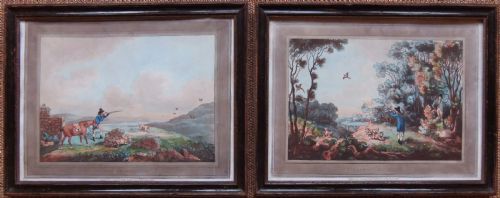


Framed Sporting Art Pair
A framed sporting art pair captures the energy of the field and the stable, offering balanced companion pieces for any country house interior.
Framed Sporting Art Pair
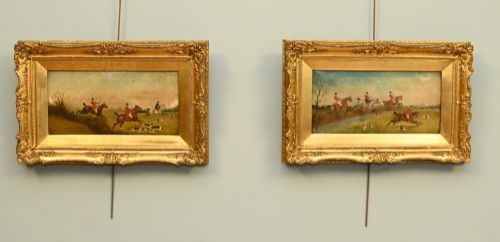
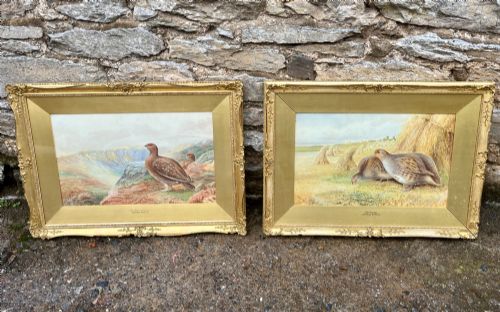
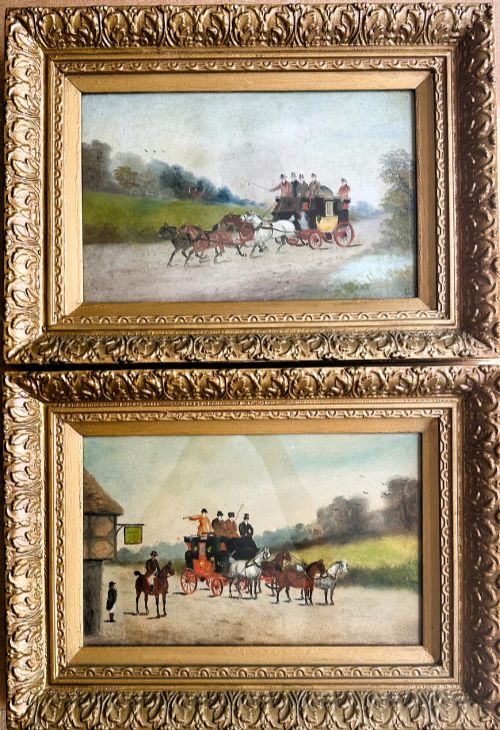
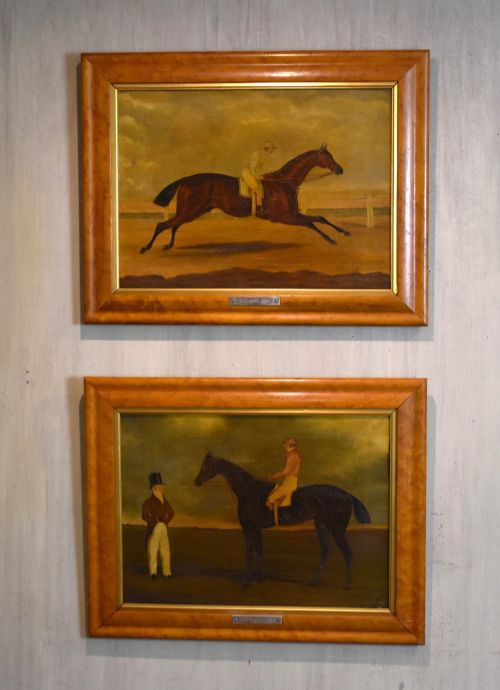
A framed sporting art pair brings together matching companion pictures depicting traditional rural pursuits, coaching scenes, and canine studies. These duos are most commonly encountered as Victorian or Edwardian watercolours, oil paintings on board, and painted prints.
The subjects span game birds, fox hunting, coaching horses, and working dogs set within traditional British landscapes. Most examples date from the nineteenth and early twentieth centuries, reflecting a period when equine and field sports dominated polite visual culture.
Buyers choose these sets to hang in symmetrical arrangements above sideboards, mantelpieces, or along hallways. Their paired format provides a deliberate visual rhythm that single pictures cannot achieve.
Materials and Construction
These works rely primarily on oil paint applied to canvas or board, alongside watercolours executed on paper. Artists also utilised printed media, occasionally hand-finishing the surfaces to resemble direct brushwork.
Framing is an integral component of the medium, utilising wood, gilt, and giltwood mouldings designed to protect the paper or canvas beneath glass. The backing boards and mounts secure the works while maintaining proper tension across the picture plane.
Framed Sporting Art Pair Retail Price Guide 2026
Typical asking prices for framed sporting art pair among the pieces listed under this phrase on Sellingantiques today, from the lower quarter to the upper quarter. They describe what is for sale here now, not the wider market.
The listings span from the early nineteenth century through the Edwardian era, featuring works in oil paint, watercolour, and print.
Assessing Quality
Quality rests heavily on the confidence of the draughtsmanship and the naturalistic rendering of anatomy, particularly in horses, hounds, and game birds. Stronger pieces reveal an artist's deep familiarity with the mechanics of movement and the specific breed characteristics of working animals.
The harmony of the pair dictates its success as a matched set, where matching scale, palette, and framing create a cohesive visual statement. Original frames in good condition enhance the integrity of the ensemble.
George Rankin·Philip Rideout·John Frederick Herring Snr·Philip Henry Rideout·Colin Graeme Roe·John Sanderson Wells·W.A. Clark·Henry Frederick Lucas-Lucas·Richard Ansdell·John Crossley·H. Alken·A. Betts·Arthur Alfred Davis·Sam. Howitt·Godfrey Douglas Giles·Frank Dadd
The Framed Sporting Art Pair Glossary
- Watercolour
- A painting method where fine pigment is suspended in a water-soluble binder on paper. It requires swift, decisive brushwork since alterations are difficult to conceal.
- Oil on board
- A painting created by applying oil colours directly onto a rigid wooden or composition panel. This surface offers a stable foundation that resists the sagging common to stretched canvas.
- Giltwood
- Timber carved and surfaced with a thin layer of gold leaf applied over a prepared ground. It provides a reflective, warm border suited to traditional British paintings.
Framed Sporting Art Pair: Frequently Asked Questions
Why are these works sold as pairs?
Victorian and Edwardian interior decoration favoured symmetry, making paired pictures ideal for hanging side by side on either side of a fireplace or architectural feature.
Artists frequently painted companion subjects, such as morning and evening scenes or matching hunting dogs, to be displayed together from the start.
Where should I hang a framed sporting art pair?
These pieces suit traditional spaces such as studies, dining rooms, and hallways where country pursuits align with the interior character.
Keep them out of direct sunlight to prevent fading on watercolour washes and paper supports.
How do I identify the period of a piece?
Stylistic clues within the clothing, framing materials, and the specific rendering of horses and hounds point toward Victorian or Edwardian tastes.
Signatures, artist dates, and framing construction styles help narrow down the decade of execution.