






Framed Silk Needlepoint Panel
These framed silk needlepoint panels bring centuries of textile art into domestic spaces, preserving intricate hand-stitched narratives behind glass.
Framed Silk Needlepoint Panel
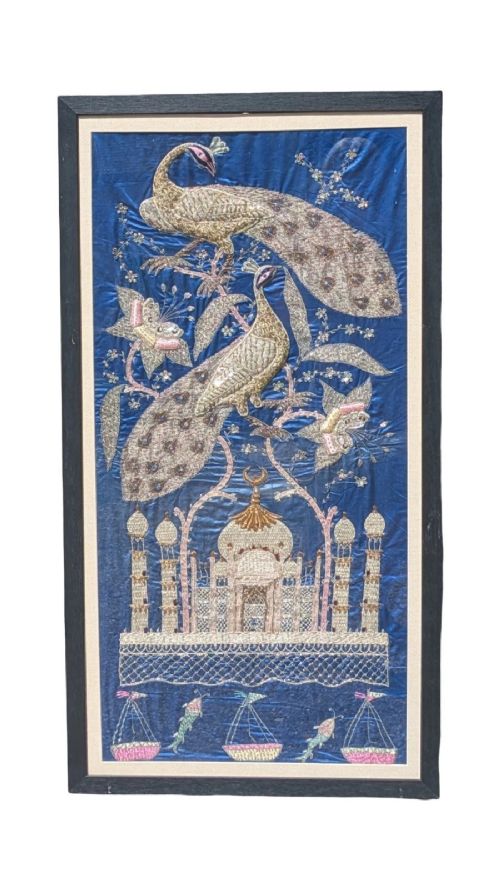
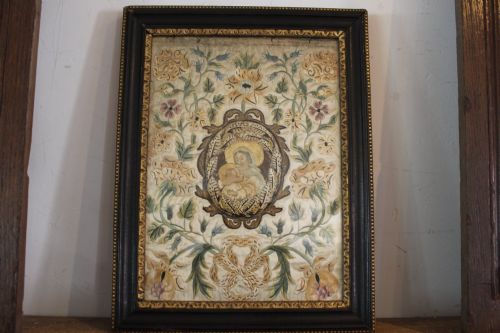
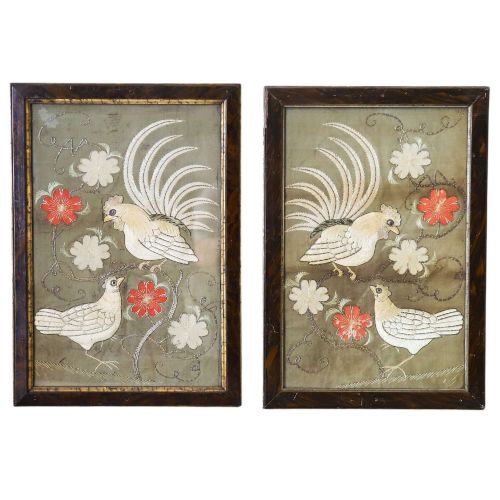
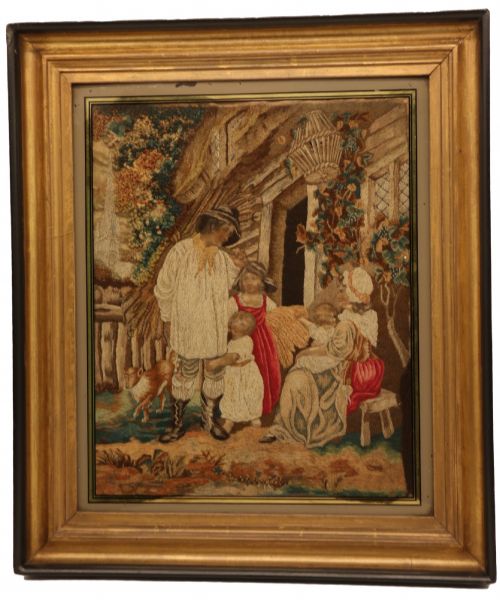
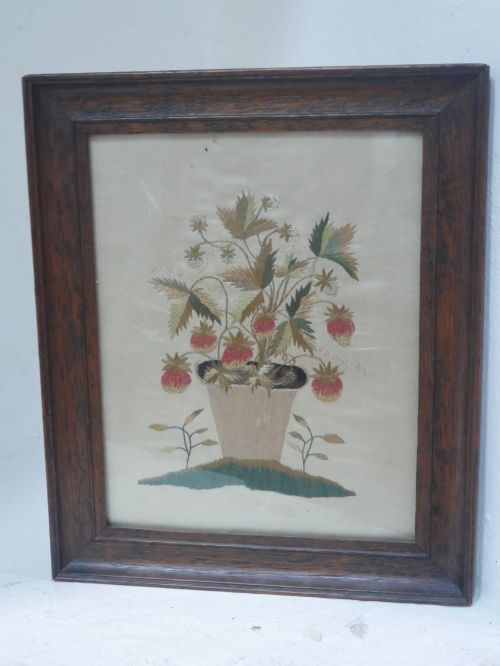
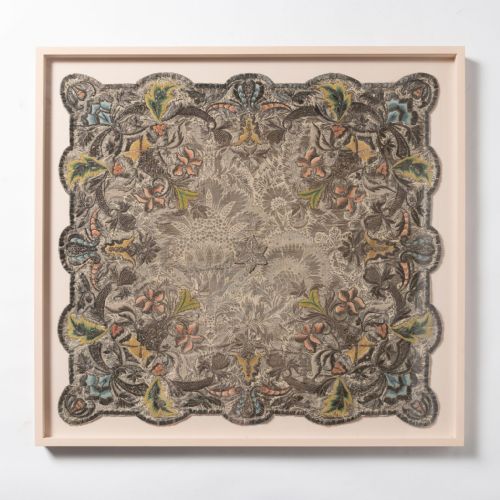
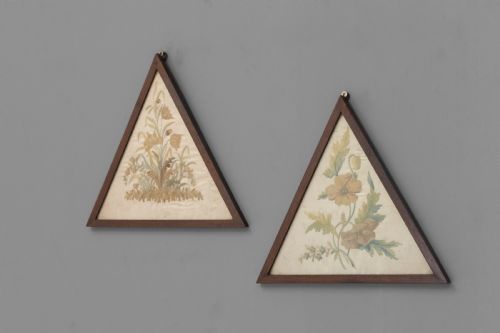
A framed silk needlepoint panel brings together historical textile artistry and protective framing, encompassing everything from pictorial scenes to detailed samplers. When you search for a framed silk needlepoint panel, you encounter works spanning the seventeenth century through the early twentieth century, originating from English, French, Dutch, Italian, Greek, Indian, and Chinese makers. The selection leans heavily toward eighteenth-century pastoral pictures and nineteenth-century samplers, alongside narrative works depicting figures, birds, and botanical studies.
Object types on this page range from wall art and framed textiles to needlework samplers and pictorial panels. Many examples incorporate hand-painted elements on silk alongside the needlework, while others rely entirely on thread to build the composition. Makers utilised various framing styles, including giltwood and faux tortoiseshell, to house these fragile textiles.
Materials and Construction
Makers constructed these panels using a foundation of silk, linen, or wool stretched to receive the needlework. Silk floss and metallic thread provide the lustrous highlights seen in seventeenth-century Stuart works and eighteenth-century Dutch panels, catching the light behind the protective glass.
Wood and giltwood form the primary framing materials, often paired with glass to shield the delicate textile art from dust and moisture. Crewel work, stumpwork, and standard needlepoint techniques dictate the texture of the surface, sometimes combined with hand-painted details on the silk background.
Listings feature works spanning the 17th, 18th, and 19th centuries, incorporating silk, wool, metallic thread, and giltwood frames.
Factors That Distinguish Quality
Quality rests upon the fineness of the stitchery and the complexity of the composition, where intricate pictorial detail commands attention over simpler exercises. The survival of the original silk ground and the vibrancy of the threads distinguish superior examples from those faded or degraded by time.
The sophistication of the enclosing frame, whether period giltwood or specialised faux tortoiseshell, contributes significantly to the overall integrity of the piece. Samplers with well-documented maker details, dates, and legible inscriptions hold distinct documentary weight compared to anonymous or heavily restored panels.
The Framed Silk Needlepoint Panel Glossary
- Sampler
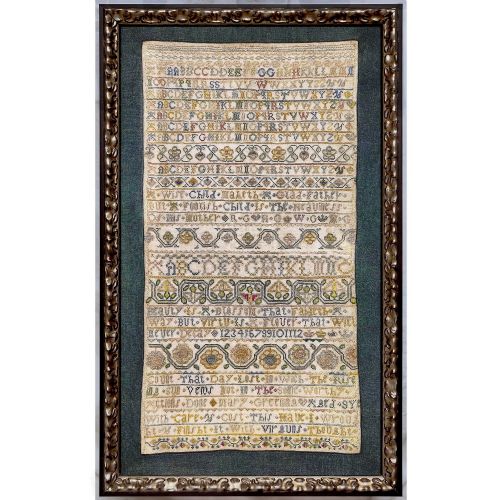
- A piece of cloth worked with various stitches and motifs to demonstrate needlework skill. These often include alphabets, numbers, and the maker's name alongside a date.
- Stumpwork
- A raised embroidery style popular in the seventeenth century that utilises padded underlays to create three-dimensional figures and motifs. This technique frequently appears in historical religious and royal depictions.
- Crewel work
- Embroidery executed with wool yarn on a heavy linen or twill foundation. It creates robust, textured designs historically used for furnishings and pictorial panels.
- Giltwood
- Wood that has been coated with a thin layer of gold leaf or gold paint. This finish frequently characterises the frames housing eighteenth- and nineteenth-century needlework.
- Metallic thread
- Flat or twisted metal wire incorporated into embroidery to add reflective detail. It appears alongside silk floss in Dutch and English panels from the seventeenth and eighteenth centuries.
Framed Silk Needlepoint Panel: Frequently Asked Questions
How do I date a framed needlework?
Dating relies on stylistic clues within the imagery, the type of threads used, and any stitched inscriptions providing a maker's name or year. Samplers often bear explicit dates, while pictorial subjects reflect the prevailing aesthetic of their specific century.
Framing styles also offer chronological markers, though many textiles were remounted later. Comparing the stitching technique against known historical periods helps narrow down the origin.
Where should I hang these panels?
These delicate textiles require placement away from direct sunlight to prevent the silk ground and coloured threads from fading. Interior walls with stable humidity and temperature conditions protect the fibres and the wooden frames.
Keep them away from damp areas like kitchens or unventilated bathrooms to safeguard the linen or silk foundation. Proper placement ensures the glass barrier remains effective against dust and atmospheric pollutants.
What is the difference between a sampler and a picture?
A sampler functions as a demonstration of technical proficiency, featuring alphabets, numbers, and isolated motifs arranged in rows. They typically record the name and age of the maker, often a young girl.
A needlework picture presents a unified pictorial scene, such as a pastoral landscape, a botanical study, or a narrative story. These compositions focus on artistic representation rather than technical exercises.
How are these textiles protected inside the frame?
The needlework sits behind glass to shield the fragile threads and fabric from physical handling and airborne debris. Acid-free backing materials are often used behind the textile to prevent chemical degradation over time.
Historical panels may retain their original mounting boards, while others benefit from modern conservation framing to ensure structural support. The seal around the glass prevents dust accumulation on the stitchery.