


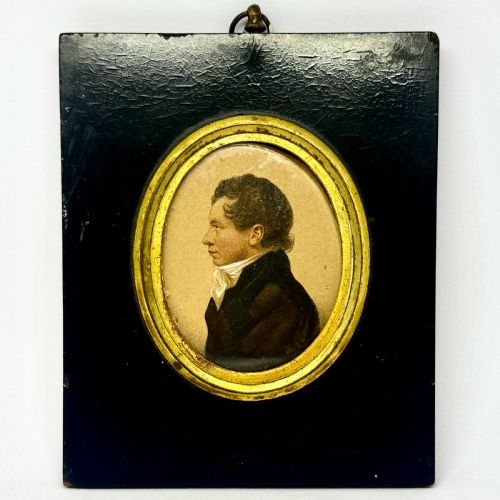


Framed Silhouette Painting
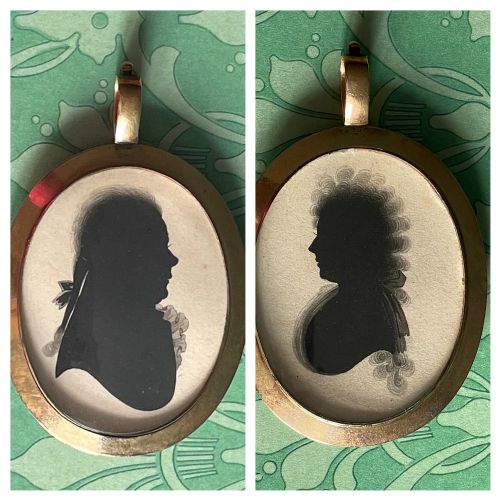
These framed silhouette painting examples capture profile likenesses in ink, glass and plaster, offering a glimpse into Georgian and Victorian likenesses.
Framed Silhouette Painting
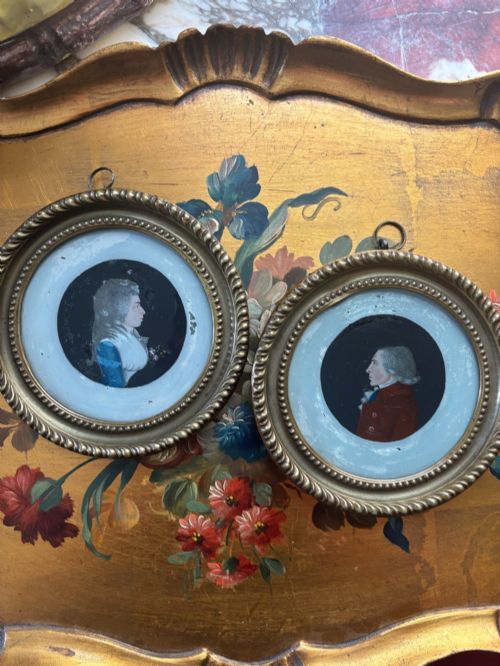
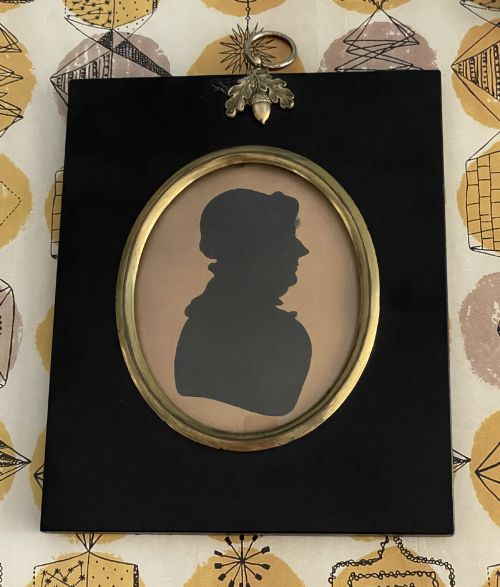
A framed silhouette painting presents a profile likeness preserved behind glass within a timber or metal surround, spanning periods from the eighteenth century through to the Victorian era. These miniature works frequently depict individual sitters, marriage pairs, or children with domestic animals, capturing likenesses before the widespread adoption of photography.
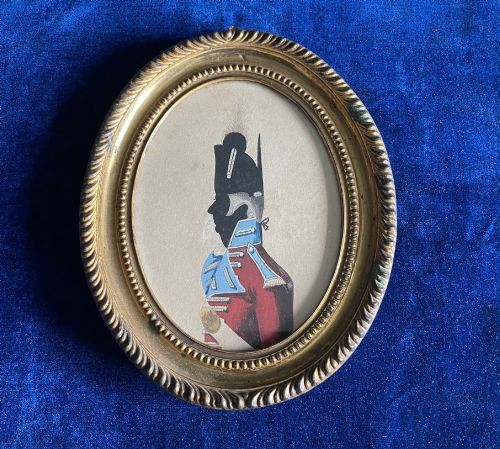
The objects on this page bridge domestic portraiture and decorative art, taking forms such as reverse glass paintings, plaster plaques, and delicate paper profiles enhanced with ink or gold leaf. Originating largely from British workshops and miniaturists, they rely on sharp contour and economy of line to define the subject.
Materials and technique
Makers produced these works using diverse substrates, including paper, plaster, and glass, applying dense black ink, oil paint, or coloured pigments to render the profile. Reverse glass painting required artists to paint the image backwards on the rear surface of the glass so the final view appeared correctly oriented from the front.
Surrounds were constructed from wood such as rosewood, maple, or ebonised timber, frequently fitted with brass bezels or gilded metal hangers. Detail work often involved gold leaf highlights applied directly to the painted surface to denote jewellery, buttons, or lace.
Framed Silhouette Painting Retail Price Guide 2026
Typical asking prices for framed silhouette painting among the pieces listed under this phrase on Sellingantiques today, from the lower quarter to the upper quarter. They describe what is for sale here now, not the wider market.
Listings feature works spanning the eighteenth century, the Regency period, and the Victorian era, utilising glass, paper, brass, and ebonised wood.
Factors of quality
Original framing and known provenance elevate a piece, particularly when works retain contemporary glass, rosewood surrounds, or maker signatures on the backing paper. The integration of colour or gold leaf highlights also separates basic ink profiles from more ambitious artistic productions.
James Ferguson·James Gillespie·Alfred Darbyshire·George Atkinson·John Miers·John Smith of Edinburgh
The Framed Silhouette Painting Glossary
- Reverse glass painting
- A technique where the artist paints directly onto the rear side of a glass panel. The finished image is viewed through the unpainted front surface.
- Portrait miniature
- A small-scale painting capturing a person's likeness. These works were historically designed for intimate domestic display or personal carriage.
- Ebonised wood
- Timber treated with a dark finish to imitate expensive ebony. This material was commonly used for framing contrasting light profiles.
- Gilded metal
- Base metal treated with a gold-coloured finish or gold leaf. It frequently forms the sight edge or bezel within a timber frame.
- Plaster
- A fine casting material used as a solid base for profile reliefs. John Miers and other profileists utilised plaster plaques for crisp shadow work.
Framed Silhouette Painting: Frequently Asked Questions
What is a framed silhouette painting?
A framed silhouette painting is a historical profile portrait rendered in ink, oil, or pigment on glass, paper, or plaster, displayed within a protective wall frame.
These works date predominantly from the eighteenth and nineteenth centuries, serving as personal likenesses before photography became common.
How do I date a silhouette?
Dating relies on examining the costume of the sitter, the framing materials, and any inscriptions or labels on the reverse. Regency styles often feature specific bonnet shapes or high-waisted dresses, while Victorian pieces show different mounting techniques.
Changes in glass clarity and backing papers also help establish the approximate period of creation.
Where should I hang these?
These miniature works suit small wall spaces, hallways, or grouped arrangements alongside other framed portraits and works on paper. They require protection from direct sunlight to prevent fading of the delicate pigments and paper grounds.
Keeping them away from damp environments ensures the preservation of early wooden frames and glass panels.
How were reverse glass pieces made?
Reverse glass pieces required the artist to paint the portrait backwards on the rear side of the glass panel. This demanded precise brushwork because any initial error could not be painted over from the front.
Once completed, the glass was reversed and framed, leaving the smooth surface to protect the paint layer.