




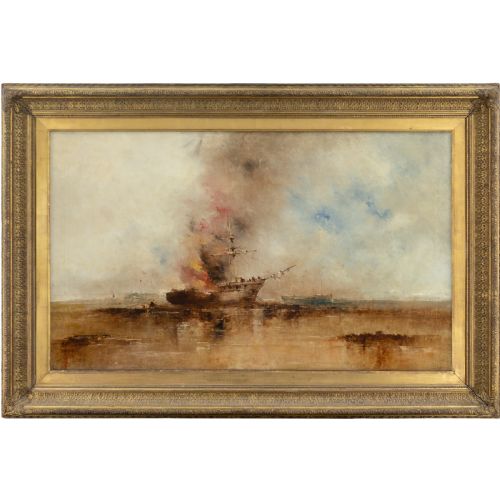
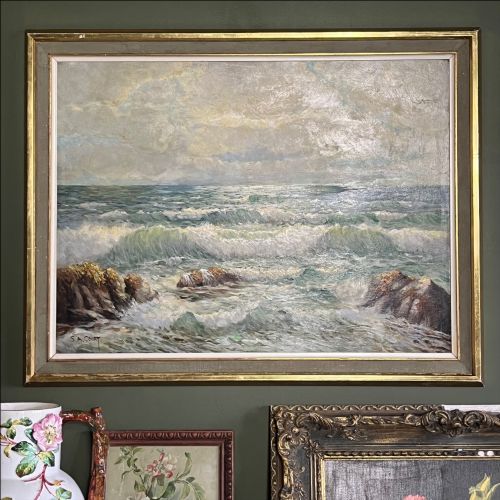
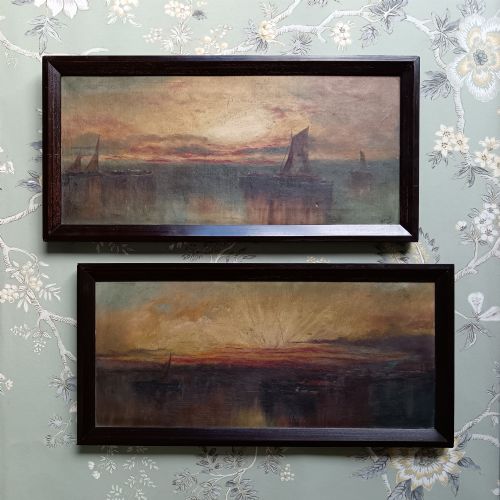
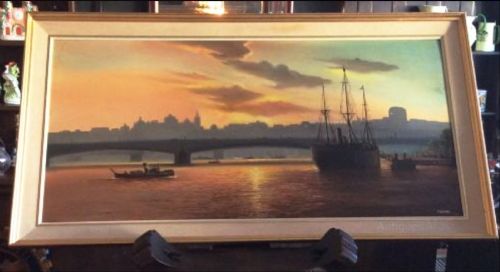
Framed Seascape Art
Framed seascape art captures the enduring power and movement of the ocean through historical maritime paintings.
Framed Seascape Art
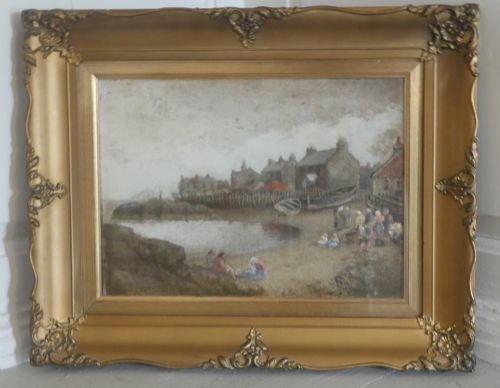
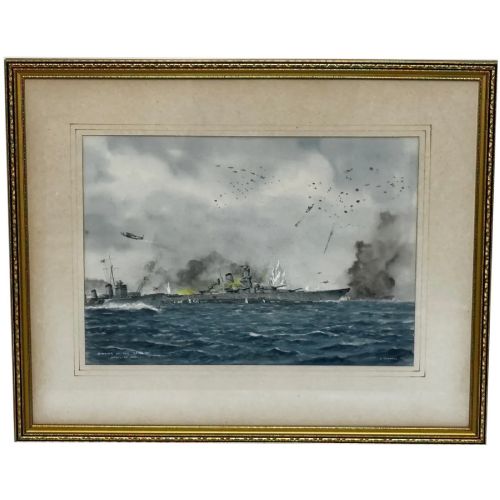
When you search for framed seascape art, you encounter a variety of oil paintings and watercolour paintings depicting coastal views, harbour scenes, and open waters. The selection spans the Victorian and Edwardian eras through to the mid-twentieth century, showcasing British Impressionism and maritime art traditions.
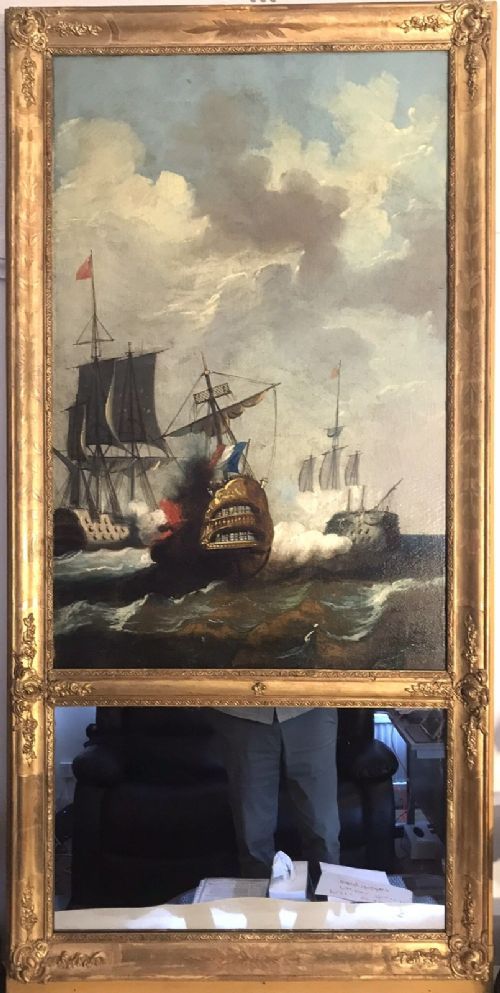
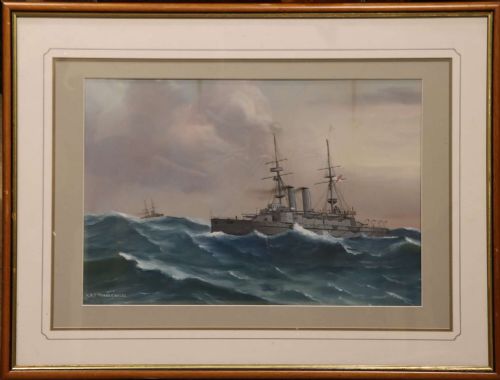
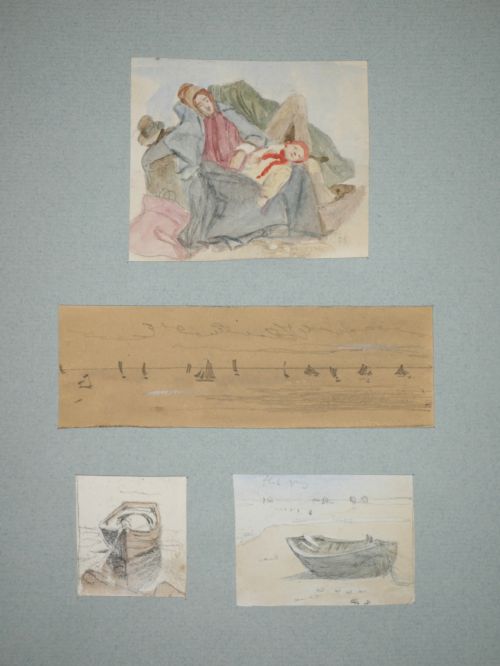
Most pieces on this page are oil paintings on canvas or board, alongside watercolours and drawings on paper. Subjects range from calm coastal villages in Cornwall and fishing boats on Brighton beach to dramatic shipwrecks and naval battles in rough seas.
How they were made
Artists painted these works using oil paint on canvas or wooden panel, and watercolour or gouache on paper. Many nineteenth-century and early twentieth-century works were painted en plein air to capture natural coastal light and atmospheric weather conditions.
The artworks are typically housed within traditional wooden frames, frequently enhanced with gilt or gold leaf. Glazing is commonly used to protect works on paper such as watercolours and gouache.
Materials recorded in these listings include oil paint, canvas, wood, paper, gilt, and glass across various historical periods.
What varies in quality
Quality in these maritime works rests upon the artist's command of light, movement, and proportion when rendering water and vessels. Finer pieces demonstrate skilful handling of rough waves or calm harbours, whereas lesser works rely on repetitive formulas.
The preservation of the original paint surface and the character of the period frame also influence the overall standing of a piece. Original gilt wood frames that complement the painting elevate the visual integrity of the artwork.
James Hardy·James Orrock·Clifford Hanney·James Smetham·Eugène-Louis Gillot·William McAlpine·Sidney A Court·B Nash·Charles Edward Dixon·Eric Tufnell·William Banks Fortescue·John Rose Miles·James Kay·Frank Watson Wood·William Broome·Bernard Gribble·Frank William Scarbrough·F Corpuz·Clive Browne·Peter Brannan·Francis Moltino·Bernard Benedict Hemy·Thomas Creswick·Lucy Pratt·James Fry
The Framed Seascape Art Glossary
- En plein air
- Painting outdoors to directly capture the transient effects of light and weather on the coast. This method was widely utilised by impressionist painters.
- Marine art
- Depictions of ships, harbours, coastal landscapes, and naval engagements. This genre encompasses both commercial shipping and dramatic storm scenes.
- Gilt wood
- Wood coated with a thin layer of gold leaf or gold paint. It is commonly found on traditional frames from the nineteenth and early twentieth centuries.
- Watercolour painting
- A medium where coloured pigments are suspended in a water-based solution on paper. These works are sensitive to light and require glass protection.
Framed Seascape Art: Frequently Asked Questions
What subjects appear in these seascapes?
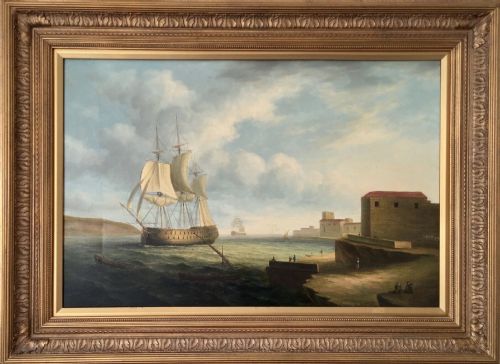
The works depict a wide range of maritime subjects, including calm harbour scenes, coastal villages, and bustling ports like London and Venice. You will also find dramatic depictions of merchant ships, naval warships, and vessels navigating rough seas or storms.
Many pieces focus on specific coastal locations in Britain and abroad, such as Cornwall, St Ives, and Whitby. Others record historical events like wartime shipping and naval operations.
How do I date a framed seascape?
Dating relies on stylistic clues, framing materials, and artist signatures recorded in the listing details. Nineteenth-century works often feature detailed rigging on traditional sailing ships, while twentieth-century pieces may show steamships and industrial ports.
Artists' active dates and period framing styles provide further confirmation of a painting's age. Victorian and Edwardian pieces frequently employ heavy gilt wood frames characteristic of their manufacturing period.
How should I hang maritime art?
Maritime art suits rooms with traditional or neutral decor where the tones of the sea and sky can stand out. Ensure the painting is hung away from direct sunlight to protect oil surfaces and delicate watercolours on paper.
Pairing works with similar wooden or gilt frames helps create a cohesive display on a wall. Consider eye level placement to properly appreciate the fine detail in ship rigging and coastal brushwork.
Are watercolours different from oil paintings?
Watercolours utilise paper supports and require protective glass glazing to prevent environmental damage from moisture and dust. They generally offer a lighter, more translucent depiction of coastal light and atmosphere.
Oil paintings use canvas or wooden panels that do not require glass, presenting a heavier texture of paint application. Oils often allow for richer depth in rendering dark storm clouds and churning ocean waves.