


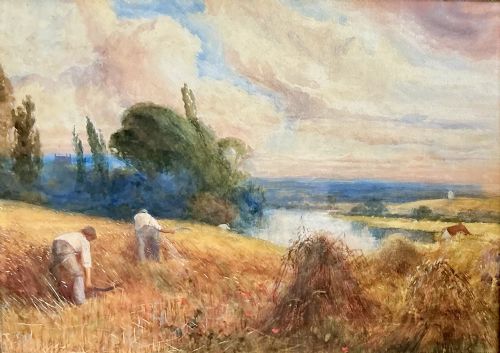

Framed Rural Watercolour Painting
A framed rural watercolour painting brings the quiet fields, harvest scenes and country lanes of the nineteenth and early twentieth centuries directly onto the wall.
Framed Rural Watercolour Painting
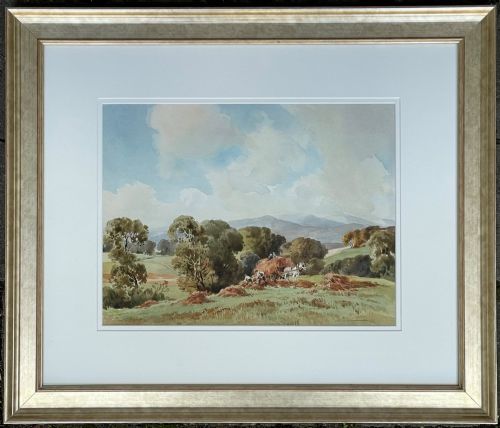
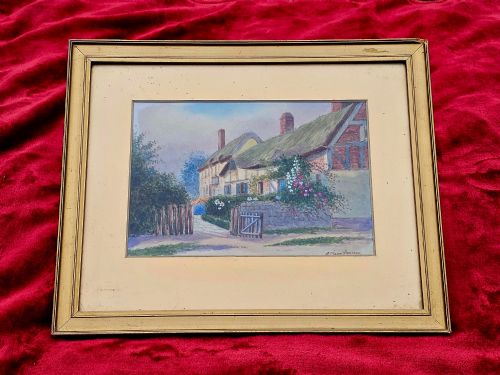
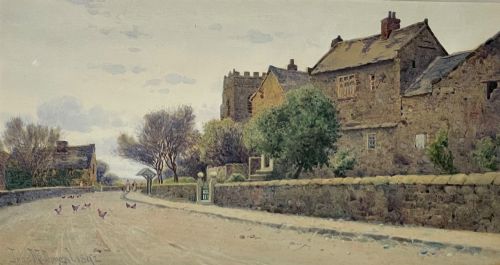
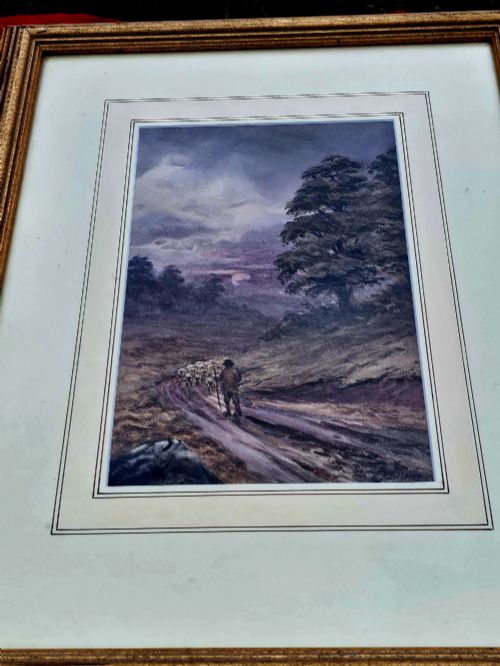
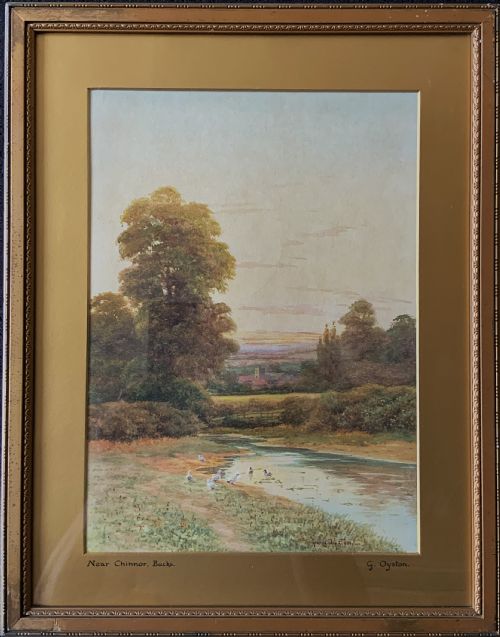
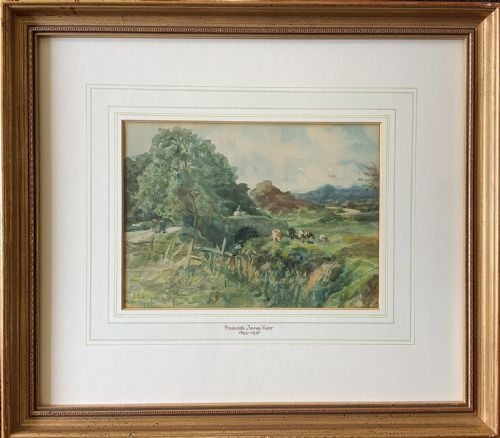
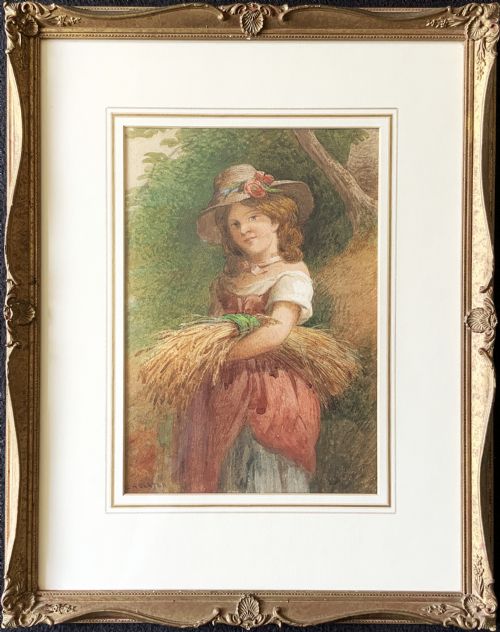
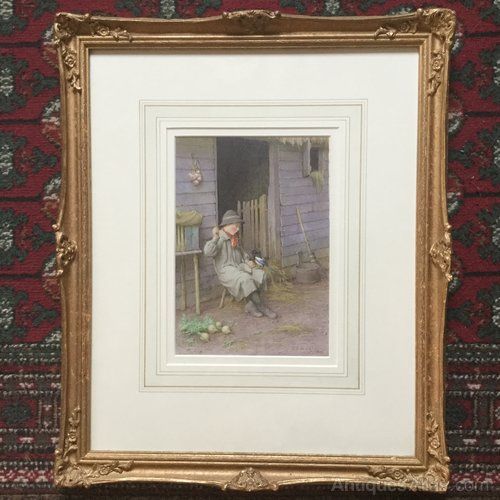
A framed rural watercolour painting captures traditional British country life, agricultural scenes and pastoral landscapes produced across the Victorian, Edwardian and early twentieth-century periods. These works focus on farmyards, riverbanks, cottages and fieldwork executed by named artists and skilled hands.
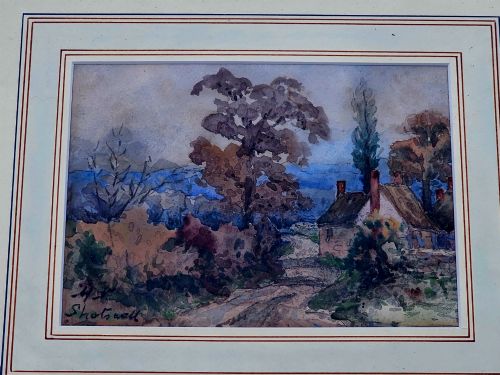
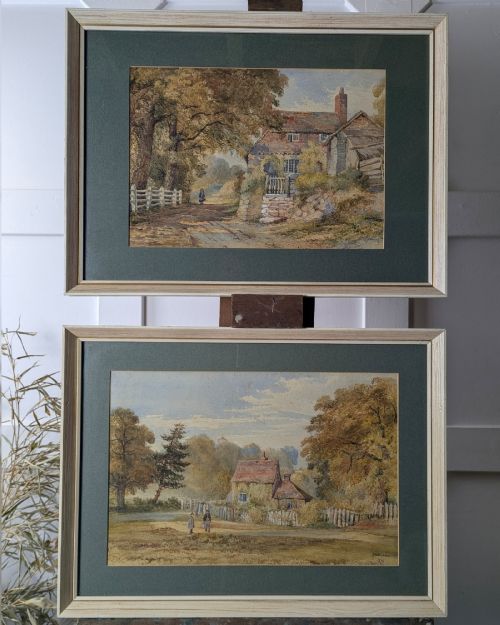
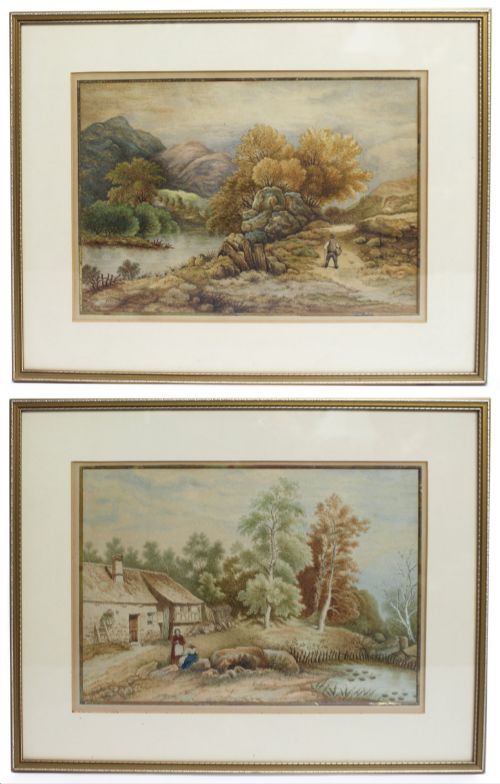
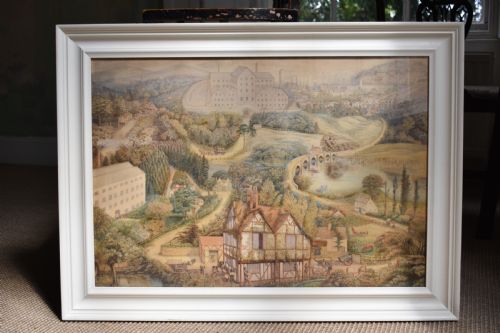
The versions most commonly met on this page include watercolours executed on paper, set behind glass, and housed within wooden or gilt wood frames. The subjects range from expansive Yorkshire views and Hampshire harvest scenes to quiet village lanes and cattle watering by a stream.
Materials and construction
These pieces rely on watercolour pigment and paint applied to paper supports, capturing light and atmosphere through transparent washes and fine brushwork. Artists during the nineteenth and early twentieth centuries worked on paper mounted within protective frames of wood or gilt wood.
Protection from the environment was achieved by placing the painted paper behind glass, which preserved the delicate pigments from moisture and fading over decades. The framing often incorporated gold leaf detailing to complement the tones within the watercolour composition.
Keep an eye out for rogue ducks, stray sheep and runaway goats interrupting otherwise peaceful rural landscapes.
Distinctions in quality
Quality rests in the handling of light, atmospheric depth and the confidence of the brushwork across the paper surface. Works by established painters demonstrate a superior command of proportion, movement in figures and animals, and harmonious colour palettes.
The integrity of the physical presentation also separates examples, including the preservation of the original gilt wood frame and the clarity of the paper beneath the glass.
Percy Lancaster·A. Marie Parsons·John McDougal·EJ Letheren·Robert A. Nottingham·Th.Thibault·George Oyston·Frederick James Kerr·Charles Henry Slater·Herman S Melville·Charles Edward Wilson·Frederick Hines·Edgar Woollatt·Oswald Garside·Henry Charles Fox·Fred Lawson·James William Booth·William Hoggatt·Ernest Pile Bucknall·James Hardy Junior·John Atkinson·Helena Maguire·Robert Winchester Fraser·George Soper·William Joseph Boyes
The Framed Rural Watercolour Painting Glossary
- Watercolour
- A painting method in which the paints are made of pigments suspended in a water-based solution. This technique allows for translucent washes of colour on paper.
- Gilt wood
- Wood that has been treated with a thin layer of gold leaf or metallic gilt. It provides a decorative and protective border to the framed artwork.
- Pastoral
- A style or subject matter concerning the rural countryside, farm life and shepherd scenes. It romanticises traditional agricultural routines.
- Impressionism
- An art movement focusing on the visual impression of the moment, particularly regarding shifting light and open-air scenes. British interpretations often capture rural light effects.
Framed Rural Watercolour Painting: Frequently Asked Questions
How do I date a rural watercolour?
Dating relies on stylistic clues, artist signatures, framing materials and paper types recorded from the Victorian and Edwardian eras. Victorian pieces often lean towards detailed realism, while early twentieth-century examples show looser impressionistic brushwork.
Checking artist lifespans and historical costume details within the pastoral scene provides further confirmation of the period.
Where should I hang a watercolour painting?
Watercolours require careful placement away from direct sunlight to prevent the pigments and paper from fading over time. Interior walls with indirect ambient light ensure the delicate washes remain vibrant.
Keeping them away from damp exterior walls or heat sources protects both the paper support and the wooden frame.
Are these paintings original?
The listings feature original hand-painted watercolours executed directly onto paper by period artists. Each piece represents a unique composition rather than a modern mass-produced print.
Signatures and inscriptions on the front or reverse often confirm the individual authorship of the artwork.
What framing is typical for these?
Traditional frames made from wood or gilt wood are standard for protecting and displaying these works behind glass. Many retain their period frames, which match the aesthetic of the nineteenth and early twentieth centuries.
The inclusion of gold leaf accents was common for elevating pastoral and landscape subjects.