


Framed Rural Landscape Canvas
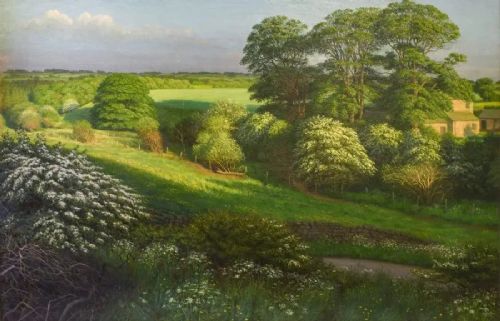
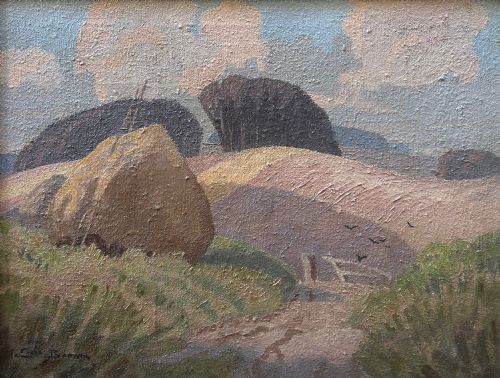
A framed rural landscape canvas brings the quiet fields, rivers and cottages of the countryside directly into the room.
Framed Rural Landscape Canvas
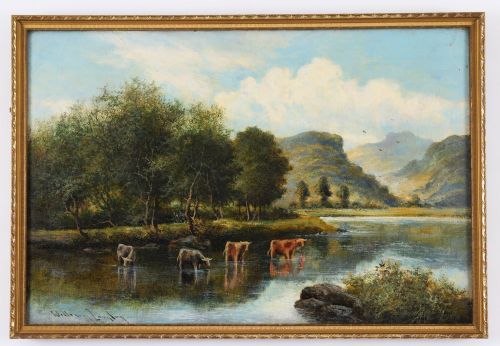
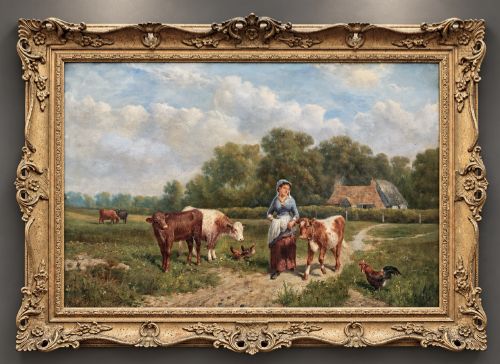
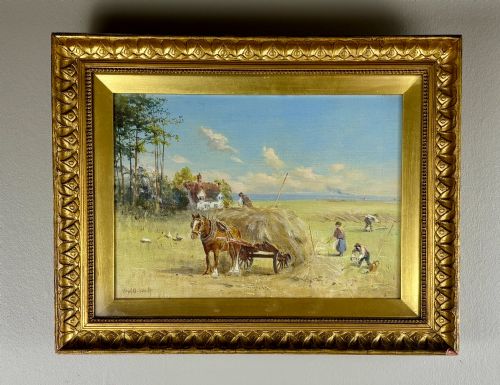
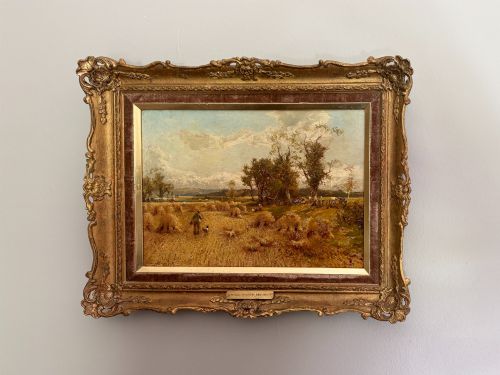
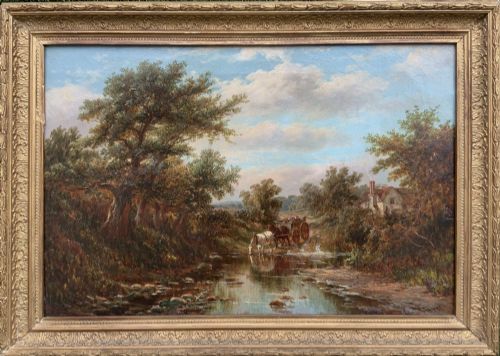
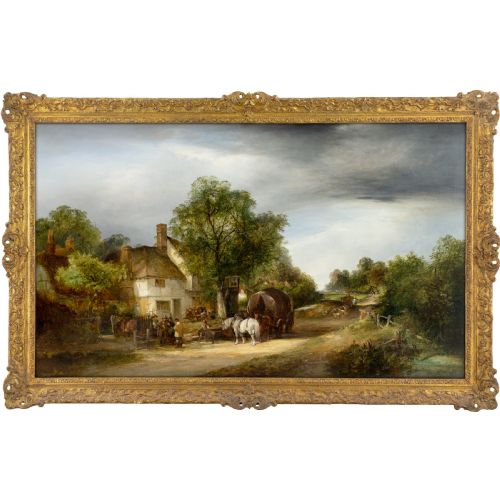
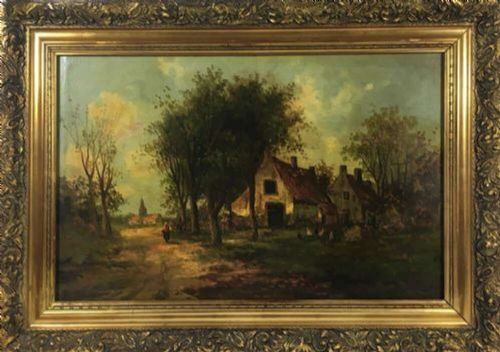
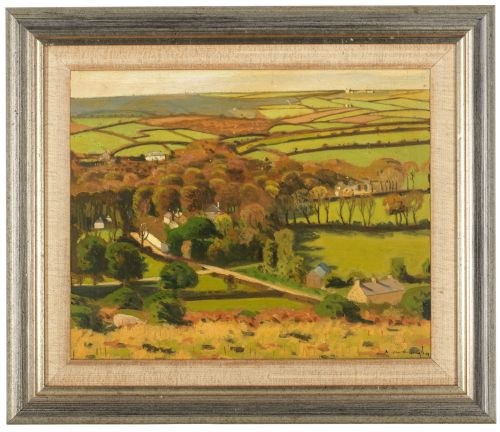
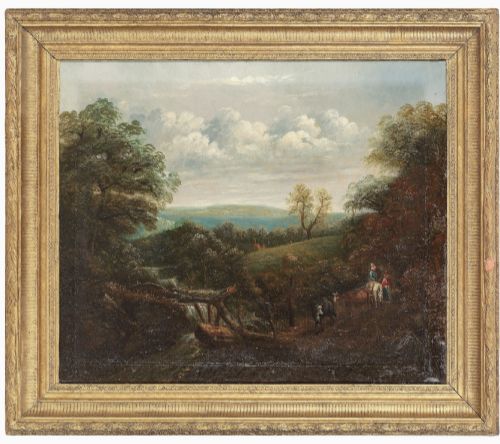
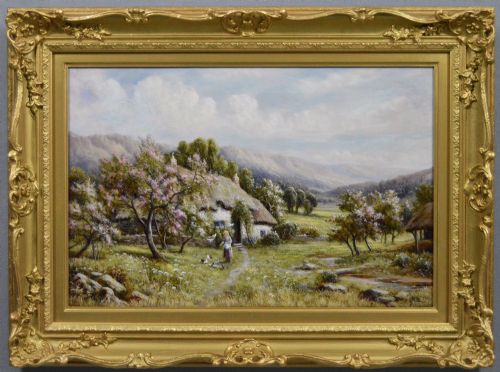
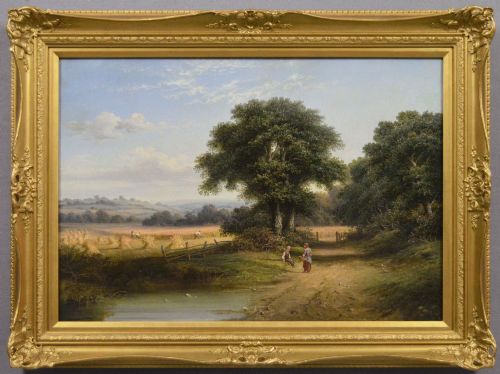
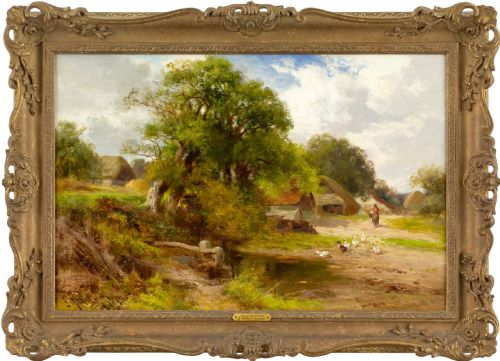
A framed rural landscape canvas captures scenes of country life, agricultural work and natural vistas painted in oil on canvas. These works span the nineteenth century through the mid-twentieth century, encompassing British Impressionism, Victorian realism and the Barbizon School.
The most common examples on this page are oil paintings set in wooden frames, often featuring cottages, farmyards, rivers, livestock and figures at work in the fields. Pieces range from late eighteenth-century Norwich School works to mid-twentieth-century village scenes.
Makers and painters represented include named artists such as Owen Bowen, Robert John Hammond and William Henry Mander, alongside numerous works from the British and French schools. Each piece preserves a distinct record of rural topography and agrarian life.
How They Were Made
These works are executed in oil paint upon woven canvas stretched over wooden supports, capturing light and texture through layered brushwork. Pigments mix rich earth tones with luminous skies, applied with either the detailed precision of Victorian realism or the looser strokes of impressionist schools.
Surrounding the canvas is the frame, typically constructed from wood and finished with gesso and gilt. These frames protect the edges of the fabric and provide the architectural boundary that completes the composition.
Several canvases capture cows, sheep and heavy horses pausing beside rivers or harvest fields as if posing deliberately for the painter.
What Varies in Quality
Quality rests in the handling of light, depth and atmospheric perspective across the canvas, separating routine topographical records from masterly works of observation. The dexterity of the brushwork and the convincing rendering of figures, animals and foliage determine the artistic weight of the piece.
The execution of the frame also distinguishes the pieces, as heavy gilt wood mouldings with crisp gesso enrichment elevate the presentation of the artwork compared to plain or later replacements.
George Graham·Robert Morson Hughes·David Bates·Robert John Hammond·Walter Heath Williams·John Horace Hooper·Raymond Booth·Eric Brown·Ernest Higgins Rigg·Umberto Volpato·William Greaves·Sydney Yates Johnson·Owen Bowen·Charles Clair·Harry Freckleton·Raimond Louis Lecourt·William Henry Mander·Thomas Sidney Cooper·Henry John Yeend King·William Sydney Cooper·Samuel Joseph Clark·Henry John Boddington·M C Hider·G Vincent
The Framed Rural Landscape Canvas Glossary
- Oil on Canvas
- A painting medium where pigments suspended in drying oil are applied to a woven fabric support. This combination allows for rich colour saturation and varied surface textures.
- Gilt Wood
- Wood carved and coated with gold leaf or a metallic substitute. This finish provides a reflective border that frames and isolates the painted scene.
- Gesso
- A plaster mixture applied to wooden frames as a base for moulding or gilding. It creates a smooth, sculptured surface ready for decorative detail.
- Barbizon School
- A nineteenth-century art movement focused on realism in landscape painting, emphasising direct observation of nature, rustic settings and unidealised rural life.
- Norwich School
- The first provincial art movement in Britain, centred around East Anglian artists who painted local landscapes and rural scenery.
Framed Rural Landscape Canvas: Frequently Asked Questions
What is a framed rural landscape canvas?
It is an oil painting on stretched fabric depicting countryside scenery, such as fields, rivers, cottages and farm animals, presented within a protective wooden or gilt frame.
These artworks record historical rural environments and agricultural life from the nineteenth and twentieth centuries.
How were these oil paintings originally displayed?
They were designed to hang in domestic interiors, parlours and country houses, mounted on walls to bring natural scenery indoors.
The accompanying wooden frames were chosen to complement the domestic scale and decor of the period.
How should I care for an antique canvas?
Keep the painting away from direct sunlight, high humidity and sudden temperature changes to protect the oil paint and canvas from cracking or warping.
Dust the frame and canvas surface gently with a soft, dry brush without applying pressure to the paint layer.
How do I identify the period of a landscape painting?
Examine the style of brushwork, the clothing of any figures depicted, and the construction methods and materials of the frame.
Signatures, artist records, and regional painting schools like the Norwich or Barbizon movements also help date the work.