

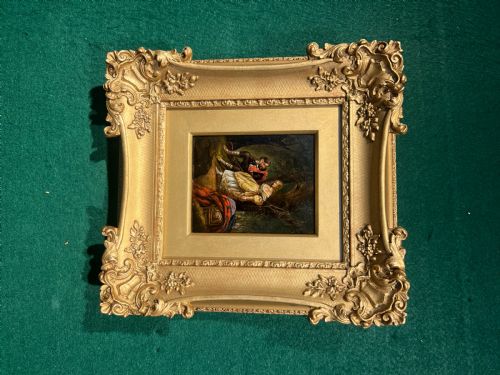


Framed Romanticism Artwork
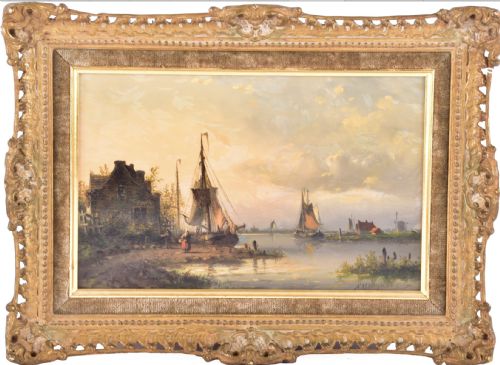
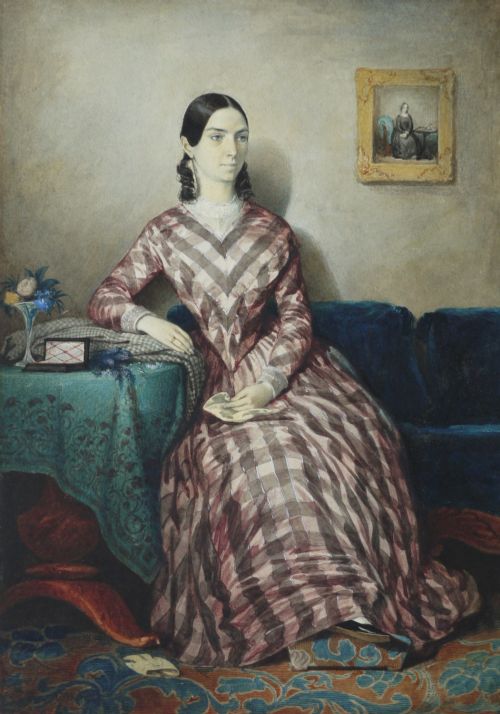
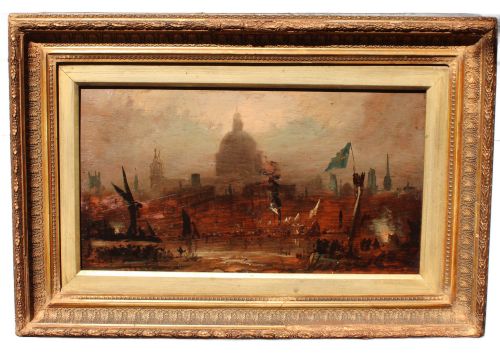
Framed romanticism artwork brings together nineteenth-century canvases and watercolours that capture pastoral scenes, dramatic landscapes, and historic architecture within period surrounds.
Framed Romanticism Artwork
Most pieces on this page are oil on canvas or oil on board works, alongside watercolours on paper and occasional graphite drawings. Frames are typically constructed from wood, embellished with gesso, and finished in giltwood or gold leaf to complement the subject matter.
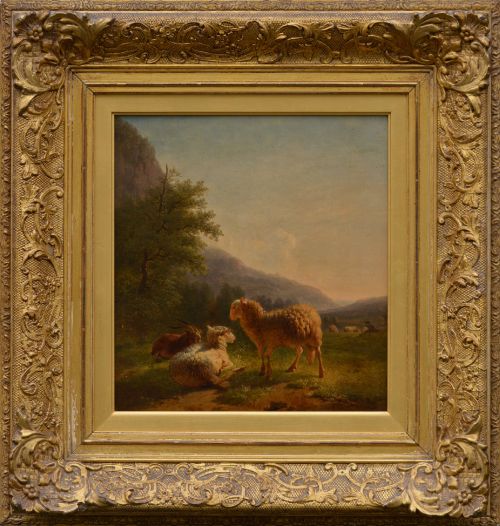
Mannerist works and pieces in the style of recognised nineteenth-century painters appear frequently alongside signed compositions. Subjects range from tranquil rural tracks and mountain landscapes to maritime scenes and architectural studies such as castles and townscapes.
Materials and construction
Artists painted primarily in oil on canvas stretched over wooden frames, or applied watercolour and gouache pigments to paper surfaces. Some works utilise oil on board or graphite on paper, reflecting the varied preparatory and finished mediums of the period.
Frames rely on sturdy wooden timbers built with mitred joints, then coated with plaster-based gesso to receive intricate mouldings. Guilders applied gold leaf or metallic finishes over these prepared surfaces to create reflective borders that frame the pictorial space.
Several canvases feature remarkably fluffy sheep and cheeky dogs sharing the frame with nineteenth-century travellers.
Variations in quality and execution
Quality rests in the handling of light, depth, and anatomical accuracy within the painted scene, distinguishing master works from naive or studio copies. Skilled brushwork brings texture to foliage, water, and skies, whereas lesser examples rely on flat applications and formulaic compositions.
The craftsmanship of the frame also dictates overall merit, with hand-carved gesso ornamentation and original gilding holding greater artistic integrity than replacement mouldings. Conservation state, including the stability of the canvas and the absence of heavy overpainting, preserves the integrity of the piece.
Eugène Verboeckhoven·George Hilditch·Augustus Jules Bouvier·Samuel Palmer·John Constable·William Collins RA·Ludwig Hermann·Alexandre Decamps
The Framed Romanticism Artwork Glossary
- Gesso
- A plaster-like mixture applied to wooden frames as a base for gilding or painting. It allows craftsmen to carve intricate relief details before applying gold leaf.
- Giltwood
- Wood carved and coated with gold leaf or metallic powder. It provides a bright, reflective boundary that enhances nineteenth-century oil paintings.
- Oil on Canvas
- Pigment suspended in drying oil applied to a woven fabric support. This medium permits subtle blending and rich colour layering characteristic of the period.
- Manner of
- A term indicating a work created in the style of a specific artist without being their direct hand. It denotes period adherence to a master's distinct technique.
Framed Romanticism Artwork: Frequently Asked Questions
What periods do these artworks represent?
The listings span the nineteenth century, encompassing Georgian, Victorian, and later periods up to the early twentieth century.
Artists worked across various European schools, producing pieces that reflect the evolving landscape and genre traditions of those decades.
Are the frames original to the paintings?
Many pieces retain period frames made of wood and gesso, often finished in giltwood or gold leaf.
Some artworks have been reframed over time to protect the canvas or paper surface from environmental damage.
What subjects are most common?
Common subjects include pastoral landscapes, coastal riverscapes, architectural ruins, and animal studies involving sheep, ponies, and dogs.
Townscapes and historical processions also appear frequently in both oil and watercolour mediums.
How do I care for nineteenth-century art?
Keep artworks away from direct sunlight and fluctuating humidity to prevent canvas warping and paper degradation.
Dust wooden frames gently with a dry cloth and avoid using liquid cleaners on gilt surfaces.