




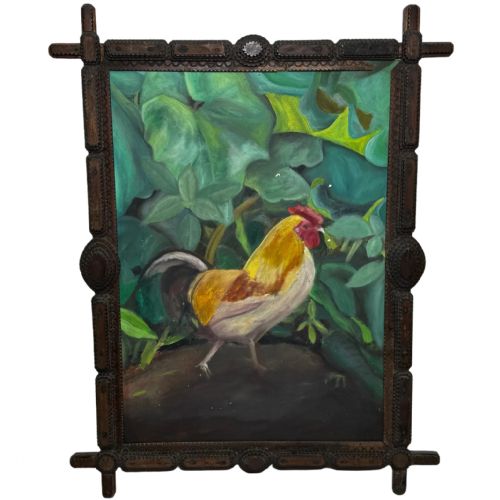


Framed Poultry Art
Framed poultry art brings feathered farmyard subjects into domestic interiors through oil paintings, watercolours, and antique prints spanning several centuries.
Framed Poultry Art
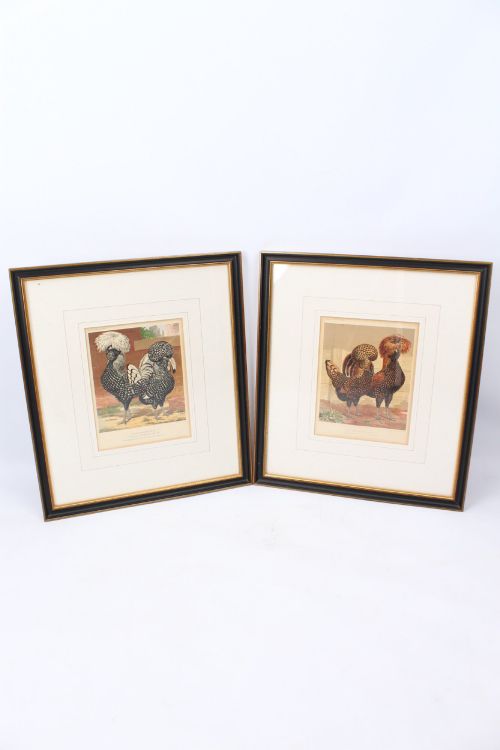
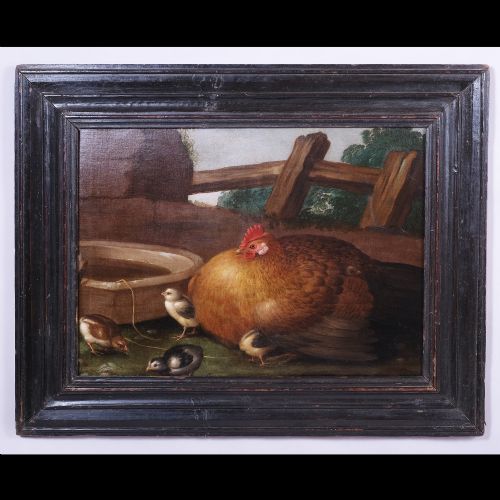
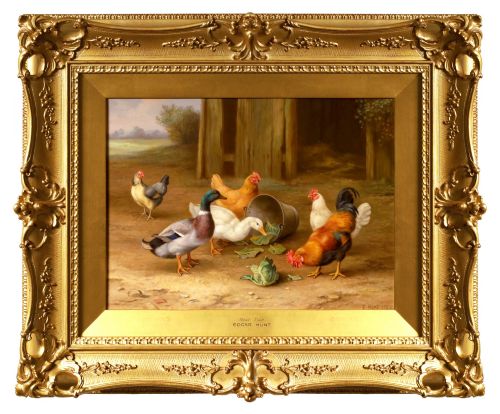
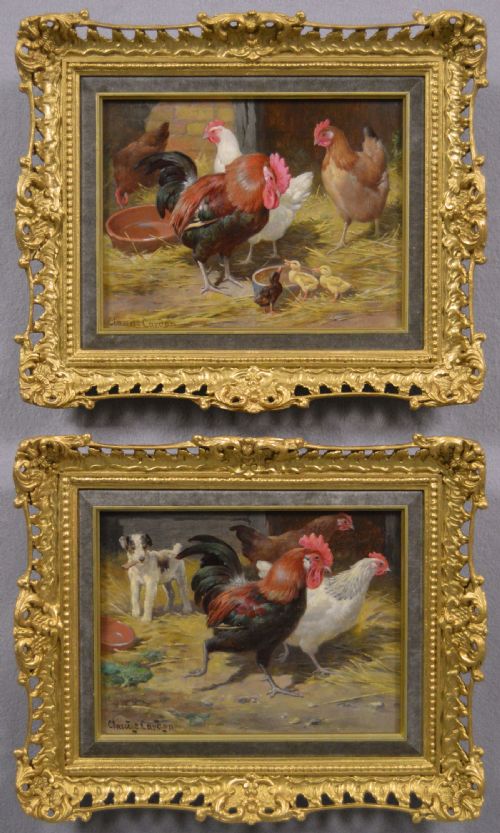
Framed poultry art encompasses oil paintings, watercolours, and prints depicting chickens, cockerels, hens, and farmyard scenes. These works capture domestic birds in natural settings, often accompanied by other farm animals or rendered in detailed interior environments.
The pieces on this page span from the eighteenth century through the Edwardian period and into the early twentieth century. Buyers encounter everything from large Dutch and Flemish style old master canvases to modest twentieth-century watercolours and coloured lithographic prints.
British animalier traditions and continental realist approaches dominate the selection available. Works range from intimate watercolour studies by named artists to decorative pairs of farmyard prints housed in period wood and giltwood frames.
How they were made
Painters utilised oil on canvas, oil on board, and watercolour on paper to render the intricate feather patterns and textures of poultry. Canvases are frequently set within heavy wooden and giltwood frames, while works on paper employ glass protection.
Draftsmanship relies on careful observation of light falling across plumage, capturing the iridescent greens and reds of cockerels and the softer tones of hens. Early works utilise traditional priming and layering techniques on stretched canvas or wooden panels.
Framed Poultry Art Retail Price Guide 2026
Typical asking prices for framed poultry art among the pieces listed under this phrase on Sellingantiques today, from the lower quarter to the upper quarter. They describe what is for sale here now, not the wider market.
Object types include oil paintings, watercolours, framed prints, and detailed farmyard scenes.
What varies in quality
Quality depends upon the precision of anatomical rendering in the birds and the depth of the surrounding farmyard or interior context. Superior works display confident brushwork that distinguishes individual feathers and light effects rather than flat application.
The originality of the composition and the presence of a known artist's hand elevate certain pieces above decorative studio output. Frame construction and material stability also separate significant period pieces from later reproductions.
Edgar Hunt·Claude Cardon·John Atkinson·Gustav Goemans·John Frederick Herring Jnr·J L VAN Leemputten·Fred C Jones·Emile Lecomte
The Framed Poultry Art Glossary
- Animalier
- Art depicting animals, particularly popular in nineteenth-century British and European painting. This genre encompasses detailed studies of farmyard poultry and livestock.
- Giltwood
- Wood that has been coated with gold leaf or a gold-coloured finish. Antique frames often feature carved details enhanced by this technique.
- Lithograph
- A print made from a design drawn on limestone or a metal plate. Many antique illustrations of poultry were produced using this multi-plate printing method.
- Realism
- An artistic movement focused on depicting subject matter truthfully without artificiality. In poultry art, this appears as accurate feather textures and realistic farmyard settings.
- Watercolour
- A painting method in which the paints are made of pigments suspended in a water-based solution. These works on paper are typically mounted behind glass.
Framed Poultry Art: Frequently Asked Questions
What periods do these pieces come from?
The selection includes works from the eighteenth century, the Victorian and Edwardian eras, and early twentieth-century decades up to nineteen thirty. Each era brings distinct framing styles and painting techniques to the subject.
Earlier pieces often reflect Dutch and Flemish influences, while later works embrace British animalier traditions and continental realism.
How should I hang these works?
Consider the weight of original giltwood frames and ensure proper wall fixings are used to support heavier oil canvases safely. Grouping pairs of farmyard prints or smaller watercolours together creates a balanced display.
Keep framed works away from direct sunlight and excessive moisture to protect paper surfaces, watercolours, and old canvas priming.
Are these works signed by artists?
Several pieces feature artist signatures, inscriptions, or attribution notes from periods such as the nineteenth and early twentieth centuries. Some works remain unattributed or are created in the style of known animal painters.
Checking the lower corners of canvases or paper margins often reveals inscriptions left by the original hand.
What mediums were used for poultry art?
Artists employed oil paint on canvas or board alongside watercolour on paper for original compositions. Printed media such as lithographs also appear among nineteenth-century depictions.
Frames are constructed from wood, frequently finished with gilt decoration to complement the oil paintings and watercolours.