
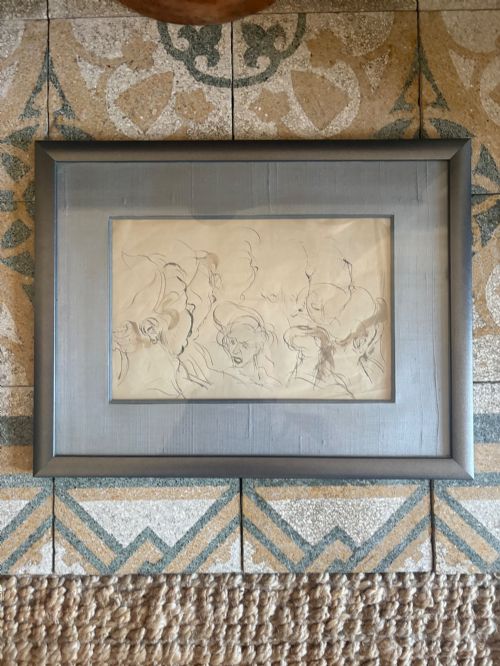


Framed Paper Pen Sketch
These framed paper pen sketch pieces bring immediate graphic focus to a wall, combining direct ink lines on paper with period framing.
Framed Paper Pen Sketch
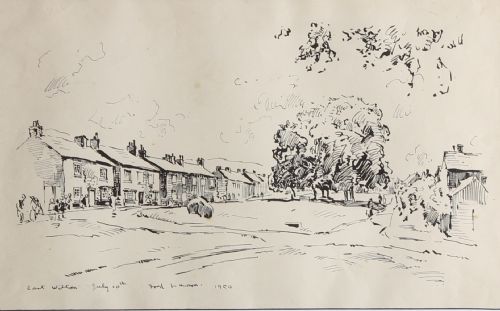
A framed paper pen sketch captures direct draftsmanship, ranging from 18th century topographical views and 19th century historical studies to mid-20th century British landscapes. Buyers encounter works rendered in ink, wash, gouache, and watercolour upon paper supports.
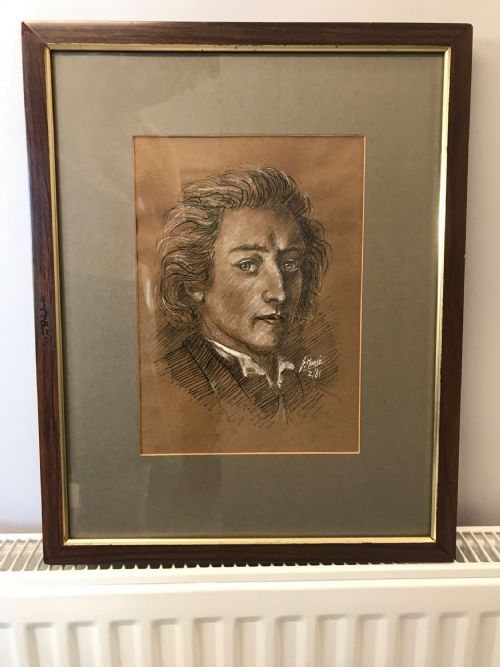
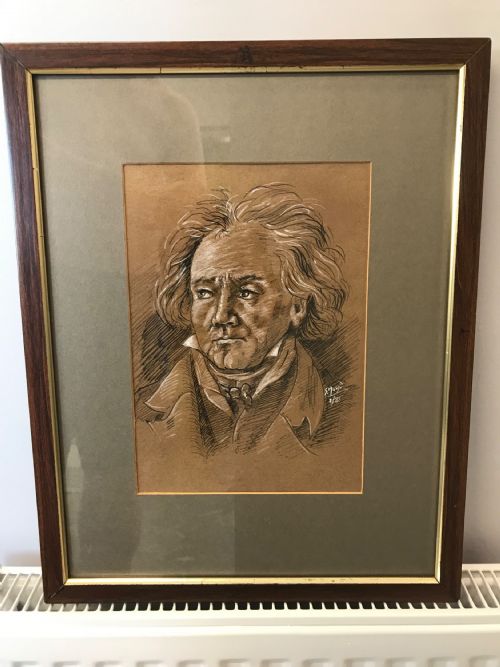
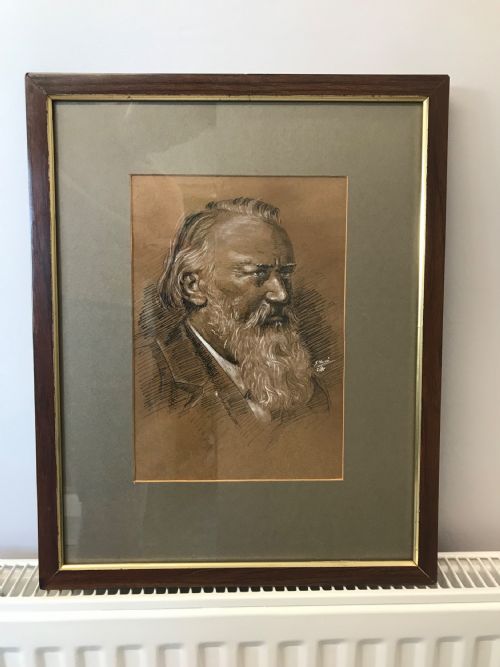
The selection includes portrait drawings of composers, landscape scenes by artists such as Fred Lawson, architectural studies, and animal subjects by Louis Wain. These works appear within wood frames, gilt wood surrounds, and scroll mounted frames.
Pieces span several distinct periods, including Georgian, Victorian, Edwardian, and mid-century modern movements. The visual language moves from 19th century realism and Gothic revival to academic realism and French romanticism.
How they were made
Artists executed these works primarily using ink, gouache, and watercolour applied directly to paper. Pen nibs provided precise linear detail, whilst washes and gouache introduced tonal depth and opaque highlights.
Framing materials integrate wood and gilt wood with glass protection. Late 18th century and 19th century examples frequently utilise ornate or scroll mounted frames that complement the monochromatic or tinted drawings within.
Cats, classical composers, and Gothic abbeys share the same paper stage.
What varies in quality
The distinction between standard examples and superior works rests upon the surety of the draughtsmanship and the contextual documentation attached to the piece. Confident line work and preparatory studies by known hands command greater attention from collectors.
The integrity of the pairing between the paper artwork and its period frame influences the overall standing of the piece. Original gilt wood and scroll mounted frames that preserve the work contemporary to its creation elevate the presentation.
Fred Lawson·Louis Wain·Lucien Freud·Alfred Dehodencq·Dame Laura Knight
The Framed Paper Pen Sketch Glossary
- Gouache
- An opaque watercolour paint consisting of pigment, water, and a binding agent such as gum arabic. It provides solid, flat areas of colour and sharp highlights on paper.
- Wash
- A thin, transparent layer of diluted ink or watercolour applied across paper. Artists utilise this technique to establish rapid tonal gradients and shadow.
- Gilt wood
- Wood carved and coated with a thin layer of gold leaf or metallic gilt powder. This finish appears frequently on 18th and 19th century frames.
- Preparatory study
- A preliminary drawing executed by an artist to plan a larger composition or explore a subject. These works record the initial working thoughts of the creator.
Framed Paper Pen Sketch: Frequently Asked Questions
How do I hang a framed paper pen sketch?
Hang these works away from direct sunlight to prevent the ink and paper from fading over time. Ensure the wall fixings match the weight of the wood and glass frame.
Maintain stable indoor humidity levels to protect both the historic paper support and the wooden framing elements from warping or environmental degradation.
Are these drawings original works?
The listings comprise original hand-drawn works on paper rather than mechanical reproductions. Artists applied ink, wash, and watercolour directly by hand during the respective periods.
Each piece represents a unique execution, evidenced by individual pen strokes and preparatory marks visible across the paper surface.
How do I date an antique drawing?
Dating relies upon the paper characteristics, ink composition, stylistic markers, and any accompanying signatures or documentation. 19th century realism and 18th century architectural or landscape subjects exhibit period-specific traits.
The framing style often provides a concurrent timeframe, particularly when original gilt wood or scroll mounted frames remain with the artwork.
What subjects appear in these sketches?
The subjects encompass landscape views, architectural studies of Gothic structures, animal illustrations, and portraiture of historical figures including composers. Works range from topographical scenes to narrative battle compositions.
Artists documented domestic settings, rural villages, and historical book illustrations, reflecting the specific aesthetic interests of Georgian, Victorian, and mid-century British periods.