

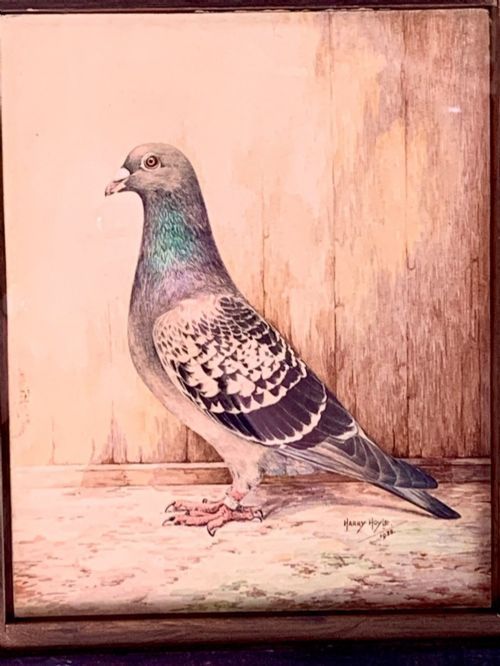
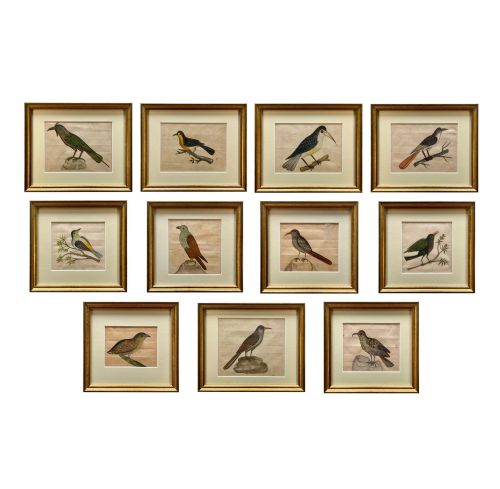
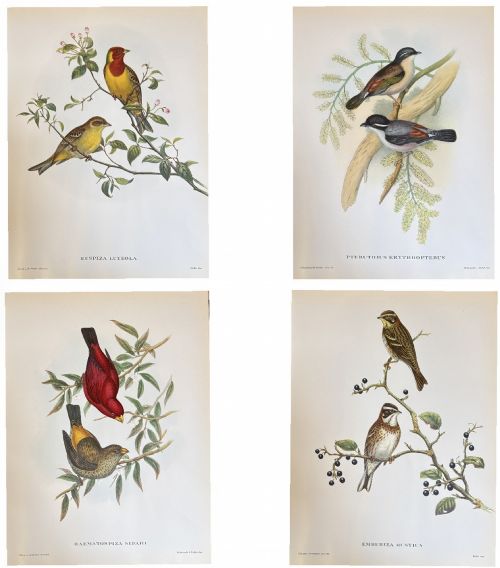
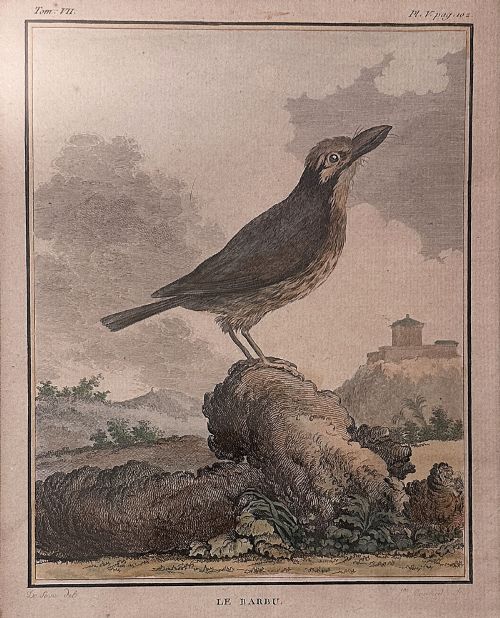


Framed Ornithological Artwork
These framed ornithological artwork pieces capture centuries of avian observation in delicate watercolours, pencil drawings, and antique lithographs.
Framed Ornithological Artwork
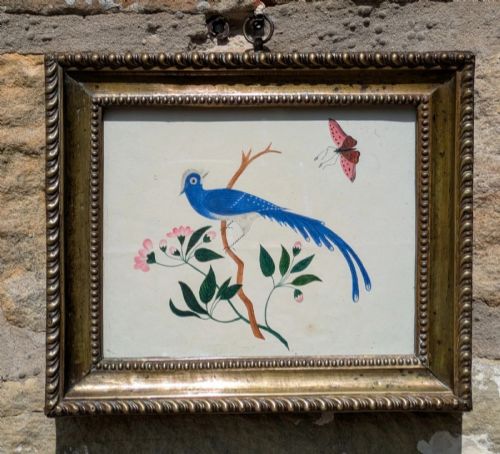
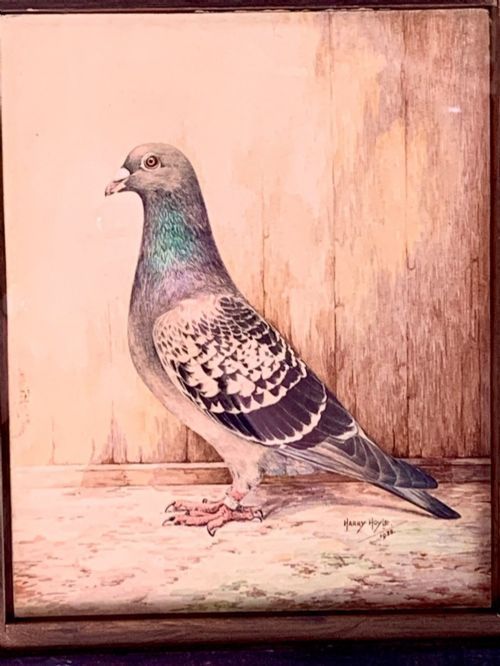
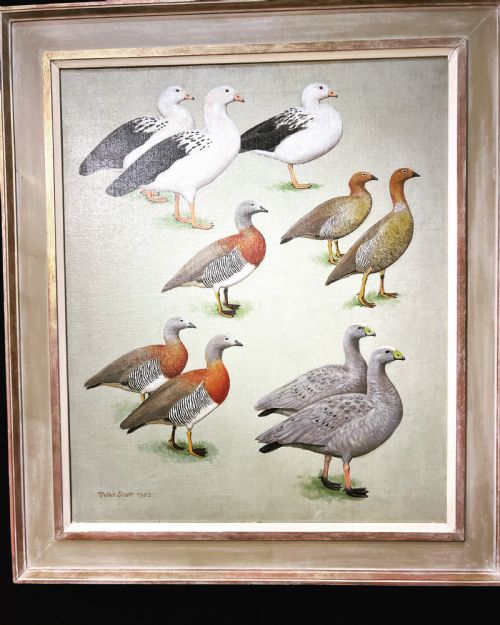
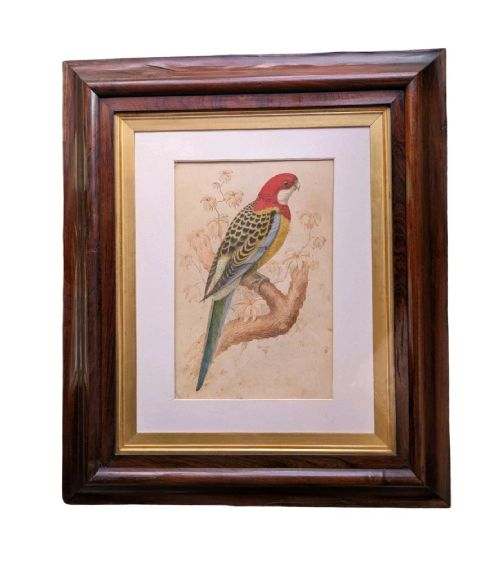
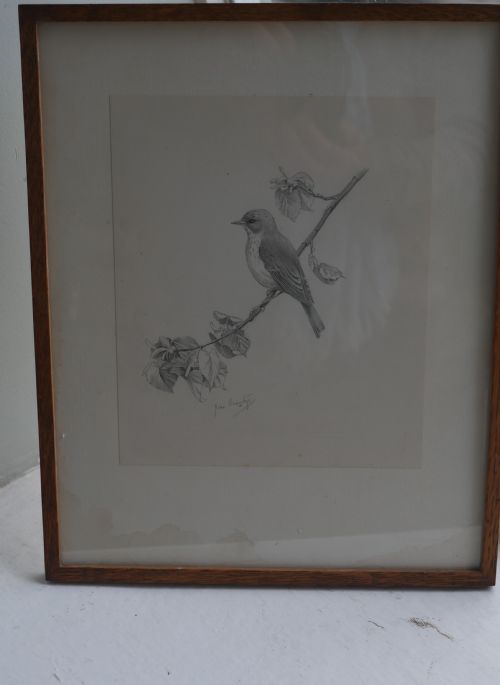
When you examine framed ornithological artwork on this page, you encounter hand-painted watercolours, gouache studies, pencil drawings, and coloured lithographs dedicated to bird life. These pieces span from the Georgian period through the Victorian era into mid-century British realism and modern interpretations.
You are most likely to meet Victorian and Edwardian watercolours alongside mid-century paintings by notable natural history artists. The subjects range from exotic parrots and macaws to British garden birds, waterfowl, and game birds.
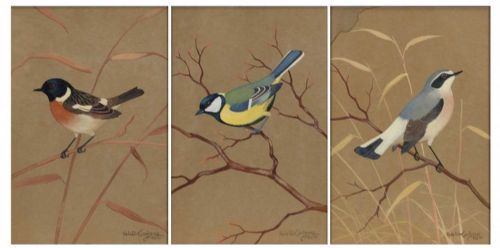
The forms vary from single intimate studies to pairs, sets of three or four, and larger ornithological plates. Each piece arrives ready to hang in its protective wooden frame behind glass.
Materials and technique
Artists executed these works on paper using watercolour paint, gouache, and pencil, often enhanced with delicate hand-colouring on early printed engravings and lithographs.
The framing typically incorporates wood moulding and glass to protect the fragile works on paper from atmospheric damage.
Selected pieces utilise gold leaf or gilt details to accent the framing or highlight the subject matter within the composition.
Framed Ornithological Artwork Retail Price Guide 2026
Typical asking prices for framed ornithological artwork among the pieces listed under this phrase on Sellingantiques today, from the lower quarter to the upper quarter. They describe what is for sale here now, not the wider market.
Materials recorded across the archive include watercolour paint, gouache, pencil, paper, wood, glass, gold leaf, and gilt.
Judging quality
Quality rests upon the precision of the draughtsmanship and the artist's ability to render the anatomical detail and plumage of the bird with scientific accuracy and artistic grace.
The sophistication of the medium elevates certain works, distinguishing hand-painted watercolours and gouache studies by named artists from standard reproduction prints.
Condition remains paramount, where clean paper, stable pigments without excessive fading, and period-appropriate framing preserve the integrity of the piece.
Samuel Dixon·Ralston Gudgeon·Charles F Tunnicliffe·William Andrews Nesfield·Harry Bright·Thomas Blinks·Arthur Wardle·Edward Lear·Robin Hill·Donald Watson
The Framed Ornithological Artwork Glossary
- Gouache
- An opaque water-based paint that provides solid, vibrant colour blocks in bird studies. It differs from transparent watercolour by containing white pigment to increase opacity.
- Lithograph
- A print made from a flat stone or metal plate on which the image area is receptive to ink. Hand-coloured lithographs feature pigment applied by hand after the printing process.
- Basso-rilievo
- A low relief sculptural picture that projects slightly from the background plane. This technique adds tactile depth to avian subjects.
- Engraving
- A printmaking method where an artist cuts lines directly into a metal plate with a burin. The resulting lines hold ink to produce fine, crisp details.
- Naturalism
- An artistic movement focused on the accurate depiction of the natural world. In these works, it manifests as precise observation of birds in their natural habitats.
Framed Ornithological Artwork: Frequently Asked Questions
How do I date an old bird painting?
Examine the paper quality, framing style, and signature to establish a baseline era. Victorian and Georgian works often utilise handmade paper and distinct hand-written inscriptions on the reverse.
Compare the artistic style and pigment characteristics with documented periods like Edwardian naturalism or mid-century British realism to narrow down the decade.
Are these pieces original watercolours?
Many listings feature original hand-painted watercolours, gouache, and pencil drawings created directly by artists and naturalists. Each brushstroke and pencil line is unique to that specific sheet of paper.
Other listings comprise antique hand-coloured lithographs and engravings produced in limited runs during the nineteenth century.
How should I hang and protect them?
Keep these works on paper away from direct sunlight to prevent the watercolour pigments and coloured inks from fading over time. Maintain stable indoor humidity levels to protect both the paper support and the wooden frame.
Ensure the glass is clean and secure, and use professional picture-hanging hardware suited to the weight of the timber frame.
What subjects are most common?
British garden birds, game fowl, waterfowl, and birds of prey appear frequently across the Victorian, Edwardian, and mid-century selections. Artists captured native species alongside exotic parrots and macaws.
Some works present solitary ornithological studies, while others group multiple species together in a single framed composition.