




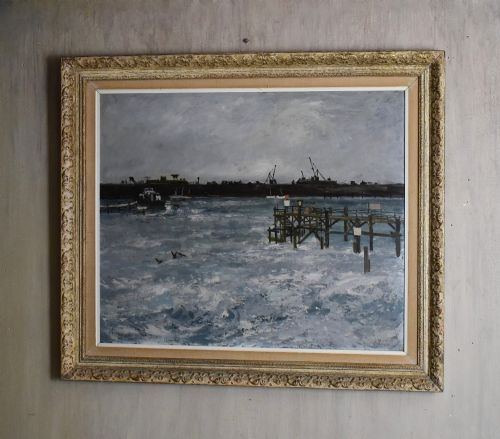
Framed Ocean Art
Framed ocean art brings the movement and atmosphere of the sea indoors through maritime paintings, watercolours and prints.
Framed Ocean Art
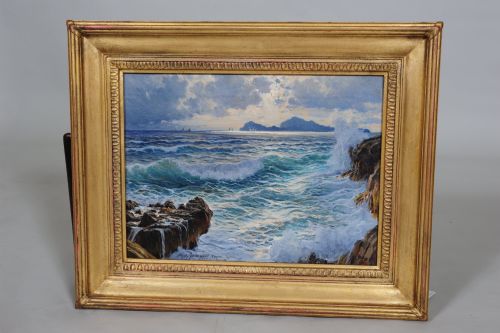
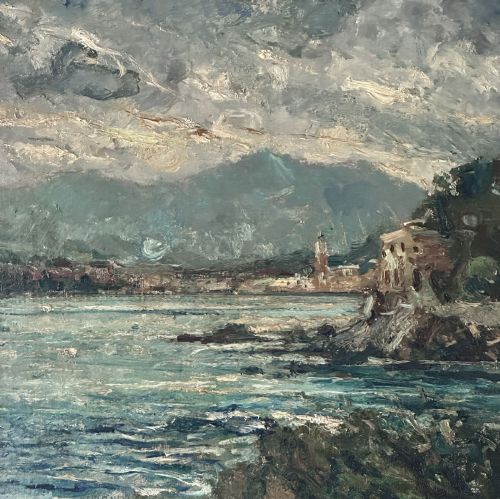
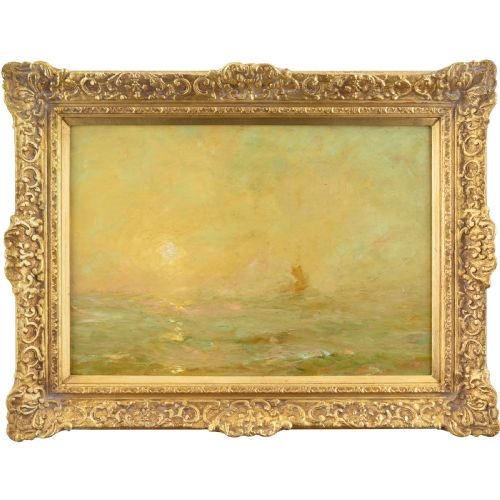
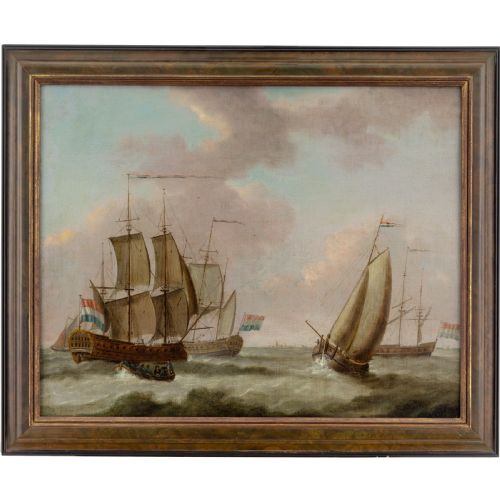
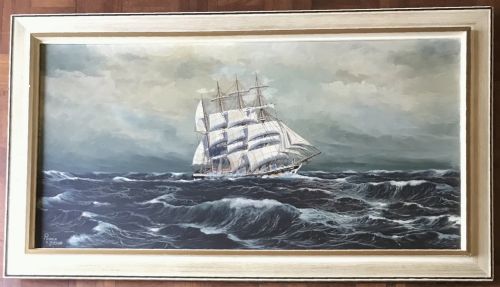
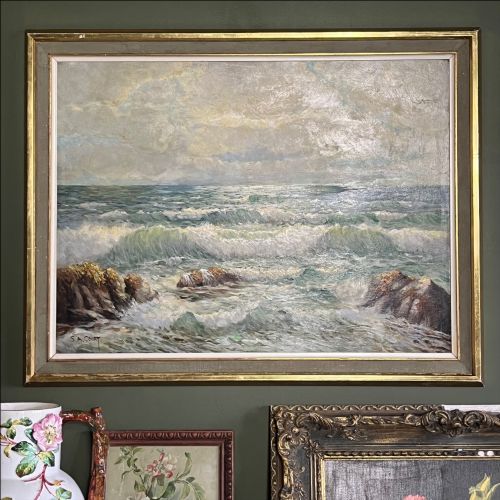
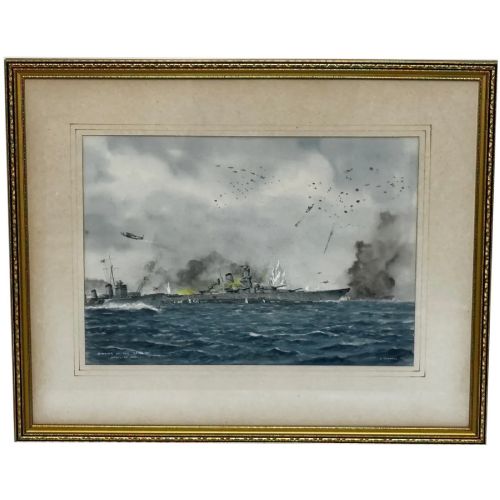
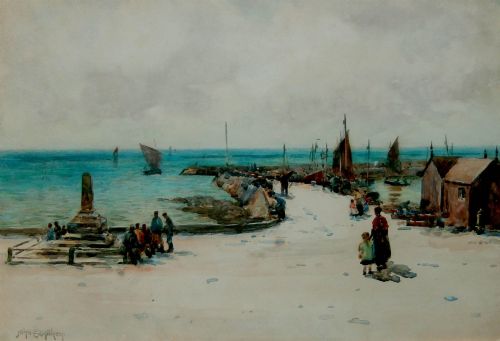
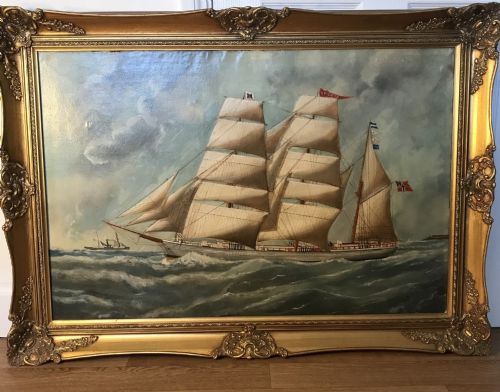
Framed ocean art encompasses historical marine oil paintings, delicate watercolours, and coastal scenes spanning from the nineteenth century through the mid twentieth century. Buyers seeking framed ocean art encounter depictions of rolling seas, naval vessels, and quiet coastal harbours captured by British, French, and Dutch artists.
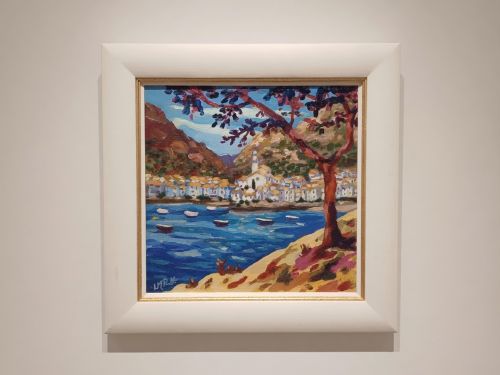
The selections on this page lean heavily towards traditional oil on canvas and watercolour paintings framed in wood and gilt surrounds. Works range from early nineteenth century depictions of shipping in heavy seas to later impressionist coastal views created en plein air.
Materials and construction
Artists painted these coastal scenes utilising oil paint on canvas or board, alongside watercolour and gouache on paper. Canvases are stretched over wooden frames and frequently housed within substantial wood or gilt wood mouldings under glass where appropriate for works on paper.
Traditional techniques involve layering oil pigment to capture the texture of waves or applying fluid washes of watercolour to denote atmospheric skies and coastal light. The physical framing materials match the period of the artwork, using hand-finished wood and decorative gilding.
Framed Ocean Art Retail Price Guide 2026
Typical asking prices for framed ocean art among the pieces listed under this phrase on Sellingantiques today, from the lower quarter to the upper quarter. They describe what is for sale here now, not the wider market.
Several artists clearly preferred rolling waves over calm harbours, ensuring plenty of salt spray frozen in oil paint.
Distinguishing quality in marine works
Quality rests upon the artist's command of light, atmospheric perspective, and maritime architecture. Superior works render the weight of heavy seas and the rigging of sailing ships with anatomical precision and confident brushwork, avoiding stiff or formulaic representations of water.
Condition of the medium and the integrity of the original frame also influence the standing of a piece. Retaining untouched painted surfaces and period-appropriate framing elevates the historical character of these maritime works.
William Ayerst Ingram·Hans Harlander·Reginald Arthur Borstel·John E. Aitken·Eric Tufnell·William Banks Fortescue·Lucy Pratt·Peter Brannan·Lai Fong·Thomas Hodgson Liddell·William Henry Williamson·Alexander Harwood·George Stanfield Walters·Warwick Goble·John Moxon·Charles William Adderton·Charles Napier Hemy·Gustave De Bréanski·Daniel Sherrin
The Framed Ocean Art Glossary
- Marine art
- Painting or imagery that depicts ships, coastal views, naval battles, and the open sea. This genre encompasses both documentary records of specific vessels and expressive interpretations of coastal weather.
- En plein air
- The practice of painting outdoors to capture direct natural light and atmospheric conditions. Artists utilising this method often depicted changing coastal weather and local shorelines.
- Gilt wood
- Wood coated with a thin layer of gold leaf or metallic gilt finish. Picture frames from the nineteenth and early twentieth centuries frequently utilised this decorative treatment.
- Watercolour painting
- Pigments suspended in a water-soluble base applied to paper. These works require protective glass framing to prevent moisture damage and fading.
Framed Ocean Art: Frequently Asked Questions
How do I date an antique marine painting?
Dating relies on stylistic clues, artists' active working years, and the construction of the canvas or frame. Maritime subjects often provide historical markers through the type of vessel depicted.
Examining signatures, stretcher frames, and backing materials helps narrow the decade of creation. Many nineteenth and early twentieth century works carry inscriptions or artist signatures on the reverse.
Where should I hang coastal artwork?
These pieces suit spaces with stable humidity away from direct sunlight to protect pigments and paper supports. Wall placement benefits from eye-level hanging where the detail of the rigging or brushwork can be observed.
Pairing traditional maritime oils with simple wall spaces allows the dark tones of stormy seas or the bright palette of coastal watercolours to stand out.
How do oil paintings differ from watercolours here?
Oil paintings utilise heavy pigments on canvas or board, offering rich textures and deep tones suited to dramatic storms and heavy seas. Watercolours employ translucent washes on paper, creating luminous effects ideal for coastal light and quiet harbours.
Oils generally require only a sturdy wooden frame, whereas watercolours need mounting board and protective glass to prevent environmental degradation.
What is a pierhead painting?
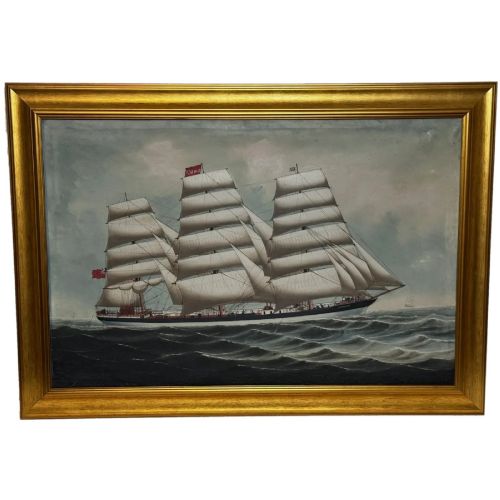
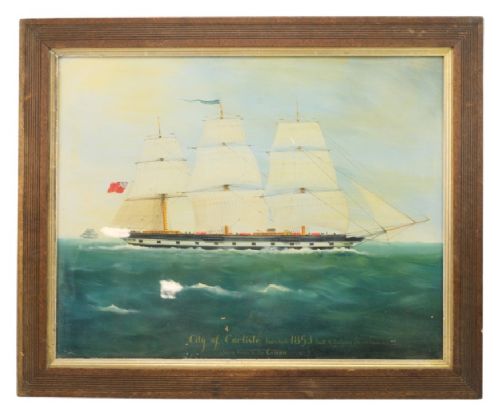
Pierhead paintings are historical portraits of specific merchant or naval ships, often commissioned by captains or shipowners. These works document the exact rigging and flag details of named vessels.
Artists painted these pieces with an emphasis on accuracy, frequently showing the ship entering or leaving a specific port.