







Framed Nude Portrait
A framed nude portrait brings classical form, expressive brushwork, and intimate character straight to the wall.
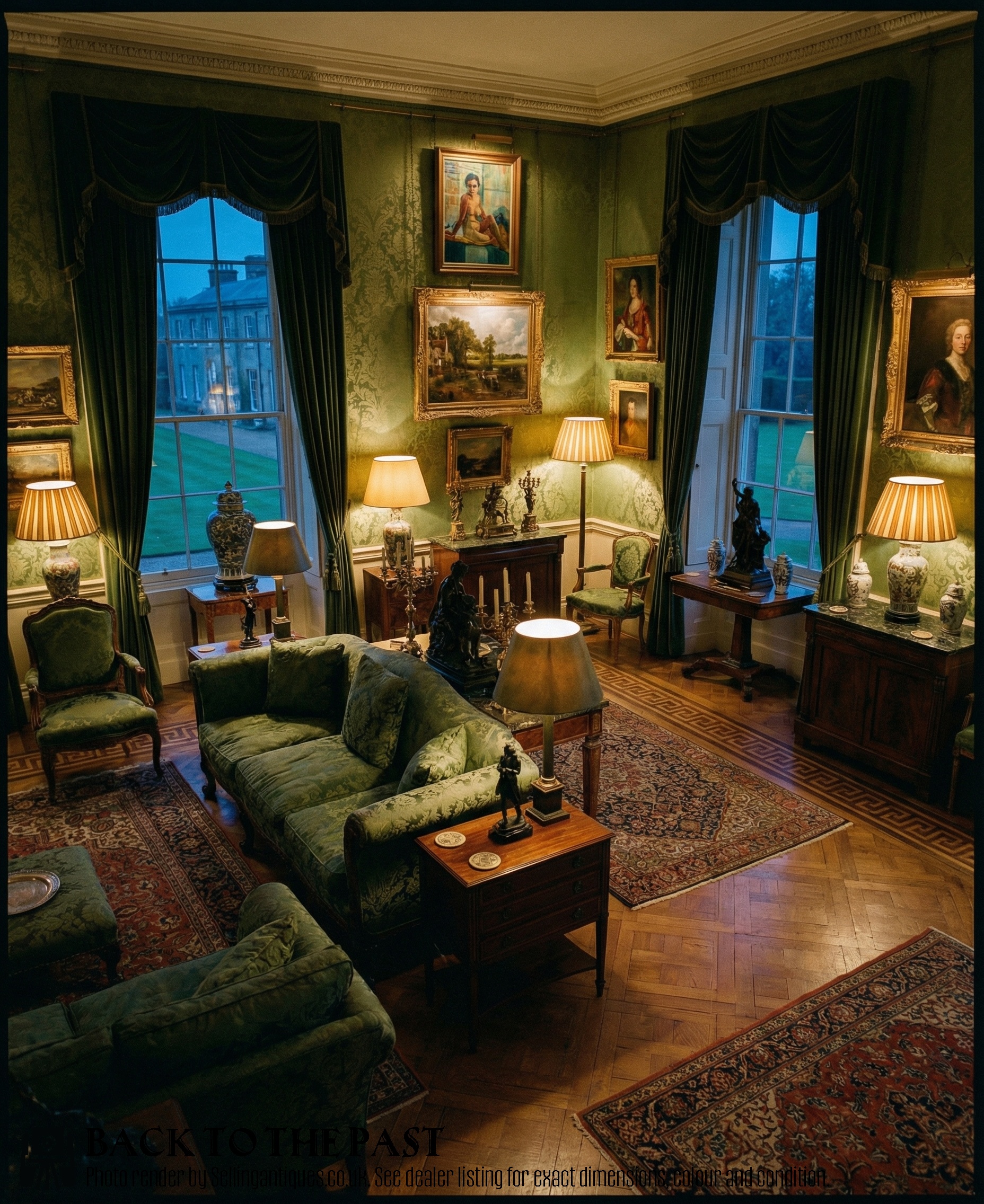
Framed Nude Portrait
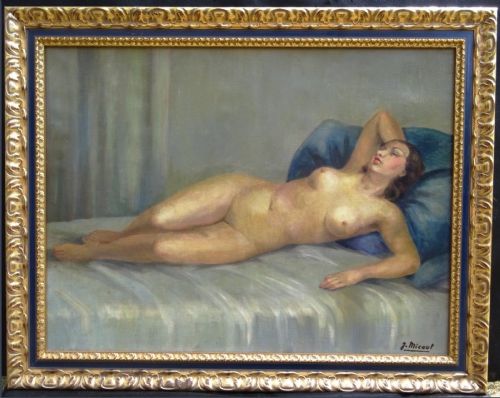
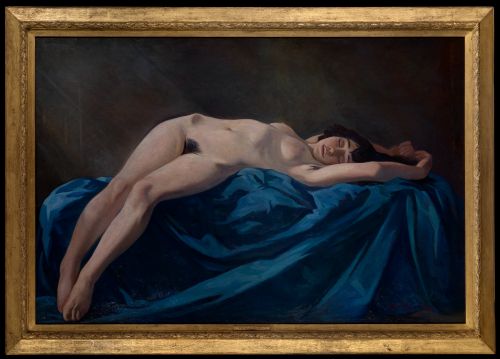
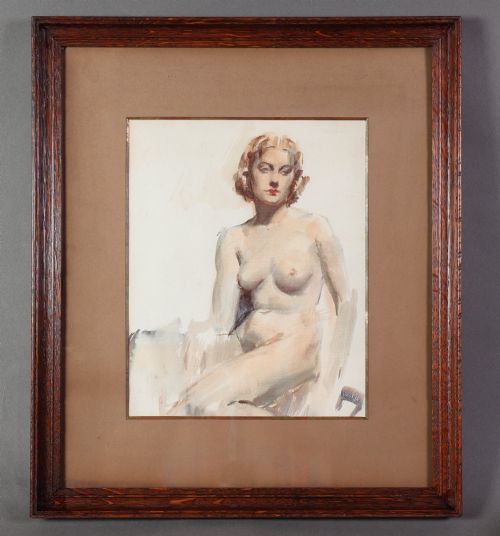
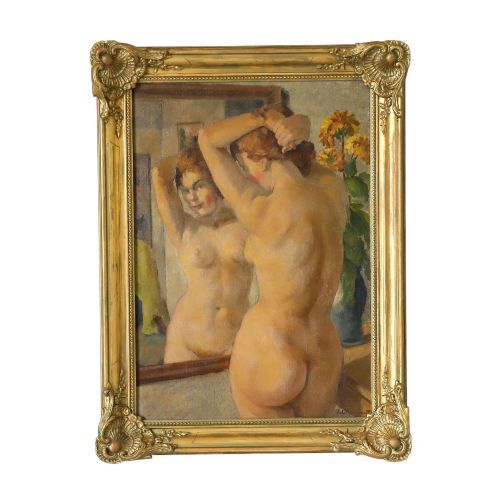
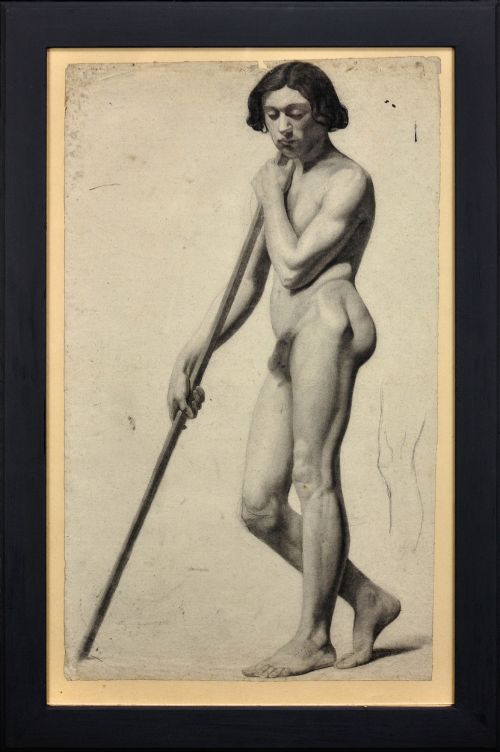
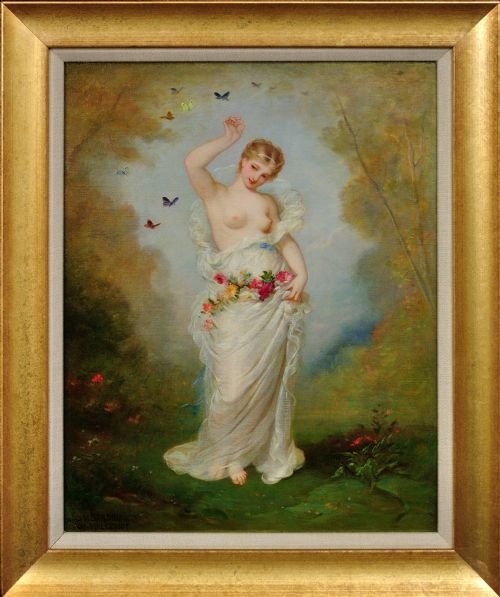
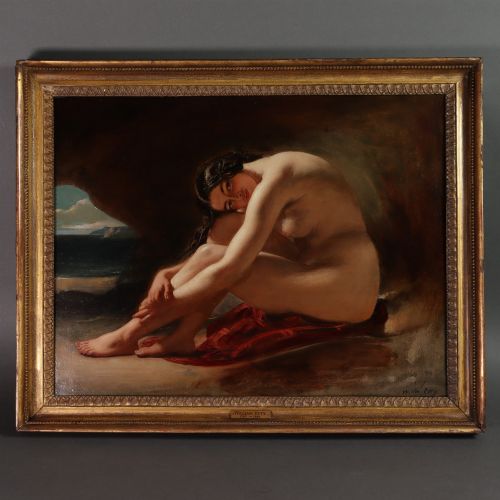
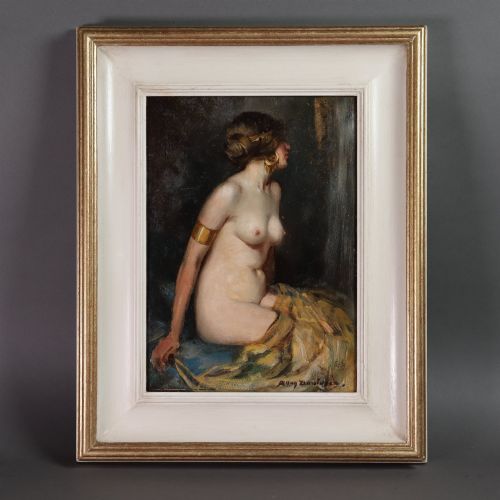
A framed nude portrait spans academic life studies, Art Deco compositions, and mid-century interpretations of the human form. Buyers searching for a framed nude portrait encounter pieces ranging from Victorian watercolours and charcoal drawings to oil paintings on canvas and board.
The selections on this page feature works by named European and British artists alongside unsigned school pieces. Most examples emerge from the nineteenth and twentieth centuries, capturing subjects from mythological figures to studio models in oil or pastel.
How they were made
Artists relied primarily on oil paint applied to canvas or wood panel, as well as charcoal and pastel on paper. These mediums allowed for subtle tonal modeling of the human figure, supported by glass for works on paper.
The supporting frames consist of wood, often tailored to the aesthetic of the period, from ornate nineteenth-century moulding to clean mid-century profiles.
Several ladies on this page appear to be thoroughly enjoying a sunny day out on the cliffs or by the river.
What varies in quality
Quality rests upon the artist's command of anatomical proportion, draughtsmanship, and the handling of light across the form. A strong piece demonstrates confident brushwork or precise charcoal lines that give weight and presence to the subject.
The harmony between the artwork and its period frame further distinguishes the piece, alongside the preservation of the original canvas or paper surface.
Eric Robertson·Philippe de Rougemont·Julian Mandel·Augustus John·Henry Arthur Roberts·Raymond Moritz·Tony Giles·Henri Vincent-Anglade·Alexandre-Louis Martin·Gaetan Dumas·William Etty·Allan Douglas Davidson·James Clark·Arthur Hacker·Fernand Jean Barbier·William Edward Frost·Peter Paul Rubens·Jean Hippolyte Marchand·Pinchus Kremegne·Winifred Eugene Ballard·Yetta Kane·Raymond Arthur Roadnight·Montagu Barstow
The Framed Nude Portrait Glossary
- Academic realisms
- A style of painting and sculpture produced under the influence of European academies of art, emphasising precise anatomical accuracy and classical themes.
- Charcoal
- A form of dry art medium made of finely ground organic materials held together by a gum or wax binder, used here for life study drawings.
- Oil on canvas
- Pigments bound in a medium of drying oil applied to stretched fabric, representing the primary painting technique found across these listings.
- Post-Impressionism
- A predominantly French art movement that developed from about 1880 to 1914, extending Impressionism while rejecting its limitations.
- Life study
- An artwork depicting the human figure drawn or painted directly from a live model in a studio or academic setting.
Framed Nude Portrait: Frequently Asked Questions
How are these portraits dated?
Dates are determined by artist lifespan records, stylistic indicators such as Art Deco or mid-century modern traits, and traditional framing methods.
Archival signatures and exhibition labels further confirm the decade of creation.
What subjects do these pieces show?
The subjects range from studio life studies of male and female figures to mythological characters like nymphs and dryads.
Artists also captured contemporary sunbathers, dancers, and introspective portraits within domestic or natural settings.
How should I hang a framed nude portrait?
These works suit private spaces such as studies, bedrooms, or dedicated gallery walls where lighting can be carefully managed.
Ensure the piece hangs away from direct sunlight to protect oil paint and paper from fading over time.
What is the difference between an oil study and a finished painting?
An oil study was typically created quickly to capture posture, lighting, and anatomical details in a studio setting.
A finished painting usually involves tighter composition, greater detail, and preparation for exhibition or sale.