

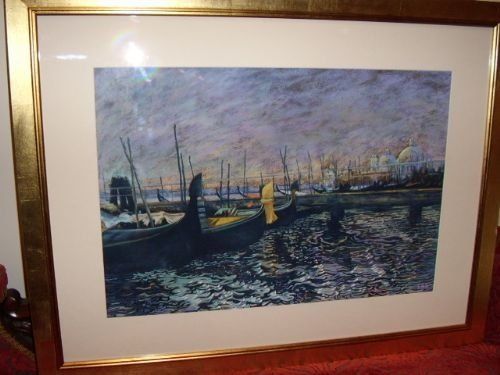


Framed Nocturnal Landscape Artwork
Framed nocturnal landscape artwork captures the quiet drama of moonlight across seas, lochs and country scenes, offering buyers moody historic scenes to hang at home.
Framed Nocturnal Landscape Artwork
When you search for framed nocturnal landscape artwork, you encounter historic depictions of night scenes spanning from the Victorian era through the mid twentieth century. These works capture moonlit views of country landscapes, Highland lochs, coastal shipping and urban churches after dark.
The pieces on this page include oil paintings on canvas, watercolours, pastels and ink drawings. Subjects range from Scottish romantic views and Dutch school influences to maritime impressions and Georgian romantic ruins.
How they were made
Artists create these night scenes using oil paint, watercolour, pastel, gouache and ink on canvas and paper. Canvases are stretched and mounted in wooden frames, frequently finished with gilt.
Techniques rely on tonal contrasts to suggest moonlight, using dark palettes pierced by pale highlights on water, stone and clouds. Works are preserved in traditional wooden and gilt wood frames appropriate to their period.
Framed Nocturnal Landscape Artwork Retail Price Guide 2026
Typical asking prices for framed nocturnal landscape artwork among the pieces listed under this phrase on Sellingantiques today, from the lower quarter to the upper quarter. They describe what is for sale here now, not the wider market.
Several artists preferred painting after hours, capturing ghostly sailing ships and moonlit churchyards long past bedtime.
What varies in quality
Quality separates through the artist's handling of shadow and light, distinguishing atmospheric depth from flat darkness. Named makers and attributed followers command greater attention for their skilled brushwork and composition.
The fidelity of the framing also alters the character of the piece, with period gilt wood enhancing the visual weight of nineteenth and twentieth century canvases alike.
The Framed Nocturnal Landscape Artwork Glossary
- Oil on Canvas
- Pigments bound in a drying oil applied to a woven fabric stretched across a wooden frame. This medium allows for rich blending and deep nocturnal tones.
- Gilt Wood
- Timber frames coated with a thin layer of gold leaf or metallic gilt. These frames provide a reflective border that complements dark compositions.
- Maritime Impressionism
- A style focusing on seascapes and shipping rendered with visible brushstrokes and atmospheric light effects. It frequently depicts vessels under moonlight or stormy skies.
- Gouache
- An opaque water-based paint that dries to a matte finish. Artists combine it with watercolour and ink for detailed night drawings.
Framed Nocturnal Landscape Artwork: Frequently Asked Questions
What periods do these night paintings come from?
The selection spans from Georgian and Victorian eras through the early and mid twentieth century, including pieces from the 1880s, 1910s, 1920s, 1930s, 1950s and 1960s.
Each era brings distinct framing choices and painting mediums, ranging from traditional nineteenth century oil on canvas to twentieth century pastels and watercolours.
Who are some of the artists featured?
Makers and artists referenced in the evidence include George Cole, Walter Meegan, William Samuel Horton, William Manners, Hubert Thornley, Owen Bowen and Lillian M. Harrison.
Some works are attributed to pupils or followers of notable painters such as Grimshaw, adding context to the nocturnal style.
What mediums are used in these artworks?
Artworks utilise oil paint on canvas, watercolours on paper, pastels, gouache and ink drawings. Many are presented within wood and gilt wood frames.
The combination of dark pigments and contrasting light captures moonlight on water, ruins and country paths.
How do I live with historic night landscapes?
Hang these pieces in spaces where controlled lighting can catch the gilt frames and illuminate the dark tones of the canvas without excessive glare. Pairing them with traditional interiors highlights their historic Victorian and twentieth century origins.
Ensure they are placed away from direct sunlight to protect vulnerable watercolours, pastels and paper drawings.