

Framed Narrative Painting
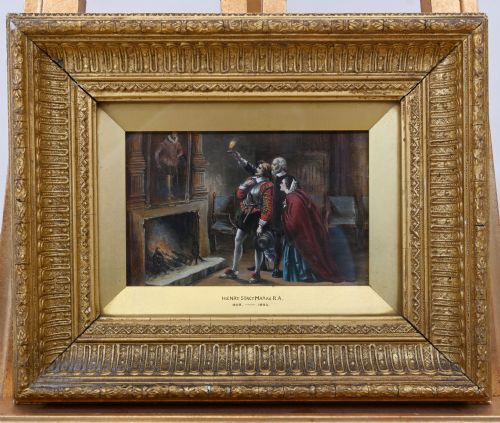
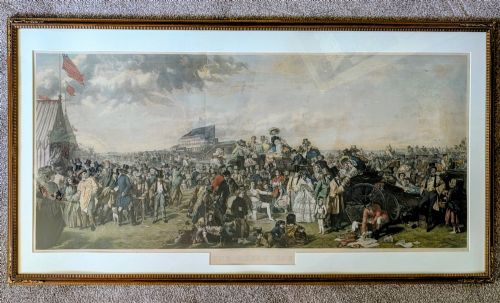
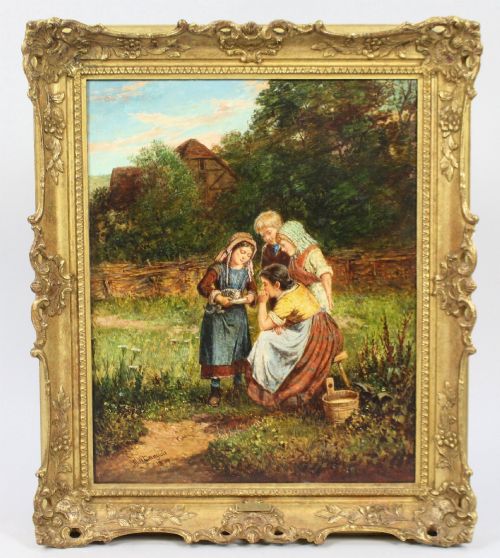
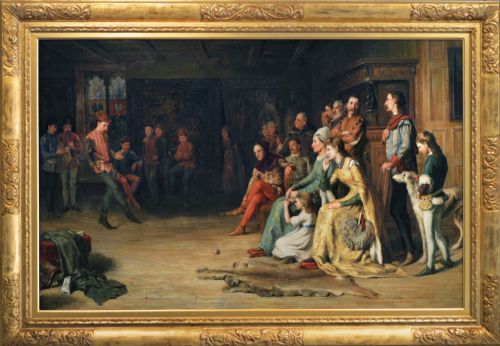
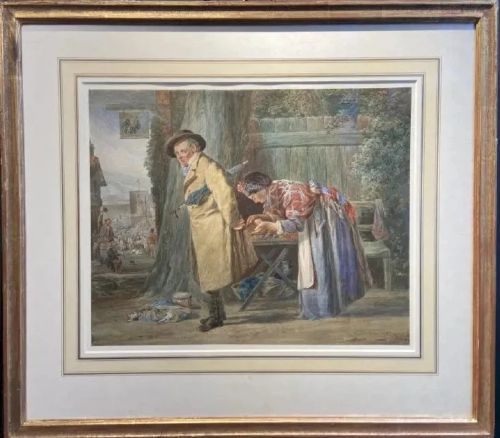
When you search for framed narrative painting, you are looking at canvases and panels that tell stories, mostly from the Victorian era and the nineteenth century.
Framed Narrative Painting
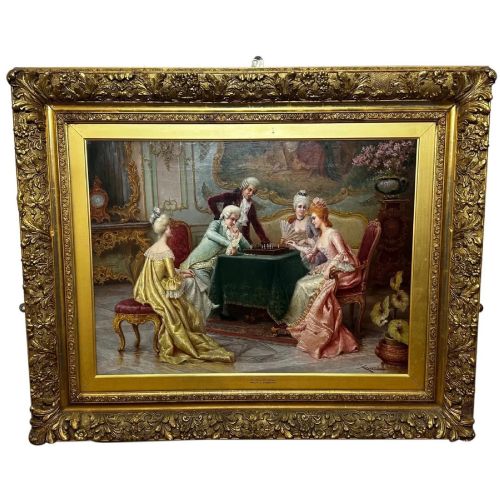
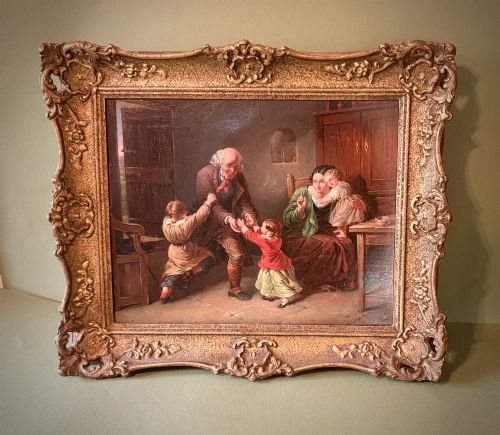
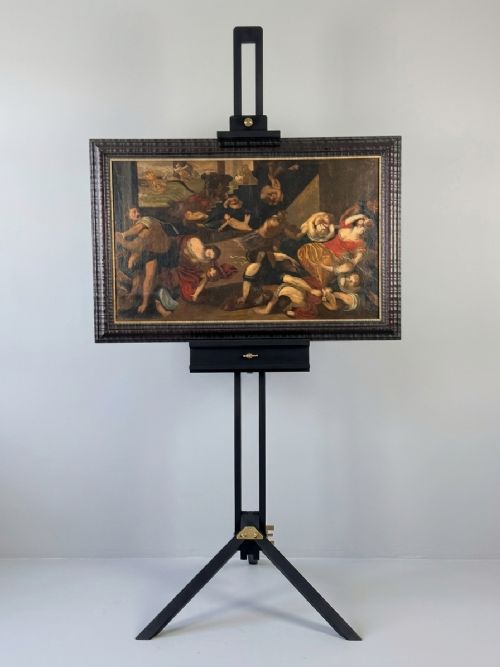
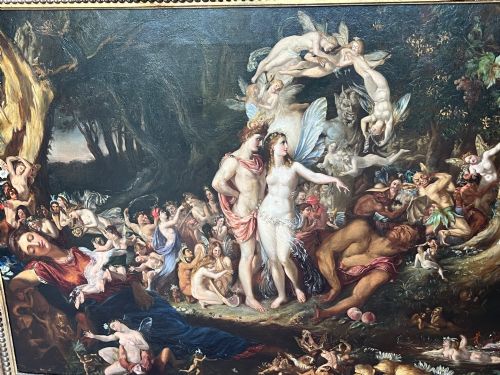
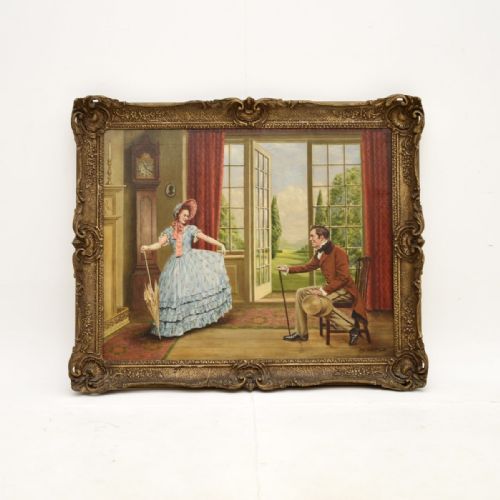
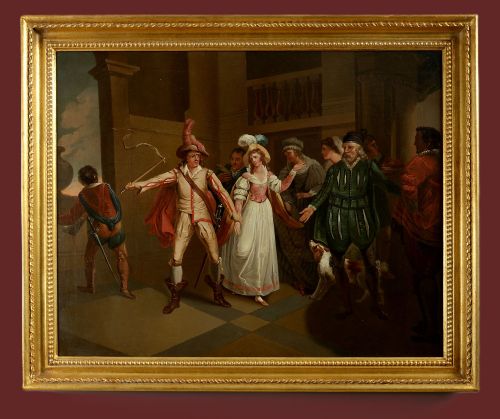
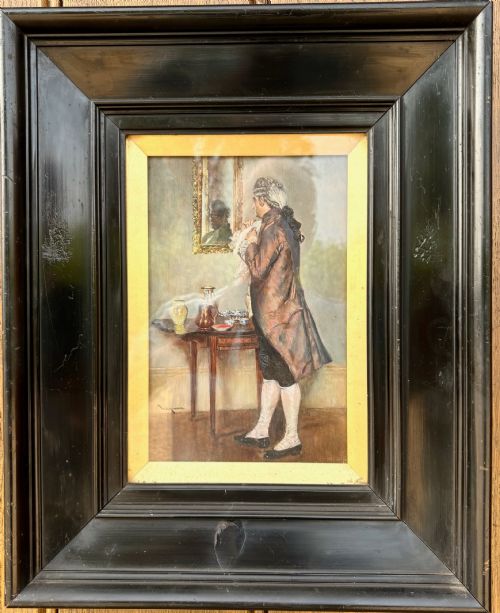
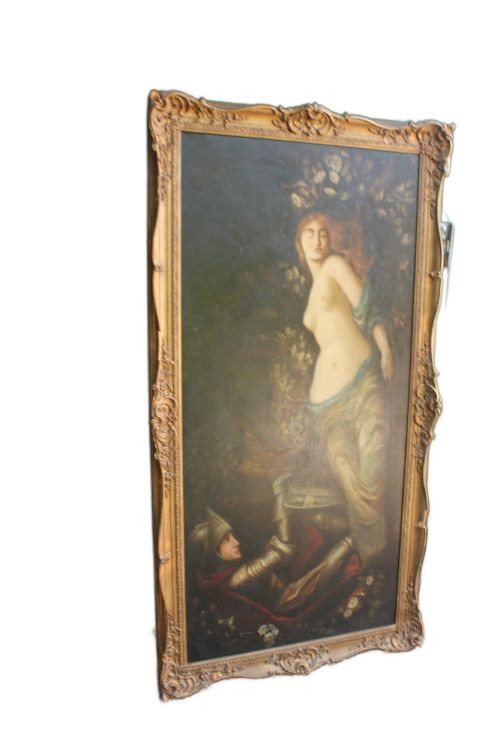
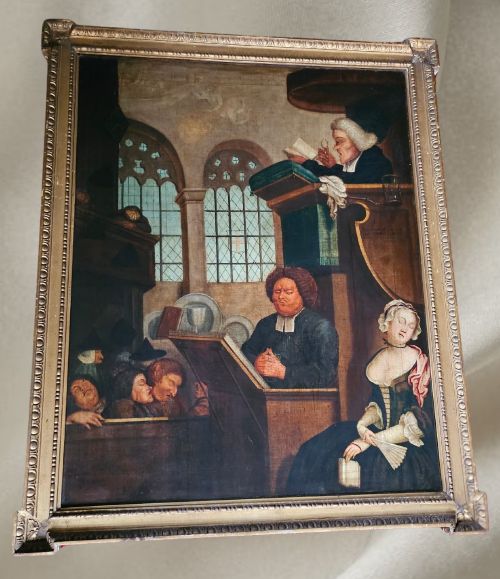
A framed narrative painting tells a story, often drawing on Shakespeare, biblical scenes, historical events or domestic genre moments involving figures in interior and exterior settings. On this page, you will most frequently encounter nineteenth-century British and French works, alongside Victorian genre scenes depicting daily life, literature and romance.
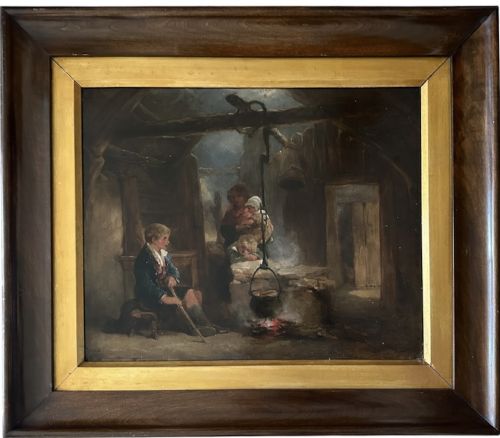
The subjects range from grand historical events and literary tableaus such as Midsummer Night's Dream and The Taming of the Shrew to intimate domestic interactions like tea time, fireside chats and children playing in cottages. These works capture specific moments in time, using human figures to convey morality, humour, drama or social history.
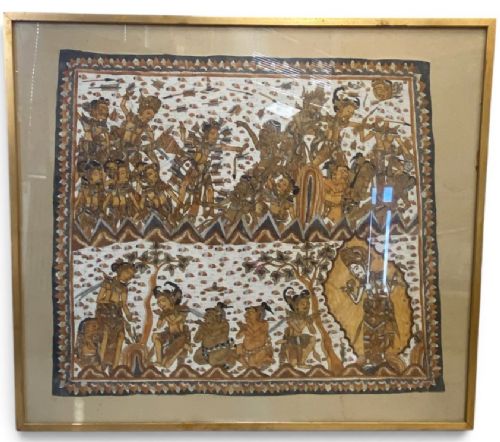
Beyond the nineteenth-century mainstream, you will also find seventeenth-century compositions, Edwardian canvases, and textiles such as Balinese Kamasan paintings depicting warriors and deities in multiple registers. The framing itself is an integral part of the presentation, frequently utilising period giltwood and gesso surrounds to complement the artwork.
Materials and technique
These works are executed primarily in oil paint on canvas, wood panels, or occasionally board, utilising traditional layering and brushwork techniques suited to figurative composition. The physical support often bears the marks of its era, from nineteenth-century woven canvas structures to earlier wooden panels.
The frames accompanying these paintings are typically constructed from wood, finished with layers of gesso and gold leaf to create ornate giltwood surrounds. These decorative borders are moulded to match the aesthetic of the period, from simple nineteenth-century profiles to elaborate Victorian ornamentation.
Framed Narrative Painting Retail Price Guide 2026
Typical asking prices for framed narrative painting among the pieces listed under this phrase on Sellingantiques today, from the lower quarter to the upper quarter. They describe what is for sale here now, not the wider market.
Cats, kittens, and geese frequently steal the narrative from the humans sharing the domestic interior.
Distinctions in quality
The distinction between standard works and exceptional pieces lies in the precision of the figure drawing, the expressiveness of the faces, and the handling of light within the narrative scene. Superior paintings achieve a psychological depth and compositional harmony that draw the viewer directly into the story.
The quality of the surrounding frame matters equally, with original period giltwood and gesso frames retaining their crisp moulding and genuine gold leaf finish holding greater artistic integrity than later replacements.
Sir Joseph Noel Paton·Felix Stone Moscheles·Stephen Samuel Lewin·Mark William Langlois·Alfred Lyndon Grace·W D Almond·Howard Helmick·William Powell Frith·William Hogarth·Joseph H Barnes·James Hamilton·Charles Hunt·Abraham Cooper·Delapoer Downing·John A Monteith·James Hayllar·Harry Brooker·Byam Shaw·Alexander Rosell·William Arthur Breakspeare·Charles Bellay·John Arthur Lomax·George Bernard O'Neill·Charles Haigh Wood·Haynes King
The Framed Narrative Painting Glossary
- Genre painting
- Depictions of everyday life, domestic interiors, and ordinary people engaged in common activities. These scenes often carry subtle social narratives or moral lessons.
- Giltwood
- Wood that has been coated with gold leaf or gold paint. It provides the shiny, reflective finish characteristic of period picture frames.
- Gesso
- A plaster-like mixture used as a base coat on wood frames before gilding. It allows craftsmen to carve intricate decorative patterns.
- Oil on canvas
- Pigments bound in a drying oil medium and applied to a stretched woven fabric support. This combination offers durability and rich colour blending.
- Pre-Raphaelite
- A style associated with nineteenth-century artists who rejected academic rules in favour of detailed observation and glowing colours. These works often feature literary or legendary subjects.
Framed Narrative Painting: Frequently Asked Questions
What is a narrative painting?
A narrative painting is an artwork that tells a distinct story, capturing a specific moment from a literary work, a historical event, or an everyday domestic scene. The figures and their expressions are arranged to communicate a clear plot or human interaction to the viewer.
These pieces rely on visual cues such as gestures, setting, and costume to unfold their stories without the need for words. They range from grand theatrical tableaus to quiet observations of nineteenth-century home life.
How were these paintings displayed?
Historically, these artworks were framed in ornate wooden surrounds and hung in prominent reception rooms, parlours, and country house galleries. The frames were chosen to project status and to complement the interior decor of the period.
Today, they function similarly in modern interiors, serving as focal points above mantelpieces or along principal walls where their detailed storytelling can be appreciated up close.
How do I care for an oil painting on canvas?
Caring for an oil painting involves keeping it away from direct sunlight, extreme temperature fluctuations, and high humidity. Gentle dusting with a soft, dry brush is generally sufficient for surface maintenance.
Avoid using water or chemical cleaners on the canvas or the giltwood frame. Professional conservation should be sought if the paint surface shows signs of cracking or lifting.
How can I tell the period of a frame?
Period frames can be dated by examining the construction techniques, the composition of the gesso, and the style of the ornamentation. Nineteenth-century frames often feature machine-moulded compo decoration applied over timber substrates.
Looking at the reverse of the frame often reveals age-related wood shrinkage, old fixings, and dealer labels that help confirm its historical context.