
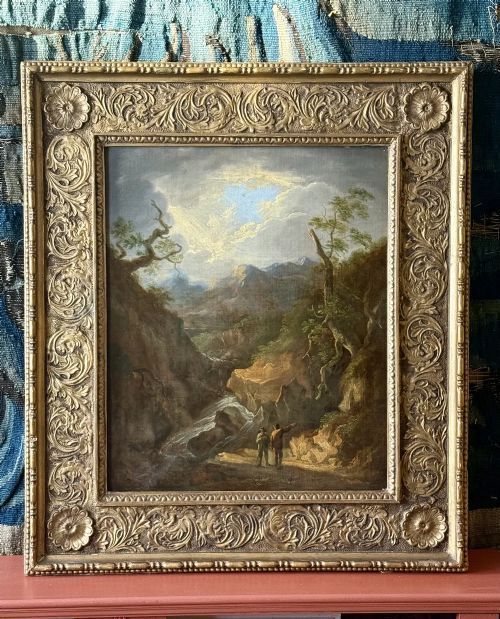
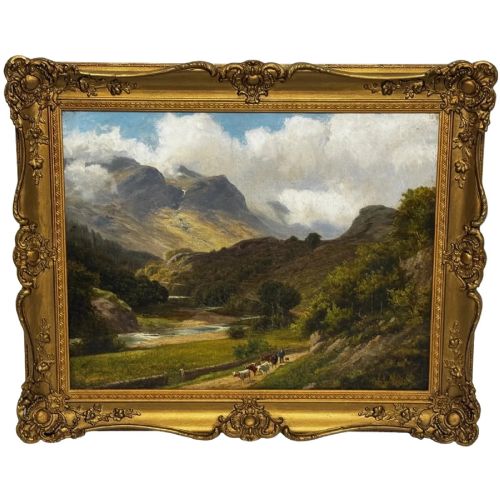
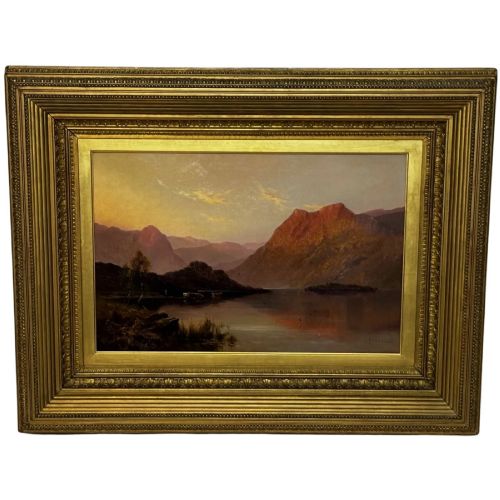
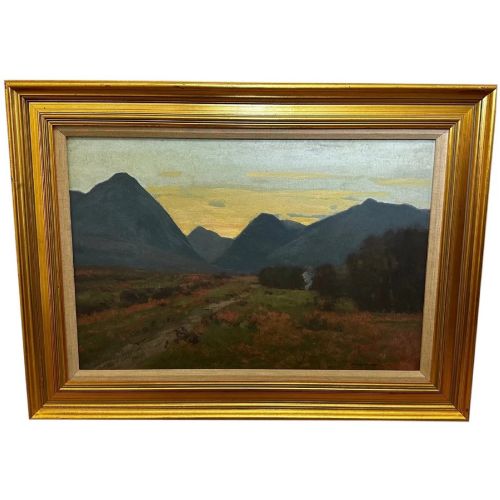
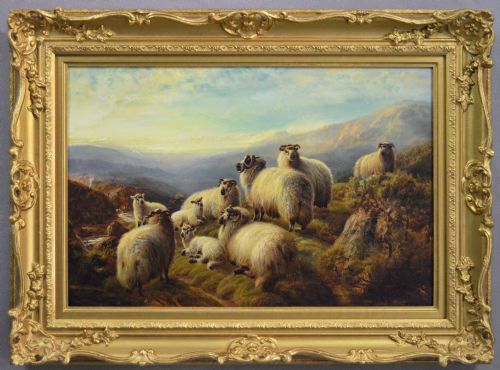


Framed Mountain Oil Painting
When you set out to acquire a framed mountain oil painting, you are looking for a window onto rugged crags and sweeping valleys captured in rich pigments.
Framed Mountain Oil Painting
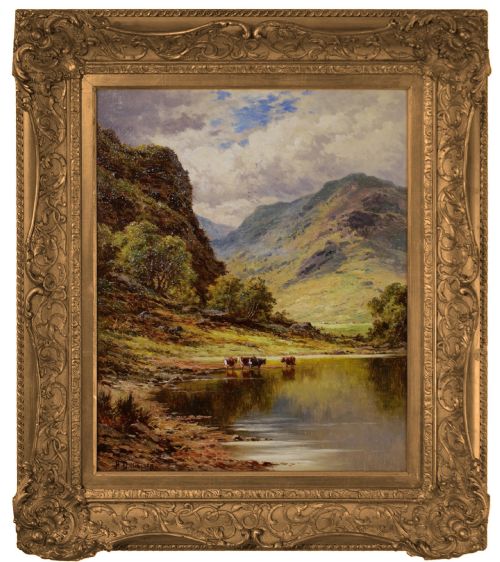
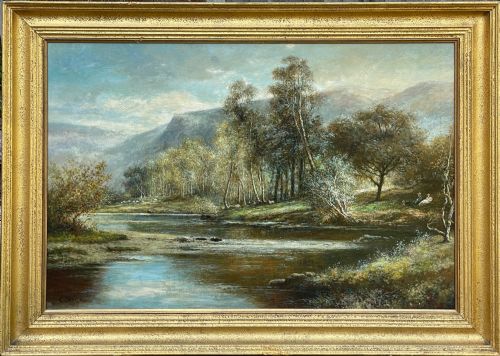
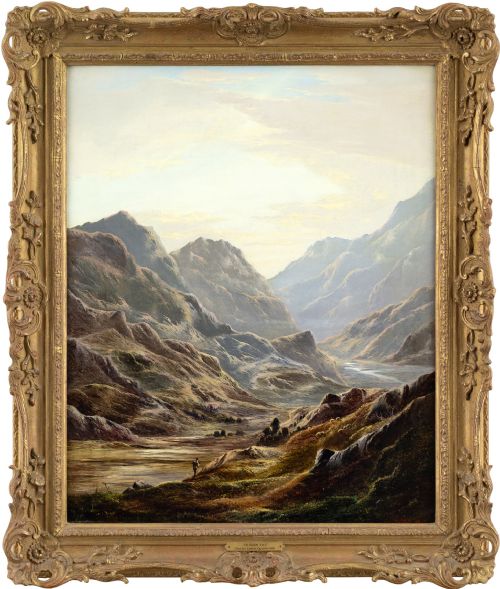
A framed mountain oil painting brings the drama of highland peaks, alpine lakes, and remote valleys directly onto your wall, capturing the untamed topography of regions like the Scottish Highlands, the Lake District, Wales, and continental Europe. You will frequently encounter works from the nineteenth century and the Victorian era, alongside pieces stretching into the early decades of the twentieth century.
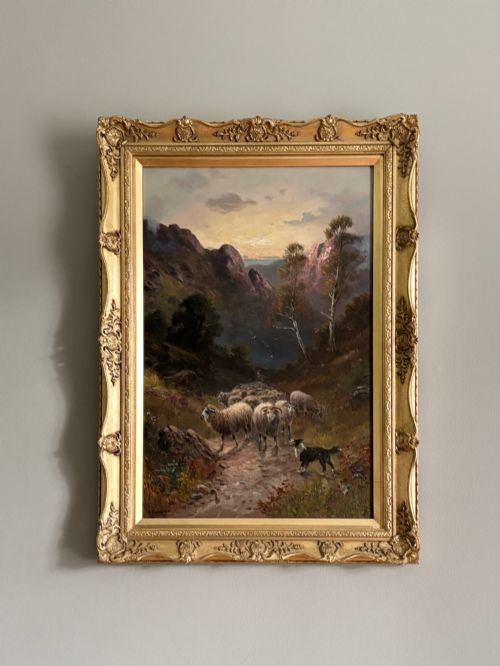
The subjects range from tranquil lochs reflecting snow-capped summits to moody, mist-shrouded ranges populated by figures, sheep, and cattle. These works serve as enduring records of romanticized wilderness, executed by artists who travelled extensively to record specific topographical views.
Most examples arrive housed in their original surrounds, which often comprise heavy giltwood and elaborate gesso mouldings that complement the grandeur of the painted scenery. These frames are integral to the identity of each piece, functioning as a structural boundary that draws the eye directly into the receding distance of the canvas.
How they were made
The foundation of these works is oil paint applied to stretched canvas or wooden panels, utilising brushes and palette knives to build up textures of rock, water, and foliage. Painters layered translucent glazes for atmospheric skies and opaque pigments for solid crags, achieving depth through careful control of light and shadow.
Surrounding these canvases are frames constructed from timber, heavily ornamented with moulded gesso and finished with layers of gold leaf or gilt. These housings required skilled joinery and decorative plasterwork to support the weight of the heavy wooden stretchers and protect the edges of the artwork.
Listings feature regional scenes from the nineteenth century onwards, executed primarily in oil on canvas with elaborate giltwood and gesso frames.
What varies in quality
The distinction between ordinary and exceptional works lies in the handling of light, atmospheric perspective, and anatomical accuracy of the terrain and animals. Superior artists managed to convey the vast scale and moisture-laden air of a mountain pass, whereas lesser works remain flat and formulaic in their depiction of rocks and foliage.
The preservation and integrity of the original gilt frame play a significant role in the overall stature of the piece. Frames with crisp, unblemished gesso enrich the visual impact, while heavy restoration or replacement changes the historical harmony between the artwork and its perimeter.
Karl Gatermann·Benjamin Barker of Bath·Alfred Fontville de Breanski Jr·George Houston·Henry H. Parker·Charles Leslie·Robert Watson·John Grenville Fennell·William Henry Mander·Sidney Richard Percy·Thomas Spinks·Frank Hider·Walter J Watson·C Caldwell·William Grant Murray·J Barclay·John Douglas Perrett·Karl Herrle·George Melvin Rennie·William Miller Frazer·George Turner·Alfred de Breanski
The Framed Mountain Oil Painting Glossary
- Gesso
- A plaster mixture applied to wood frames as a base for moulding and gilding. This substance allows artisans to carve intricate decorative patterns before applying gold leaf.
- Giltwood
- Timber that has been coated with gold leaf or a gold-coloured metallic finish. It provides a luminous boundary that separates the dark tones of a landscape from the surrounding room.
- Oil on Canvas
- Pigments mixed with drying oils, such as linseed, spread across a woven textile stretched over a wooden frame. This medium allows for slow blending and rich tonal depth.
- Impressionism
- A style characterised by relatively small, thin, yet visible brush strokes and an emphasis on accurate depiction of light. In mountain landscapes, this technique captures changing weather and shifting atmospheric conditions.
Framed Mountain Oil Painting: Frequently Asked Questions
How do I date a mountain oil painting?
Dating relies on examining the stretcher frames, canvas type, and style of the gilt surround, alongside any signatures or inscriptions on the reverse. Victorian and nineteenth-century works often feature hand-written titles on the canvas edges or wooden framing.
Changes in artistic style also offer clues, as mid-nineteenth-century works tend towards romanticized drama while later periods adopt looser, impressionistic brushwork. Comparing the artist's recorded working dates provides the most reliable chronological anchor.
Where were most of these landscapes painted?
Artists sought out renowned wilderness regions across Britain and continental Europe, frequently visiting the Scottish Highlands, the English Lake District, and Snowdonia in Wales. Continental subjects often feature the Alps or German and Austrian ranges.
These locations offered dramatic weather, lakes, and towering peaks that suited the romantic aesthetic of the nineteenth century. Painters established sketching camps in these valleys, returning to their studios to complete large canvases.
Why do many paintings feature sheep or cattle?
Animals provided a sense of human and rural scale against towering mountain ranges, grounding vast landscapes in pastoral daily life. Herds of Highland cattle or flocks of sheep added movement and local character to remote valleys.
These additions also reflected the Victorian appetite for rural genre scenes combined with topographical grandeur. Including figures or livestock transformed an intimidating wilderness into an accessible, lived-in environment.
How should I hang and light an antique oil painting?
Select a wall away from direct sunlight and steady heat sources to protect both the oil pigments and the wooden frame from drying out. A stable indoor climate prevents the canvas from slackening and the gesso moulding from cracking.
Use a dedicated picture light mounted above the frame to evenly illuminate the darker tones of the mountain pass. Ensure the fixing weight is supported properly, as heavy nineteenth-century gilt frames require robust wall anchors.