
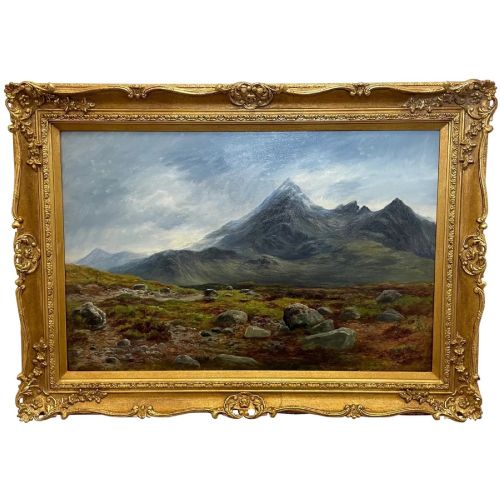
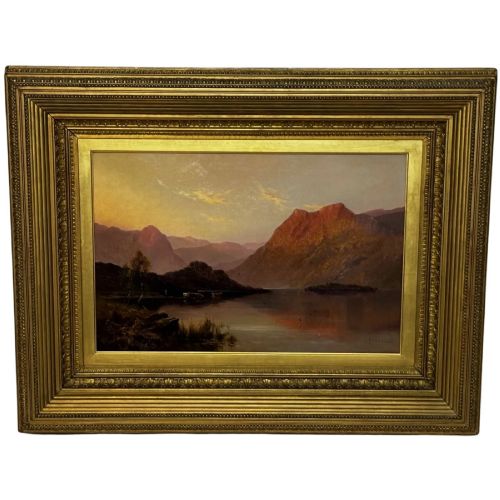
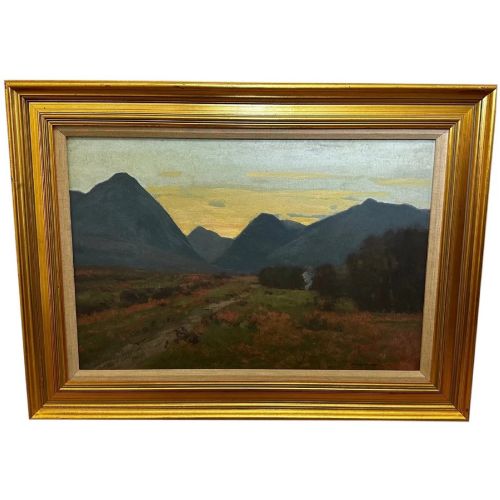
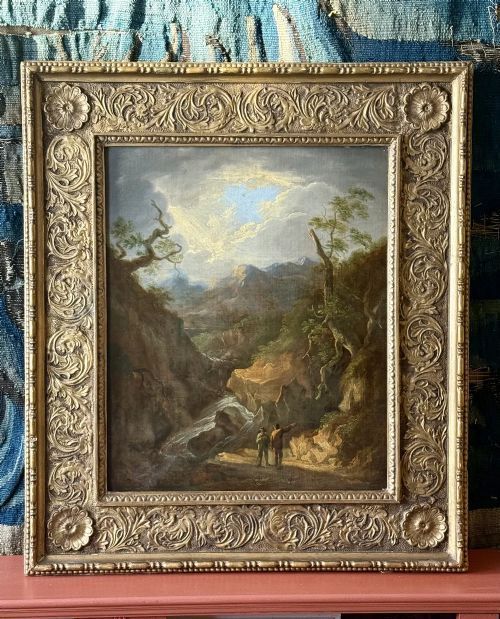
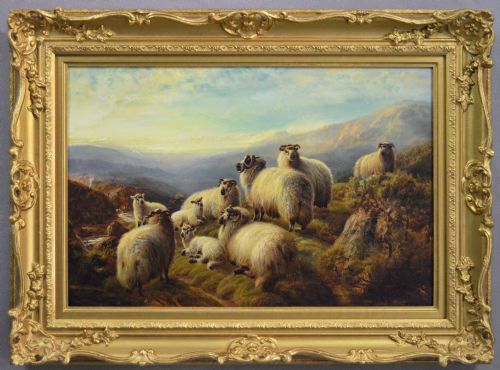


Framed Mountain Landscape Oil
These framed mountain landscape oil works capture peak and glen across the nineteenth and twentieth centuries, offering a window into rugged terrain that every collector seeks.
Framed Mountain Landscape Oil
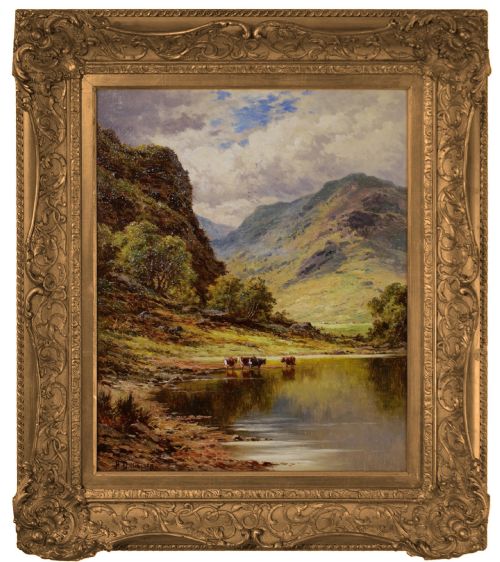
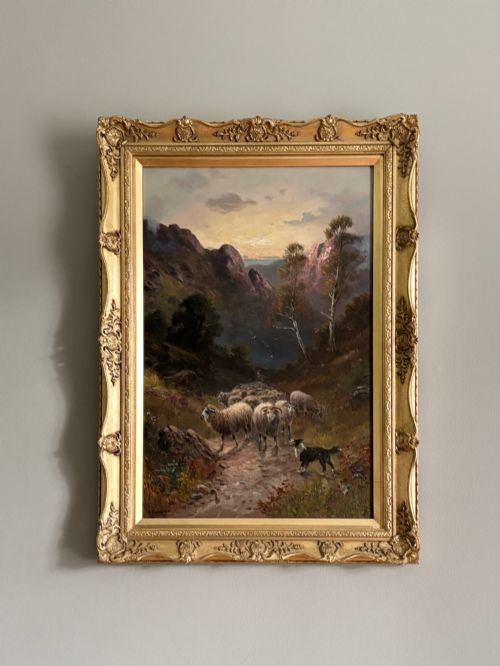
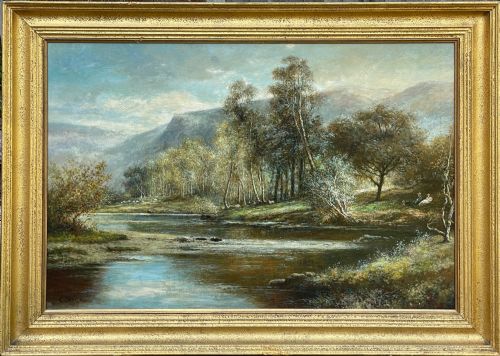
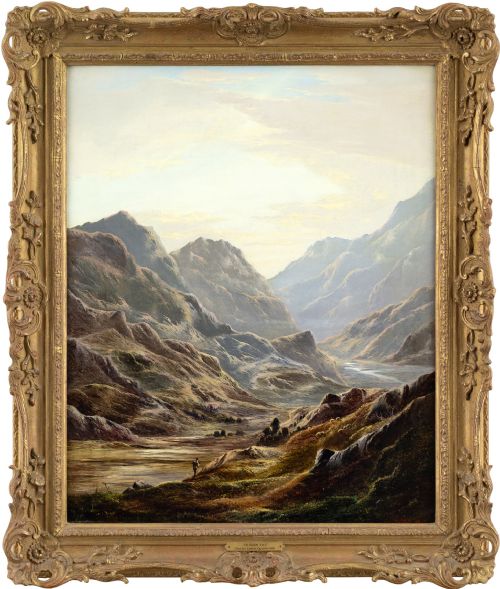
When you search for framed mountain landscape oil paintings, you encounter canvases recording dramatic peaks, remote lakes, and highland valleys. These works document specific geographies from Scotland, Wales, and the Alps, painted during the nineteenth and early twentieth centuries.
The most common pieces on this page stem from the Victorian period through the nineteen-twenties, frequently displaying cattle, rivers, or figures within a mountainous setting. Artists of these decades favored expansive vistas, capturing changing weather over crags and lochs.
Compositions range from intimate river views to massive canvases depicting snow-capped summits. Many retain their original surrounds, which form an integral part of the piece.
How they were made
Painters applied oil pigments onto stretched canvas or wooden panels, building up texture with brushwork and palette knives to render the weight of stone and water. Canvas serves as the primary support across the selection.
Moulded gesso and giltwood frames enclose these works, often finished with applied ornamentation that complements the era of the painting. Wood and gilt provide the standard framing materials found here.
Listings span the seventeenth through the twentieth centuries, utilising oil on canvas and wood with giltwood framing.
What varies in quality
The distinction between standard works and exceptional examples lies in the handling of atmospheric light and topographical precision. Master painters balance the raw scale of crags with subtle details in vegetation and water.
Frame preservation alters the overall presentation significantly, with original gilded mouldings maintaining greater historical integrity than later replacements. The depth of the pigment layers and the clarity of the brushwork separate routine studio output from master hand.
William Beattie-Brown·Alfred Fontville de Breanski·George Houston·Benjamin Barker·Henry H. Parker·Douglas Cameron·Charles Leslie·Robert Watson·William George Tennick·John Grenville Fennell·William Henry Mander·Sidney Richard Percy·Thomas Spinks·Frank Hider·Walter J Watson·C Caldwell·William Grant Murray·J Barclay·John Douglas Perrett·Karl Herrle·Stephen Enoch Hogley·George Melvin Rennie·William Miller Frazer·George Turner·Alfred de Breanski
The Framed Mountain Landscape Oil Glossary
- Oil on Canvas
- Pigment mixed with drying oil applied to a woven fabric support. This combination allows for rich blending and textured impasto.
- Giltwood
- Timber carved and coated with gold leaf or metallic powder. This material forms the ornate surrounds typical of nineteenth-century art.
- Gesso
- A plaster-like mixture applied to wood frames to create a smooth surface for gilding. It permits intricate moulded relief details.
- Impasto
- Paint laid on an area of the surface in very thick layers. This technique adds tactile relief to elements like clouds and water.
- Panel
- A rigid flat piece of wood used as a painting support instead of canvas. It provides a stable ground for detailed brushwork.
Framed Mountain Landscape Oil: Frequently Asked Questions
How do I date a mountain landscape oil painting?
Examine the canvas preparation, stretcher construction, and the style of the gilt frame. Pigment analysis and artist signatures also help narrow the decade of creation.
Victorian works frequently utilise heavier wooden stretchers and distinctively moulded gesso frames that match nineteenth-century aesthetic conventions.
Are these oil paintings signed by the artist?
Many pieces on this page bear the artist signature, often placed discreetly in a lower corner. Unsigned examples are attributed based on style and technique.
Recorded signatures link specific canvases to known regional schools and exhibited painters from the Victorian era.
How should I clean a vintage oil painting?
Dust accumulation should be gently removed with a soft, dry artist brush. Avoid applying water or chemical solvents directly to the canvas.
Professional conservators handle deeper grime and aged varnish removal to protect the underlying oil pigments from damage.
Did Victorian artists paint these landscapes outdoors?
Painters often created initial sketches and watercolours directly in the field. Studio work completed the large canvases using these observational studies.
This method allowed artists to capture accurate geological formations while managing the practical challenges of working with oil outdoors.