




Framed Marine Painting
A framed marine painting captures the movement of open water, historic vessels and coastal light through the lasting traditions of maritime art.
Framed Marine Painting
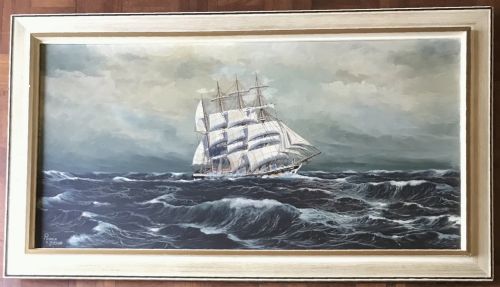
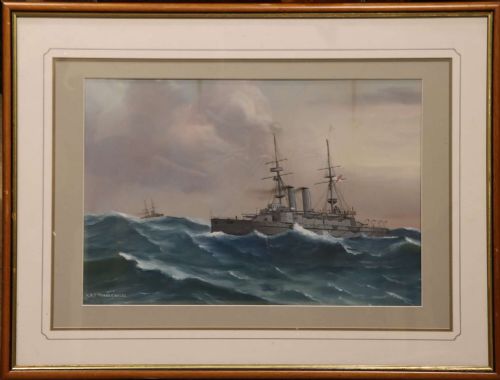
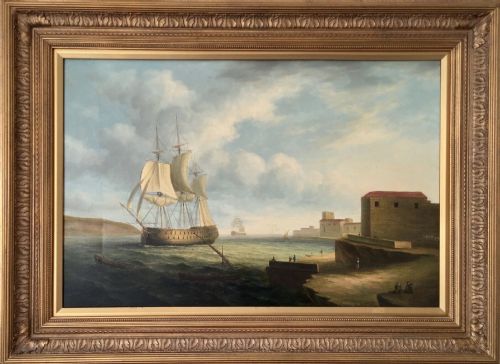
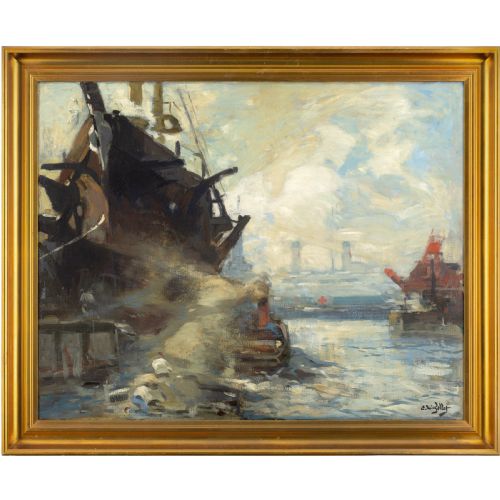
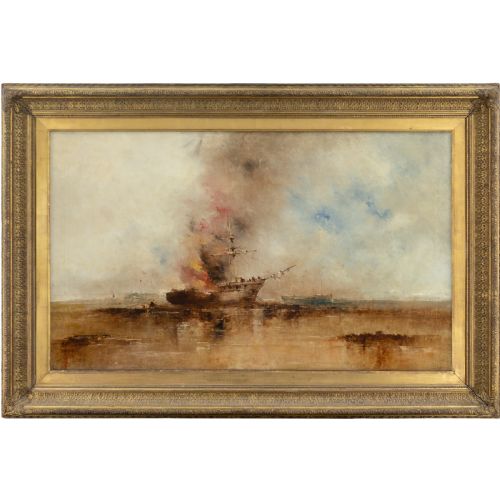
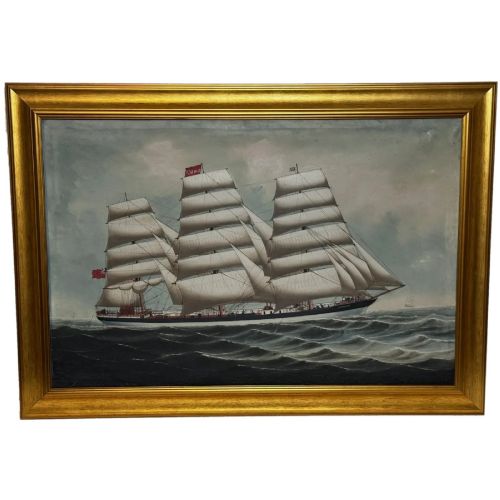
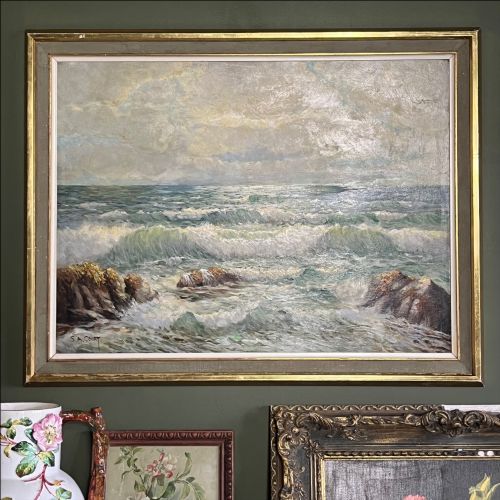
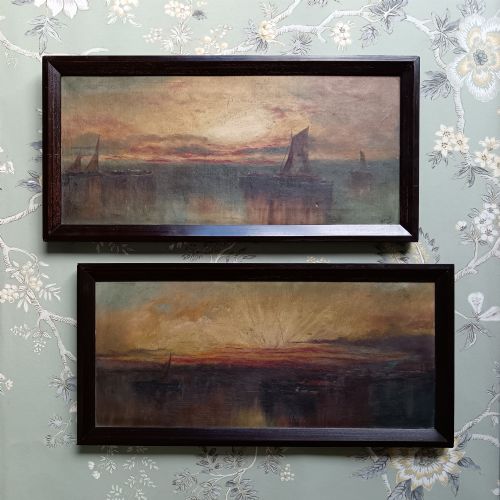
A framed marine painting records ships, harbours, coastal views and open seas across various historical periods. The most common examples met here originate from the nineteenth and early twentieth centuries, spanning Victorian maritime scenes to Edwardian watercolours.
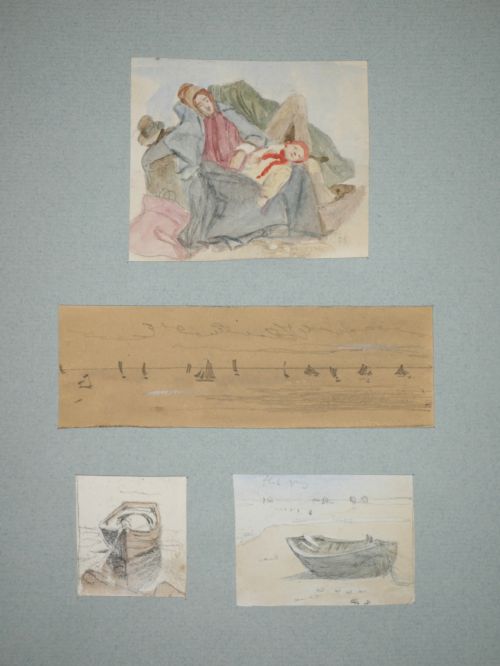
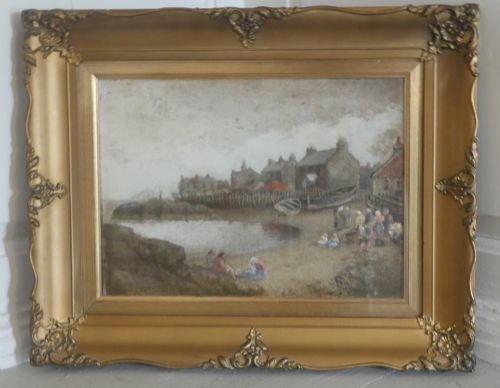
These works take several visual forms, including oil paintings on canvas or panel, delicate watercolours on paper, and gouache studies. Subjects range from busy commercial ports and naval engagements to quiet coastal villages and rough seas.
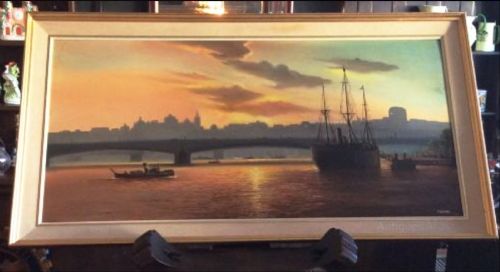
Makers and schools from Britain, France, and the Netherlands appear frequently, depicting specific vessels, local fishing fleets, and sweeping panoramas of rivers and bridges. Each piece places the viewer directly beside the water, recording maritime history through the artist's medium.
How they were made
Artists applied oil paint to stretched canvas, wooden panels, or prepared boards to build depth and texture within maritime scenes. Alternatively, watercolours and gouache were worked onto paper to capture the translucent quality of light on water and sky.
Surviving works are typically presented within wooden frames, often finished with gilt or moulded detailing that complements the period of the artwork. Glass is frequently used to protect works on paper, while oil paintings remain open to the room or housed within decorative wooden mouldings.
Listings feature works spanning the nineteenth and twentieth centuries, executed in oil, watercolour, and gouache on canvas, panel, and paper.
What varies in quality
Quality rests in the artist's command of light, atmospheric perspective, and the accurate rendering of maritime architecture and rigging. Superior examples demonstrate a confident handling of water movement and coastal weather, whereas lesser pieces rely on stiff brushwork and generic compositions.
The integration of the artwork with its housing also alters the character of the piece, with period frames adding appropriate context. The handling of the medium itself - whether through vigorous oil impasto or delicate watercolour washes - defines the ultimate visual presence of the work.
James Hardy·James Orrock·Clifford Hanney·Eugène-Louis Gillot·William McAlpine·Reginald Arthur Borstel·Sidney A. Court·B. Nash·Edward Mills·Charles Edward Dixon·John E. Aitken·Eric Tufnell·William Banks Fortescue·John Rose Miles·Frank Watson Wood·William Broome·Bernard Gribble·Bonaventura Peeters·Frank William Scarbrough·F. Corpuz·Clive Browne·Peter Brannan·Paul Bret·Francis Moltino·Bernard Benedict Hemy
The Framed Marine Painting Glossary
- Gouache
- An opaque watercolour medium used by artists to achieve solid areas of colour and bright highlights on paper or board.
- Gilt
- A thin layer of gold leaf or metallic gilding applied to wooden frames to provide a decorative surface finish.
- En plein air
- A French term describing paintings executed outdoors to capture natural light and atmospheric conditions directly from life.
- Panel
- A flat wooden support used as a base for oil paintings prior to or alongside stretched canvas.
- Seascape
- A work of art depicting the sea, coastal views, ships, or marine life as the primary subject.
Framed Marine Painting: Frequently Asked Questions
How do I date a marine painting?
Dating relies upon artist signatures, clothing styles of any figures present, and the types of ships depicted in the composition. Documentary clues such as specific naval vessels or historical events recorded in titles also anchor the work to a specific era.
Framing styles can offer additional supporting evidence, though frames are sometimes replaced over the lifetime of an artwork. Comparing the signature and medium with documented active periods of the artist remains the most reliable method for establishing a date.
What is the difference between oil and watercolour marine paintings?
Oil paintings utilise heavy pigments suspended in oil on canvas or panel, allowing for rich textures, deep shadows, and luminous atmospheric effects. Watercolours employ water-soluble pigments on paper, producing lighter, translucent effects that emphasise sky and water.
Oils are typically framed without glass and possess a robust physical presence, whereas watercolours require protective glazing to shield the delicate paper surface from atmospheric moisture and dust.
Where should I hang a framed marine painting?
These pieces suit rooms with stable humidity away from direct sunlight, which can fade watercolours and discolour oil varnishes over time. Placing them at eye level allows the fine details of rigging, waves, and coastal architecture to be properly appreciated.
Pairing the frame style with existing interior woodwork helps the artwork integrate naturally into the room. Ambient lighting directed towards the canvas or paper enhances the depth and tonal range of the scene.