

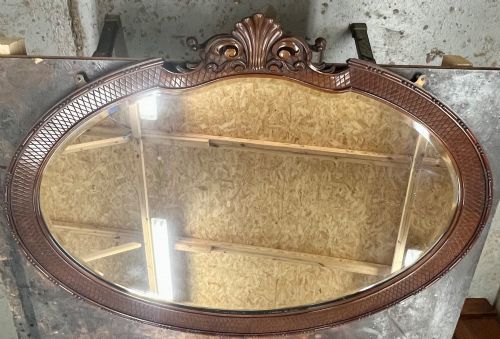

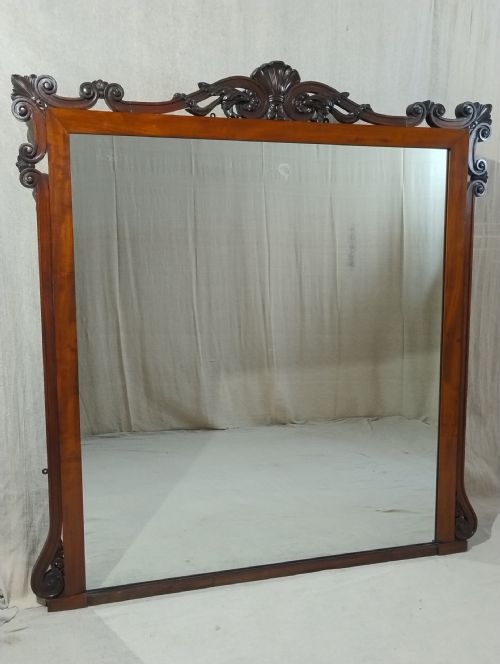
Framed Mahogany Wall Mirror
A framed mahogany wall mirror brings depth and warmth to a room through dark timber and reflective glass.
Framed Mahogany Wall Mirror
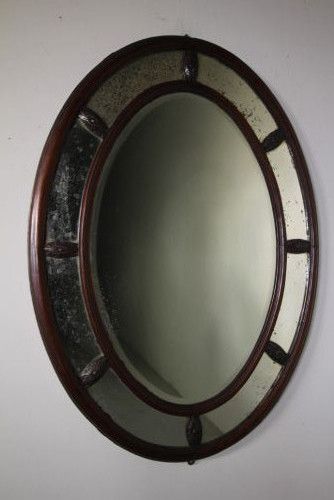
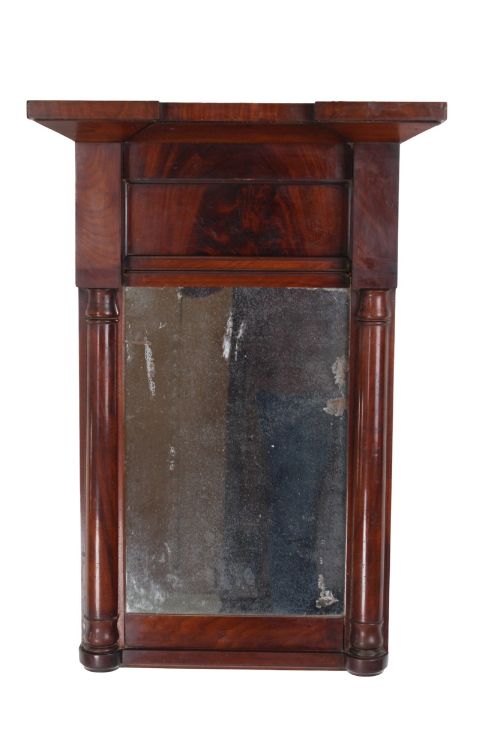
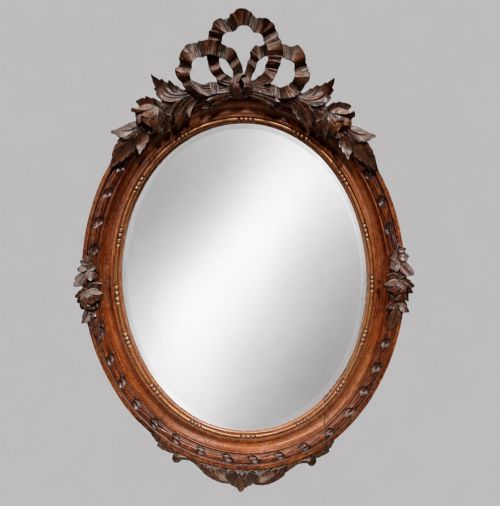
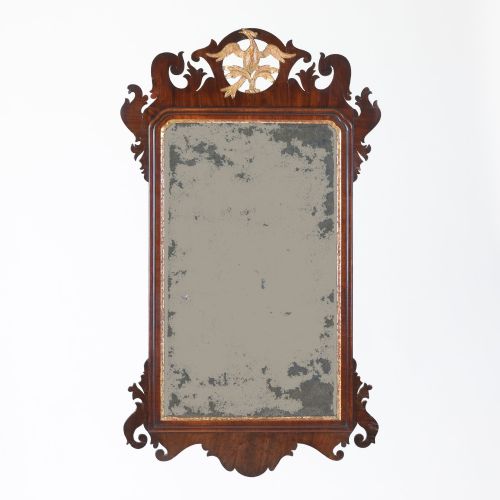
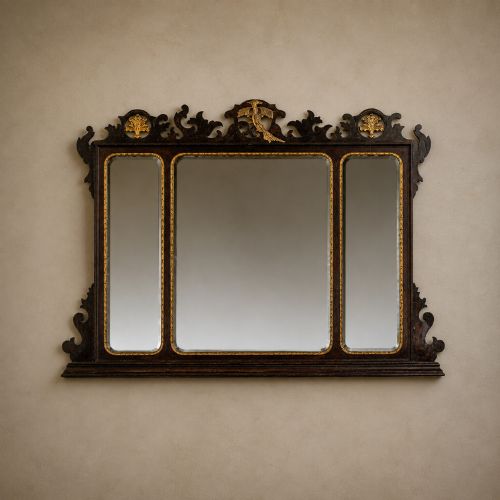
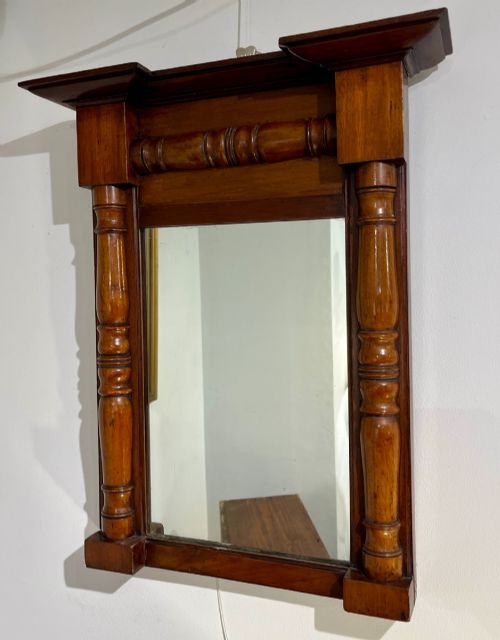
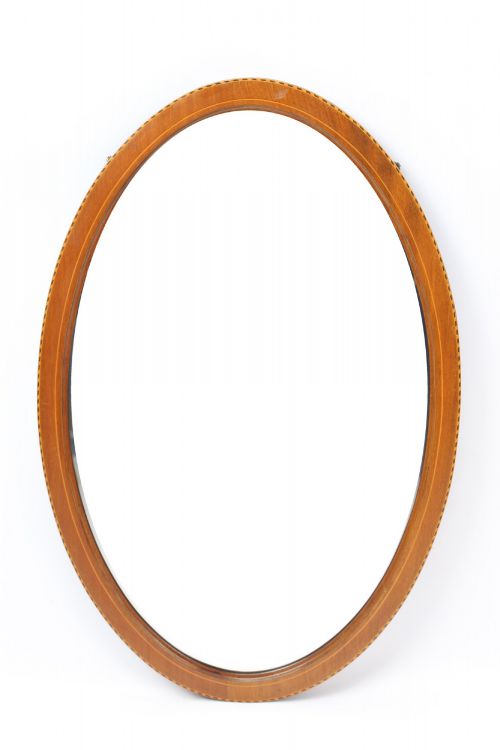
A framed mahogany wall mirror unites solid timber and reflective glass to hang in domestic spaces, originating from periods spanning the eighteenth century to the twentieth century. These objects appear in diverse forms including rectangular wall hangings, oval shapes, and large overmantels designed for placement above fireplaces.
The most common examples on this page date from the Victorian and Edwardian eras, alongside Georgian pieces and later revivals. Makers constructed these mirrors for specific domestic functions, ranging from smaller pier glasses placed between windows to expansive triptych overmantel mirrors.
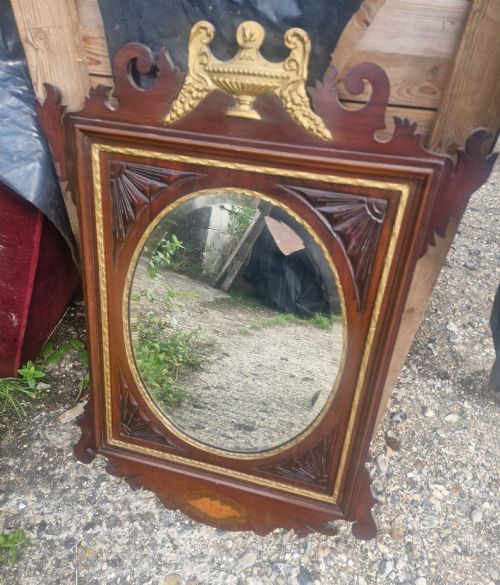
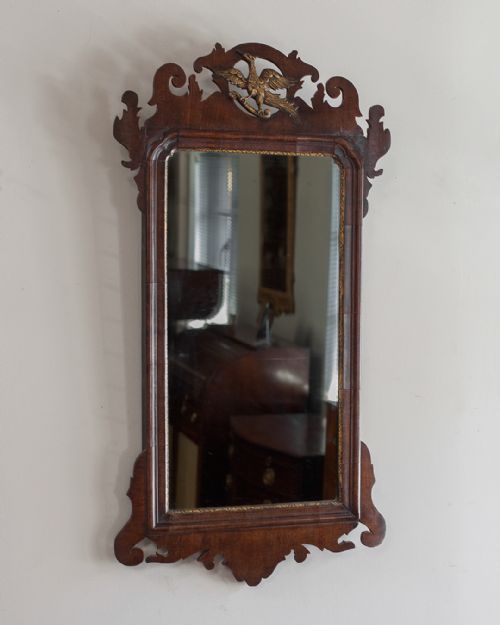
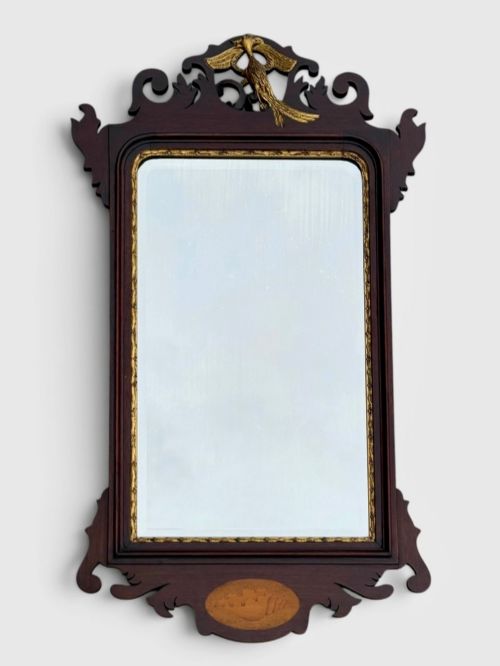
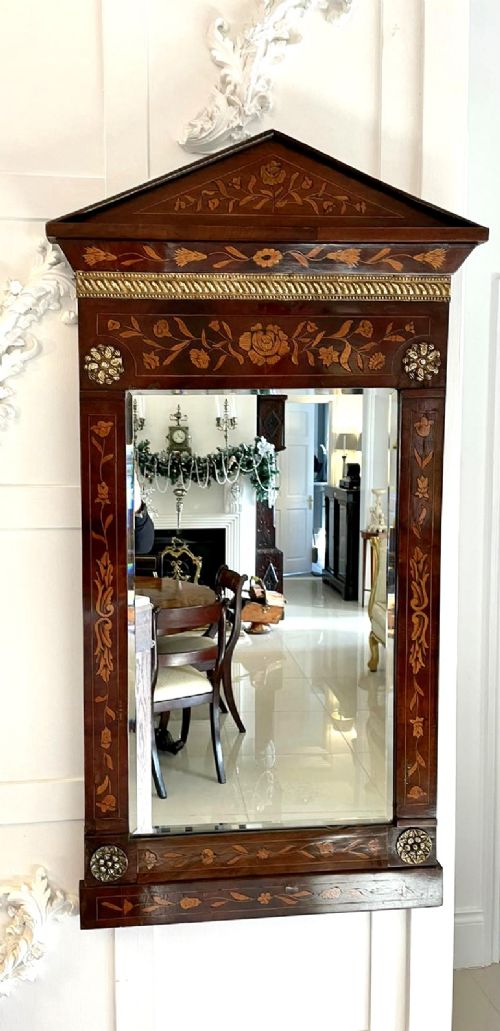
Regional variations and stylistic revivals emerge across the selection, including Chippendale style fretwork frames and Dutch marquetry inlay. Buyers encounter both simple moulded timber surrounds and elaborate carved crestings featuring motifs like the Ho-Ho bird.
Materials and Construction
Cabinetmakers utilised dense tropical hardwoods, primarily mahogany, shaped into boards and veneers to build the structural frame. Workshops often integrated secondary materials such as giltwood, parcel-gilt accents, brass hooks, and delicate wood inlay to embellish the surface.
Joinery techniques varied from traditional fretsawn scrollwork to pegged mortise and tenon joints on heavier overmantels. Craftsmen applied gold leaf to carved gesso details, creating contrast against the dark reddish-brown grain of the polished mahogany.
Certain mirrors arrive equipped with brass hooks, ready to hold hats or pocket watches alongside their reflections.
Distinctions in Quality
The sophistication of the carved ornamentation and the depth of the fretwork define the upper tier of these mirrors. Superior examples display crisp hand-carving on details like golden pheasants or gilded scrolls, whereas simpler items rely on plain moulded surrounds.
The integrity of the timber and the preservation of the original mercury or silvered glass plate influence the character of the piece. Master craftsmen achieved harmonious proportions in early Georgian and Regency formats, setting them apart from later mass-produced alternatives.
The Framed Mahogany Wall Mirror Glossary
- Fret mirror
- A wall mirror featuring a frame cut with a fretsaw, typically displaying symmetrical scrollwork and popular during the Georgian period.
- Overmantel mirror
- A large mirror specifically proportioned to hang on the wall directly above a mantelpiece or fireplace.
- Pier mirror
- A tall, narrow mirror designed to fit on the wall space or pier between two windows.
- Parcel-gilt
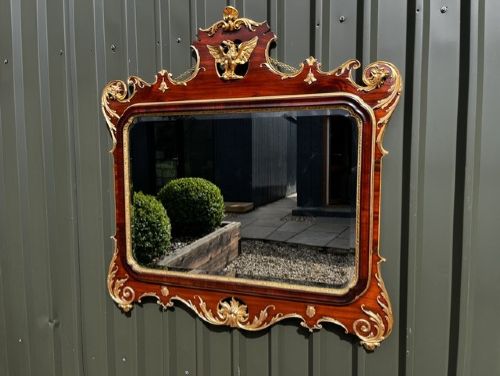
- Woodwork partially decorated with gold leaf or gilding, highlighting specific carved details against a contrasting mahogany ground.
- Marquetry
- Decorative veneer work arranged in intricate patterns using various coloured woods to form pictorial or geometric designs.
Framed Mahogany Wall Mirror: Frequently Asked Questions
How do I hang a heavy mahogany overmantel mirror?
Heavy overmantel mirrors require secure fixing directly into wall studs or masonry using appropriate brackets that can support the combined weight of the dense timber and thick glass.
Professional installation ensures the frame remains stable against the wall without placing undue stress on the antique structure.
What is a Ho-Ho bird on a mirror frame?
The Ho-Ho bird is a stylized Chinese phoenix motif frequently carved into the cresting of eighteenth-century and Chippendale revival fret mirrors.
Cabinetmakers used this mythical creature as a popular decorative accent atop the central scrollwork of the wooden frame.
How can I tell a Georgian mirror from a later revival?
Authentic Georgian mirrors typically exhibit the distinct tool marks, secondary woods, and oxidized backing associated with eighteenth-century workshop practices.
Revival pieces made during the Victorian era or around nineteen hundred often display machine-cut precision, later hardware, and standardised veneer thicknesses.
Where should I place a convex sorcerer's mirror?
Convex sorcerer's mirrors, also known as convex or witch's mirrors, work best in spaces where the curved glass can capture a wide-angle reflection of the entire room.
Historical placement often favored dining rooms or hallways to distort light and provide a panoramic view of the interior.