




Framed Livestock Art
Framed livestock art captures rural life through oil paintings, watercolours, and etchings of cattle, sheep, and pigs from the eighteenth to the early twentieth century.
Framed Livestock Art
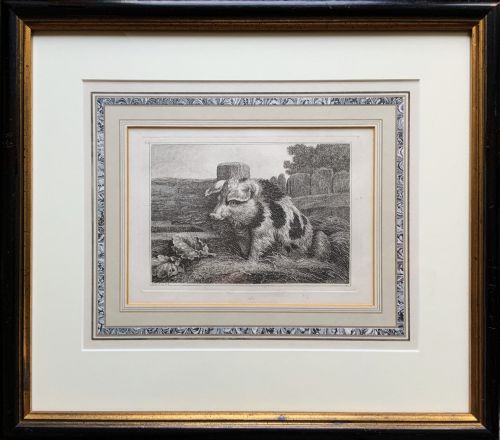
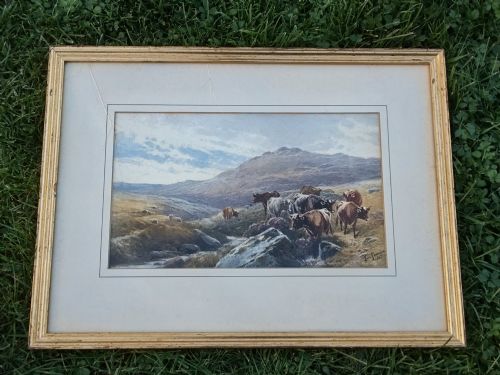
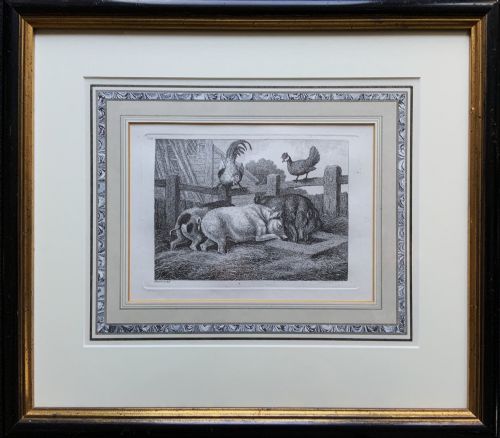
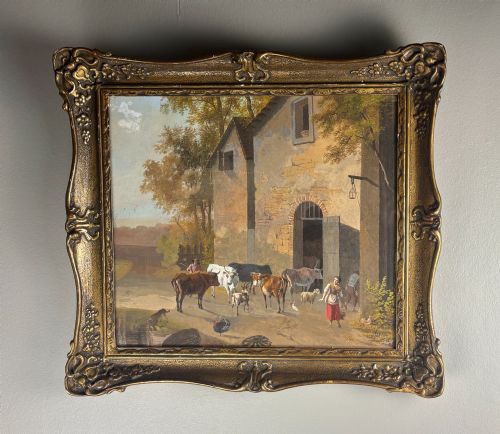
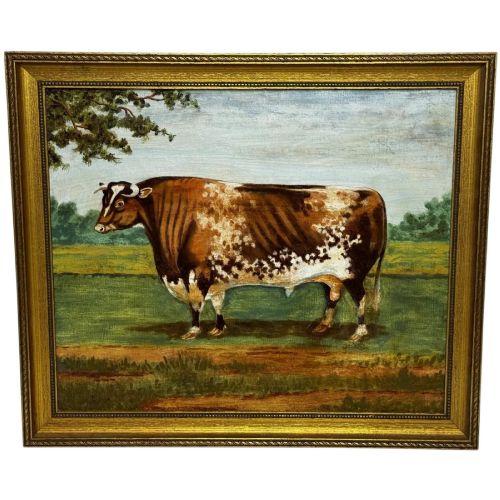
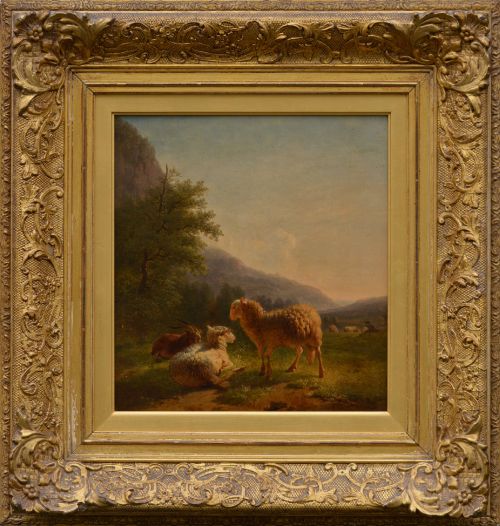
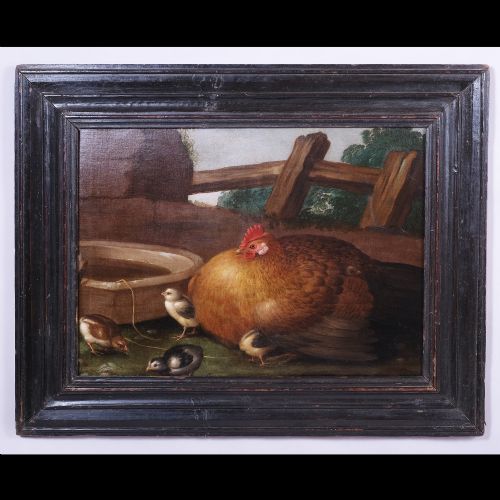
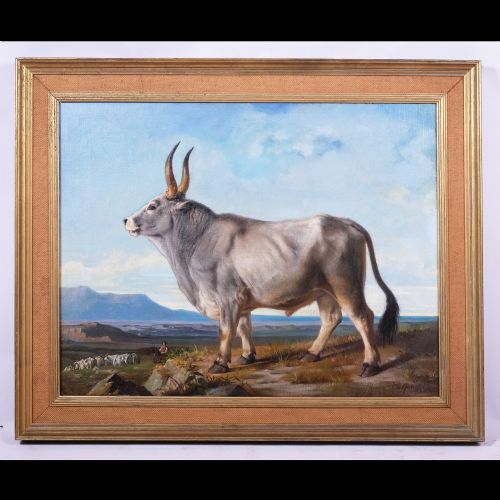
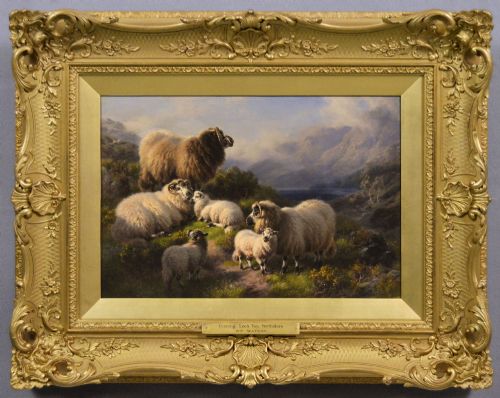
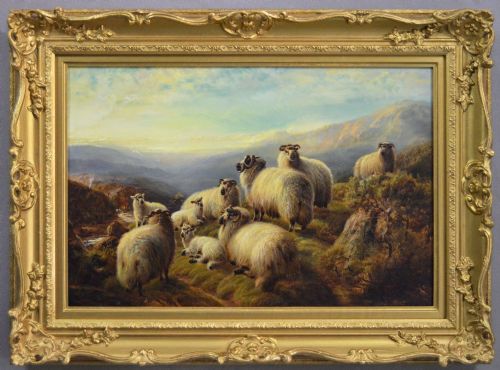
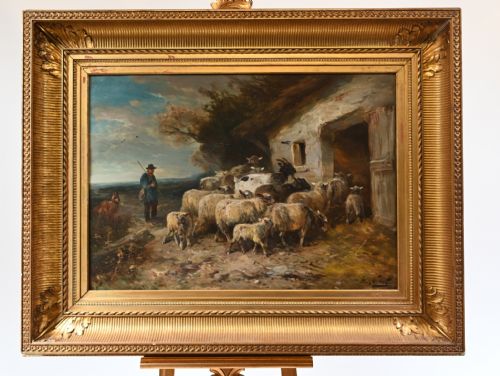
Framed livestock art comprises historical works depicting farm animals, pastoral scenes, and rural yards across multiple European schools. Buyers encounter Victorian oil paintings on canvas alongside earlier eighteenth-century farmyard scenes and delicate watercolours.
Subjects range from prized shorthorn bulls and Highland sheep to pigs and working horses, rendered in settings from quiet pastures to snowy winter landscapes. These pieces reflect a historical fascination with agrarian life and rural wealth.
Materials and technique
The primary medium is oil paint applied to canvas, wood panels, or oak panels, prized for rich colour blending and texture. Artists also utilised watercolour, gouache, mixed media, and paper for finer, more immediate studies.
Frames are an integral part of the survival of these works, frequently constructed from wood finished with moulded gesso and gold leaf. These period surrounds complement the pastoral subjects through ornate nineteenth-century moulding and gilding techniques.
Framed Livestock Art Retail Price Guide 2026
Typical asking prices for framed livestock art among the pieces listed under this phrase on Sellingantiques today, from the lower quarter to the upper quarter. They describe what is for sale here now, not the wider market.
Framed livestock art spans multiple historical styles including Victorian Realism and British Impressionism.
Evaluating quality
Quality rests on the anatomical accuracy of the animals, the depth of the landscape, and the handling of light by the artist. Master painters capture the texture of wool and hide alongside convincing atmospheric conditions.
The integrity of the original frame and the preservation of the paint layer determine the desirability of each piece. Works by recognised continental and British animaliers command greater attention for their accomplished brushwork and provenance.
Thomas Rowden·Karel Dujardin·Samuel Howitt·Eugène Verboeckhoven·Johann Friedrich Voltz·Robert Watson·Henry Schouten·William Henry Mander·Thomas Sidney Cooper·Franz van Severdonck·Philipp Peter Roos·Frederick Septimus Lewis·Ernest Pile Bucknall·Andre de Moller·James de Rijk·Julius Caesar Ibbetson·Charles Jones·Arthur Charles Dodd·Claude Cardon
The Framed Livestock Art Glossary
- Animalier
- An artist who specialises in the realistic portrayal of animals. These painters often focus on livestock, domestic pets, and wildlife within pastoral or farmyard settings.
- Gesso
- A plaster-like mixture applied to wooden frames as a base for gilding or painting. It allows craftsmen to carve intricate relief ornamentation.
- Giltwood
- Wood that has been coated with a thin layer of gold leaf or gold paint. It forms the lustrous finish seen on many period frames.
- Etch
- A printmaking process where acid cuts into unprotected parts of a metal plate to hold ink. This technique allows for fine linear detail in antique works on paper.
Framed Livestock Art: Frequently Asked Questions
What periods do these artworks come from?
The pieces span from the seventeenth century through the Georgian and Victorian eras up to the early twentieth century. This range covers diverse artistic movements including British impressionism and realism.
Most items originate from the nineteenth century, reflecting the era's strong focus on pastoral subjects and animal portraiture.
Are the frames original to the paintings?
Many works retain their period surrounds, constructed from wood with gesso ornamentation and gold leaf finishes. These frames were designed specifically to complement the aesthetic of the artwork.
Inspect the joinery and wear on the gilding to understand the history of the frame alongside the canvas.
How should I care for an oil painting on canvas?
Keep the artwork away from direct sunlight and fluctuating humidity levels to protect the canvas and paint layers. Dust the surface and the frame gently with a dry, soft brush.
Avoid using water or chemical cleaners on the paint or the giltwood frame.
What subjects are most common in livestock art?
Cattle, sheep, pigs, and horses dominate the compositions, often depicted resting in pastures, farmyards, or dramatic landscapes. Artists frequently portrayed prized livestock to celebrate agricultural achievements.
Scenes range from solitary animal portraits to bustling farmyard gatherings with figures.