

Framed Hunting Scene
A framed hunting scene captures the drama and pageantry of rural pursuits, preserved in oil, engraving, and watercolour for the wall.
Framed Hunting Scene
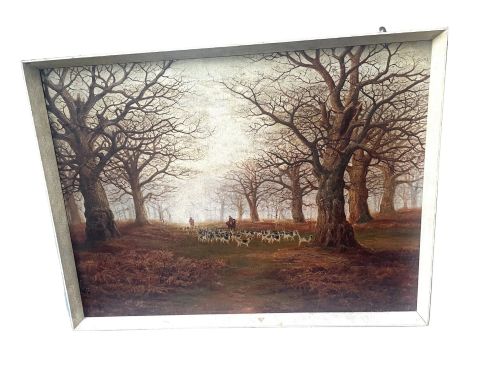
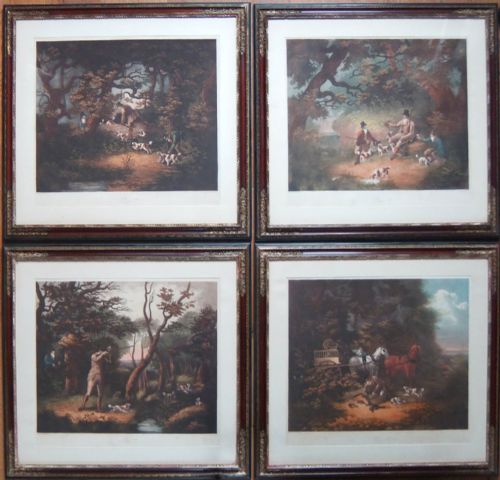
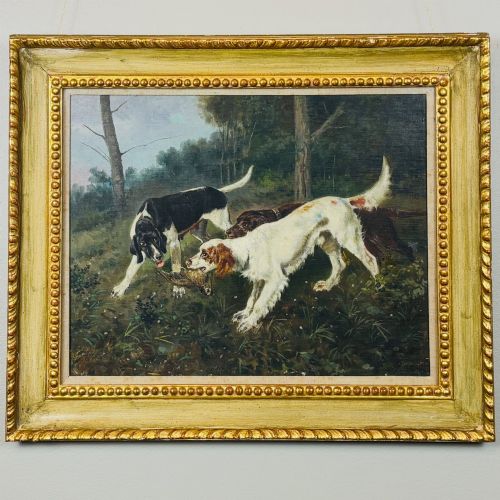
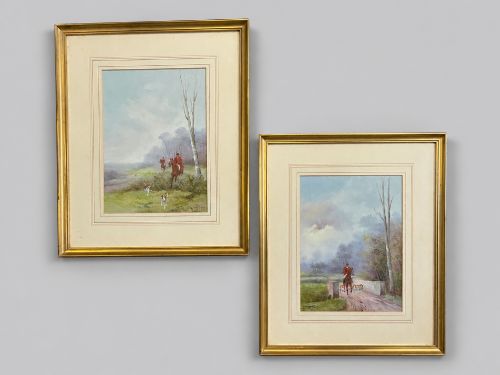
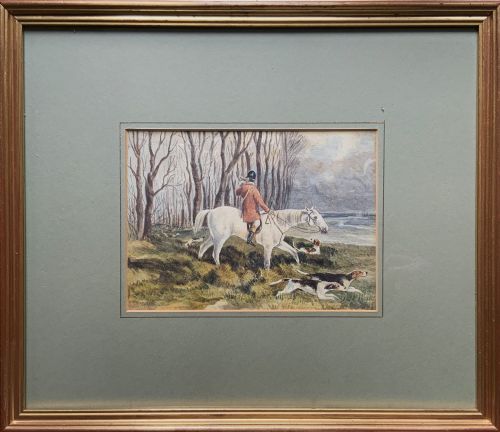
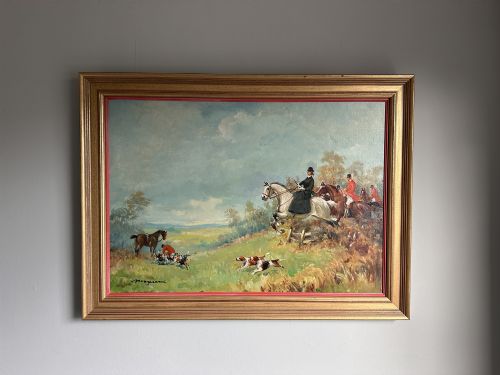
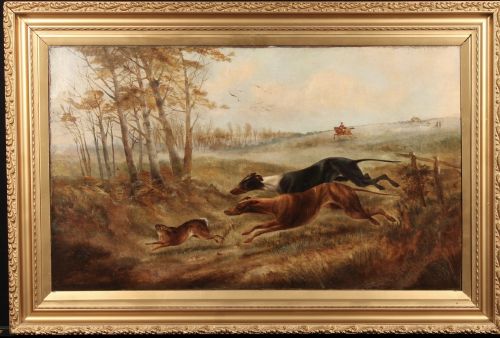
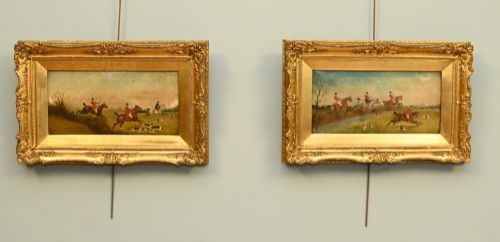
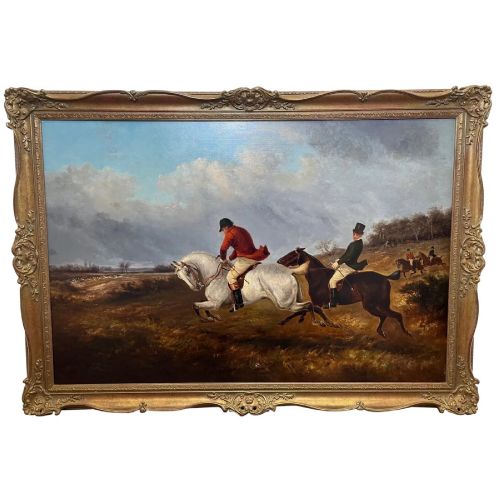
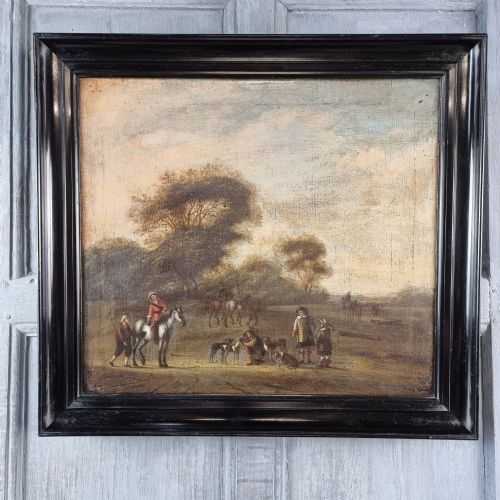
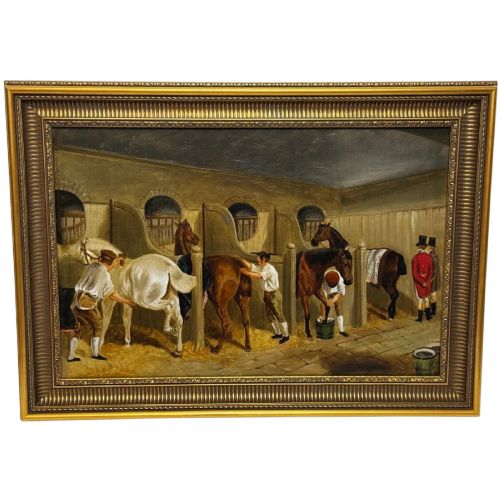
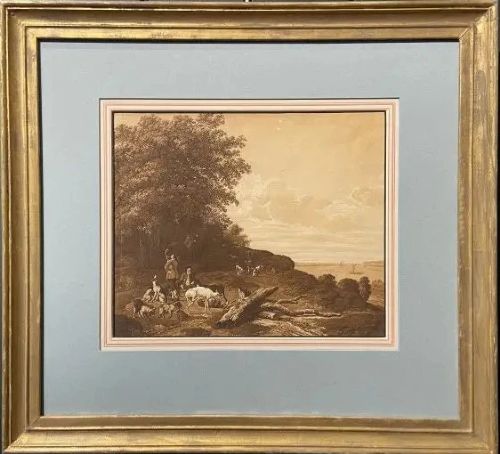
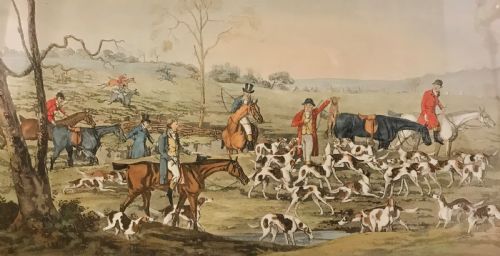
A framed hunting scene brings together centuries of equestrian and sporting art, spanning 17th-century landscapes to Edwardian and Victorian works. These pieces depict hounds, horses, riders, and rural field sports captured during great chases or quiet moments at the meet.
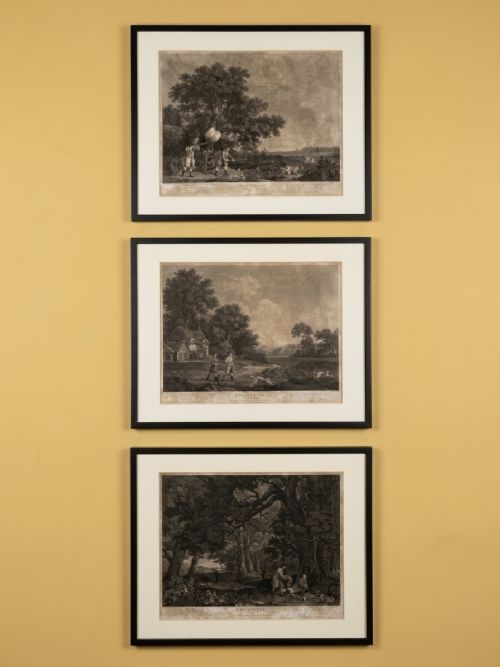
The most common examples on this page are 19th-century oil paintings on canvas, alongside hand-coloured engravings, lithographs, and watercolours. Framed textile art and reverse silhouette glass paintings also appear, offering varied expressions of sporting heritage.
How they were made
Artists worked primarily with oil paint on canvas or board, layering pigments to capture the coat of a horse, the texture of a hound, and the light across an open landscape. Engravings and lithographs relied on precision printmaking techniques, often finished with hand colouring.
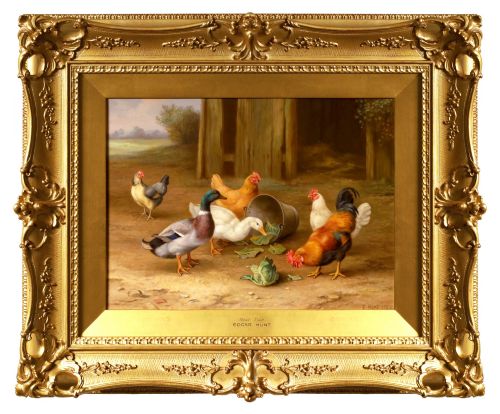
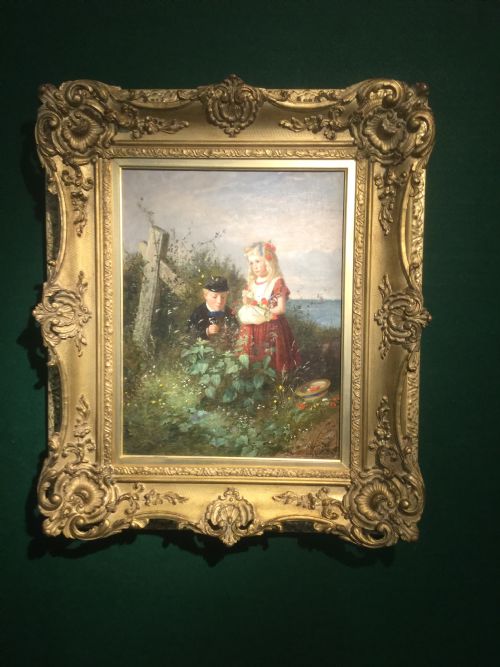
Framing is an integral part of these pieces, utilising traditional wood, gilt wood, and giltwood mouldings to complement the artwork within. Beadwork fragments and tapestries demonstrate alternative textile techniques mounted behind glass or within decorative frames.
Framed Hunting Scene Retail Price Guide 2026
Typical asking prices for framed hunting scene among the pieces listed under this phrase on Sellingantiques today, from the lower quarter to the upper quarter. They describe what is for sale here now, not the wider market.
Hounds occasionally command more artistic detail than the riders, reflecting their prized status in the field.
What varies in quality
Quality rests in the anatomical accuracy of horses and hounds, the dynamism of the composition, and the handling of light and atmosphere by the artist. Well-rendered figures and convincing motion separate accomplished works from simpler decorative prints.
The integrity of the physical medium matters greatly, from the preservation of the original canvas and oil paint to the depth and condition of the period gilt wood frame. Original signatures and documented attributions to known sporting artists elevate the standing of a piece.
William Woollett·George Stubbs·George Armfield·Thomas Smythe·Johannes Lingelbach·Edgar Hunt·Charles Hunt·George Wright·Philip Henry Rideout·Michael Lyne·Charles Faulkner·John Arthur Lomax·John Charles Tunnard·John Sanderson Wells·Henri Schouten·Heywood Hardy·Ludolf de Jongh·Robert Cleminson·Guillaume Urban Régamey
The Framed Hunting Scene Glossary
- Oil on Canvas
- Pigments bound in a drying oil applied to a stretched fabric support. This traditional medium allows for rich colour blending and lasting durability.
- Engraving
- A printmaking process where an image is incised into a metal plate, holding ink to transfer fine lines onto paper. These are frequently seen hand-coloured.
- Lithograph
- A planographic printing method using a stone or metal plate to reproduce artworks accurately. They capture detailed illustrative lines effectively.
- Gilt Wood
- Wood carved and coated with a thin layer of gold leaf or metallic gilt paint. It provides a bright, ornate border suited to traditional art.
- Watercolour
- Pigments suspended in a water-based, translucent solution applied to paper. It yields delicate washes and fine illustrative detail.
Framed Hunting Scene: Frequently Asked Questions
How do I date a framed hunting scene?
Dating relies on stylistic clues in the clothing, horse tack, and framing materials, alongside any signatures or publication dates inscribed on prints. Victorian and 19th-century pieces often display distinct artistic conventions compared to earlier 18th or 17th-century works.
Examining the back of the canvas, the stretcher bars, and the type of paper or wood provides further physical evidence of the era of manufacture.
Where should I hang these artworks?
These works suit traditional reception rooms, studies, and hallways where their equestrian themes harmonize with classic interior schemes. They benefit from placement away from direct sunlight to protect oil paint and paper from fading.
Ensuring stable room humidity protects both the canvas and the gilt wood frame from warping over time.
Are engravings considered original art?
Engravings and lithographs are recognised printmaking mediums produced from plates or stones created by artists, often published in limited series. Many period prints were hand-finished with watercolour, giving them individual character.
While distinct from a unique oil painting, period engravings hold historical and artistic significance in their own right.
How do I care for antique oil paintings?
Maintain the artwork by dusting the frame gently with a soft, dry brush and keeping the canvas clear of moisture. Avoid using chemical cleaners on either the painted surface or the gilt wood moulding.
Professional conservators should handle any cleaning of the paint surface or repair of historic frames.