



Framed Hound Painting
A framed hound painting captures the spirit of the chase and the fierce loyalty of sporting dogs through centuries of fine canvas and pigment.
Framed Hound Painting
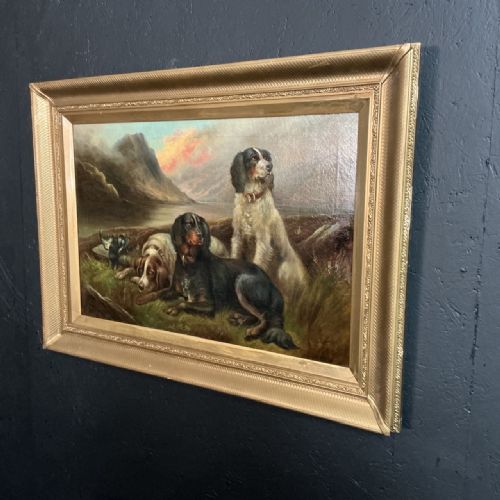
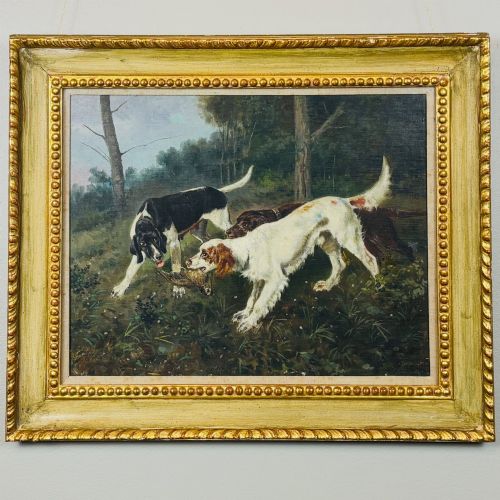
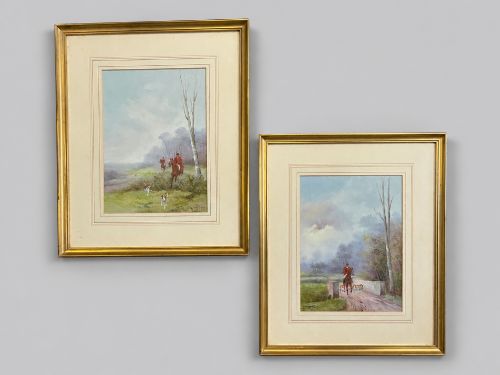
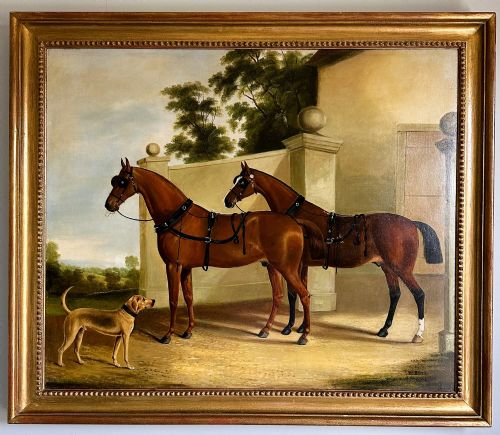
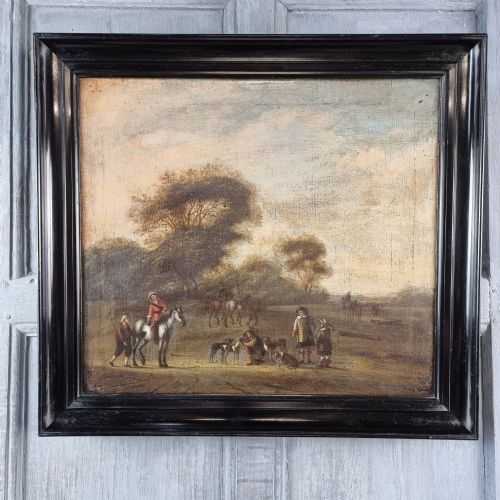
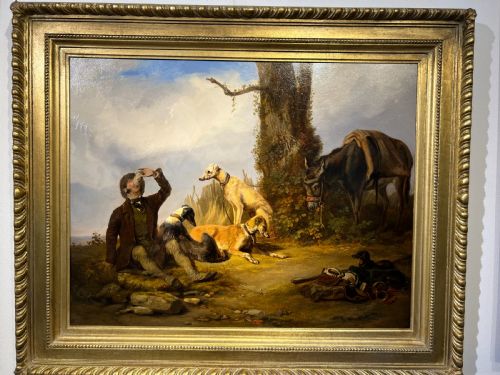
A framed hound painting brings together centuries of canine portraiture and sporting art, spanning from Georgian watercolours to Victorian oils on canvas. These works celebrate working dogs, pack hounds, and individual portraits set within rich landscapes or stable interiors.
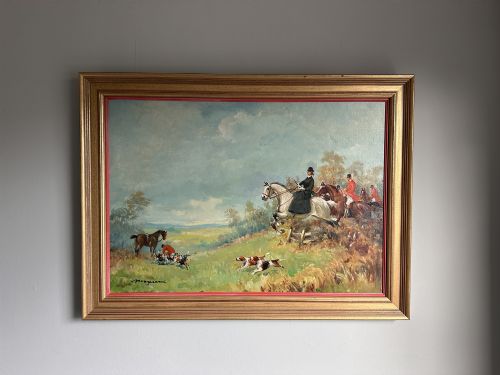
Buyers encounter everything from intimate studies of curly-coated retrievers and single hounds to large-scale hunting scenes recording the Berkeley Hunt or Welsh packs in motion. The predominant examples hail from the nineteenth century, reflecting a golden age of British sporting art.
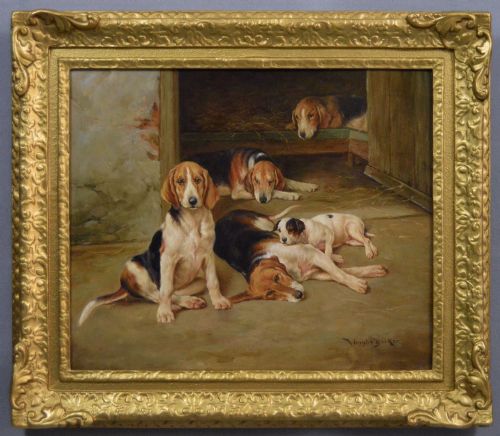
Many of these artworks capture dogs either at rest, in solitary portraits bearing human-like dignity, or caught mid-chase during winter hunts. The framing ranges from heavy nineteenth-century giltwood to simpler period frames that enhance the depth of the painted scenes.
How they were made
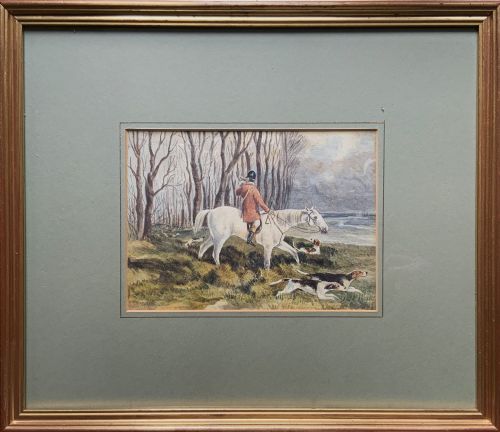
The primary medium for these works is oil paint applied to woven canvas or occasionally wood panels, allowing artists to build rich textures in the fur of the hounds and the surrounding foliage. Watercolours on paper also appear, offering lighter, more immediate depictions of hunting subjects.
Frames play a crucial role in the presentation, utilising carved wood finished with gold leaf or giltwood to create ornate borders that complement the dark, atmospheric palettes of the paintings.
Framed Hound Painting Retail Price Guide 2026
Typical asking prices for framed hound painting among the pieces listed under this phrase on Sellingantiques today, from the lower quarter to the upper quarter. They describe what is for sale here now, not the wider market.
Listings feature works executed in oil on canvas, oil on board, and watercolour, spanning the seventeenth through to the mid-twentieth century.
What varies in quality
The anatomical accuracy and expressive depth of the animals separate exceptional dog portraits from standard decorative works, with master artists capturing the distinct musculature and intelligence of hounds with remarkable precision. Compositional balance within landscape settings also dictates the artistic merit of each piece.
The preservation of the original paint layer and the absence of heavy overpainting determine the historical integrity of the canvas. Additionally, the quality of the period framing influences the overall presentation and authenticity of the artwork.
Sir Edwin Henry Landseer·Arthur Wardle·George Wright·Samuel Raven·Colin Graeme Roe·Fannie moody·Jules Chardigny·John Sanderson-Wells·Alfred Duke·Henri Schouten·Ludolf de Jongh·Heywood Hardy·Guillaume Urban Régamey·George Goodwin Kilburne·Thomas Blinks·Philip Eustace Stretton·Richard Waitt·Henry Frederick Lucas-Lucas·Edward B Herberte
The Framed Hound Painting Glossary
- Sporting Art
- A genre of painting that depicts rural pursuits, including hunting, shooting, and detailed portraits of horses and hounds.
- Giltwood
- Wood that has been coated with a thin layer of gold leaf or gold paint, frequently used for traditional picture frames.
- Oil on Canvas
- A traditional painting technique utilising pigments suspended in drying oils applied to a stretched fabric surface.
- Provenance
- The documented history of ownership of an artwork, establishing its authenticity and chain of custody.
Framed Hound Painting: Frequently Asked Questions
What periods do these paintings date from?
The available selection spans several centuries, with a strong concentration of pieces originating from the nineteenth century alongside Georgian and early twentieth-century examples.
Artists during these eras captured both formal canine portraits and dynamic field scenes reflecting the changing styles of British and European sporting art.
How were hound paintings originally displayed?
Wealthy patrons traditionally hung these artworks in country houses, libraries, and smoking rooms to celebrate their hunting packs and prized sporting dogs.
The heavy gilt frames were designed to project status and integrate with the dark wood panelling typical of period interiors.
How do I identify a Victorian hunting scene?
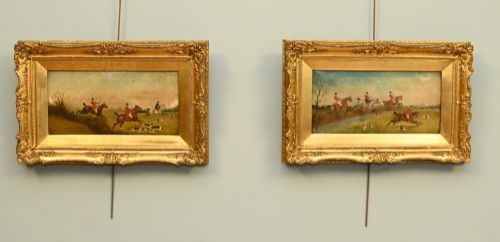
Victorian works often feature detailed landscapes with horses, riders in pink coats, and packs of hounds in full cry across open countryside or winter snow.
Brushwork during this period tended towards naturalism, focusing heavily on the physical energy of the hunt and the individual expressions of the dogs.
Are watercolours as common as oil paintings?
Oil on canvas remains the dominant medium for larger hunting scenes and formal dog portraits due to its durability and depth of colour.
Watercolours do appear, offering a more delicate execution that required protective glass framing to preserve the paper over time.