



Framed Harvest Painting
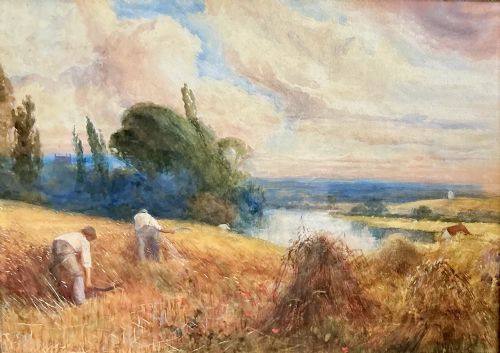
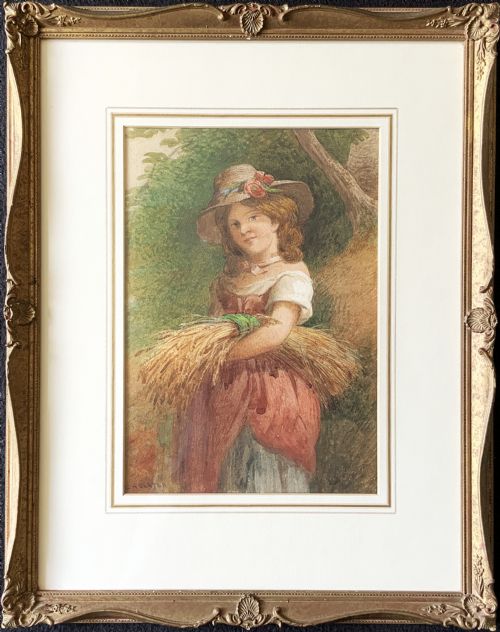
A framed harvest painting brings the golden warmth of rural labour into a room through oil and watercolour.
Framed Harvest Painting
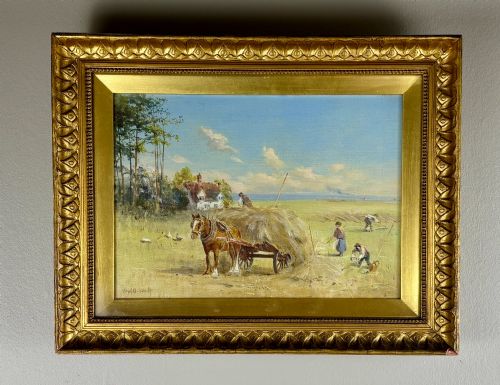
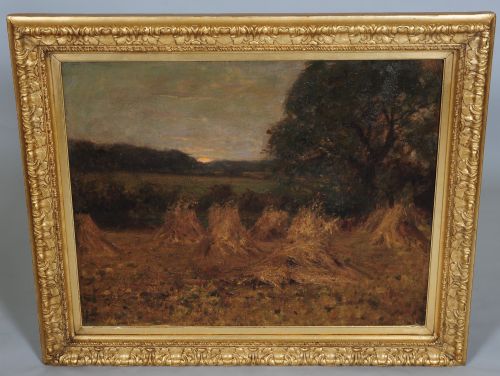
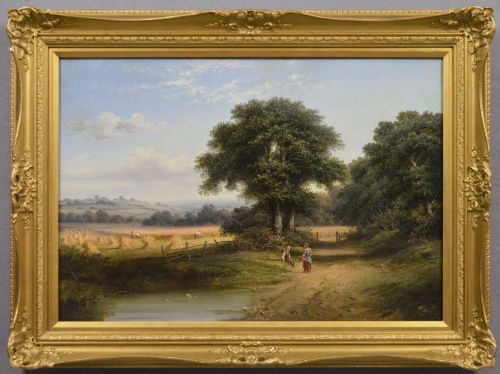
A framed harvest painting depicts agricultural scenes such as haymaking, cornfields, and farmworkers gathering crops across the nineteenth and twentieth centuries. These artworks capture rural life through British Realism, Victorian Pastoral, and Edwardian styles.
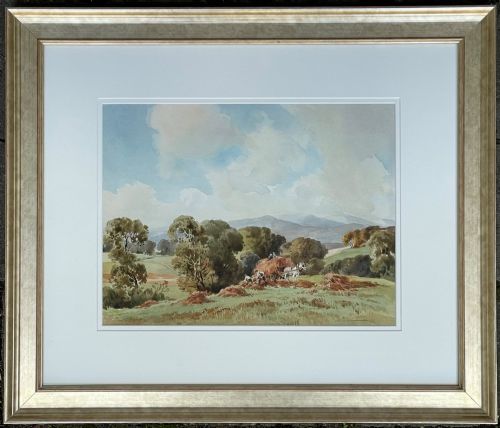
The pieces appearing on this page include oil paintings on canvas and watercolours on paper, framed predominantly in wood and gilt leaf. They span periods from the mid nineteenth century through to the mid twentieth century.
Buyers will encounter works by named artists depicting regional landscapes from Sussex, Hampshire, and the Grampians alongside vernacular country scenes.
How they were made
Artists used oil paint on canvas or watercolour on paper to record rural landscapes, applying pigments with varied brushwork to capture light on fields and figures. Many works are housed in their original wood and gilt leaf frames.
Makers constructed the supporting wooden frames to protect the painted surfaces, utilising traditional joinery and gilding techniques standard to the Victorian and Edwardian eras.
Framed Harvest Painting Retail Price Guide 2026
Typical asking prices for framed harvest painting among the pieces listed under this phrase on Sellingantiques today, from the lower quarter to the upper quarter. They describe what is for sale here now, not the wider market.
Harvesters occasionally shared their field lunches with very attentive ducks and farm dogs.
What varies in quality
The strength of a framed harvest painting depends upon the artist's command of light, atmospheric perspective, and the naturalistic rendering of figures and animals within the landscape. Superior examples display confident brushwork and balanced composition that convey the tactile quality of the harvest.
The retention of the original wood and gilt frame contributes to the integrity of the piece, as period frames complement the palette and era of the artwork.
Hugh Barry Scott·William Manners·Percy Lancaster·Walter Heath Williams·Charles Henry Slater·Frederick Hines·James William Booth·Henry John Boddington·William Grant Murray·Henry H Parker·Helmut Reuter·Herbert Royle·Arthur Walker Redgate·Rowland Henry Hill·Joseph Paulman·Henry John Kinnaird·Walter Duncan·George Cole·Joseph Thors·Alfred Augustus Glendening Snr·David Heward·William Kay Blacklock·Wilmot Pilsbury·John Clayton Adams·Arthur Heinrich Wilhelm Fitger
The Framed Harvest Painting Glossary
- Oil on Canvas
- Pigment mixed with drying oil applied to a stretched woven fabric support. This medium allowed artists to build rich textures and deep tones.
- Watercolour
- A painting method where fine pigment is suspended in a water-soluble vehicle on paper. It produces translucent washes of colour.
- Gilt Leaf
- A very thin sheet of beaten gold applied to wooden frames or decorative objects. It provides a reflective border that enhances the artwork.
- Victorian Realism
- An artistic approach focusing on unidealised, accurate representations of everyday life and rural labour. Practitioners of this style documented agricultural workers with careful observation.
- Vernacular Country
- Art created within a regional tradition without academic strictures, often reflecting local buildings, costumes, and agricultural methods.
Framed Harvest Painting: Frequently Asked Questions
What periods do these paintings cover?
The works span from the mid nineteenth century through the Edwardian era up to the mid twentieth century. They reflect shifting artistic movements including Victorian Pastoral and British Impressionism.
Artists during these periods observed changing agricultural practices and rural landscapes across Britain and Europe.
How should I hang a harvest painting?
Select a wall with stable light levels away from direct sunlight to protect watercolours on paper and oil paints on canvas. Ensure the weight of the wooden and gilt frame is supported securely.
Pairing the painting with traditional interior spaces allows the rural subject matter to complement the room.
What mediums were used?
Artists utilised oil paint on canvas and watercolour on paper to capture the tones of fields and skies. Frames are constructed from wood, frequently finished with gold leaf or gilt.
These materials determine how the artwork responds to environmental conditions such as humidity and light.
How do I identify a regional scene?
Titles and signatures often record specific locations such as the Vale of Evesham, the river Kennet, or the Grampians. Details of local flora, topography, and farming equipment provide further clues to the setting.
Artists frequently inscribed these geographical details on the reverse or within the exhibition records.