
Framed Fruit Oil Artwork
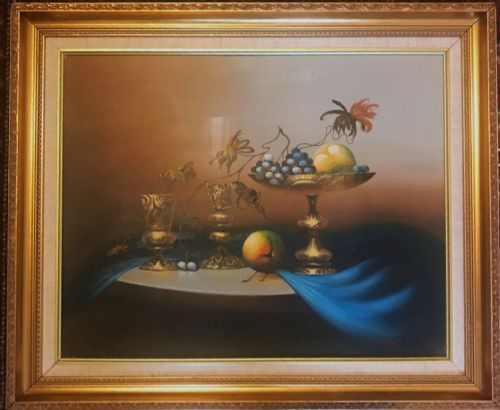
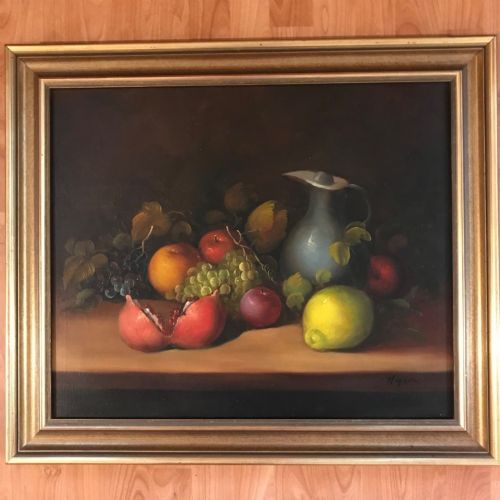
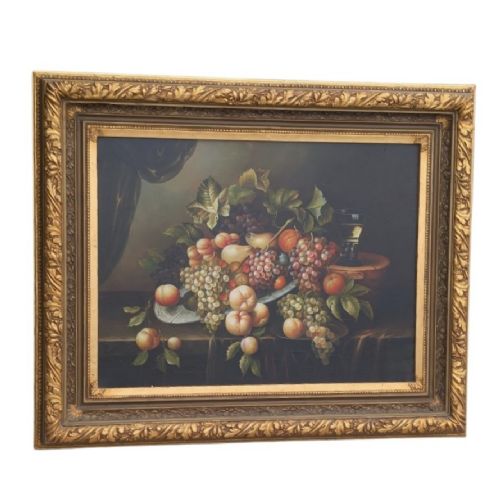
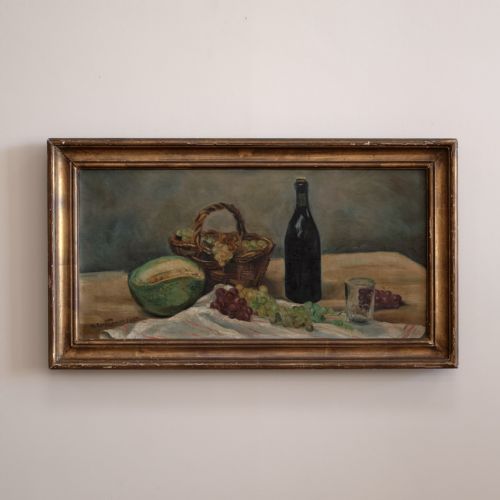
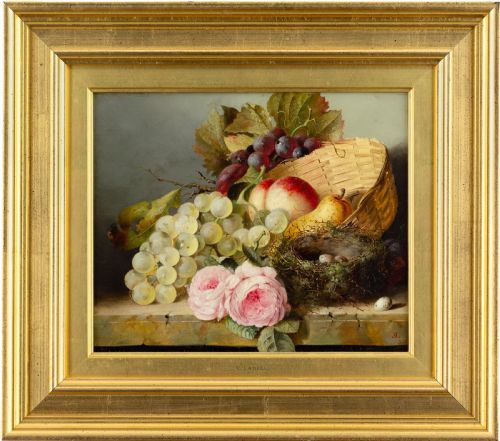
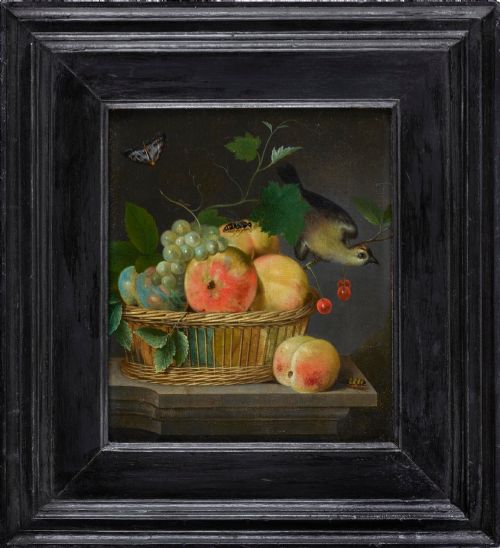
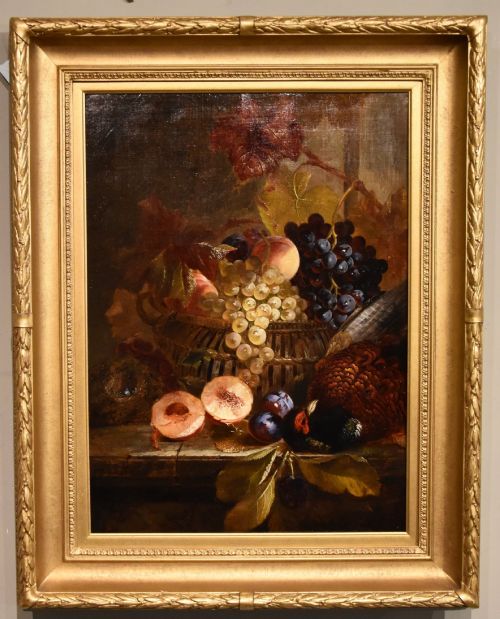
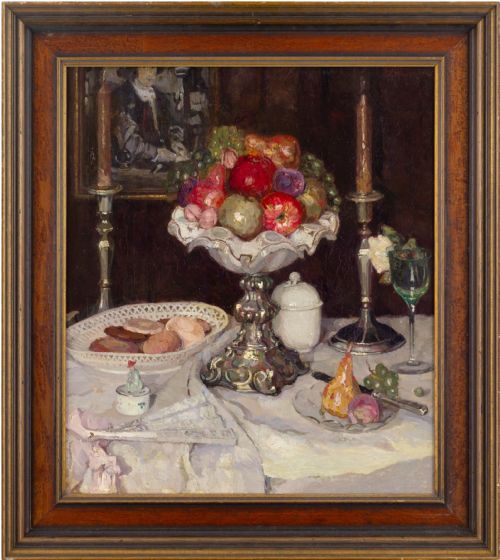
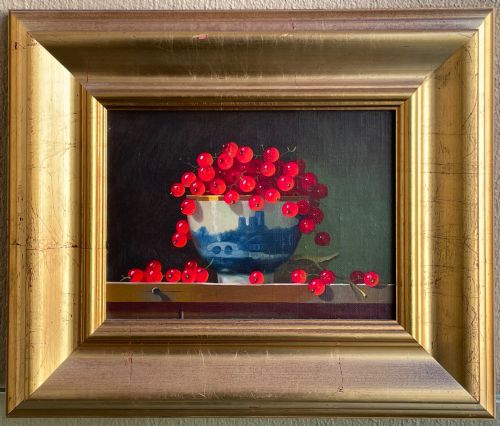
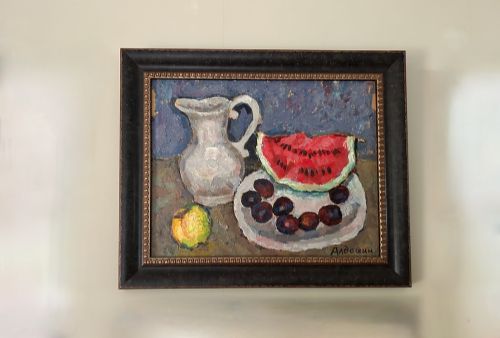
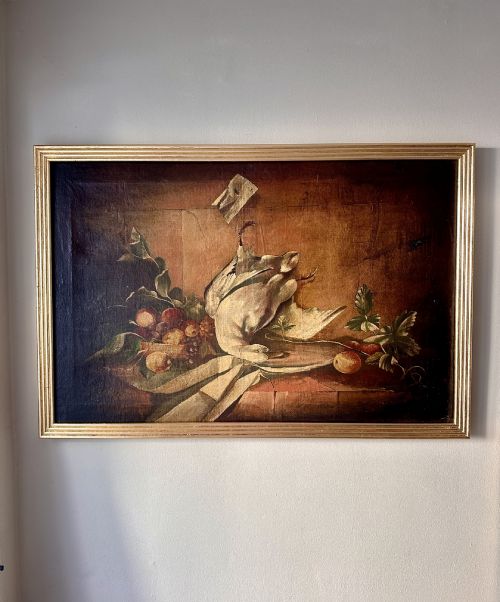
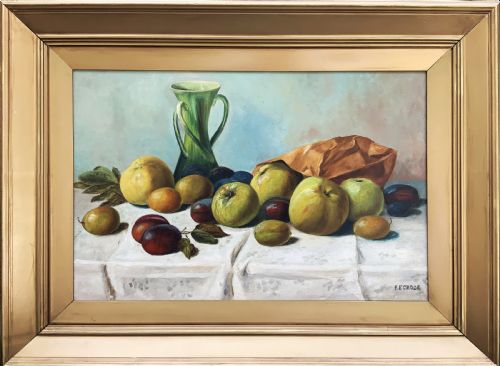
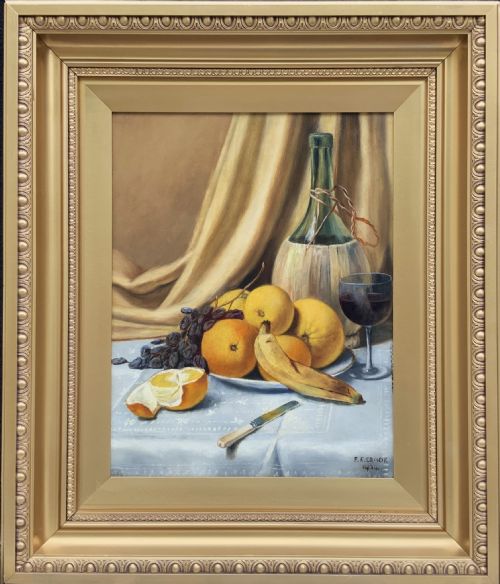
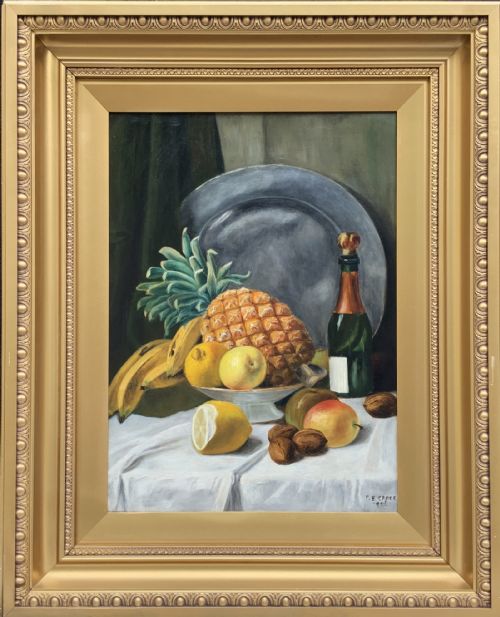
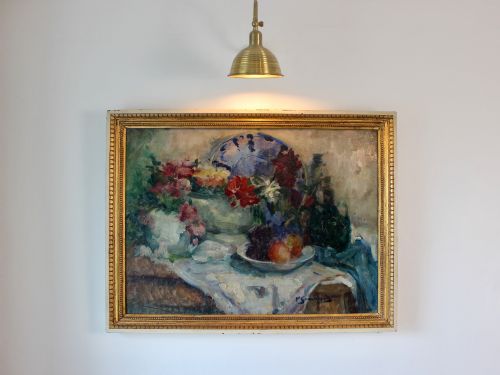
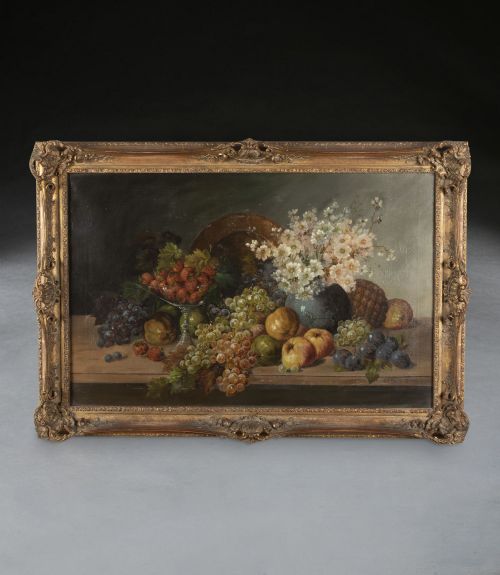
These framed fruit oil artwork pieces capture centuries of still life traditions, offering rich visual studies of apples, grapes, and baskets for any interior.
Framed Fruit Oil Artwork
When someone searches for framed fruit oil artwork, they encounter centuries of canvas paintings depicting harvest scenes, laden tables, and wicker baskets. These compositions range from 17th Century baroque works to mid-century European studies on canvas.
The selections available here lean heavily into Victorian realism, Edwardian creations, and mid-century interpretations. A buyer typically finds subjects featuring apples, grapes, pomegranates, and game alongside pottery, jugs, and glassware.
Works originate from various European schools, including English, Dutch, French, and Hungarian traditions. Many arrive preserved in their original giltwood or solid wood period frames.
How they were made
Artists painted primarily with oil paint on stretched canvas or wood panels, building rich textures and deep colour layers for natural subjects. This medium allowed painters to render the translucent skin of grapes and the rough texture of wicker baskets with precision.
Frames utilise gilt, gold leaf, and solid wood to complement the painted scenes. These housings range from ornate Victorian giltwood mouldings to simpler period wood surrounds.
Listings feature periods spanning from the 17th Century to 1960, utilising oil on canvas, wood panels, and giltwood frames.
What varies in quality
Quality separates through the artist's command of light, shadow, and natural proportion within the composition. Master hands render the delicate bloom on plums and the interplay of reflections on glassware with striking conviction.
The preservation of the original canvas and the integrity of the period frame influence the overall character of each piece. Superior works retain their original surface tension, stable pigment layers, and matching gilt surrounds.
Jozsef Molnar·Edward Ladell·Gaspar Peeter Verbruggen·William Henry Ward·Else Preussner·Ian Parker·Vladimir Aldoshin·Victor Simonin·Evelyn Chester·Henri Joseph Pauwels·Edward Duffield·Vincent Clare·Bela Balogh·Thomas Hooper·Maud Frances Eyston Sumner
The Framed Fruit Oil Artwork Glossary
- Still life
- A painting featuring inanimate subject matter, typically commonplace objects like fruit, flowers, and dead game. These arrangements allowed artists to focus entirely on form, colour, and light.
- Giltwood
- Wood carved and covered with a thin layer of gold leaf or gold paint. This material forms the ornate frames frequently paired with 19th-century canvases.
- Oil on canvas
- Pigments bound in a drying oil applied to a woven fabric stretched across a wooden frame. This combination provides a durable and flexible support for detailed brushwork.
- Baroque
- An artistic style prevalent in the 17th and 18th centuries characterised by drama, deep shadow, and exuberant detail. Fruit compositions from this era emphasise lush abundance.
- Impressionism
- A style developed in the 19th century focusing on accurate depiction of light and its shifting qualities. Mid-century and later still lifes often adopt these looser, expressive brush techniques.
Framed Fruit Oil Artwork: Frequently Asked Questions
What periods do these paintings span?
The collection spans from the 17th century through the 18th, 19th, and Edwardian eras up to the mid-20th century.
Victorian and early 20th-century pieces appear most frequently among the listings.
Are the frames original to the paintings?
Many pieces retain their original period frames, constructed from giltwood, gilt, or solid wood.
Specific listings note whether the artwork includes its matching historic frame.
How should I hang an oil painting?
Mount the artwork securely on a wall away from direct sunlight and damp environments to protect the canvas and pigments.
Ensure the hanging wire and wall fixings match the weight of the heavy gilt frame.
What subjects accompany the fruit?
Compositions often incorporate wicker baskets, birds' nests, game, pottery jugs, candlesticks, biscuits, and wine glasses.
These elements derive from traditional larder and banquet painting themes.