



Framed Fox Hunting Print
A framed fox hunting print captures the drama of British field sports through hand-coloured engravings, watercolours, and oils.
Framed Fox Hunting Print
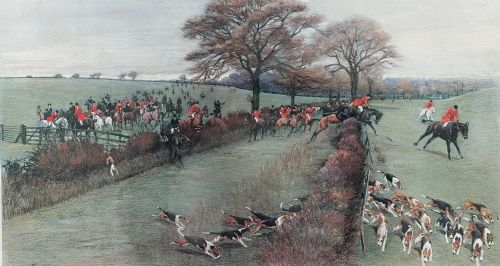
A framed fox hunting print brings nineteenth and twentieth century British sporting traditions onto the wall, spanning Victorian and Edwardian periods. Buyers encounter everything from single hand-coloured engravings to sets of four depicting famous packs like the Quorn, Belvoir and Cottesmore.
The subjects range from tranquil meets and spirited chases to individual studies by celebrated artists. Works appear in varied formats, including original prints, watercolours, oils on canvas, and Vanity Fair double prints.
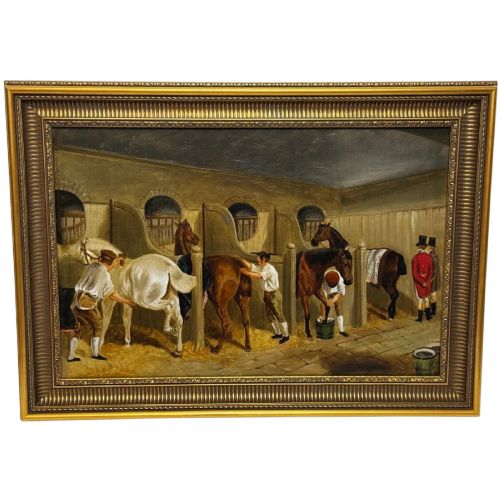
Most examples date from the nineteenth century up to the mid-twentieth century, reflecting country house tastes and the golden age of equestrian illustration. These pieces generally arrive ready to hang in period timber or gilt frames.
Materials and methods
Paper forms the primary medium for engravings and prints, frequently enhanced by hand colouring applied after the printing process. Watercolours and oils on canvas provide richer, unique textures within the selection.
Frames rely heavily on wood, oak, gilt wood, and plaster to house and protect the works behind glass. These traditional framing materials match the period of the art, ensuring the piece maintains its historical integrity.
Framed Fox Hunting Print Retail Price Guide 2026
Typical asking prices for framed fox hunting print among the pieces listed under this phrase on Sellingantiques today, from the lower quarter to the upper quarter. They describe what is for sale here now, not the wider market.
Works span original watercolours, oil paintings, hand-coloured engravings, and chromolithographs.
Judging quality and condition
Quality rests on the strength of the impression and the vibrancy of any hand colouring applied to the paper. Original works by listed artists carry distinct aesthetic weight compared to later decorative reproductions.
The matching of period frames, often in oak or gilt wood, contributes significantly to the overall desirability of the piece. Conservation of the paper surface and glass protection also dictate how well the work has survived the decades.
Charles Faulkner·Snaffles·H. Alken·Charles Hunt·Francis Calcroft Turner·J F Herring·Frank Algernon Stewart
The Framed Fox Hunting Print Glossary
- Engraving
- A printmaking technique where an image is incised into a metal plate, holding ink to transfer fine lines onto paper. These plates often received delicate hand colouring.
- Chromolithograph
- A multicolour planographic printing process that produced vibrant reproductions of original paintings during the nineteenth and twentieth centuries. This technique allowed for rich palettes without manual tinting.
- Watercolour
- A painting method where pigment is suspended in a water-based solution, creating translucent washes on paper. Original watercolours offer unique brushwork distinct from printed matter.
- Gilt wood
- Wood carved and coated with a thin layer of gold leaf or metallic paint, frequently used for traditional picture frames. This finish adds brightness and formal weight to sporting art.
Framed Fox Hunting Print: Frequently Asked Questions
How do I date a framed fox hunting print?
Dating relies on the paper type, printing technique, and framing style, alongside any visible artist signatures or publication dates. Nineteenth century examples often use hand-coloured engravings, while later twentieth century pieces include chromolithographs and original watercolours.
Examining the backboards and the construction of the wood or gilt frame provides further clues to the era. Victorian and Edwardian pieces each display distinct aesthetic markers and printing standards.
Are these prints original or reproductions?
The selection includes original period prints, hand-coloured engravings, watercolours, and oil paintings from the nineteenth and twentieth centuries. Each listing details the specific medium, distinguishing between original works on paper and later print runs.
Checking the surface through glass reveals the fine dot patterns of modern printing versus the distinct plate marks and hand application of antique engravings.
How should I hang and care for these pieces?
Keep framed paper works and watercolours out of direct sunlight to prevent the hand-coloured pigments from fading over time. Stable indoor humidity protects both the paper and the wooden or gilt frames from warping.
Ensure the hanging wire and wall fixings are secure, as heavier gilt wood frames and oil paintings require robust support. Regular dusting of the glass and frame maintains their appearance without disturbing the antique materials.
What subjects do these hunting scenes show?
The scenes depict traditional British field sports, capturing key moments like the meet, the chase, and portrait studies of riders and hounds. Named packs and locations such as the Berkeley, Quorn, and Belvoir frequently appear in the titles.
Other compositions focus on humorous character studies, tandem carriages, and panoramic views of the English countryside during winter.