





Framed Floral Watercolour Print
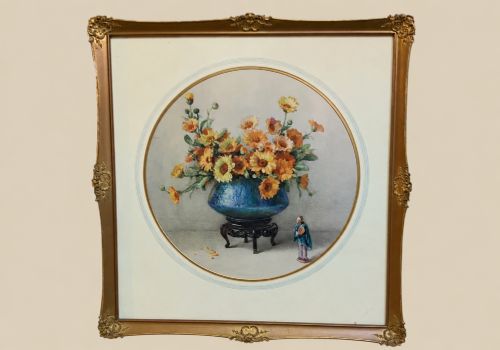
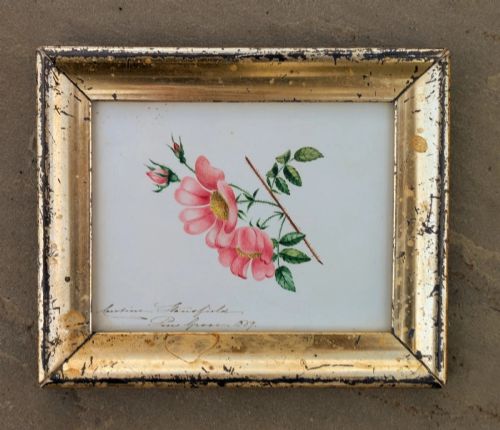
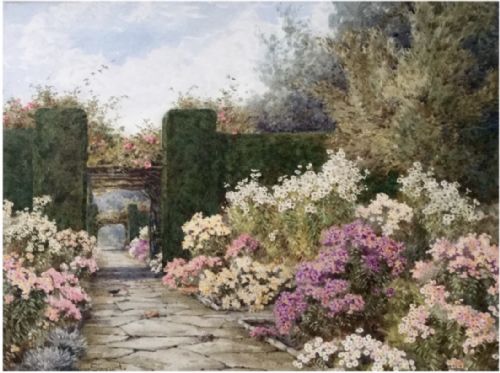
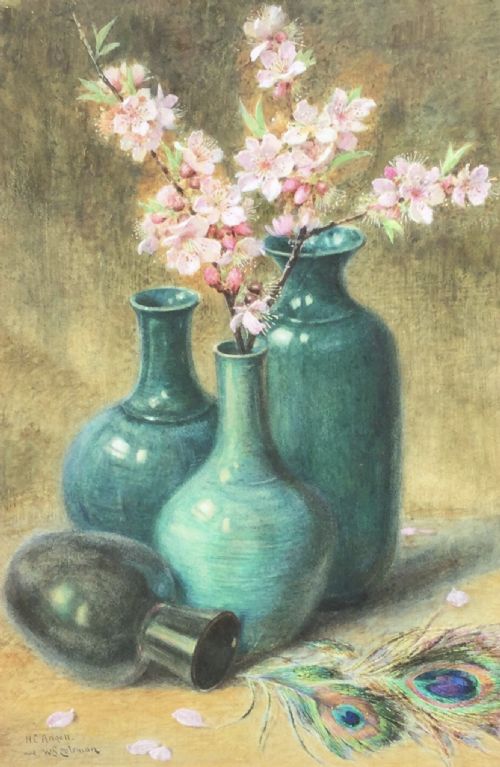
These framed floral watercolour print examples bring botanical studies and still life scenes into domestic spaces.
Framed Floral Watercolour Print
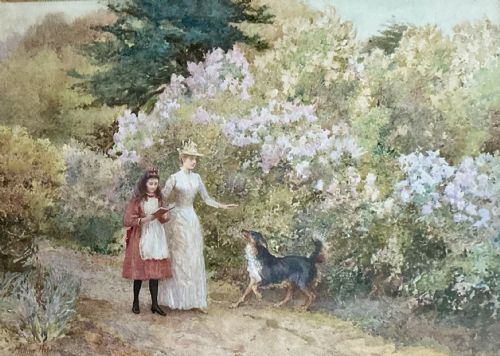
A framed floral watercolour print search brings together works created across the nineteenth and early twentieth centuries, capturing botanical subjects and natural forms. Buyers encounter pieces ranging from Victorian naturalism to early twentieth century botanical studies.
The selections span various forms including still life paintings and detailed studies of flowers such as fuscia, wild rose, azalea, and wallflowers. Works originate from periods including the 1850s, 1870s, 1880s, 1900, 1910, and the 1920s.
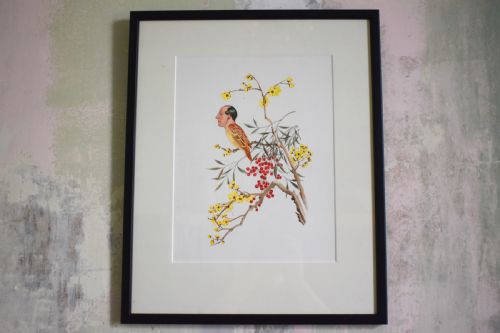
Many items present traditional English school botanical illustration alongside whimsical or satirical pieces, demonstrating the broad scope of watercolour painting within these eras.
How They Were Made
Artists applied watercolour pigment and gouache onto paper supports, frequently combining these aqueous mediums with pencil underdrawing to establish fine botanical details. Selected works incorporate gold leaf highlights to enhance the visual depth of the composition.
Finished paintings are housed in protective wooden frames, often featuring gilt wood finishes, and glazed with glass to preserve the delicate pigments from atmospheric degradation.
Listings feature paper, watercolour pigment, gouache, gold leaf, wood, and glass across various styles from Victorian botanical to early twentieth century.
What Varies In Quality
The distinction between examples rests upon the precision of the brushwork and the botanical accuracy demonstrated by the artist in rendering complex floral structures. Works displaying careful observation of light upon petals stand apart from more generalized renderings.
The preservation of the paper support and the vibrancy of the watercolour pigment heavily influence the overall character of each piece. Original framing components, particularly period wood and gilt surrounds, contribute significantly to the integrity of the object.
Arthur Hopkins·Charlotte Isa James·Jane Utley·John Sherrin·M.K Rhodes·Lilian Stannard·Amy Reeve-Fowkes·Helen Cordelia Angell·Wiliam Stephen Coleman·Owen Bowen
The Framed Floral Watercolour Print Glossary
- Watercolour pigment
- A colourant ground with a water-soluble binder, used by artists to create translucent washes on paper. This medium allows for delicate layering and luminous effects.
- Gouache
- An opaque watercolour medium containing a white pigment filler, adding density and solidity to painted areas. It is frequently paired with transparent watercolour for contrast.
- Gilt wood
- Timber frames finished with a thin layer of gold leaf or metallic powder, providing a decorative border. These surrounds are characteristic of period framing.
- Botanical naturalism
- An artistic approach focusing on the precise and faithful representation of plant life in its natural state. This style gained significant popularity during the Victorian era.
Framed Floral Watercolour Print: Frequently Asked Questions
What periods do these pieces date from?
The selection encompasses works created from the mid nineteenth century through the early twentieth century, spanning decades such as the 1850s, 1870s, 1880s, and the 1920s.
Victorian naturalism and early twentieth century botanical styles dominate the timeline, reflecting changing artistic approaches to floral illustration over time.
How should I care for these watercolours?
Protect the works from direct sunlight to prevent the watercolour pigments from fading over time. Maintaining stable indoor humidity levels ensures the paper support and wooden frames remain preserved.
Keep the glass clean using dry methods to avoid introducing moisture behind the glazing.
Are these works original paintings?
The collection consists of hand-painted works executed directly onto paper using watercolour, gouache, and pencil mediums. Each piece represents a unique artistic creation rather than a mechanical reproduction.
Artists utilised these techniques to capture detailed studies of flowers, still life arrangements, and botanical subjects.
What framing materials are used?
Pieces are typically housed in wooden frames, with several examples featuring gilt wood finishes that complement the era of the artwork. Glass glazing is employed to protect the delicate painted surface from dust and damage.
The combination of wood and glass has served as the standard method for presenting and preserving these works.