







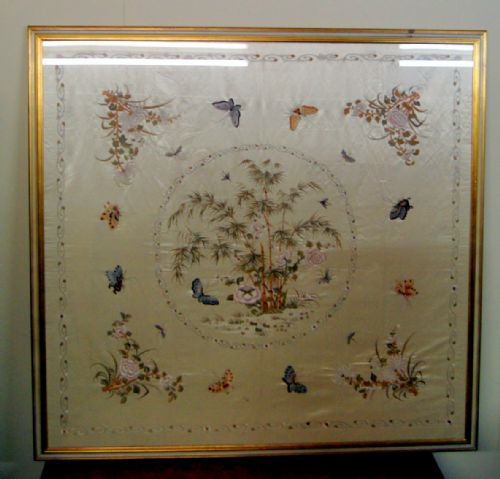

Framed Floral Embroidery Panel
A framed floral embroidery panel brings centuries of textile artistry onto the wall, offering texture and colour that modern prints simply cannot match.
Framed Floral Embroidery Panel
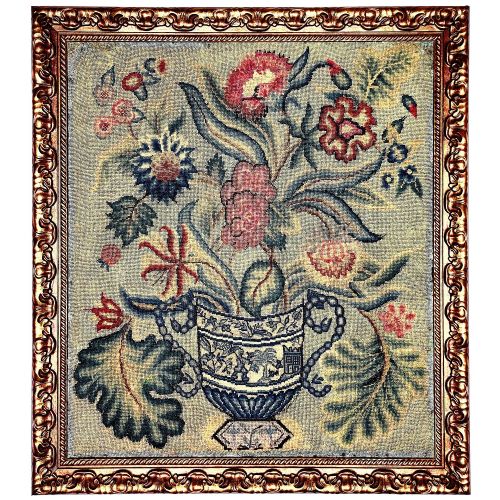
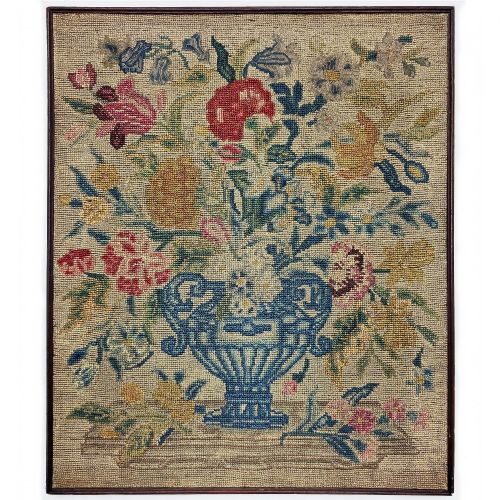
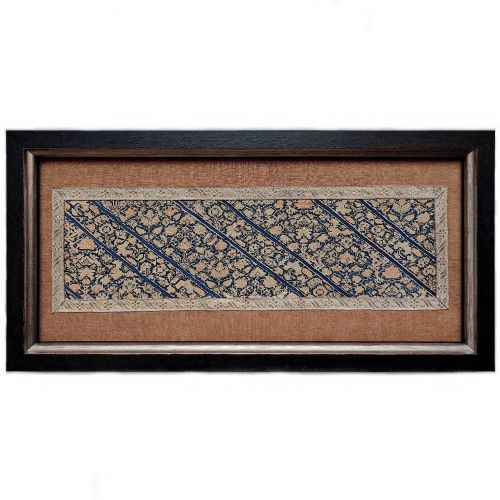
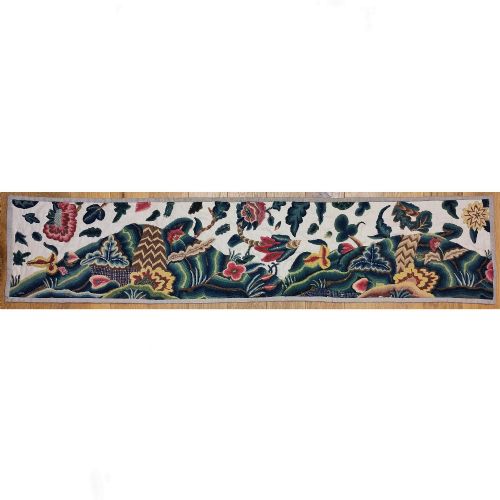
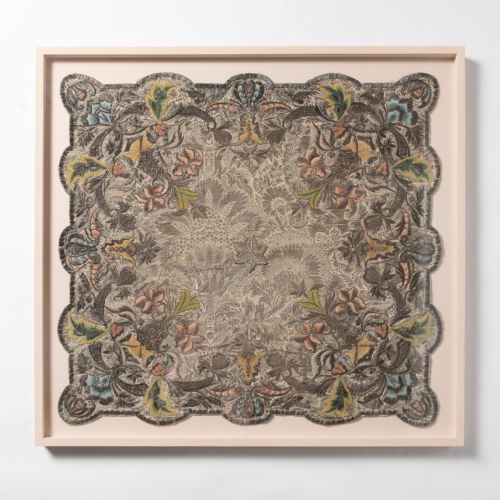
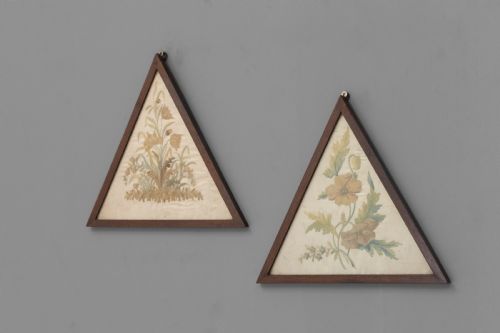
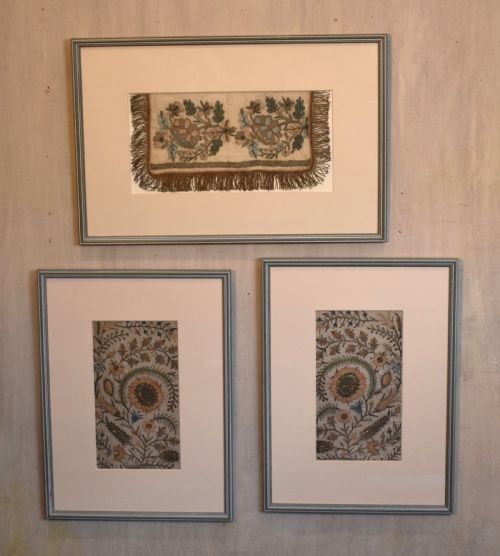
A framed floral embroidery panel is a decorative textile work preserved behind glass within a wooden or gilt surround. These pieces range from eighteenth-century English needlework pictures to nineteenth-century Chinese and Ottoman fragments.
The selections here frequently include Victorian silkwork and folk art samplers alongside Georgian floral needlework. Wall art and textile panels dominate the forms encountered in this category.
Originating from diverse traditions including French, Italian, and Central Asian workshops, each panel reflects the domestic or courtly textile practices of its era.
What varies in quality
Quality rests primarily in the precision of the needlework and the complexity of the botanical or pictorial composition. Early English needlework pictures demonstrate exceptional density in their stitch work.
The preservation of the original silk or wool threads and the integrity of the period frame contribute significantly to the standing of any individual piece.
Framed Floral Embroidery Panel Retail Price Guide 2026
Typical asking prices for framed floral embroidery panel among the pieces listed under this phrase on Sellingantiques today, from the lower quarter to the upper quarter. They describe what is for sale here now, not the wider market.
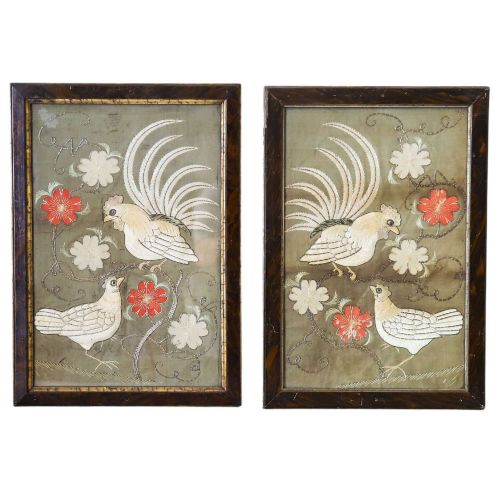
Cockerels and hens make charming appearances in nineteenth-century French silk embroideries, proving that poultry has long held artistic appeal.
The Framed Floral Embroidery Panel Glossary
- Crewelwork
- Embroidery executed with wool yarn on a linen or cotton twill fabric. This technique is typical of seventeenth and eighteenth-century English textiles.
- Sampler
- A piece of needlework produced to demonstrate skill in various stitches and patterns. Often includes alphabets, dates, and maker names.
- Silkwork
- Embroidery created predominantly using silk threads upon a silk or linen ground. It often yields a glossy, painterly finish common in Georgian and Victorian pictures.
- Suzani
- A type of embroidered and decorative tribal textile originating from Central Asia. These large panels typically feature bold floral motifs worked in silk.
Framed Floral Embroidery Panel: Frequently Asked Questions
How should I hang my framed floral embroidery panel?
Keep panels away from direct sunlight to prevent the silk and wool threads from fading over time. Maintain stable indoor humidity levels to protect both the fabric and the wooden frame.
Use secure picture hooks suited to the weight of the frame and glass. Professional framing with UV-filtering glass offers extra protection for antique textiles.
How do I date an antique embroidery panel?
Examine the materials of the ground fabric, such as hand-woven linen or machine-made cotton, alongside the type of threads utilised. Stylistic clues in the floral motifs and framing techniques also help narrow down the period.
Comparative study of documented Georgian, Victorian, and eighteenth-century examples provides reliable markers for age. Inscribed dates or maker names on samplers offer the most direct evidence.
What is the difference between crewelwork and silkwork?
Crewelwork utilises wool yarn on sturdy linen twill, producing heavy, textured designs traditional in English domestic interiors. Silkwork employs fine silk threads that allow for subtle shading and a luminous finish.
Crewelwork panels often date to earlier centuries like the 1700s, while silkwork is frequently found in Georgian and Victorian pieces.