
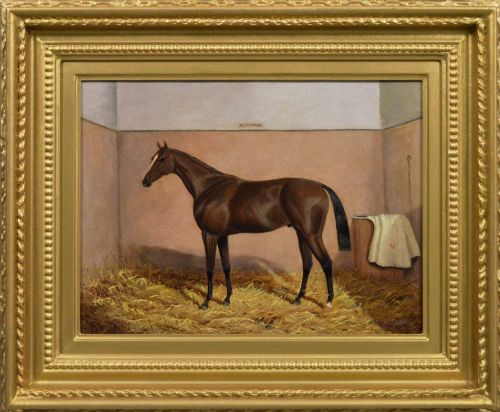
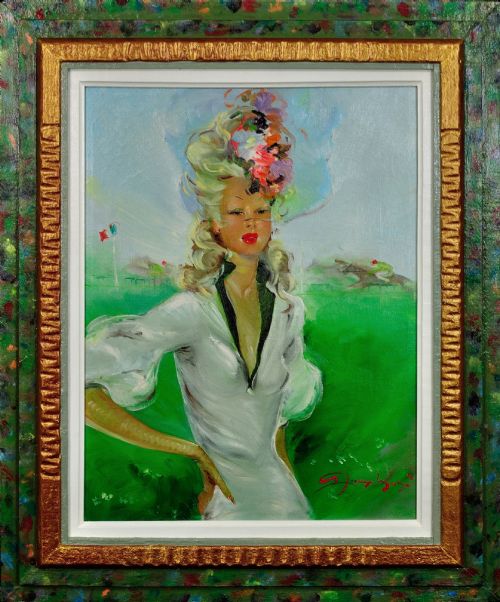
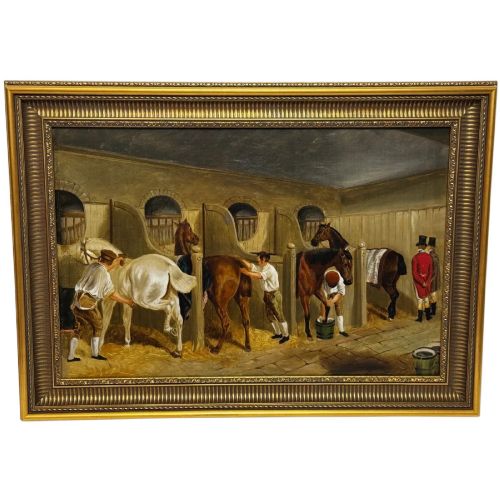
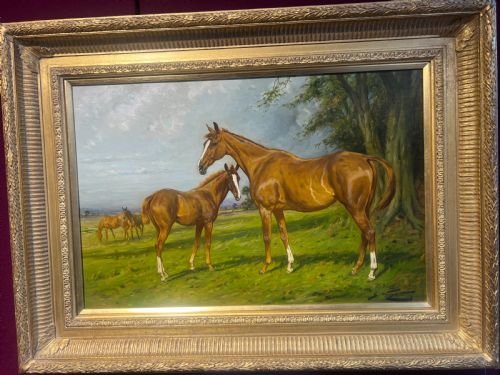
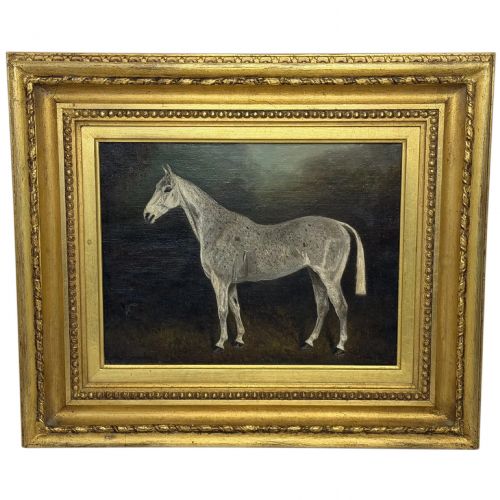
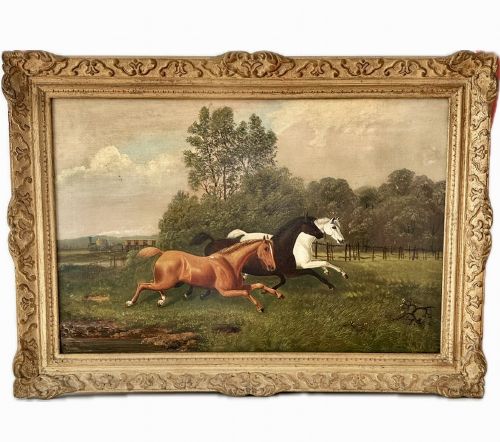
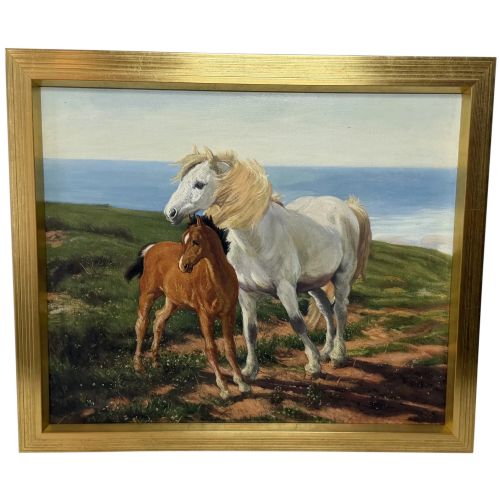
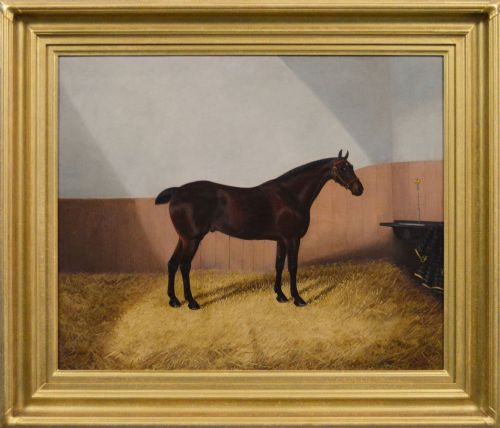
Framed Equestrian Oil Portrait
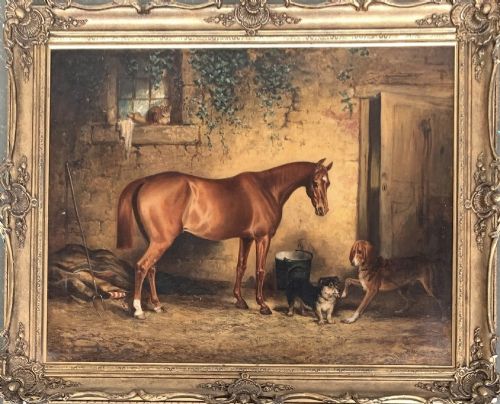
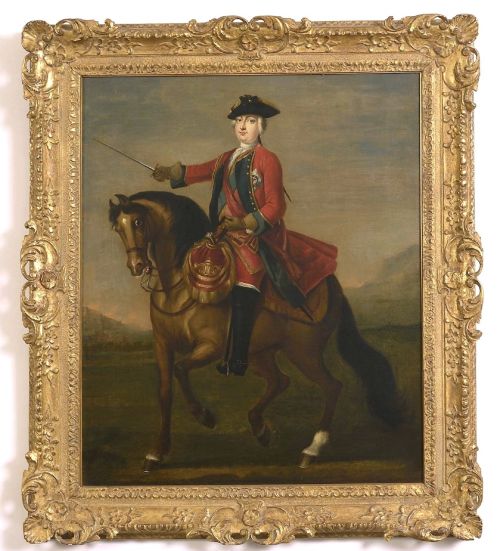
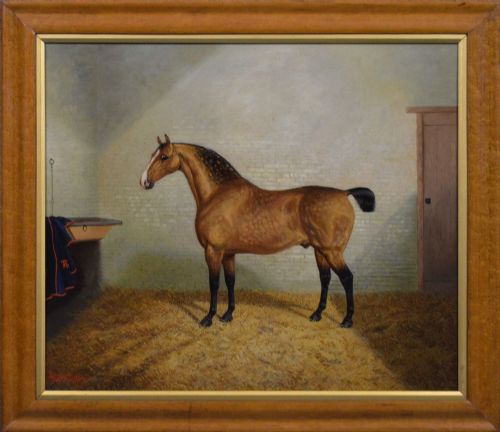
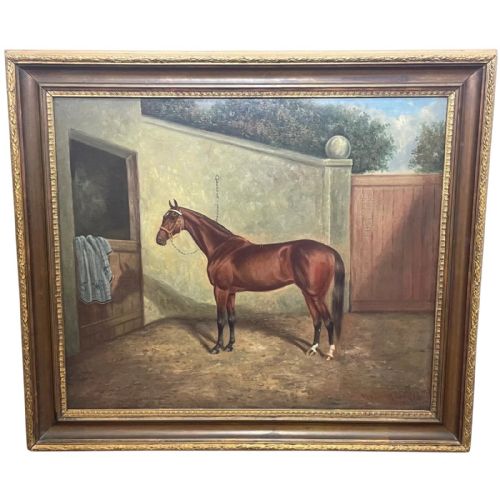
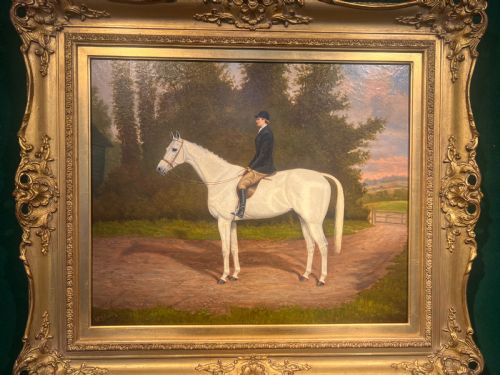
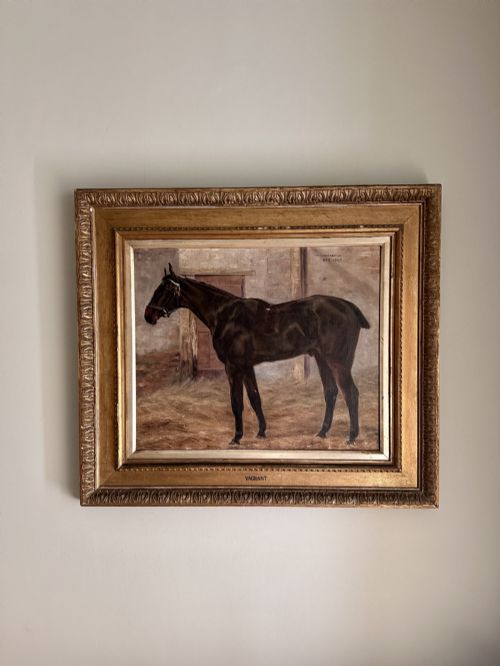
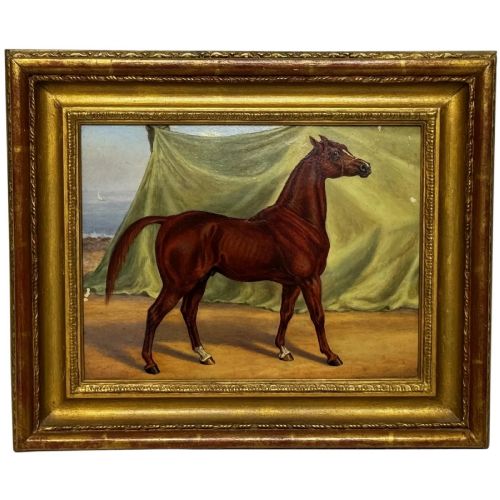
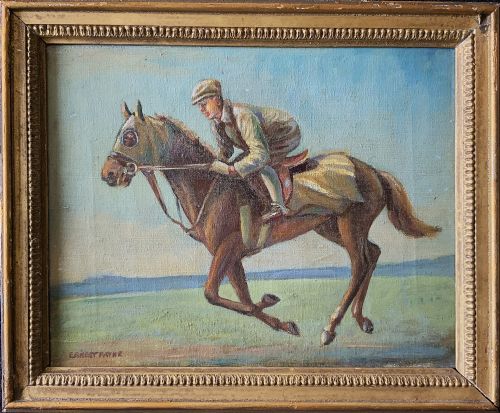
A framed equestrian oil portrait captures the power and character of horses through traditional brushwork set in period wood and gilt frames.
Framed Equestrian Oil Portrait
A framed equestrian oil portrait centres on depictions of horses, racehorses, and sporting scenes originating from the eighteenth, nineteenth, and twentieth centuries. Buyers seeking a framed equestrian oil portrait encounter works ranging from detailed studies of named thoroughbreds in stables to broader landscape compositions involving hounds and riders.
The selections span Georgian and Victorian sporting art alongside later Edwardian and mid-century interpretations. These pieces record specific animals, notable winners, and rural pursuits through historical British and continental European schools.
How They Were Made
Makers utilised oil paint applied to woven canvas stretched over wooden supports, though examples also appear on pine panels. The pigment layers build up tone and texture to define the musculature and coat of the animal.
Finished works sit within wooden frames, frequently finished with gilt or giltwood moulding. These surrounds complement the traditional subject matter and protect the perimeter of the canvas or panel.
Listings feature works spanning the eighteenth century through to the mid-twentieth century, utilising oil on canvas and wood.
What Varies in Quality
The standard of an equestrian painting rests upon the anatomical precision of the horse and the handling of light across the coat and landscape. Superior works capture individual expression and conformation accurately rather than relying on standard templates.
The integration between the painted surface and the surrounding frame also influences the overall integrity of the piece. Period frames that harmonise with the era of the canvas elevate the presentation of the artwork.
Henry Barraud·John Wootton·Thomas Hudson·Albert Clark·Jean-Gabriel Domergue·Fred Fitzpatrick·Ernest Payne·Edward Priestley·John Alfred Wheeler·Thomas Walker Bretland·John Ferneley Senior·Edward Lloyd of Ellesmere·George E Sharpe·Valentine Thomas Garland·Samuel Spode·W Williams
The Framed Equestrian Oil Portrait Glossary
- Canvas
- A heavy woven fabric used as a surface for painting. It provides the traditional support for many historical oil works.
- Giltwood
- Wood carved and coated with gold leaf or gold paint. This material forms decorative frames designed to display and protect artworks.
- Oil paint
- A slow-drying medium composed of pigments suspended in oil. It allows artists to blend tones and build rich textures.
- Panel
- A flat piece of wood used as a rigid alternative to canvas. Pine panels appear in earlier works of this type.
Framed Equestrian Oil Portrait: Frequently Asked Questions
Where were these portraits displayed?
Historical equestrian portraits hung primarily in country houses, estate offices, and sporting clubs to celebrate prized animals and racing victories.
Owners commissioned them to record successful bloodlines and notable moments in regional hunting and racing history.
How do I identify the period?
Dating relies on examining the stretcher construction, canvas type, framing style, and any signatures or inscriptions on the reverse.
Clothing styles of jockeys or handlers depicted in the background also offer clues regarding the decade of creation.
Are all these paintings British?
The majority reflect British sporting art traditions, though pieces from French schools and international locations such as India also appear.
Subject matter often points to specific regional stables, racecourses, or estates named in the documentation or titles.
How should I hang an oil portrait?
Select a wall away from direct sunlight and steady heat sources to protect the canvas and the original giltwood frame.
Ensure the hanging fixings match the weight of the wooden frame and support the structure securely.