





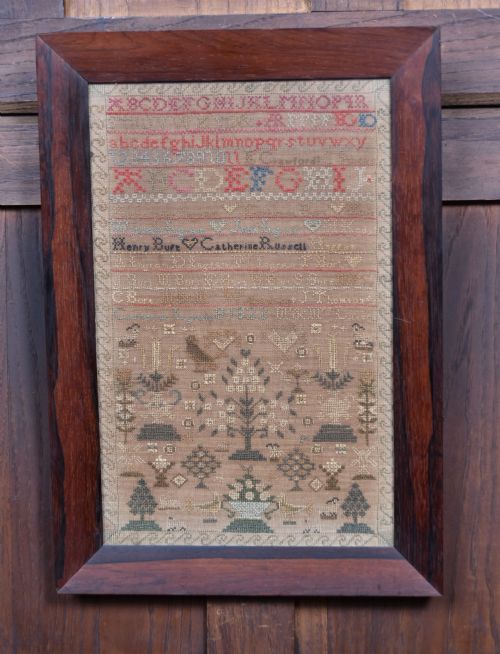


Framed Embroidery Sampler
These framed embroidery sampler pieces are historic textile works showcasing alphabets, maps, and motifs that preserve centuries of domestic needlecraft.
Framed Embroidery Sampler
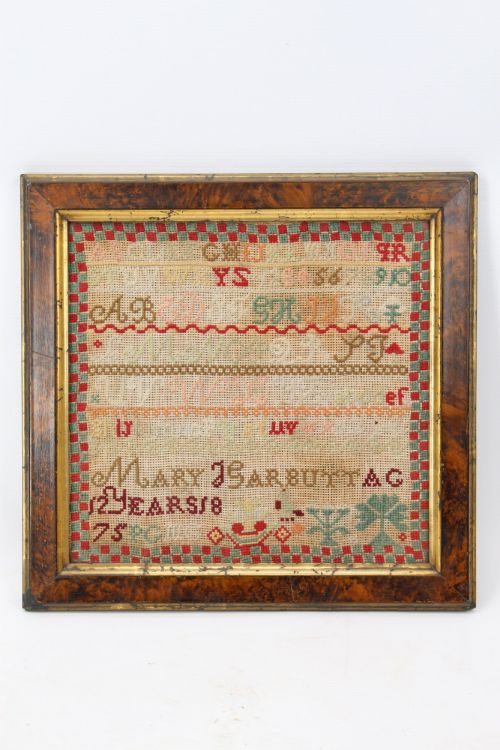
A framed embroidery sampler represents a dedicated exercise in needlework skill, often created by young makers practising stitches, letters, and numbers. The examples found here span the 18th century, Georgian era, and Victorian period, showcasing distinct regional designs such as English, Scottish, and French pieces.
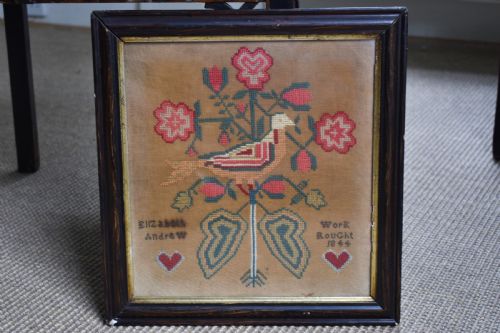
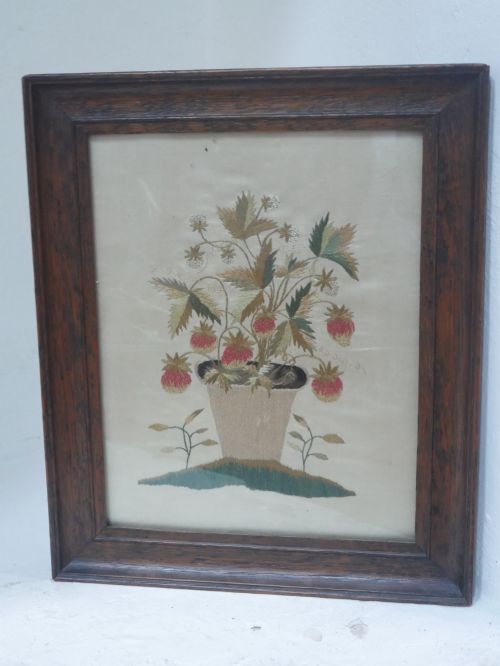
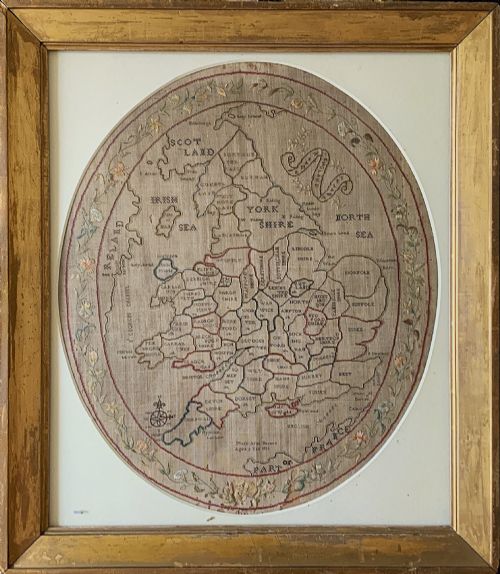
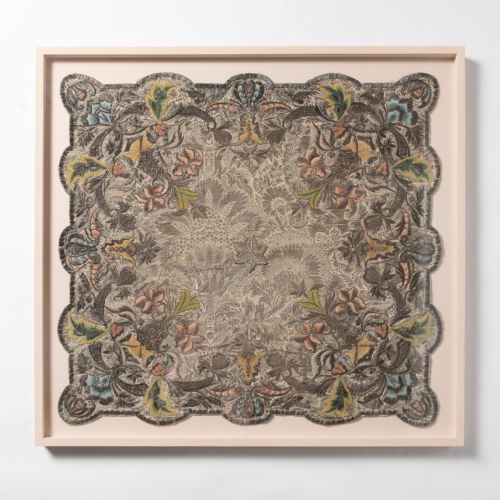
Beyond standard lettering and alphabets, many of these textile works incorporate figurative scenes, religious subjects, map designs of England and Wales, and botanical motifs like pots of strawberries. These varied compositions reflect the diverse educational and decorative purposes assigned to needlework across different generations.
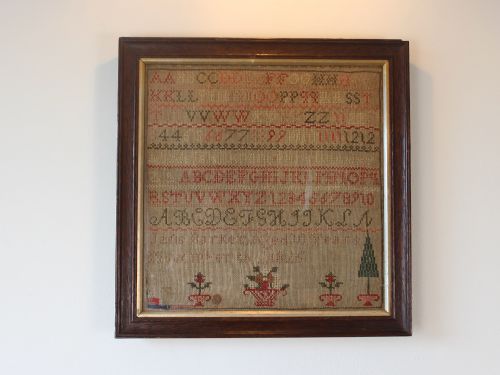
Most pieces survive housed within protective wooden frames behind glass, preserving the delicate threads from environmental damage. Viewers frequently encounter works signed and dated by children or young adults, recording their names and ages at the time of stitching.
Materials and Technique
Makers utilised woven linen or canvas as the primary foundation fabric, stretching the textile taut to receive the intricate stitching. Threads fashioned from wool, silk, and silk floss provided the colour palette for the letters, borders, and pictorial elements.
Needlework techniques range from foundational cross-stitch and alphabet practice to complex gros point needlepoint and detailed pictorial embroidery. The disciplined hand of the maker dictated the uniformity of the tension and the precision of the geometric and figurative layouts.
Framed Embroidery Sampler Retail Price Guide 2026
Typical asking prices for framed embroidery sampler among the pieces listed under this phrase on Sellingantiques today, from the lower quarter to the upper quarter. They describe what is for sale here now, not the wider market.
The inventory records diverse forms ranging from traditional alphabet practice and map designs to religious scenes and botanical illustrations.
Assessing Quality
Quality rests primarily upon the discipline of the stitching, the complexity of the design, and the completeness of the composition. A superior piece displays disciplined tension, balanced proportions, and a rich variety of stitches executed by the maker.
Historical depth and informative detail also elevate certain examples, particularly maps detailing geography or pictorial scenes depicting narratives like Jack and the Beanstalk. The survival of original framing, clear maker inscriptions with names and ages, and minimal fading of the silk and wool threads further distinguish the finer examples.
The Framed Embroidery Sampler Glossary
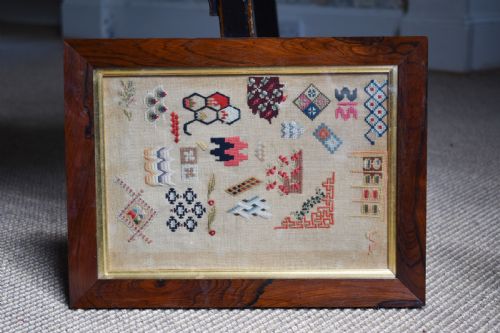
- Band sampler
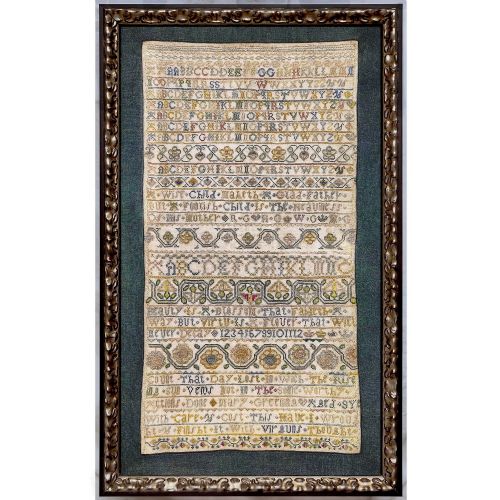
- A long, narrow textile strip displaying horizontal bands of disparate embroidery patterns and stitches. Practised makers utilised this format to record stitch repertoires before wider rectangular formats became standard.
- Gros point
- A counted-thread embroidery technique utilising wool yarn on a canvas ground to produce firm, durable pictorial surfaces. It frequently appears in mid-19th-century needlework pictures depicting figures and animals.
- Alphabet sampler
- A textile work dedicated primarily to the systematic practice of lettering and numbers. These pieces typically display uppercase and lowercase alphabets alongside modest decorative borders.
- Map sampler
- An educational embroidery depicting geographical regions, particularly England and Wales, combined with cartographic lettering. Young makers stitched these to demonstrate both needlework competence and geographical knowledge.
Framed Embroidery Sampler: Frequently Asked Questions
How old is my sampler?
Many samplers include embroidered dates, makers' names, and ages that establish a clear production period. Stylistic clues such as lettering fonts, framing types, and the specific use of wool or silk floss help date unsigned pieces.
Comparing the border designs and motifs against known examples from the Georgian and Victorian eras offers further chronological context for dating.
Who made these pieces?
Historical records and inscriptions show that these textile works were predominantly created by young girls and teenagers as part of their domestic education. Schools and boarding academies instructed pupils in needlework as an essential accomplishment.
Signatures often record the maker's name, age - frequently around eleven or twelve years old - and the specific year of completion.
How should I hang a framed sampler?
Protect antique textiles by placing them away from direct sunlight and damp environments to prevent fading of the wool and silk threads. Secure hanging hardware should support the weight of the wooden frame without stressing the aged materials inside.
Maintaining stable room temperatures prevents the linen foundation and wooden frames from expanding and contracting.
What is the difference between a sampler and a needlework picture?
A sampler focuses on repetitive exercises in alphabets, numbers, and decorative borders designed to showcase stitching proficiency. In contrast, a needlework picture presents a complete pictorial scene, such as a landscape, religious subject, or narrative illustration.
Both forms utilise similar linen, wool, and silk materials but serve distinct educational and decorative functions.