



Framed Dog Engraving
A framed dog engraving captures canine character with line and plate, offering a slice of social history for your walls.
Framed Dog Engraving
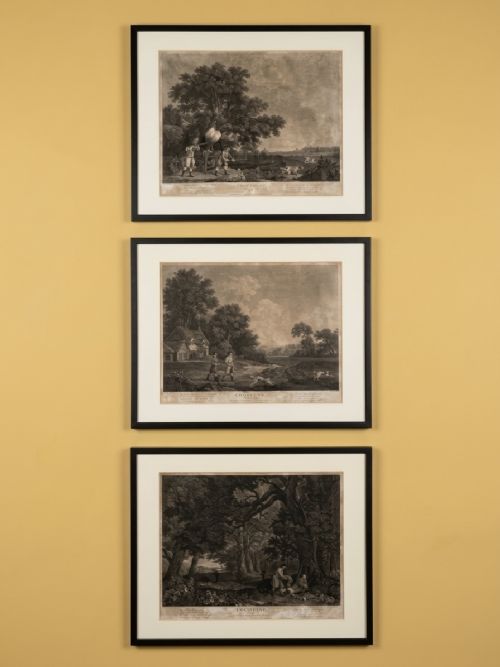
A framed dog engraving brings together printed works of art and period frames, spanning centuries of canine portraiture. When you search for a framed dog engraving, you encounter pieces that range from Georgian sporting prints to early twentieth-century drypoint works.
The selection on this page relies heavily on nineteenth-century and early twentieth-century works, alongside eighteenth-century sporting scenes. You will find domestic pets, working dogs, and famous canine subjects preserved behind glass in oak or gilt wood frames.
These works function as both social documents and decorative art, recording how artists viewed dogs across different eras. The forms vary from intimate artist proofs to larger plates from published series.
How they were made
The foundation of these pieces is paper carrying ink transferred from engraved or etched metal plates. Artists worked directly onto metal using burins or acid, creating the fine lines that define each animal's coat and expression.
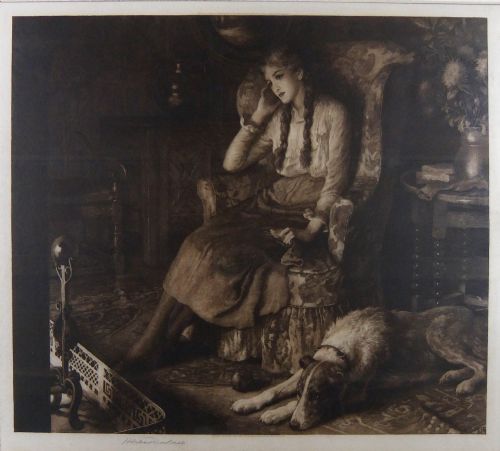
Many works utilise drypoint techniques where the artist scratches directly into the plate, producing soft, velvety burrs of ink around the lines. Finished prints were then mounted under glass and secured in frames of oak, wood, or gold leaf.
Framed Dog Engraving Retail Price Guide 2026
Typical asking prices for framed dog engraving among the pieces listed under this phrase on Sellingantiques today, from the lower quarter to the upper quarter. They describe what is for sale here now, not the wider market.
Named subjects in the collection range from celebrated bull bitches to working terriers caught mid-thought.
What varies in quality
Quality rests in the clarity of the printed line and the crispness of the impression pulled from the plate. Early impressions carry a richness and depth that later restrikes or worn plates lose.
The framing also dictates the overall standard, with period gilt wood and oak surrounds matching the age of the print inside. Original mounts and well-preserved paper without heavy foxing elevate the piece considerably.
William Woollett·George Stubbs·Herbert Dicksee·G Morland·Landseer
The Framed Dog Engraving Glossary
- Drypoint
- A printmaking process where an artist scratches an image directly onto a metal plate with a sharp needle. This technique creates a distinctive rich line through the raised burr of metal thrown up on the side of the stroke.
- Engraving
- A method of cutting a design into a hard metal plate using a burin. The resulting grooves hold the ink that transfers to paper under pressure.
- Etching
- A technique where acid bites lines into a metal plate protected by a wax ground. Artists draw through the wax to expose the metal for the acid.
- Foxing
- Brown spots and discolouration that develop on old paper over time due to chemical reactions. It appears frequently in works of considerable age.
- Plate mark
- The indentation left on the paper by the edge of the metal plate during the printing press run. Its presence confirms an original print from a plate.
Framed Dog Engraving: Frequently Asked Questions
How do I date a framed dog engraving?
Dating relies on the paper type, the framing materials, and the style of the engraving. Artists like Herbert Dicksee provide specific twentieth-century benchmarks, while Georgian plates show distinct eighteenth-century printing characteristics.
Examining the backboards and glass can also reveal whether the framing is original to the period of creation. Paper analysis and typography in the margins offer further clues to the exact decade.
What is the difference between an engraving and an etching?
An engraving is cut directly into metal using a sharp tool called a burin, producing clean, precise lines. An etching uses acid to bite the lines into the metal plate, allowing for a freer, more painterly stroke.
Both methods result in printed images on paper, but the microscopic examination of the lines reveals which tool carved the original plate. Etchings often show softer, more feathered line edges compared to the sharp cuts of an engraving.
How should I hang a framed dog engraving at home?
Keep these works away from direct sunlight to prevent the ink and paper from fading over time. Stable room temperatures protect both the paper and the antique wood or gilt frames from warping.
Use professional picture hooks suited to the weight of the frame and glass. Hanging them at eye level in dry rooms ensures the paper remains free from moisture damage.
Why are some dog engravings signed in pencil?
Pencil signatures usually indicate an original artist proof pulled personally by the maker or printmaker. These signed impressions typically command more attention from collectors than unsigned published plates.
Artists like Herbert Dicksee often signed their drypoint etchings below the image area in pencil. This practice became standard in the nineteenth and twentieth centuries to guarantee the quality of the impression.