



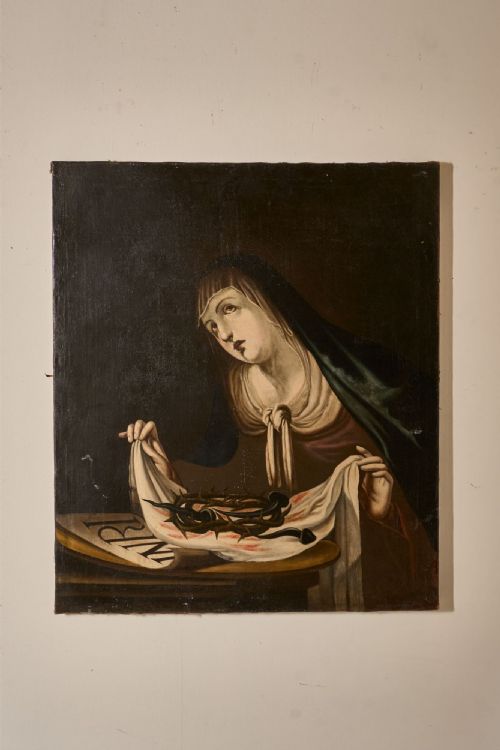


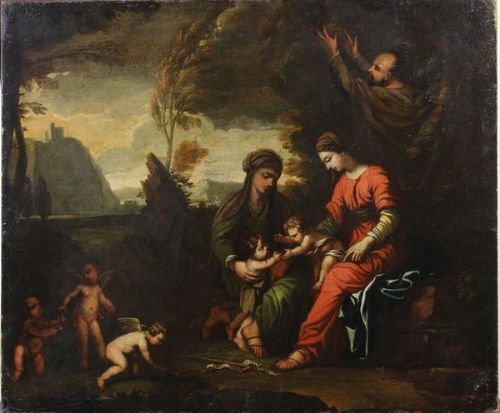


Framed Devotional Artwork
Framed devotional artwork comprises centuries of religious portraiture and sacred scenes designed for contemplation, spanning oils on canvas, reverse glass paintings, and detailed enamel plaques.
Framed Devotional Artwork
Framed devotional artwork encompasses sacred imagery created for private prayer or religious reflection, frequently taking the form of oil paintings, prints, and reverse glass works. These pieces transport centuries of religious iconography into domestic and institutional spaces, maintaining their sacred purpose through traditional frames.
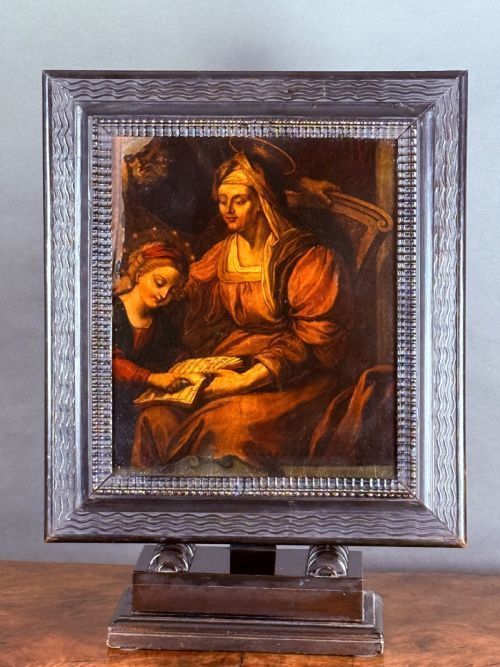
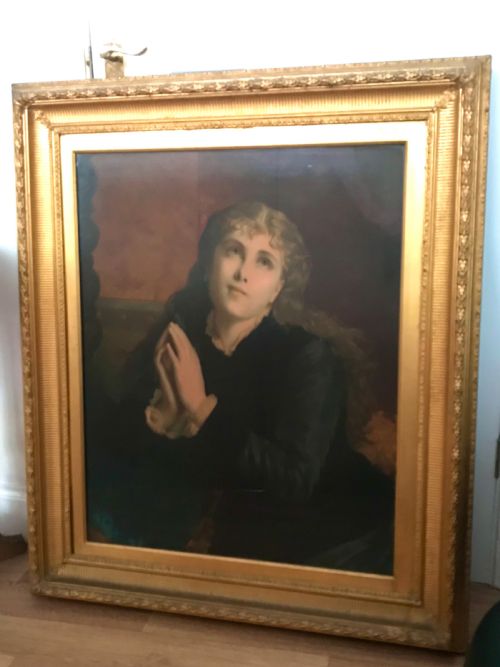
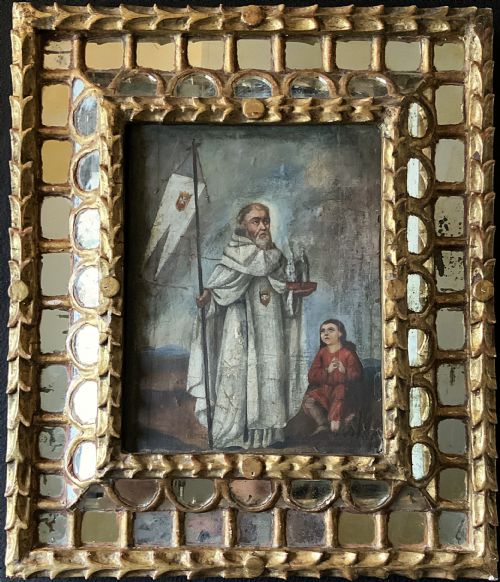
The objects seen here range from small seventeenth-century icon panels and eighteenth-century miniature saints to large nineteenth-century oils on canvas. Works attributed to various European schools alongside identified artists reveal how religious subjects were interpreted across different regions and centuries.
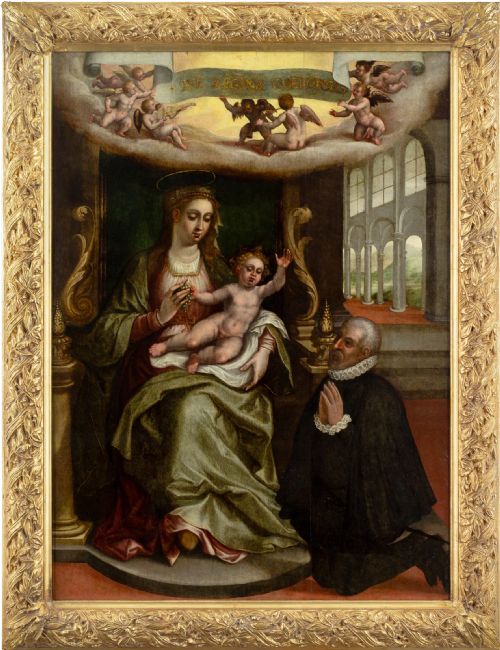
Buyers encountering this category will find a strong representation of oil paintings depicting the Virgin and Child, alongside crucifixion scenes and portraits of specific saints. These works utilise traditional canvas, wood panels, and glass supports, preserved within period frames such as giltwood.
Materials and Techniques
The construction of these pieces relies on traditional painterly materials, predominantly oil paint applied to canvas, wood panels, or paper supports. Artisans also utilised specialised techniques such as reverse glass painting and Limoges enamel to create durable devotional plaques.
Framing forms an integral part of the physical object, with giltwood frames providing both structural support and ornamental weight to the canvases and panels. Gold leaf accents frequently enhance these surrounds, complementing the painted religious scenes within.
Framed Devotional Artwork Retail Price Guide 2026
Typical asking prices for framed devotional artwork among the pieces listed under this phrase on Sellingantiques today, from the lower quarter to the upper quarter. They describe what is for sale here now, not the wider market.
Baroque and Renaissance styles dominate the religious painting selections alongside nineteenth-century devotional prints.
Distinctions in Quality
Quality within framed devotional artwork rests upon the execution of the painting and the fidelity of the theological representation. Works originating from recognised continental schools or attributed to specific workshop circles display superior brushwork and anatomical precision.
The preservation of the original medium, whether oil on canvas or delicate enamel, combined with the integrity of the period giltwood frame, determines the standing of an individual piece. The depth of historical context attached to the subject matter further elevates the piece.
Miguel Barroso·Costantino Frixione·Juan Ruiz Soriano·Gaspar de Figueroa·Reynard Le Vieux
The Framed Devotional Artwork Glossary
- Reverse glass painting
- A technique where the artist paints directly onto the reverse side of a glass sheet so the final image is viewed through the front. This method creates a glossy, protected surface.
- Giltwood
- Wood that has been coated with a thin layer of gold leaf or gold paint. It is commonly found on traditional frames housing classical and religious works.
- Limoges enamel
- Opaque enamel painted onto a copper plate to produce detailed devotional plaques. This technique flourished in France during various historical periods.
- Icon
- A religious work of art, usually painted on a small wooden panel, depicting Christ, saints, or angels. These objects serve as focal points for prayer in Eastern Christian traditions.
- Oleograph
- A type of chromolithography that simulates an oil painting by using textured paper and varnishes. It allowed mass reproduction of religious portraits in the nineteenth century.
Framed Devotional Artwork: Frequently Asked Questions
What is framed devotional artwork?
Framed devotional artwork consists of sacred paintings, prints, and plaques created to inspire religious reflection and prayer.
These pieces typically depict biblical scenes, the Virgin and Child, or individual saints within period frames.
How do I date these artworks?
Dating relies upon stylistic analysis of the painting techniques, costume details, and the characteristics of the supporting frame.
Evidence from nineteenth-century oleographs and sixteenth-century oil paintings helps establish a comparative timeline for similar works.
Where were these pieces made?
The pieces originate from various European art schools, including Italian, Spanish, French, and Central European workshops.
Regional religious traditions heavily influenced the materials and iconography chosen by the artists.
How should I display them?
Display these artworks on stable interior walls away from direct sunlight and excessive moisture to protect the canvas and giltwood frames.
Proper hanging ensures both the painting and its protective or decorative frame remain secure over time.