


Framed Cross Stitch Panel
A framed cross stitch panel brings home centuries of patient domestic handiwork, preserving alphabets, poetry and family records behind old glass.
Framed Cross Stitch Panel
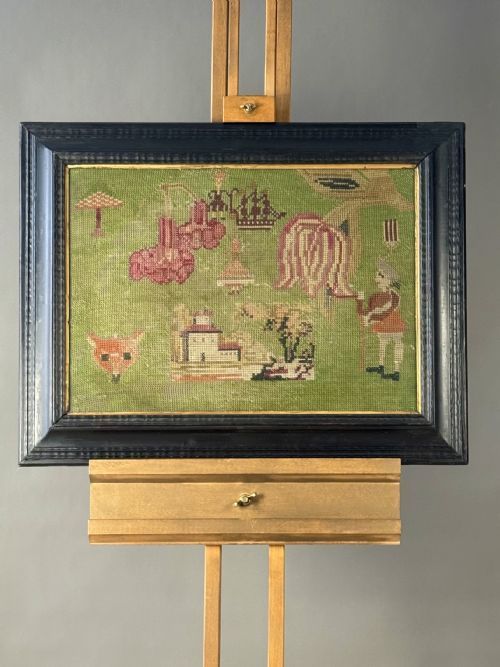
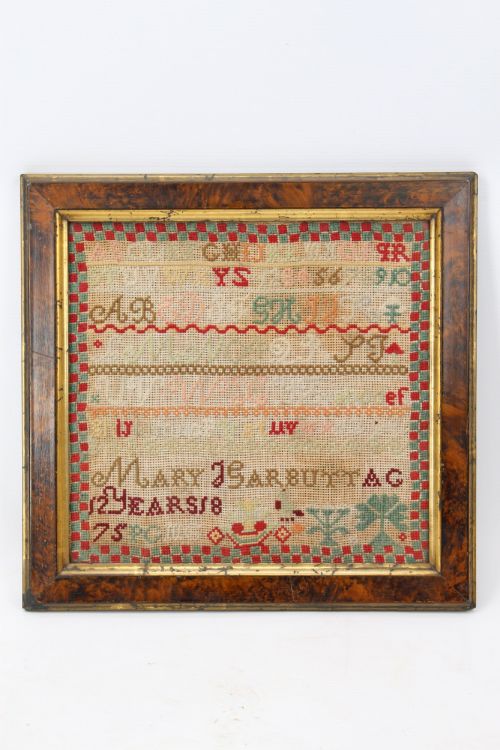
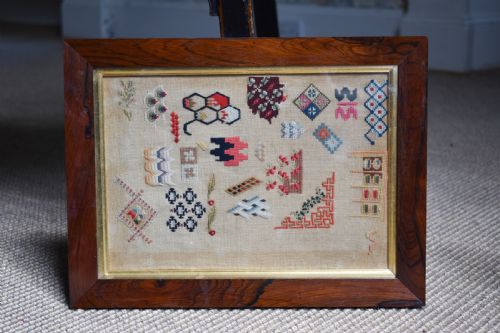
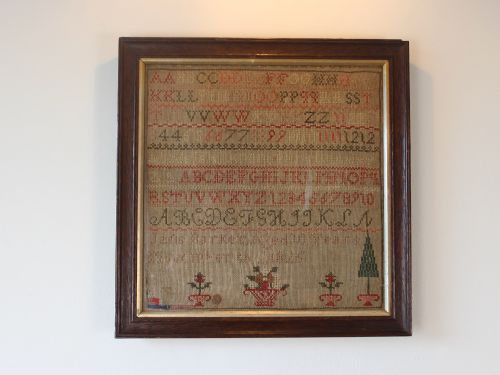
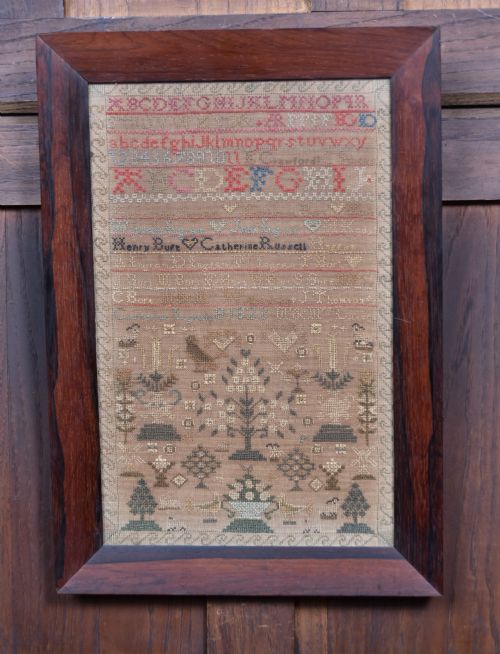
When you search for a framed cross stitch panel, you encounter needlework samplers and embroidered textile art originating from the eighteenth and nineteenth centuries. These historic pieces typically record alphabets, moral verses, religious texts such as the Lord's Prayer, or commemorative details bearing the maker's name and age.
The version you are most likely to meet on this page is the Victorian or Georgian sampler. Many of these works were executed by young girls, such as Mary J Garbutt or Margaret Ann Blackow, showing careful practice in stitchery and design.
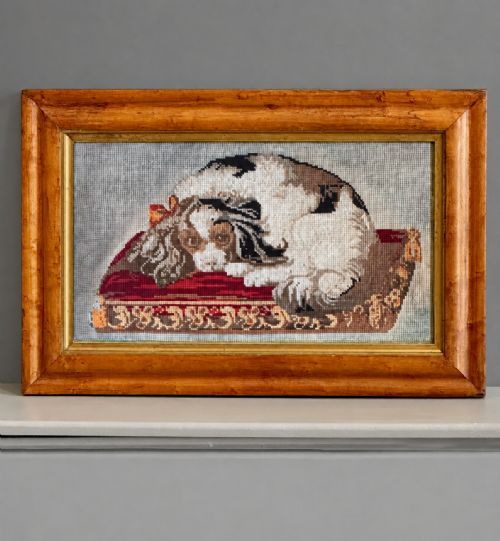
Beyond standard samplers, the selection includes pictorial works like the Berlin wool work King Charles spaniel panel. These objects arrive preserved in their period enclosures, frequently mounted within original wood frames under protective glass.
Materials and construction
The foundation of these panels rests upon woven linen stretched over a backing. Makers utilised coloured wool, silk thread, and standard thread to build up dense, textured pictorial and textual motifs stitch by stitch.
Protecting the textile surface required traditional framing methods. Makers housed the completed needlework behind glass within wood frames, such as burr maple, which helped shield the delicate threads from dust and atmospheric moisture over the generations.
Materials recorded in the inventory include silk thread, wool, glass, and wood frames.
What determines quality
The distinction between ordinary and exceptional panels lies in the complexity of the design and the precision of the stitching. Pieces featuring pictorial subjects, detailed lettering, or extensive religious texts demand greater skill than basic alphabet grids.
Condition and originality play a vital role in evaluation. Panels retaining their original wood frames, clean linen grounds, and unfaded silk or wool threads hold significantly more visual appeal than those with heavy fading, replacement surrounds, or fabric damage.
The Framed Cross Stitch Panel Glossary
- Sampler
- A piece of needlework produced as a demonstration or test of skill in various stitches, frequently displaying alphabets and numerals.
- Berlin Work
- A style of nineteenth-century canvas embroidery worked from hand-coloured charted designs using brightly coloured wool threads.
- Burr Maple
- A distinctive wood veneer showing swirling knot formations, highly prized for nineteenth-century picture frames.
- Linen
- A strong, durable fabric woven from flax fibres that served as the primary canvas ground for early needlework.
Framed Cross Stitch Panel: Frequently Asked Questions
What is a cross stitch sampler?
A cross stitch sampler is a historic textile piece worked in thread to demonstrate needlework proficiency, often recording alphabets, numbers, and the maker's personal details.
These panels served both as decorative items for the home and as practical proof of a young person's domestic education.
How old are these framed panels?
The pieces available span from the early eighteenth century through to the late nineteenth century, encompassing the Georgian and Victorian eras.
Many examples bear specific dates stitched directly into the fabric, alongside the name and age of the young maker.
How should I display antique needlework?
Antique needlework panels require placement away from direct sunlight to prevent the silk and wool threads from fading over time.
Keep them behind their protective glass in stable room environments to guard the ancient linen ground against humidity and dust.
Can I remove the panel from its frame?
Removing the textile from its historical enclosure is generally discouraged because the framing often contributes to the piece's age and preservation.
Many retain their original wood surrounds, which protect the edges of the fragile linen canvas from fraying or environmental damage.