




Framed Cityscape Wall Art
Framed cityscape wall art brings the architectural movement and daily life of historic urban centres into an interior.
Framed Cityscape Wall Art
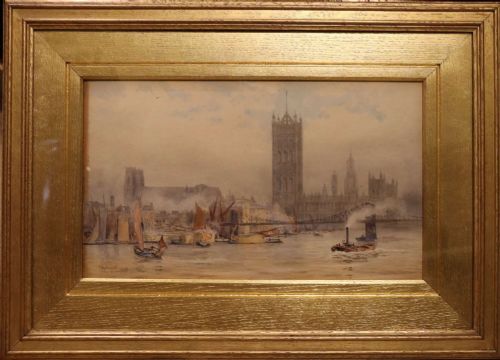
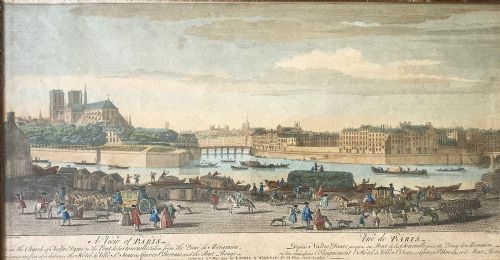
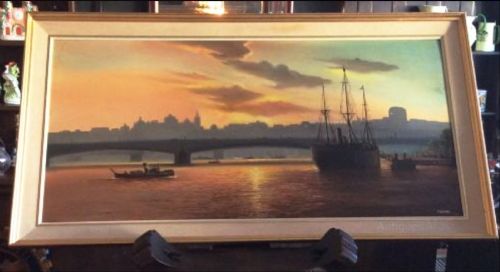
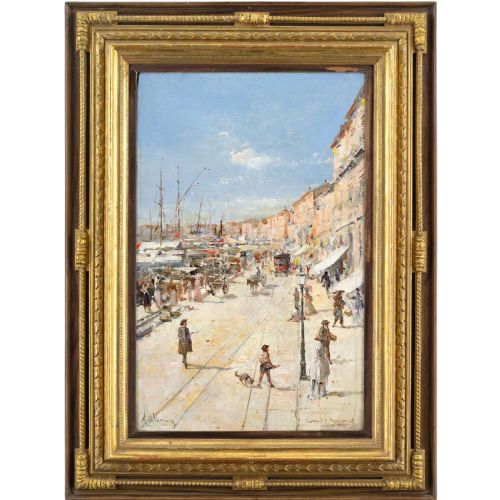
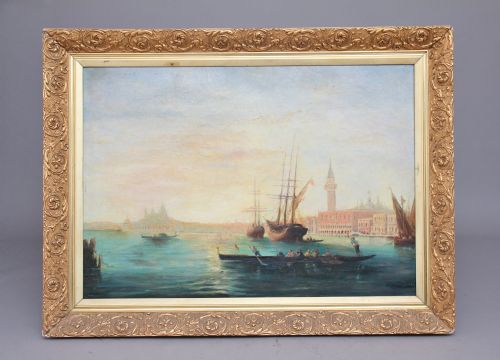
A buyer seeking framed cityscape wall art encounters a diverse range of works capturing metropolitan streets, waterways and architectural landmarks. These pieces span several centuries, recording urban environments from London and Paris to Venice and Messina.
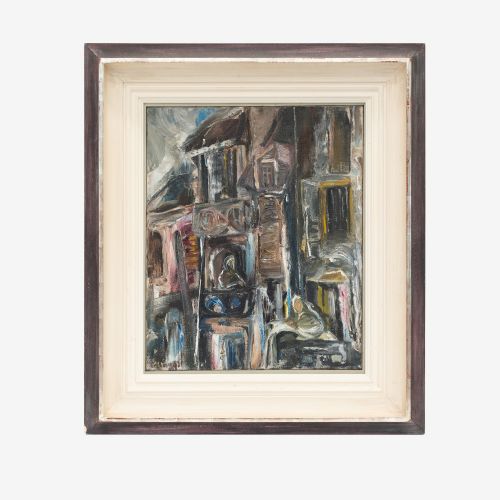
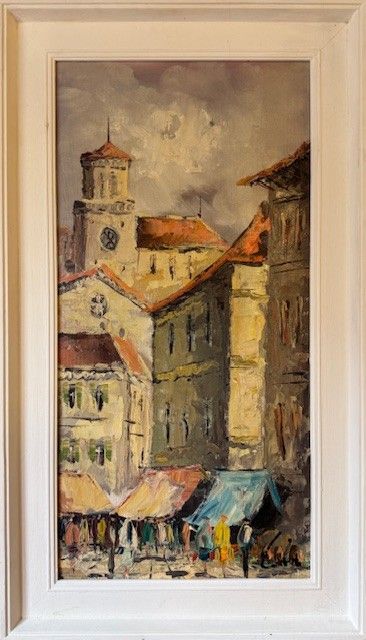
The selection on this page relies heavily on oil paintings, watercolours and engravings from the nineteenth and twentieth centuries. Mid-century impressionist canvases and earlier topographical watercolours dominate the physical forms available.
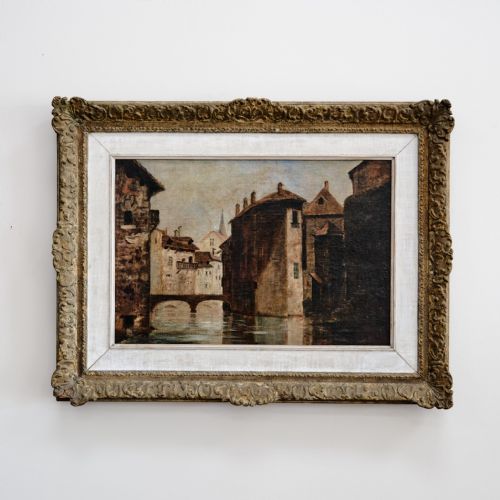
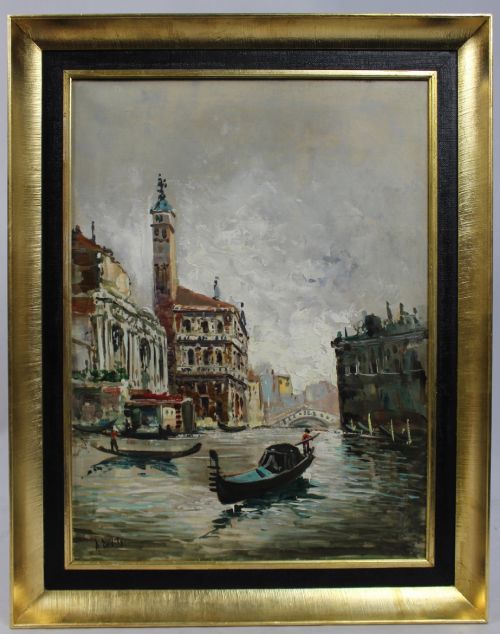
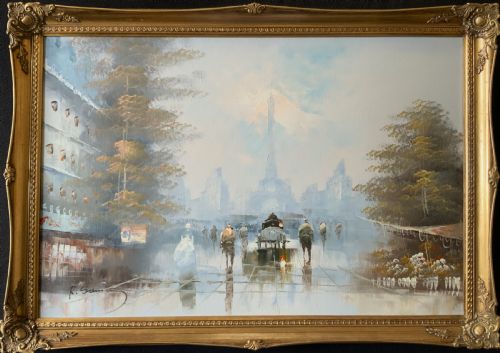
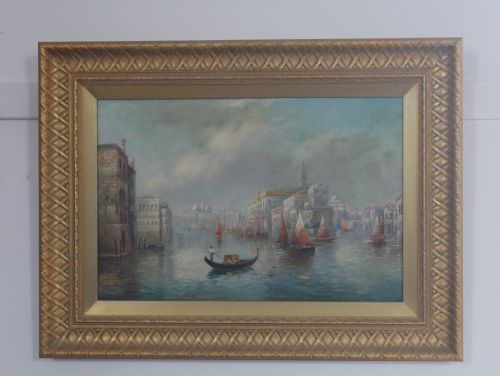
Urban landscapes range from expansive panoramic river views to intimate street scenes featuring figures on bridges and outside cafes. Many retain their original frames, particularly heavy giltwood moulding from the Victorian and mid-century periods.
Materials and technique
The primary medium across these works is oil paint applied to canvas or wood panel, frequently utilising thick impasto strokes to build architectural texture. Watercolours on paper and hand-coloured engravings also appear regularly.
Support materials include traditional stretched canvas, wood boards and heavy paper housed behind glass. Frames are predominantly constructed from wood, with ornate giltwood finishes common to nineteenth and twentieth-century presentations.
The listings span from the eighteenth century through to 1960, incorporating Georgian engravings, Victorian oils, and mid-century impressionism.
Markers of quality
Quality in these urban scenes rests upon the artist's handling of light, perspective and atmospheric depth within the urban setting. Strong compositions balance architectural precision with the fluid movement of water, sky or street crowds.
The integrity of the physical materials also determines the tier of a piece, specifically the preservation of the canvas, the clarity of the original pigments and the condition of any period giltwood framing.
Augusto Alberici·Antonio DeVity·Caroline Burnett·Gabriel Dauchot·Ron Folland·Merio Ameglio·Claude Jousset·Frederick Tully Lott·William Raymond Dommersen·Jane Vivian·Alfred Pollentine
The Framed Cityscape Wall Art Glossary
- Impasto
- Paint applied thickly to a canvas, leaving visible brush or palette knife marks that create physical texture. This technique is frequently observed in mid-century expressionist and impressionist cityscapes.
- Giltwood
- Wood carved and covered with a thin layer of gold leaf or gilt powder. It is commonly found on ornate antique frames enclosing nineteenth-century oil paintings.
- Engraving
- A printmaking method where an image is incised into a metal plate, holding ink to transfer fine linear detail onto paper. Hand-coloured examples include additional watercolour washes applied after printing.
Framed Cityscape Wall Art: Frequently Asked Questions
How do I date a cityscape painting?
Dating relies on stylistic evidence, costume details of figures within the scene, and the physical composition of the canvas and frame. Mid-century works often display expressive brushwork, whereas nineteenth-century pieces lean towards topographical accuracy.
Signatures, artist records, and back-of-canvas inscriptions provide further chronological markers. Comparing the framing materials to period manufacturing techniques helps narrow down the timeframe.
What is a Grand Tour watercolour?
Grand Tour watercolours were collected by travellers journeying through continental Europe during the eighteenth and nineteenth centuries. These works typically depict famous architectural ruins, monuments, and urban vistas of cities like Rome or Venice.
Artists produced these detailed topographical drawings to serve as portable mementoes of foreign travel. They are usually executed on paper and housed behind glass to protect the delicate water-soluble pigments.
Are these works original or prints?
The selection includes both hand-painted originals and period printed works. Listings clearly distinguish between unique oil paintings on canvas or board and mediums such as engravings and coloured prints.
Original works exhibit visible paint texture, artist signatures, and brushwork unique to each piece. Prints display uniform ink application and are often produced in sets or editions.
How should I care for an oil painting?
Oil paintings require stable indoor environments away from direct sunlight and extreme temperature fluctuations. Natural light can fade delicate pigments over decades, while humidity changes risk damaging the underlying canvas.
Dust should be removed gently from the surface and frame using a soft, dry brush without applying pressure. Professional cleaning and conservation should be left to specialists to avoid damaging the paint layers.