



Framed Chromolithographs
Framed chromolithographs bring vibrant multi-coloured imagery and rich historic character straight to your walls.
Framed Chromolithographs
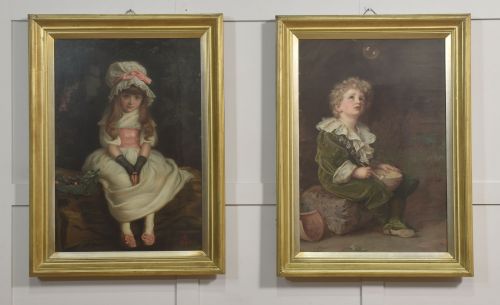
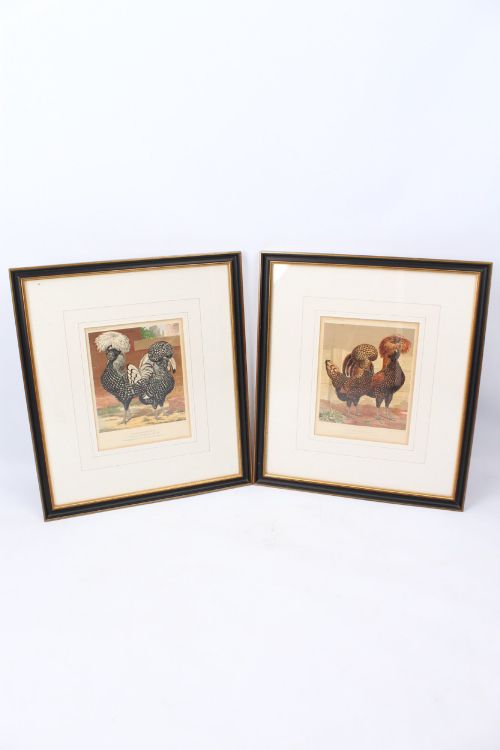
Framed chromolithographs are multi-colour planographic prints produced during the 19th century, Victorian, Edwardian, and early 20th century periods, including works dated from 1880, 1890, 1900, 1910, and 1920.
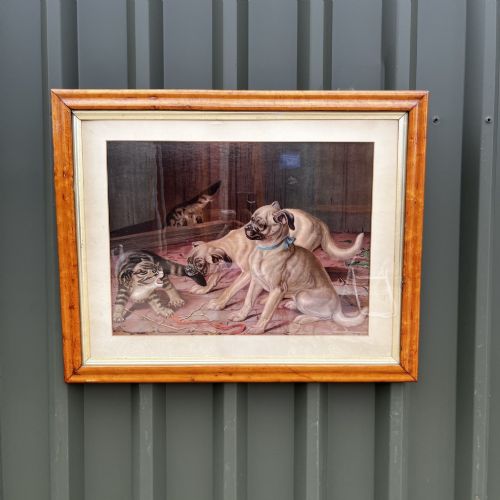
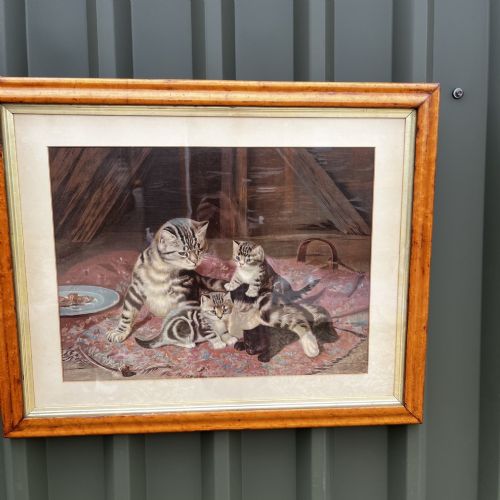
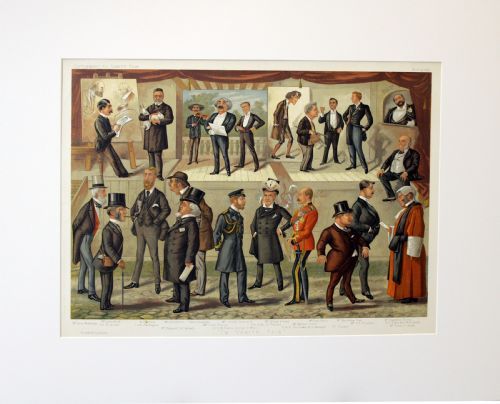
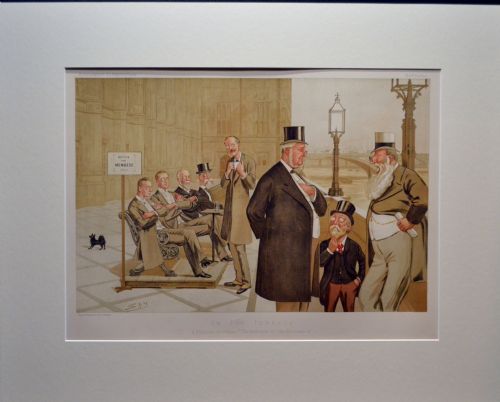
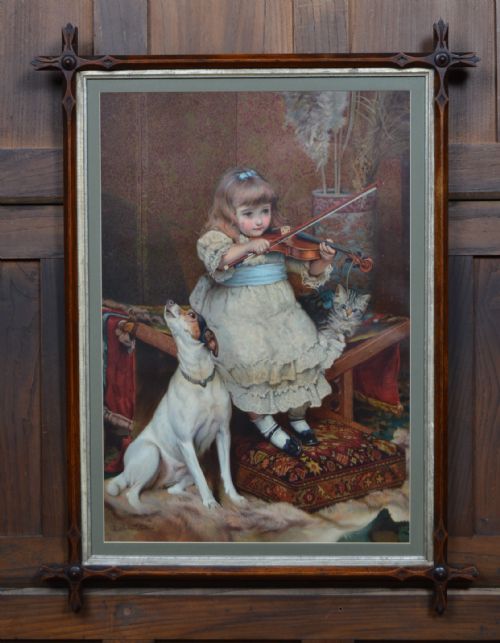
The subjects seen on this page span domestic animals and pets by Horatio Henry Couldrey, Pears soap advertising prints, double page Vanity Fair caricatures, sporting scenes by Frank Algernon Stewart, and botanical or continental subjects.
Buyers encounter these works housed in wood, oak, or gilt frames behind glass, often accompanied by mount board and gold leaf accents.
What varies in quality
The standard of a piece depends heavily on the crispness of the multi-coloured ink layers and the complexity of the original composition, such as detailed animal renderings or portraits by notable artists.
Quality is also defined by the preservation of the paper sheet within its mount board and the craftsmanship of the period frame, whether carved wood, oak, or gilt.
Pears soap advertising plates successfully turned domestic cats, dogs, and soap lather into coveted household parlour art.
The Framed Chromolithographs Glossary
- Chromolithograph
- A multi-coloured print produced by applying a separate lithographic stone for each individual hue. This technique allowed for vibrant, painterly reproductions popular throughout the Victorian era.
- Vanity Fair print
- A satirical portrait published in the periodical Vanity Fair, known for caricature subjects created by artists such as Spy. These double-page plates are prized by collectors.
- Chrystoleum
- A photograph hand-painted in oils and affixed to concave glass before the paper backing is rubbed away. This process creates a translucent, three-dimensional effect seen in continental and Victorian examples.
- Lithograph
- A planographic printing method based on the mutual repulsion of oil and water on a flat stone surface. It forms the technical foundation for chromolithography.
- Mount board
- Heavy paperboard used inside the frame to create a border between the print and the glass. It protects the paper surface from direct contact.
Framed Chromolithographs: Frequently Asked Questions
What is a chromolithograph?
A chromolithograph is a planographic print created using multiple limestone or metal plates, each applying a distinct ink colour to build up a rich, full-colour image.
This technique dominated Victorian and Edwardian visual culture, allowing mass-produced artworks to mimic the depth and tone of original paintings.
Who made Vanity Fair prints?
Vanity Fair prints were published in the British weekly magazine of the same name and featured caricatures by artists working under pseudonyms like Spy, alongside other illustrators.
They captured prominent figures from royalty, society, politics, and military life during the late 19th and early 20th centuries.
How should I hang them?
These pieces should be hung away from direct sunlight to prevent fading of the delicate paper and ink pigments found in Victorian and Edwardian prints.
Ensure they are mounted securely on a stable wall using appropriate fixings suited to the weight of the wood and glass frame.
What is a chrystoleum?
A chrystoleum is an antique image created by applying a photograph to glass, hand-tinting it with oils, and removing the paper backing.
This painstaking process yields a luminous, layered portrait often found framed in the continental styles of the 19th century.