


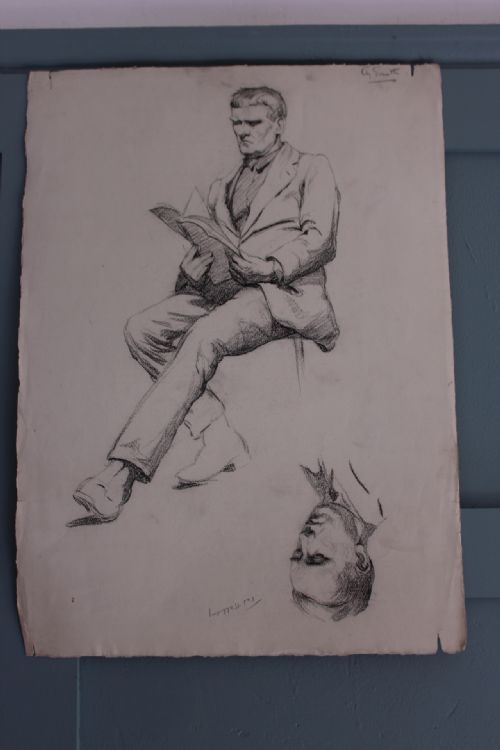

Framed Charcoal Life Study
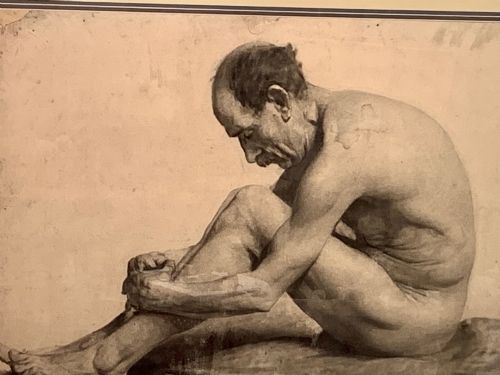
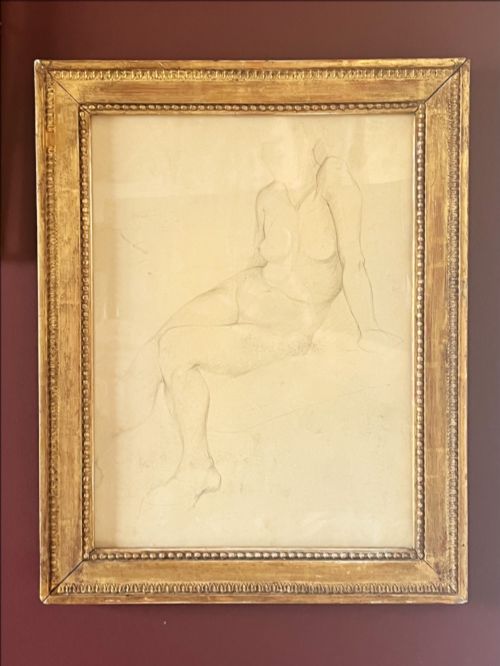
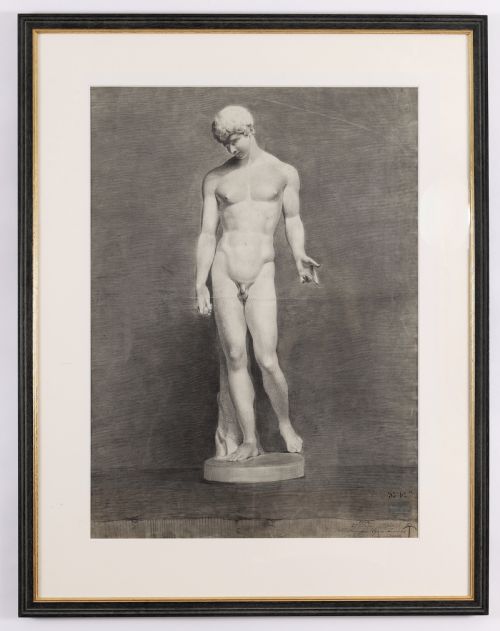
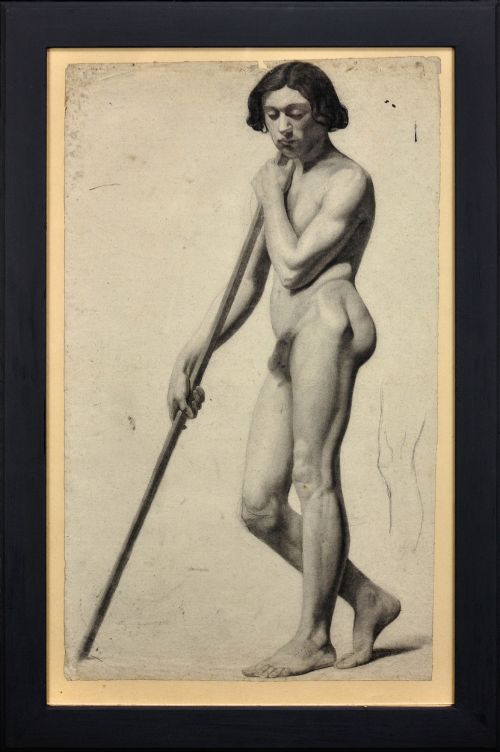
These framed charcoal life study pieces capture the human form through direct observation, offering collectors raw draughtsmanship executed in monochrome.
Framed Charcoal Life Study
A framed charcoal life study records the human form drawn directly from a live model, usually within an academic or studio setting. These works capture musculature, posture, and gesture through observational draughtsmanship.
The selections available range from nineteenth century academic renderings of classical figures to twentieth century interpretations. Buyers encounter depictions of both male and female subjects executed with varying degrees of finish.
Most examples combine charcoal with supplementary mediums such as chalk or graphite on paper. They arrive protected behind glass within period wooden or gilt frames that complement the monochrome aesthetic.
How they were made
Artists built these drawings upon paper supports, frequently utilising toned paper to provide a middle ground for highlights and shadows. Charcoal and chalk applied in swift or methodical strokes established the primary contours and tonal depth.
Graphite often accompanied the charcoal to refine finer details and anatomical precision in the musculature. Finished sheets were subsequently secured within timber frames, occasionally featuring gilt moulding, and glazed with glass for protection.
Some nineteenth-century models clearly grew tired during long poses, resulting in wonderfully slumped shoulders preserved forever in charcoal.
What varies in quality
The strength of the draughtsmanship dictates the distinction between standard studio exercises and accomplished works. Confident line work and accurate anatomical proportions demonstrate the skill of the artist during the drawing session.
The condition of the paper and the integrity of the framing materials also define the overall standard. Intact glass and stable paper surfaces without excessive degradation preserve the longevity of the artwork.
Henry Arthur Roberts·Winifred Eugene Ballard·Frank Dobson
The Framed Charcoal Life Study Glossary
- Life study
- A drawing or painting executed from a live human model. These exercises formed a core component of traditional artistic training.
- Academic realism
- An artistic style arising from the standards of European art academies. It prioritises precise anatomical accuracy and classical proportions.
- Toned paper
- Paper that possesses a natural tint rather than pure white. This surface allows the artist to build up highlights with white chalk and shadows with charcoal.
- Gilt wood
- Wood coated with a thin layer of gold leaf or metallic paint. Antique frames frequently utilise this finish to enhance the presentation of works on paper.
Framed Charcoal Life Study: Frequently Asked Questions
What is a life study?
A life study is an artwork created from direct observation of a live human model. Artists produced these to master anatomy, shading, and proportion.
In historical contexts, these were standard exercises in art academies and private studios. They capture the immediate presence of the sitter through rapid or methodical mark-making.
How should I hang these?
Display these drawings away from direct sunlight to prevent the paper from fading and the charcoal from degrading. Stable indoor humidity protects both the paper support and the timber frame.
Using proper wall anchors ensures the weight of the glass and wooden frame is securely supported. Positioning them at eye level allows the fine details of the draughtsmanship to be appreciated.
Are these original works?
The pieces listed are original works drawn by hand rather than mass-produced reproductions. Each sheet records the unique touch and technique of the individual artist.
Variations in paper texture, medium application, and framing confirm their status as singular historical objects. Collectors value this direct connection to the creator's hand.
How do I identify the period?
Stylistic indicators and framing materials help determine the era in which a drawing was produced. Nineteenth-century examples often display strict academic realism and classical subjects.
Mid-century pieces tend towards looser interpretations of the human form. Examining the paper type and frame construction provides further context for dating the work.