



Framed Cattle Wall Art
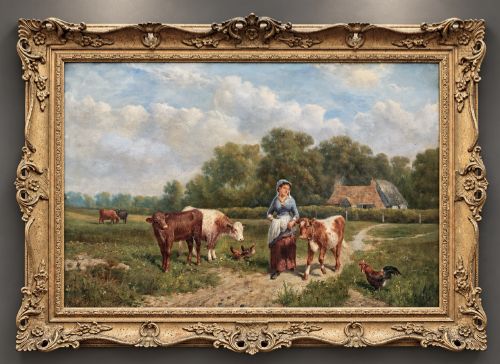
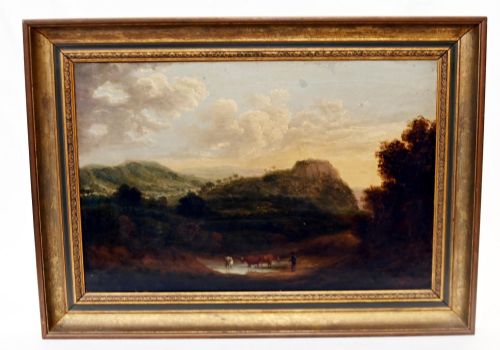
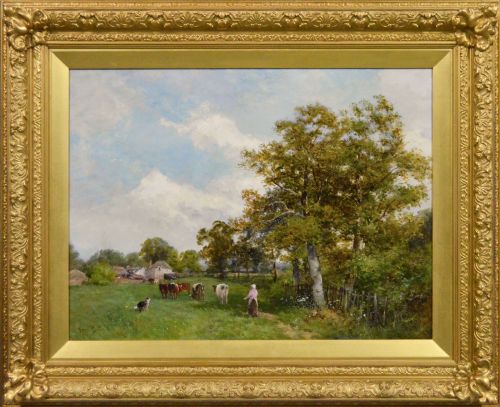
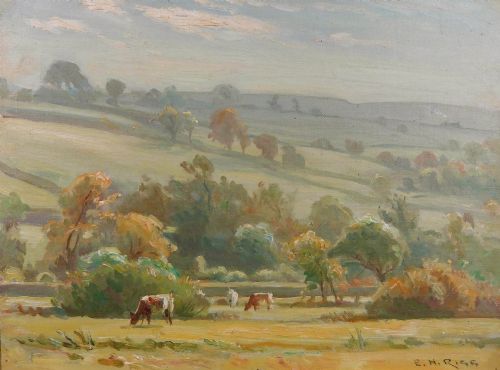
Framed cattle wall art brings the pastoral life of the nineteenth and early twentieth centuries directly into domestic interiors through historic paintings.
Framed Cattle Wall Art
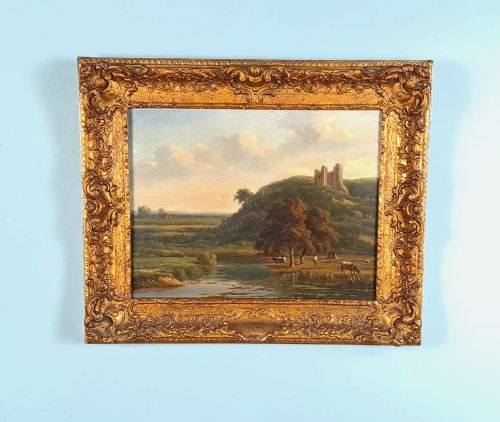
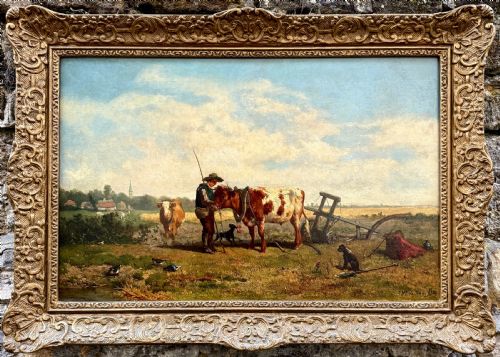
Framed cattle wall art encompasses oil paintings and watercolours depicting pastoral scenes, riverbanks, and agricultural landscapes from the nineteenth and early twentieth centuries.
The version most commonly met on this page is the traditional oil on canvas, housed in a period wood or gesso frame, capturing cattle in British and European countryside settings.
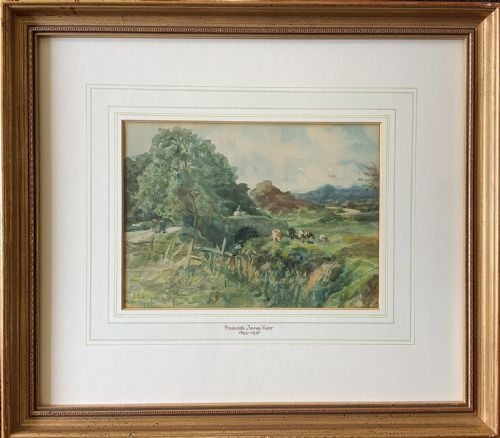
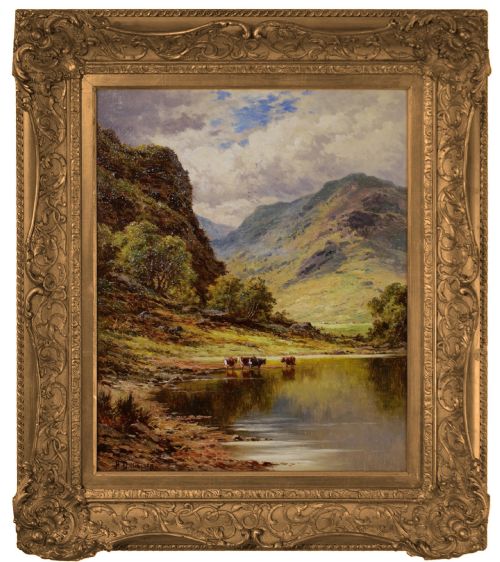
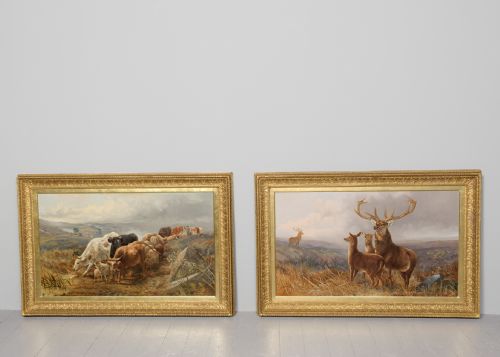
Pieces range from intimate watercolour studies of milking cows to large scale Victorian landscape oils featuring Highland cattle beside lochs.
Materials and technique
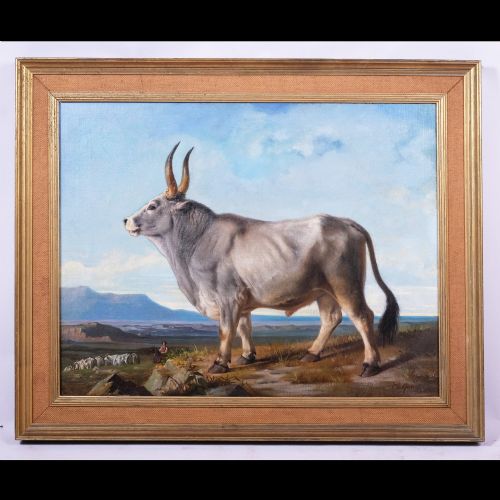
Artists worked primarily with oil paint on canvas or board, alongside watercolour on paper, building texture through layered brushwork and natural pigments.
Frames were constructed from wood, frequently finished with moulded gesso and gold leaf to complement the pastoral subject matter within.
Glazing protected fragile watercolour works, while robust wooden stretchers and heavy gilt frames supported substantial oil paintings.
Several artists clearly spent long hours watching cows stand near rivers, resulting in remarkably patient depictions of livestock.
Judging quality
Quality rests upon the artist's ability to render anatomical precision in the animals alongside atmospheric depth in the surrounding landscape.
Superior works demonstrate confident brushwork and harmonious colour palettes that convey light and weather, rather than rigid or formulaic composition.
The integration of the original frame adds value, particularly where carved gesso and gilding remain intact and sympathetic to the period of the artwork.
David Bates·Thomas Sidney Cooper·Alfred de Breanski Snr·Henry Hillier Parker·Sidney Richard Percy·Eugene Verboeckhoven
The Framed Cattle Wall Art Glossary
- Gesso
- A plaster mixture applied to wooden frames before gilding or painting, providing a smooth base for ornamental moulding. Victorian framers used it extensively to create elaborate decorative borders.
- Oil on Canvas
- Pigment mixed with drying oils applied to a woven fabric stretched across a wooden frame. This medium allowed artists to achieve rich textures and deep colour saturation.
- Watercolour Painting
- Pigments suspended in a water-soluble vehicle applied to paper. These works typically require glass protection and card mounts.
- Pastoral Realism
- An artistic movement focusing on rural life, agriculture, and livestock depicted with close attention to natural detail. It dominated nineteenth-century rural painting.
- Giltwood
- Timber that has been coated with a thin layer of gold leaf or gold paint. It provides a reflective, ornate border characteristic of fine art frames.
Framed Cattle Wall Art: Frequently Asked Questions
What periods do these paintings come from?
The works span the nineteenth century up through the Edwardian era and the early twentieth century. This covers the height of British and European pastoral landscape painting.
Most pieces date from the Victorian period through the nineteen-twenties, reflecting changing artistic approaches to rural and agricultural subjects.
Are the frames original to the art?
Many pieces retain their period frames, such as nineteenth-century gesso and giltwood or early twentieth-century wood surrounds. Original frames are noted when they form an integral part of the piece.
Surviving historic frames often show appropriate signs of age, matching the era in which the artwork was created.
How should I hang these in my home?
These works suit traditional and transitional interiors, particularly spaces where natural wood and classic art styles predominate. Ensure they are placed away from direct sunlight to protect pigments.
Large oil paintings require secure wall fixings suited to the combined weight of the canvas and heavy wooden frame.
How do I distinguish oil paintings from watercolours?
Oil paintings feature textured brushwork on canvas or board and are typically displayed without glass. They offer a rich depth of colour and heavier surface sheen.
Watercolours utilise thinner washes on paper and are presented behind glass with protective mounts to prevent environmental damage.