
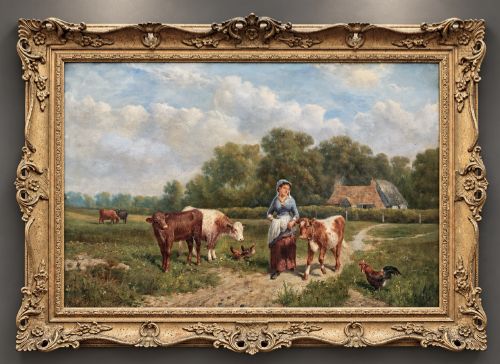
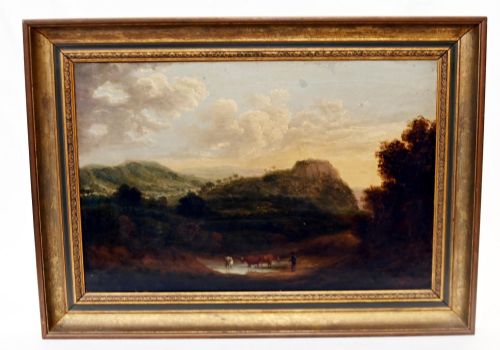

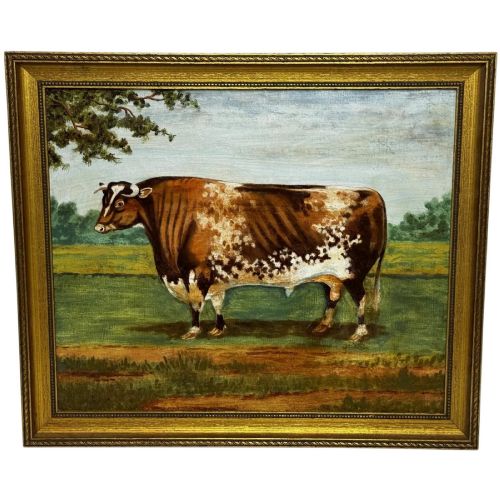
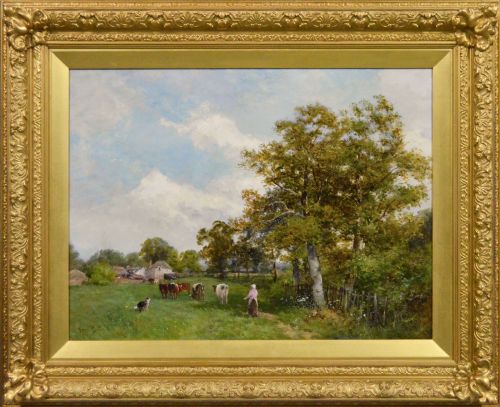

Framed Cattle Oil Painting
A framed cattle oil painting brings the pasture and the highlands indoors through nineteenth and early twentieth century pastoral and realist canvas work.
Framed Cattle Oil Painting
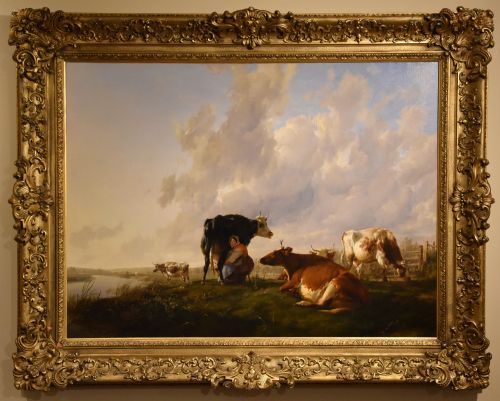
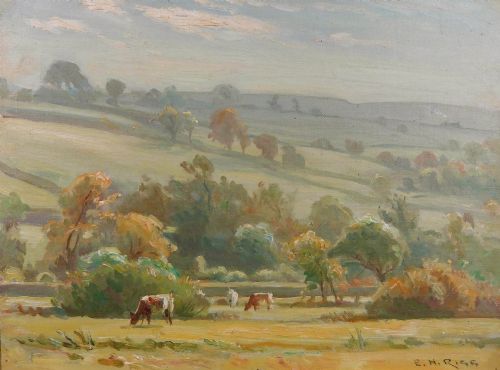
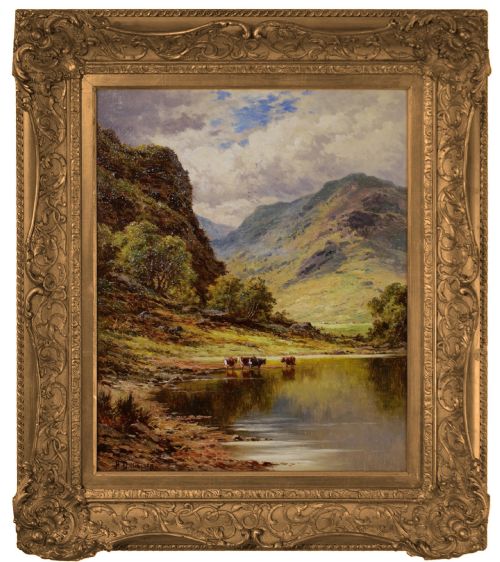
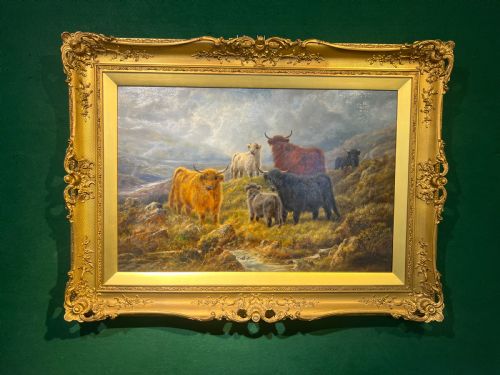
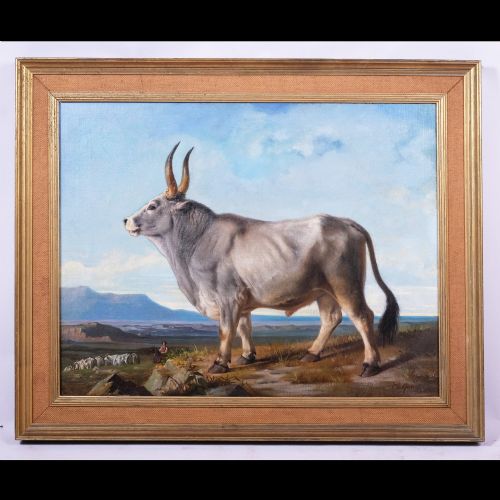
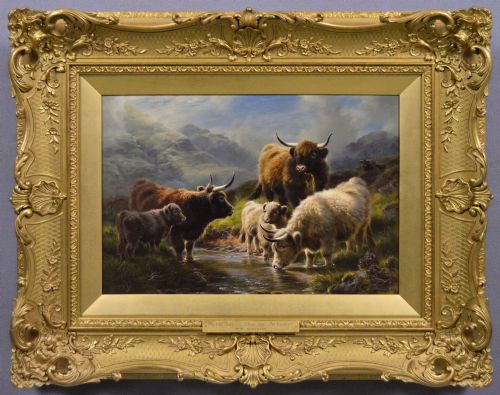
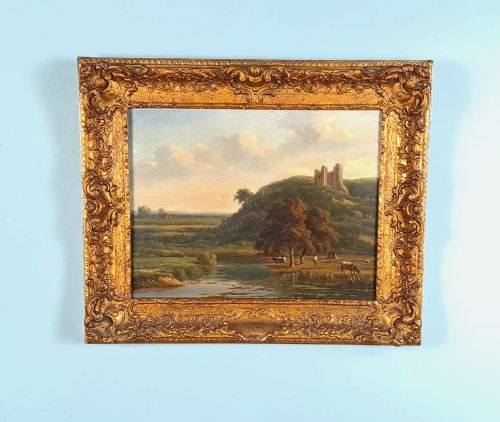
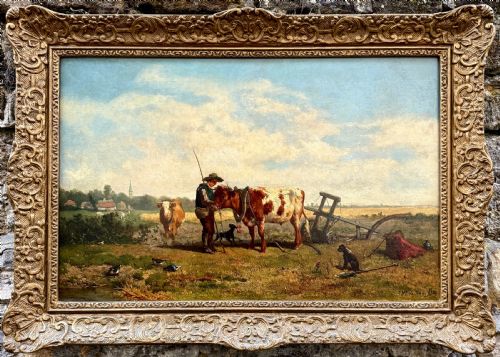
A framed cattle oil painting depicts rural scenes, pastoral landscapes, and animal portraits populated by cows, bulls, and calves. These works emerge predominantly from the Victorian, Edwardian, and nineteenth-century periods, often framed in giltwood or gesso.
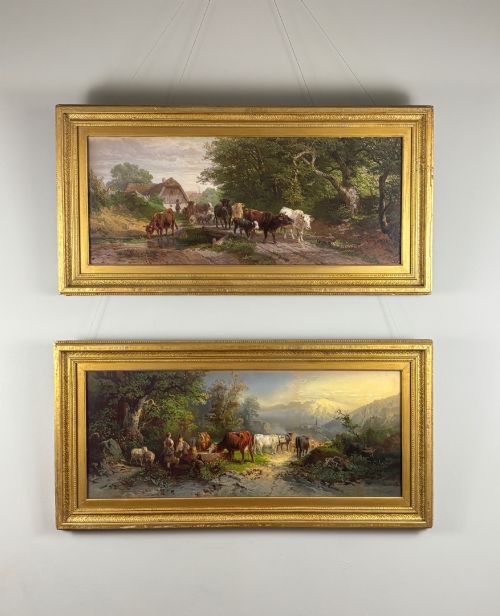
The version most commonly met on this page is the nineteenth-century canvas originating from British and European schools, depicting livestock beside rivers, in woodlands, or among mountain mists. Painters of this era captured animals both as individual prized subjects and as focal points within sweeping countryside vistas.
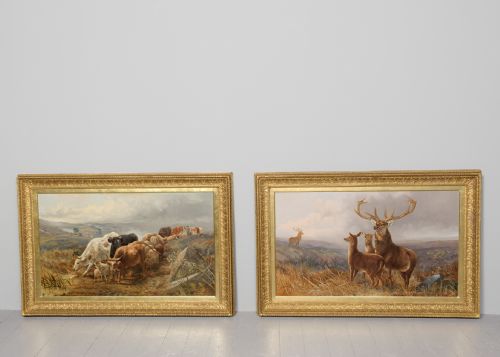
Subjects range from tranquil riverbank watering scenes to dramatic Scottish loch landscapes featuring Highland cattle under heavy skies. They reflect an agrarian fascination and a deep artistic engagement with rural life during the Victorian and Edwardian eras.
Distinctions in quality
Quality rests upon the artist's command of anatomy, light, and atmosphere, separating a routine topographical backdrop from a studied animal portrait with convincing depth. Works by recognised Victorian and Edwardian painters display superior brushwork in rendering the texture of cattle hides and the changing weather of British and European skies.
The integrity of the physical components also dictates standing, where original oil paint layers on canvas align with well-preserved, period-correct giltwood and gesso frames. Finer examples retain their structural stability and untouched pigment surfaces without heavy modern intervention.
Listings feature works spanning the nineteenth century, Victorian era, and early twentieth century, executed in oil on canvas and wood.
Thomas Sidney Cooper·Robert Watson·Henry H Parker·David Bates·Johann Friedrich Voltz
The Framed Cattle Oil Painting Glossary
- Oil on Canvas
- Pigment mixed with drying oil applied to a woven fabric support stretched across a wooden frame. This method became the dominant medium for nineteenth-century fine art painting.
- Giltwood
- Wood carved and coated with gold leaf or metallic powder to create a lustrous golden finish. It forms the decorative surface of many period picture frames.
- Gesso
- A paint mixture consisting of a neutral binder mixed with chalk, gypsum, or pigment, used to prepare wood or canvas surfaces. It serves as the smooth base beneath gilding on traditional frames.
- Pastoral
- A genre of art depicting rural life, shepherds, and livestock in idealized natural settings. These scenes emphasise tranquility and harmony between animals and the countryside.
- British School
- A loose categorization for artists trained or working primarily within Britain during specific centuries. It encompasses diverse regional styles from the Victorian era onward.
Framed Cattle Oil Painting: Frequently Asked Questions
What subjects do these paintings feature?
These works display cattle, cows, bulls, and calves within rural, agricultural, or mountainous landscapes. Many compositions focus on livestock watering at rivers, grazing in woodlands, or navigating Highland terrain.
Alongside the animals, artists rendered detailed skies, trees, and distant hills characteristic of nineteenth-century and Edwardian topography.
How can I identify the period?
Dating relies on stylistic clues, framing materials, and specific artist signatures recorded across the Victorian and Edwardian eras. Nineteenth-century canvases frequently utilise heavy giltwood and gesso frames alongside traditional pastoral or realist painting techniques.
Written records, signatures, and known biographical dates of the painters further anchor individual works within their historical timeframe.
Where were these artworks created?
The pieces originate primarily from British and European artistic traditions, including specific regional schools in Scotland, England, and Wales. Painters travelled extensively through rural areas and mountainous regions to sketch livestock and landscapes from life.
Studio finishing then transformed these field studies into large-scale oil paintings intended for domestic display.
How do I display them at home?
These framed works suit traditional interiors, study rooms, or living spaces where period oil paintings complement historic architecture. The substantial presence of giltwood framing allows them to serve as focal points above mantelpieces or along principal walls.
Proper placement avoids direct sunlight and excessive moisture to protect the oil paint and canvas over time.