

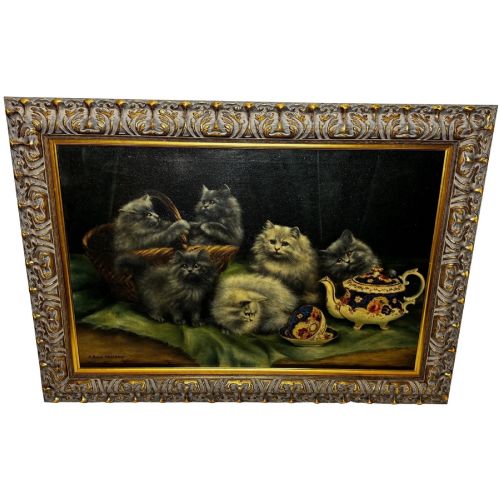
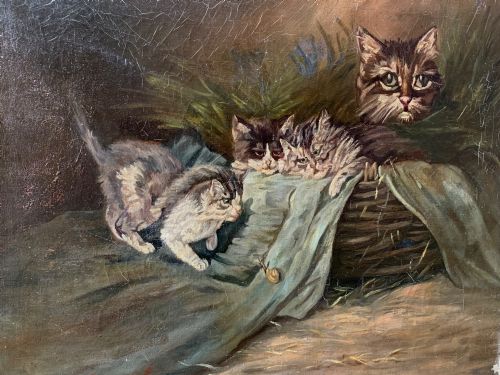
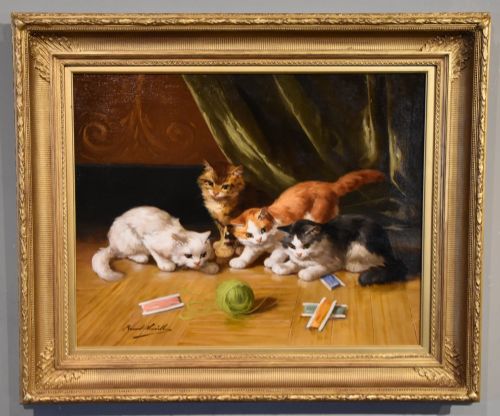


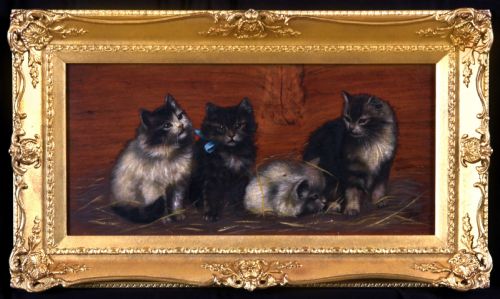



Framed Cat Painting
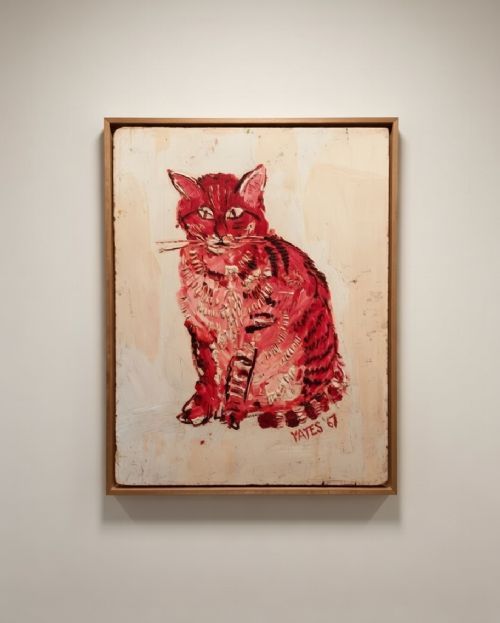
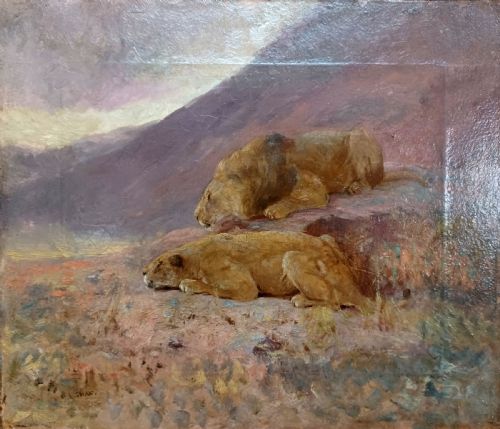
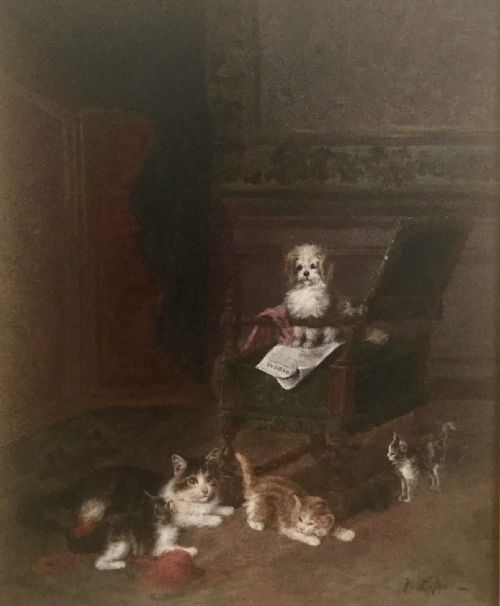
A framed cat painting brings domestic felines and wild big cats to life through oil, canvas, and glass across Victorian and mid-century periods.
Framed Cat Painting
A framed cat painting captures domestic felines and wild big cats across various historical periods, ranging from Victorian portrayals to mid-century works. These artworks appear primarily as oil paintings on canvas, board, and panel, alongside glass paintings and pastels.
Buyers meet works executed in traditional realism, Victorian animalier, and Chinese export styles, reflecting diverse international origins from British and French schools to Japanese Taisho Roman and Chinese workshops.
Subjects range from playful kittens and stylish single cats to portraits of pried pets alongside human companions, as well as lions and leopards rendered by notable artists.
How they were made
Many of these works are housed in original wood frames adorned with gesso and giltwood ornamentation, providing structural support and period presentation for the artwork.
Framed Cat Painting Retail Price Guide 2026
Typical asking prices for framed cat painting among the pieces listed under this phrase on Sellingantiques today, from the lower quarter to the upper quarter. They describe what is for sale here now, not the wider market.
Listings feature oil paint, canvas, wood, gesso, giltwood, and glass across Victorian and mid-century periods.
What varies in quality
Quality rests upon the artist's ability to capture anatomical precision and texture in the animal's coat, distinguishing masterly brushwork from simpler provincial output. Works attributed to recognised academic painters demonstrate superior handling of light, shadow, and compositional depth.
The preservation of the original support, whether canvas, panel, or glass, combined with the integrity of the period gesso and giltwood frame, defines the overall standard of the surviving piece.
Agnes Augusta Talboys·Vittorio Reggianini·Alfred Arthur Brunel de Neuville·Charles Burton Barber·Takabatake Kasho·Fred Yates·Henry Weigall·Cuthbert Edmund Swan·Horatio Henry Couldery·Raymond Arthur Roadnight·Geza Vastagh·Jules Le Roy·Bessie Bamber
The Framed Cat Painting Glossary
- Animalier
- A style dedicated to the realistic portrayal of animals, particularly prominent in nineteenth-century European art. These works focus on the natural behaviour and physical form of creatures.
- Giltwood
- Wood that has been coated with a thin layer of gold leaf or gold paint. This material is frequently found on traditional frames surrounding antique paintings.
- Reverse painting on glass
- A technique where the image is painted directly onto the back of a glass panel so that the finished work is viewed through the front. This method creates a glossy, luminous surface finish.
- Oil on panel
- A painting executed on a wooden board rather than stretched canvas. Panels offer a rigid support that prevents the flexing associated with fabric.
Framed Cat Painting: Frequently Asked Questions
How do I date a framed cat painting?
Dating relies on examining the stretcher frames, the backing materials, and the style of the giltwood or gesso framing. Pigment analysis and the canvas weave also provide clues to the period.
Signatures, artist registry records, and stylistic movements such as Victorian animalier or Taisho Roman further narrow down the decade of creation.
Are all these pieces painted in oil?
While oil on canvas and board predominate, the selection includes works in other mediums. Examples feature oil pastels and reverse painting on glass.
Each medium requires specific preservation methods, particularly regarding humidity control for glass paintings and panel works.
Where were these paintings made?
The collection spans various global origins, including British, French, and Italian schools from the nineteenth century. Asian examples include Chinese reverse glass works and Japanese Taisho Roman pieces.
This geographic diversity brings distinct regional framing styles and painting techniques to the selection.
How should I hang and light my painting?
Hang paintings away from direct sunlight and fluctuating heat sources to protect the oil pigments and wooden panels or canvas supports. Stable indoor climates prevent warping in the gesso and giltwood frames.
Use UV-filtered picture lights or indirect ambient lighting to illuminate the canvas without generating excessive heat.