



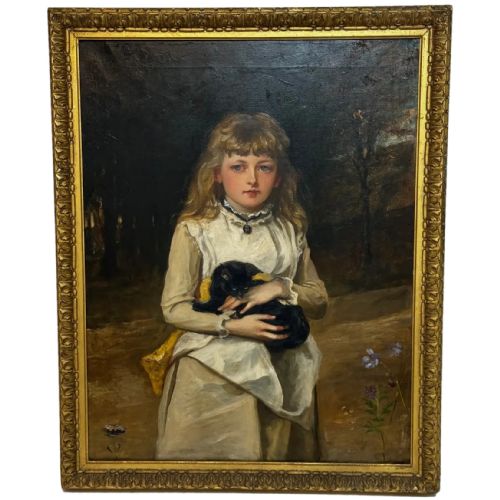


Framed Cat Oil Painting
A framed cat oil painting brings domestic warmth and character to a room through traditional canvas work and period gilt wood surrounds.
Framed Cat Oil Painting
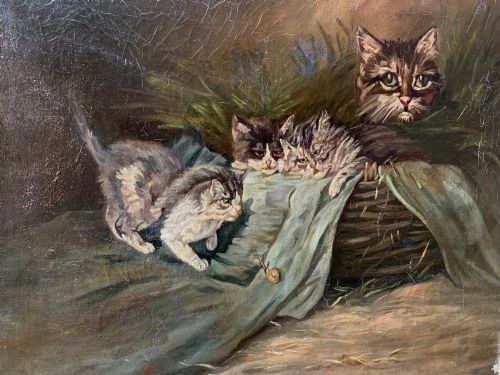
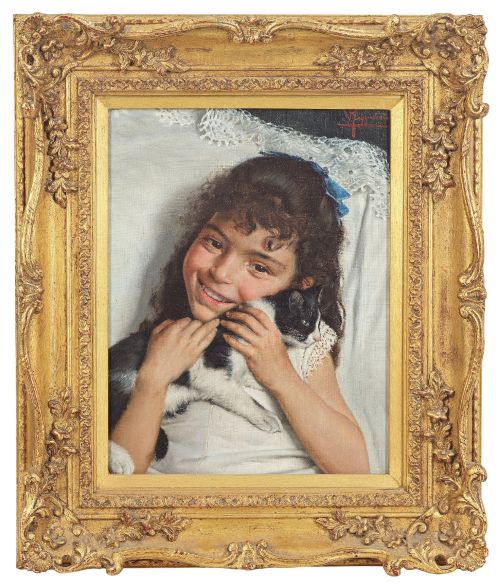
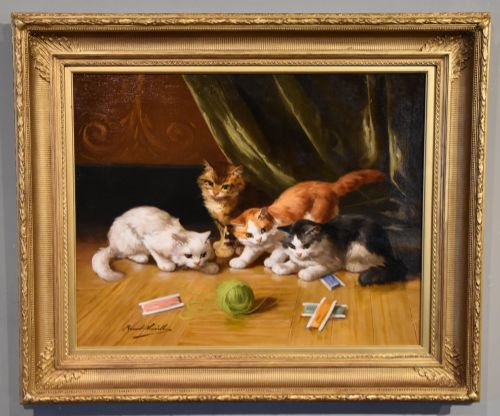
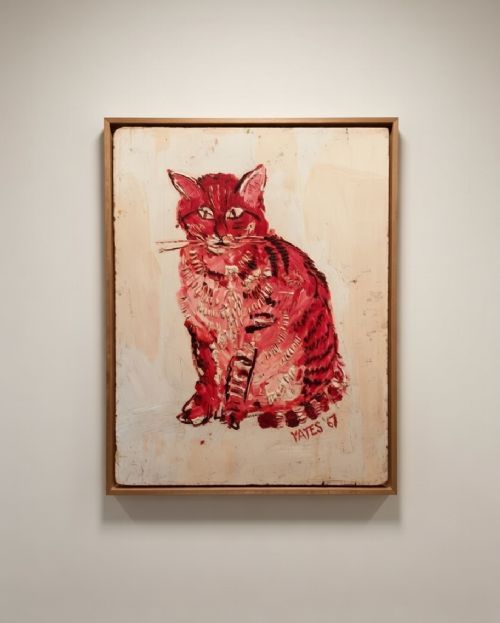
A framed cat oil painting captures feline subjects across various historical periods, ranging from 19th-century Victorian works to mid-century naive art. Buyers examining this page encounter intimate portraits of single pets, playful kitten groups, and genre scenes depicting animals alongside children or domestic objects.
Materials and technique
Makers built these pieces using oil paint applied to woven canvas supports, stretched wooden boards, or wooden panels. Artists layered pigments to capture the soft texture of fur and the varied lighting of interior domestic settings.
Surrounding enclosures rely on timber frames finished with carved gesso and applied gilt leaf. These traditional mountings protect the edges of the canvas and provide the characteristic metallic border found on period works.
Listings feature works spanning the Victorian era through the mid-20th century, utilising oil on canvas, board, and panel within gilt wood frames.
Assessing quality
Quality rests upon the artist's ability to render anatomical accuracy, lifelike expressions, and convincing textures in the animal's coat. Stronger pieces display confident brushwork and careful attention to light, whereas weaker examples lack depth in the fur and background details.
The standard of the surrounding frame influences the overall integrity of the piece. Well-preserved gilt wood mouldings with crisp gesso enrichment elevate the presentation compared to plain or heavily restored surrounds.
Vittorio Reggianini·Alfred Arthur Brunel de Neuville·Charles Burton Barber·Agnes Augusta Talboys·Henry Weigall·Cuthbert Edmund Swan·Horatio Henry Couldery·Francisco José Domingo y Marqués·Raymond Arthur Roadnight·Geza Vastagh·Jules Le Roy·Bessie Bamber
The Framed Cat Oil Painting Glossary
- Oil paint
- A slow-drying paint made of pigment particles suspended in a drying oil, typically linseed oil. This medium allows artists to blend tones smoothly and build rich textures.
- Canvas
- A heavy woven fabric used as a surface for painting, usually stretched tightly across a wooden frame. It provides a stable and flexible ground for oil pigments.
- Gesso
- A plaster-like mixture applied to wood or canvas as a prepared base before gilding or painting. It creates a smooth, absorbent surface for decorative finishes.
- Giltwood
- Wood that has been decorated with a thin layer of gold leaf or metallic powder. It provides a bright, reflective border suited to traditional oil paintings.
- Genre painting
- Artwork that depicts aspects of everyday life by portraying ordinary people and domestic animals in natural settings. These scenes often tell a subtle story or capture a specific mood.
Framed Cat Oil Painting: Frequently Asked Questions
How do I date a framed cat oil painting?
Examine the materials of the canvas, stretcher bars, and the construction of the frame behind the artwork. Technological markers like machine-made tacks or specific pigment types often indicate the century of production.
Style also offers strong clues regarding age. Victorian and mid-century pieces display distinct approaches to framing, brushwork, and subject matter that align with their respective eras.
Where should I hang a cat oil painting?
Display the artwork away from direct sunlight and excessive moisture to protect the oil paint and the underlying canvas support. Stable indoor environments prevent the wood and gesso frame from cracking.
Choose a wall height that places the centre of the painting at eye level for comfortable viewing. Pairing the piece with traditional room decor complements the period aesthetic of the gilt wood frame.
How do I clean a vintage oil painting?
Dust the surface very gently with a soft, dry brush to remove loose particles without disturbing the pigment layer. Avoid using water, household cleaners, or solvents on the paint.
Professional conservators should handle deeper cleaning or removal of discoloured varnish. Attempting to clean the canvas with liquid can cause permanent damage to the historic medium.
What is the difference between canvas and panel?
Canvas consists of woven fabric stretched across a wooden frame, offering slight flexibility and a textured surface for brushstrokes. Wood panels provide a rigid, flat foundation that prevents sagging over long periods.
Both supports were widely used across different periods, with panel paintings often appearing in smaller domestic formats. The choice of support rarely dictates quality, which depends entirely on the skill of the artist.